
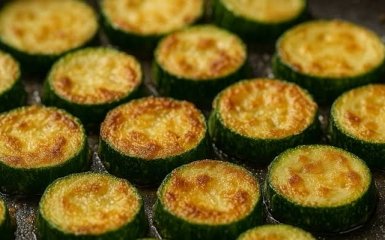
Fried zucchini seems like one of the easiest summer dishes to make. All you have to do is slice the vegetables, place them in a frying pan, and brown them on both sides. However, the result is often disappointing: instead of a delicious golden crust, the zucchini becomes soft, releases a lot of water, sticks to the pan, or absorbs too much oil.
Points of attention
- For frying, choose young zucchini, cut them into even pieces, and dry thoroughly.
- To remove excess moisture, salt the zucchini 20–30 minutes before roasting and pat dry or add salt at the end.
- Fry the zucchini uncovered in a hot pan in small batches; slices about 1 cm thick usually take 5–8 minutes.
The reason lies in the characteristics of the vegetable itself. Zucchini is about 95% water, so it quickly gives off moisture when heated. If the pan is not hot enough or the pieces are packed too tightly, they will actually stew in their own juices.
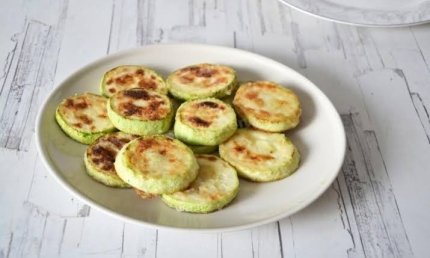
To get a golden brown crust, zucchini should be properly sliced, dried well, and fried in a hot pan in small batches. For an especially crispy crust, you can use a thin layer of flour, starch, or breading.
We'll explain how to fry zucchini without excess water, when to salt them, what oil to use, and how many minutes to keep them in the pan. We also offer five recipes — from classic zucchini with garlic to crispy sticks and tender vegetable fritters.
Why do zucchini become watery when fried?
Zucchini has a delicate cell structure and high water content. Under the influence of temperature, the cell walls gradually lose their strength, and some of the moisture escapes.
This is a natural process that cannot be completely stopped.
However, you can create conditions under which the water will evaporate quickly enough and the surface of the vegetables will have time to brown.
When a piece of zucchini comes into contact with a hot pan, its surface gradually loses moisture. This allows the reactions responsible for producing the golden color and pleasant toasted aroma to take place more actively.
If too much water is released, the surface temperature drops and browning slows down.
This is why zucchini that is fried in a large pile often remains pale.
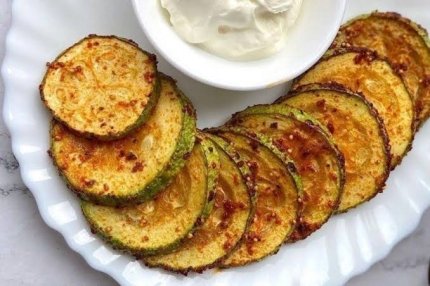
The main reasons for unsuccessful frying
Pieces that are cut too thinly will soften quickly.
A wet surface prevents crust formation.
An underheated pan slows down evaporation.
A large number of zucchini at the same time contributes to the accumulation of steam.
Constant stirring prevents the surface from browning.
Cooking too long destroys the delicate structure of the vegetable.
To get a good result, it is not necessary to use a lot of oil or complex ingredients. It is much more important to organize the process correctly.
Which zucchini is best for frying?
For quick frying, it is most convenient to use young zucchini of small or medium size.
They usually have a delicate skin, small seeds, and a denser flesh structure.
Overripe squash may contain large seeds and have a fibrous or mushy center. Such squash is more difficult to brown evenly.
How to choose a good zucchini
Pay attention to several signs:
the fruit is elastic and heavy for its size;
the skin is smooth, without major damage;
no soft or slippery areas;
the surface has no signs of mold;
The stem and the adjacent part are not damaged.
The color of the skin does not determine the cooking quality. Green, light, and yellow zucchini can all be equally good for frying.
Do you need to peel zucchini before frying?
Young zucchini usually do not need to be peeled.
It helps the pieces keep their shape better and adds color to the dish.
It is enough to thoroughly rinse the vegetables under running water, remove the tips and dry them.
If the zucchini is large and has a tough skin, you can cut it off. It is also a good idea to remove the middle with the large seeds.
For very overripe fruits, it is better to choose stewing, baking, or making fritters.
How to properly cut zucchini for frying
The thickness of the slices directly affects the texture of the finished dish.
Slices that are too thin can soften quickly, while slices that are too thick will take longer to cook on the inside.
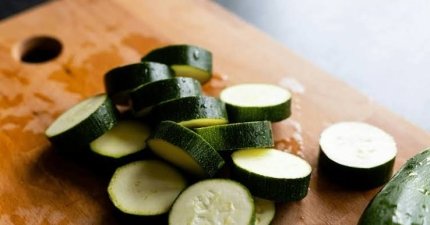
For classic fried zucchini, it is convenient to use circles approximately 8–12 mm thick.
If you plan on breading, the pieces can be a little thinner.
| Cutting method | Approximate thickness | For which dishes |
| Kruzhaltsa | 8–12 mm | Classic frying |
| Semicircle | 10–15 mm | Zucchini with vegetables |
| Long plates | 5–8 mm | Zucchini rolls |
| Bricks | 1–1.5 cm | Crispy sticks |
| Small cubes | 1.5–2 cm | Side dishes and vegetable mixes |
Try to cut the pieces into approximately the same size. This will help them cook more evenly.
For long plates, it is convenient to use a sharp wide knife or a special vegetable slicer.
Do you need to salt zucchini before frying?
Salt affects the movement of moisture in vegetable tissues.
After salinization, some water gradually leaves the cells. This phenomenon is associated with osmosis - the movement of water through cell membranes under the influence of differences in the concentrations of dissolved substances.
Thanks to this, the zucchini can be partially rid of excess moisture before frying.
However, pre-salting is not always necessary.
Method 1. Salt in advance
This option is suitable for large portions, especially if the zucchini is quite juicy.
Cut the vegetables into slices.
Sprinkle lightly with salt and mix.
Place in a colander for 20–30 minutes.
Drain the liquid that has separated.
Pat the pieces thoroughly with a paper towel.
Fry in a hot pan.
You don't need to add a lot of salt: its job is to help draw out some of the moisture, not make the vegetables oversalted.
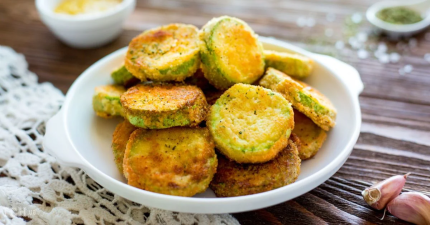
Method 2. Salt at the end
For quick frying of young zucchini, you can skip the pre-salting.
In this case, well-dried pieces are placed on a hot frying pan, browned, and salt is added closer to the end.
This is convenient when you need to prepare a small portion in 10–15 minutes.
Both methods work. Pre-brining helps reduce moisture, while brining at the end shortens cooking time. The choice depends on the juiciness of the zucchini and the desired texture.
How to fry zucchini in a pan: basic recipe
This method is suitable for young zucchini without breading. The finished pieces will have a golden surface and a soft, but not overcooked, middle.
Ingredients
young zucchini - 500 g;
refined sunflower or olive oil for frying — 1–2 tbsp. l.;
salt - to taste;
black pepper - to taste;
fresh herbs - optional.
Step-by-step cooking
Step 1. Prepare the vegetables. Wash the zucchini, cut off the ends, and cut into slices of approximately the same thickness.
Step 2. Remove moisture. Pat the pieces dry with paper towels. If necessary, salt them beforehand and leave them in a colander.
Step 3. Heat a frying pan. Use medium-high heat. Add a thin layer of oil and wait until it is hot but not smoking.
Step 4. Arrange the zucchini in a single layer, leaving small spaces between the pieces.
Step 5. Brown the first side. Do not turn the vegetables every half minute. Give them about 2-4 minutes to develop a golden surface.
Step 6. Flip. Carefully brown the second side. Reduce heat slightly if necessary.
Step 7. Add seasonings. When the zucchini is soft but still holds its shape, season with salt and pepper.
Step 8. Serve. Transfer to a plate and add the greens.
Total frying time is usually around 5–8 minutes per batch, but depends on the thickness of the pieces and the temperature of the pan.
You don't need to wait until the zucchini is completely soft. They will remain hot for a while after you remove them from the heat.
Which pan and oil is best to use?
Non-stick, stainless steel, or well-seasoned cast iron pans are suitable for frying zucchini.
It is important that the surface heats evenly and is wide enough.
For 500 g of zucchini, it is usually more convenient to use a pan with a diameter of approximately 26–28 cm and cook the vegetables in several batches.
Why you shouldn't pour a lot of oil
Zucchini can absorb some of the fat during cooking, especially if fried for a long time or has a damaged, softened texture.
A large amount of oil does not guarantee a better crust.
For normal frying, a thin layer of fat covering the working surface of the pan is sufficient.
Oil should be added gradually if it is truly necessary.
Refined sunflower, rapeseed, or suitable olive oil is suitable.
Do not allow excessive smoking or overheating of the fat.
5 delicious roasted zucchini recipes
Thanks to their neutral taste, zucchini goes well with garlic, herbs, cheese, tomatoes, and sour-milk sauces.
The recipes given are designed for approximately two to three servings.
1. Zucchini with garlic and dill
A classic version in which the aroma of fresh garlic and herbs plays a major role.
Ingredients:
zucchini - 500 g;
oil - 1–2 tbsp. l.;
garlic - 2 cloves;
dill - a small bunch;
salt and pepper - to taste.
Preparation:
Cut the zucchini into slices about 1 cm thick.
Dry and fry in small batches until golden brown.
Chop the garlic and dill separately.
Mix the greens with a little salt.
Add the aromatic mixture to the hot zucchini after removing it from the pan.
Secret: Don't add the minced garlic at the beginning of the frying process. It darkens quickly on high heat and can take on a bitter taste.
2. Crispy zucchini in flour
A thin layer of flour helps create a browned surface and gives the dish a more distinct texture.
Ingredients:
zucchini - 500 g;
wheat flour - 3 tbsp. l.;
paprika - ½ teaspoon;
salt - to taste;
oil - for frying.
Preparation:
Cut the zucchini into 6–8 mm thick slices.
Lightly salt and leave for about 15 minutes.
Blot the moisture thoroughly.
Mix the flour with paprika.
Roll each piece in a thin layer of the mixture.
Shake off excess flour.
Fry in a hot pan until golden brown on both sides.
Do not stack the finished circles in a dense pile. The steam will soften the breading.
For best results, place them on a wire rack or serve immediately.
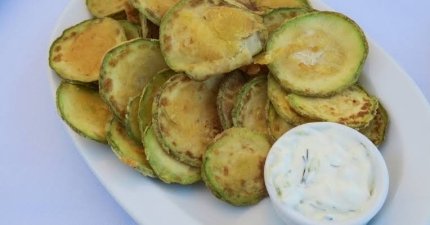
3. Zucchini with Parmesan and Lemon Zest
This recipe is good for a light vegetable side dish.
Ingredients:
zucchini - 500 g;
olive oil - 1 tbsp. l.;
grated hard cheese - 30 g;
lemon zest - ½ tsp;
dried oregano - ¼ tsp;
black pepper - to taste.
Preparation:
Cut the zucchini into large half-circles.
Dry well.
Fry over moderately high heat until browned.
Add oregano and pepper.
Remove the pan from the heat.
Sprinkle the zucchini with grated cheese and lemon zest.
It's better to add the cheese at the end: it won't have time to burn, and its flavor will remain distinct.
4. Roasted zucchini with tomatoes and basil
This is a juicier dish in which the zucchini is first browned and then briefly combined with tomatoes.
Ingredients:
zucchini - 400 g;
cherry tomatoes - 150 g;
garlic - 1 clove;
olive oil - 1½ tbsp. l.;
fresh basil - a few leaves;
salt and pepper - to taste.
Preparation:
Cut the zucchini into half-circles about 1 cm thick.
Fry until golden brown and transfer to a plate.
In the same pan, briefly heat the halved tomatoes.
Add the garlic and cook for about 30 more seconds.
Turn the zucchini over, mix gently.
Remove from heat and add basil.
Tomatoes contain a lot of juice. If you put them with raw zucchini, the vegetables will most likely start to stew.
Therefore, it is important to first form a crust on the zucchini.
5. Zucchini sticks in crispy breading
This option resembles a vegetable appetizer that can be served with yogurt sauce.
Ingredients:
zucchini - 450 g;
egg - 1 pc.;
flour - 2 tbsp. l.;
breadcrumbs - 60 g;
dried garlic - ½ tsp;
paprika - ½ teaspoon;
salt - to taste;
oil - for frying.
Preparation:
Cut the zucchini into long strips about 1–1.5 cm thick.
Dry thoroughly.
Prepare three containers: with flour, beaten egg, and breadcrumbs with spices.
Roll the cubes in flour, egg, and breadcrumbs sequentially.
Place in a frying pan with heated oil.
Fry in small batches, turning carefully.
Transfer the finished sticks to a wire rack so that excess steam does not soften the crust.
For the sauce, mix natural yogurt, finely chopped dill, and a little garlic.
Important: Breading best preserves crispiness immediately after cooking.
How to fry zucchini without flour and with minimal oil
If you want a lighter side dish, flour and breading are not necessary.
It is best to cut the zucchini into large half-circles or cubes.
It is enough to grease a frying pan with a high-quality non-stick coating with a small amount of oil.
Spread the zucchini in a single layer and brown without constant stirring.
If necessary, you can use a cooking brush to evenly distribute the fat.
However, you don't have to completely give up oil. A small amount helps transfer heat and form the desired surface.
The main thing is not to add fat every time the zucchini starts to release juice.
How many minutes to fry zucchini
The cooking time depends on the cutting, the amount of vegetables and the method of frying.
Estimated time:
| Zucchini shape | Frying time |
| Thin circles 5–7 mm | 4–6 minutes |
| 8–12 mm circles | 5–8 minutes |
| Large semicircles | 6–9 minutes |
| 1.5–2 cm cubes | 7–10 minutes |
| Breaded cubes | 6–10 minutes |
The values are approximate and do not replace a readiness assessment.
Properly cooked zucchini is easily pierced with a fork, but retains its shape and does not fall apart.
If a crispy surface is desired, it is better to remove the vegetables a little earlier than to continue heating until completely softened.
Why do zucchini absorb a lot of oil?
During frying, water evaporates from the surface of vegetables, and the structure of the pulp gradually changes.
If the pieces are left in the fat for a long time or have a loose surface, the amount of oil absorbed may increase.
This is especially noticeable when frying flour breading.
How to reduce the amount of oil
Use a well-heated pan, but do not allow the fat to smoke.
Don't overload it with too many vegetables.
Dry the zucchini before cooking and shake off excess flour.
Don't fry the pieces longer than necessary.
If you are gradually running out of oil, add it in small portions, rather than a few extra spoonfuls at once.
It is also worth remembering that the calorie content of the finished dish depends not only on the zucchini themselves, but also on the amount of fat remaining after frying.
What to do if the zucchini has already let water out in the pan
If instead of browning, the zucchini starts to release a lot of liquid, the situation can sometimes be partially corrected.
First of all, do not cover the pan with a lid.
Remove some of the vegetables if they are too tightly packed.
Allow excess moisture to evaporate over moderate heat. Do not immediately try to compensate for the problem by turning the stove to maximum power.
When the liquid reduces, you can carefully brown the pieces.
However, if the zucchini has already softened a lot, it will not be possible to completely restore its original texture.
These vegetables are best used for omelets, vegetable stews, or stuffing.
Common mistakes when frying zucchini
Even with proper cutting, the result can be unsuccessful due to a few common actions.
Roasting under a lid. Steam builds up inside and helps soften the vegetables. A lid is more suitable for stewing.
Cold pan. Zucchini will start to release water before the surface has time to brown.
Constant stirring. Without sufficient contact with the pan, a golden crust will form more slowly.
Using very large zucchini. The mushy flesh and large seeds can compromise the consistency.
Adding tomatoes at the beginning. Tomato juice increases the amount of liquid, so it is better to combine the vegetables after pre-searing.
Excess salt before quick frying. If you salt the zucchini and immediately put it in the pan, it can actively release water during heating.
Cooking too long. Even well-browned zucchini gradually loses its shape if left on the heat for too long.
Can you fry frozen zucchini?
Frozen zucchini usually has a different texture than fresh.
During freezing, ice crystals form, which can damage the cellular structures of vegetables.
After defrosting, zucchini often releases more water and becomes softer.
Therefore, it is more difficult to get the same elastic golden circles from them.
Frozen zucchini is best used for soups, stews, casseroles, or vegetable fritters.
If you still plan to fry, it is worth removing excess moisture first and cooking in small batches.
What sauces are best to serve fried zucchini with?
The neutral taste of zucchini goes well with sour milk, herbal, and tomato sauces.
For a quick homemade sauce, you can use natural yogurt, sour cream, or another base.
Here are some good combinations:
yogurt, dill and garlic;
sour cream, green onions and black pepper;
natural yogurt, lemon zest and mint;
tomato sauce with basil;
sauce made from tahini, lemon juice and water.
It is best to serve the sauce separately.
If you pour it over hot fried zucchini in advance, the crust will quickly lose its crispiness.
Can you eat zucchini if it's bitter?
This is an important food safety issue.
Sometimes zucchini can accumulate naturally bitter compounds called cucurbitacins. In high concentrations, they can cause poisoning.
Fruits with unusually strong bitterness require special attention.
If raw zucchini has a distinctly bitter taste, it should not be used for cooking. Frying, stewing, or baking does not guarantee the destruction of cucurbitacins.
You should not try to hide the bitterness with salt, garlic, or sauces.
The risk is especially important to consider for vegetables grown from seeds of unknown origin.
If you experience abdominal pain, vomiting, or diarrhea after consuming suspiciously bitter squash, seek medical attention.
Disclaimer: The material is for informational purposes only. If you suspect food poisoning, you should consult a doctor. Self-medication can be harmful to your health.
How to properly store fresh and roasted zucchini
Fresh zucchini is best stored in the vegetable compartment of the refrigerator.
They do not need to be washed before storage. Excess moisture can contribute to faster spoilage.
For good quality, it is advisable to use fresh zucchini within a few days.
Finished roasted zucchini should be cooled and placed in the refrigerator within two hours of cooking.
Store them in a clean, closed container at a temperature not exceeding 4 °C.
While general recommendations for many prepared foods allow for storage of up to 3–4 days, roasted zucchini is best consumed within 1–2 days as its texture deteriorates quickly.
When reheating, it is best to use a non-stick pan or the oven. The microwave tends to soften the crust more.
You shouldn't expect reheated zucchini to be as crispy as they are right after frying.
Conclusion
To keep fried zucchini appetizing and not turning into a watery mass, you need to control three factors: the amount of moisture, the temperature of the pan, and the cooking time.
For the classic recipe, young zucchini, cut into slices about a centimeter thick, are best. They should be dried well, laid out in small batches, and turned over only after the surface becomes golden.
For a crispier texture, you can use a thin breading, and it's better to add garlic, herbs, cheese, and sauces at the end. This way, the zucchini will retain their shape, natural flavor, and a nice crust.
FAQ: Frequently Asked Questions About Roasting Zucchini
How to fry zucchini so that they are not watery?
Cut the zucchini into approximately equal pieces, dry well and place in a single layer on the heated pan. Do not cover or stir constantly. For particularly juicy zucchini, you can use salt first and then remove the moisture.
How many minutes do you need to fry zucchini in a pan?
Slices about 1 cm thick usually take 5–8 minutes total. The exact time depends on the pan and temperature. The zucchini should be ready when pierced easily with a fork but still hold their shape.
Do you need to salt zucchini before frying?
Optional: To remove excess moisture, you can salt the sliced zucchini and leave it for 20–30 minutes, then drain. If you need to cook young zucchini quickly, you can salt it at the end of frying.
How to fry zucchini with flour so that the crust is crispy?
First, remove excess moisture from the surface of the vegetables. Then, roll the pieces in a thin layer of flour, shake off the excess, and fry in small batches. Place the finished zucchini on a wire rack so that the steam does not soften the breading.
Why do zucchini stick to the pan?
This could be due to insufficient heat, insufficient oil, or the condition of the pan's surface. Vegetables can also stick if you turn them over before they are browned. A good quality non-stick pan is ideal for convenient cooking.
Do I need to peel the zucchini?
The skin of young zucchini is usually tender, so you can leave it on. It helps the vegetable hold its shape better. The skin of large, overripe zucchini can be tough, so it is sometimes advisable to cut it off.
How to fry zucchini without flour?
Cut the vegetables into half circles or cubes, dry and brown in a hot pan with a little oil. Add salt, spices and herbs towards the end. Flour is not necessary to get a golden surface.
Why do fried zucchini absorb a lot of oil?
The amount of fat absorbed is affected by the texture of the vegetables, the temperature of the pan, the cooking time and the method of breading. To reduce the amount of oil, do not fry the zucchini for too long, use a preheated pan and do not add fat unnecessarily.
Can I fry zucchini under a lid?
You can if you want a soft stew. However, for a golden crust, it is better to cook without a lid. Steam accumulates under it, which helps soften the zucchini.
What to do if fried zucchini becomes too soft?
You won't be able to get them back to their full elasticity. However, you can use these zucchinis for a vegetable omelet, stuffing, stew, or pasta sauce. Next time, fry them in smaller batches and reduce the heating time.

