
Apples picked in the fall can retain their flavor and crisp flesh for months. However, sometimes even the best harvest starts to deteriorate within a few weeks: the fruits shrivel, become soft, become covered with dark spots or rot inside. The reason is usually not in one bad decision, but in a combination of several factors: the wrong variety, damage during harvesting, too high a temperature, too low a humidity or insufficient control over the condition of the fruits.
To preserve apples until winter or spring, you need to choose varieties suitable for long-term storage, select undamaged fruits, and maintain a stable low temperature and sufficient air humidity.
For most varieties, favorable conditions are close to 0–4 °C and relative humidity around 90–95%. However, some varieties are sensitive to temperatures close to zero, so there is no universal regime for all apples.
We'll figure out how to properly store apples in the refrigerator, cellar, basement, and on the balcony, which varieties are best kept until spring, whether you need to wrap the fruit in paper, and what to do if the apples have started to spoil.
Why do apples spoil during storage?
Even after harvesting, an apple remains living plant tissue.
The fruit continues to undergo respiratory processes, during which accumulated organic substances are used. The cell structure, acidity, aroma, and density of the pulp gradually change.
Over time, the apple loses its characteristic crunchiness and may become mealy or too soft.
At the same time, water gradually evaporates through the skin. This is why fruits that lie in a dry, warm room for a long time often shrivel.
What role does ethylene play?
Apples naturally emit ethylene, a gaseous substance that is involved in regulating fruit ripening.
After harvest, ethylene continues to affect physiological processes in the fruit.
Its accumulation under certain conditions can accelerate the aging of apples and other vegetables and fruits sensitive to it.
Therefore, long-term storage requires not only coolness, but also adequate air circulation.
Why cold prolongs freshness
Low temperature slows down fruit respiration, enzyme activity, and the development of many microorganisms.
But it does not stop these processes completely.
That is why apples have a limited shelf life, even in the refrigerator.
It is also important not to overcool the crop: freezing damages the pulp cells, and some varieties can suffer from prolonged exposure to temperatures close to zero.
What varieties of apples are best stored until spring?
Variety is one of the main factors in the keeping quality of apples.
Shelf life is the ability of fruits to maintain quality for a certain period of time after harvest.
Summer apples typically have a shorter shelf life. They lose firmness more quickly and are often intended for consumption shortly after harvest.
Late fall and winter varieties can remain suitable for much longer under appropriate conditions.
What varieties should you choose?
| Sort | Features | Storage potential |
| Idared | Dense pulp, sweet and sour taste | High, 5–6 months possible if refrigerated |
| Golden Delicious | Sweet taste, yellow skin | High under the right conditions |
| Florina | Dense fruits, late ripening | Suitable for long-term storage |
| Renet Symyrenko | Green fruits, characteristic aroma | Good shelf life when stored properly |
| Fuji | Sweet and dense flesh | High storage potential |
| Granny Smith | Firm green fruits, pronounced acidity | Usually well preserved |
| Jonagold | Large juicy fruits | Suitable for winter storage |
The above characteristics do not mean that each variety is guaranteed to last until a certain date.
The term depends on the degree of maturity, weather conditions during the season, the condition of the fruit and the storage temperature.
For example, the storage duration for Idared is described as about 150–180 days under artificial cooling conditions. But a home cellar does not always provide the same result.
Can summer apples be stored in winter?
Ordinary summer varieties should not be stored for long periods of time.
Even if the fruits look healthy, they can quickly lose flavor and texture.
They are best used primarily for fresh consumption, baking, drying, or other processing methods.
For winter storage, it is more advisable to choose varieties with proven good keeping quality.
How to properly harvest apples for long-term storage
If the apples are grown in your own garden, preparation for storage begins during the harvest.
The fruits should be harvested at the appropriate harvest maturity.
Harvesting too early can result in underdeveloped flavor, and overripe fruit usually does not hold up well to long-term storage.
How to determine ripeness
Focus on the characteristics of a particular variety.
For many apples, important characteristics are characteristic color, pulp density, taste, and relatively easy separation of the fruit from the branch.
But seed color or red blush are not universal indicators of optimal harvesting time.
In professional horticulture, tests for starch content, pulp density, and other indicators can be used.
For a home garden, it is useful to know the approximate ripening times of a particular variety and to check several fruits.
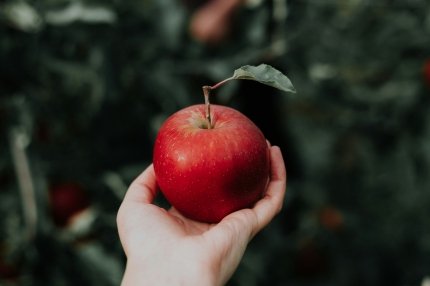
How to remove apples from a tree
Grasp the apple with your palm, carefully lift and turn it.
A ripe fruit usually separates from the branch without a strong jerk.
Try to keep the stem intact and avoid damaging the skin with your nails.
Do not shake the tree if you plan to store the crop for the winter.
Apples that have fallen to the ground may have unnoticeable bruises and tissue damage.
Such fruits should be used separately and not mixed with the main stock.
How to select apples for storage
Even one variety can contain fruits of different quality.
Therefore, before harvesting, you need to carefully sort the apples.
Whole fruits without signs of disease, mechanical damage, and severe overripeness are best stored.
Which apples to leave for the winter
For long-term storage, choose fruits that have:
color characteristic of the variety;
fairly dense pulp;
whole skin without deep scratches;
absence of wet spots and mold;
no signs of insect damage;
preferably an intact stalk.
Small natural color variations are not necessarily defects.
But it is better to put aside fruits with cracks, bruises or punctures.
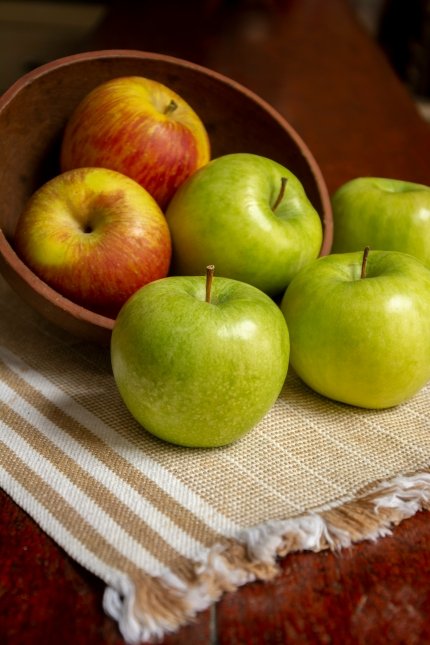
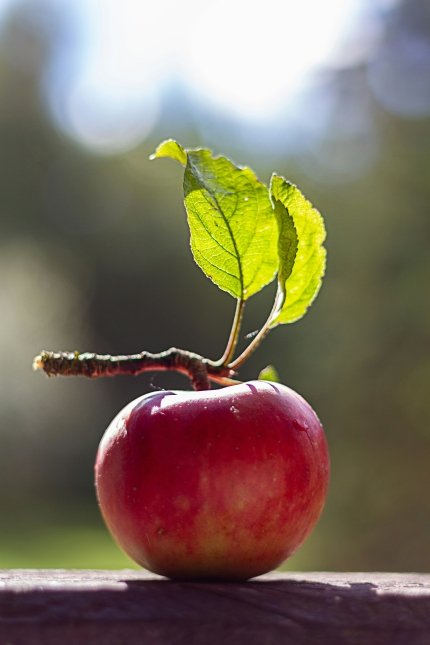
Can apples be stored without the stem?
Such fruits can be stored, but for long-term storage, it is better to choose apples with whole stalks.
The place where they are detached sometimes becomes an additional vulnerable area.
However, the absence of a stem does not mean that the apple is automatically dangerous or unfit for consumption.
It is simply advisable to use it earlier.
Do you need to wash apples before storing?
For home storage of whole apples, it is usually recommended to store the harvest unwashed.
The reason is not only the natural protective layer on the surface of the skin, but also the risk of residual moisture.
If water is retained near the stem, in depressions, or between the fruits, it can create favorable conditions for the development of microorganisms.
How to prepare dirty apples
If there is a little dry dust on the surface, there is no need to specifically soak the fruits before planting.
It is better not to select heavily contaminated or damaged apples for storage for many months.
At the same time , apples must be washed under clean running water before consumption , even if you plan to peel them.
Do not use soap, dishwashing liquid, chlorine bleach, or household disinfectants for this purpose.
What is the best temperature to store apples?
Temperature is crucial for storage duration.
For many varieties, professional recommendations suggest temperatures around 0 °C, sometimes slightly below zero.
However, at home, it is safer to focus on stable cold around 0–4 °C , avoiding freezing of the fruits.
Certain varieties, including Honeycrisp and McIntosh, may be sensitive to very low temperatures and require different conditions.
What happens at different temperatures?
| Temperature | Impact on storage |
| Around 0–2 °C | Favorable regime for many varieties |
| About 3–4 °C | A practical home option, especially for sensitive varieties |
| 5–8 °C | Storage is possible, but aging is usually accelerated |
| Above 10 °C | Fruits lose density and freshness faster |
| Below the freezing temperature of fruits | Risk of cell damage and loss of texture |
Apple juice does not necessarily freeze at exactly 0 °C due to dissolved sugars.
In many cases, frost damage is possible at around −1.5…−2 °C, but the exact limit depends on the composition of the fruit.
Therefore, leaving the crop where the temperature can drop uncontrollably below zero is risky.
What humidity is needed to keep apples from shriveling?
For long-term storage of apples, high relative humidity is desirable — approximately 90–95%.
If the air is too dry, the fruit loses water faster through the skin.
As a result, the flesh becomes less juicy, the skin shrivels, and the apple loses its marketable appearance.
However, high humidity does not mean that drops of water should constantly remain on the fruit.
Why excessive condensation is dangerous
If fruits are regularly covered with moisture, the risk of developing certain fungal diseases increases.
Therefore, it is important to ensure not only humidity, but also moderate air exchange.
In a home refrigerator, a convenient compromise may be a loosely sealed or perforated bag, which limits moisture loss but does not create a completely airtight environment.
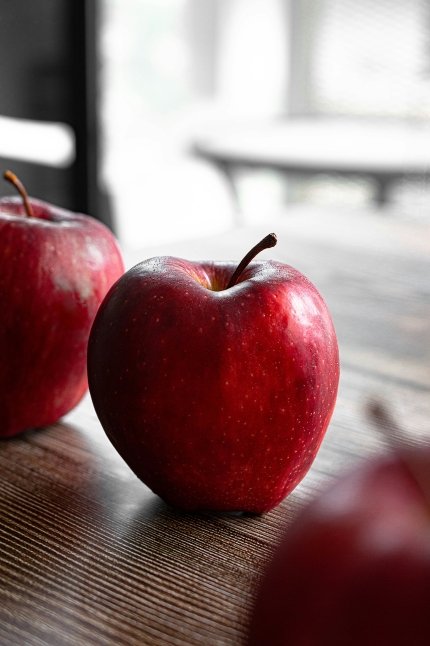
How to properly store apples in the refrigerator
For a small amount of apples, a refrigerator is one of the most convenient options.
It is easier to maintain a stable temperature there than on a balcony or in a regular pantry.
Step-by-step instructions
Sort through the apples and set aside any damaged fruit.
Do not wash the fruit before planting.
Place the apples in a clean perforated bag or suitable ventilated container.
Place them in the fruit and vegetable compartment.
Do not press the fruit against the back wall if there is a possibility of freezing there.
Check your stock status about once a week.
If the refrigerator has humidity control in the vegetable bins, select a mode suitable for storing fruit.
How many apples can be stored in the refrigerator?
For regular store-bought apples, a practical guideline is often about 1–4 weeks of good quality storage.
However, freshly harvested winter varieties can last much longer at the right temperature and humidity.
It is important not to confuse a home refrigerator with a professional fruit storage facility, where the temperature, humidity, and composition of the gas environment are controlled.
It is not always possible to obtain the same shelf life in a regular refrigerator.
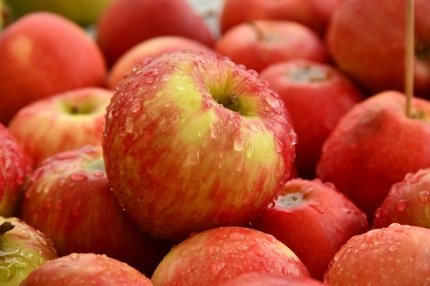
How to store apples in a cellar or basement
If you need to preserve several boxes of harvest, a refrigerator may not be enough.
In this case, a cool basement or cellar is suitable, if appropriate conditions can be maintained there.
It is important that the temperature is stable and the fruits do not freeze.
How to prepare the room
Before planting the crop, remove last year's fruit remnants and other debris.
Clean shelves, drawers, and accessible surfaces.
Check for active leaks, mold, or rodent infestation.
It is advisable to install a thermometer and hygrometer to monitor temperature and humidity.
Don't just focus on the feeling of coolness.
What to store apples in
It is best to use clean wooden, plastic, or sturdy cardboard boxes designed for food.
They must ensure air circulation.
Do not overcrowd the boxes or put too much pressure on the lower fruits.
If there is enough space, it is convenient to place the apples in one or more shallow layers.
Do not place boxes directly on a wet floor.
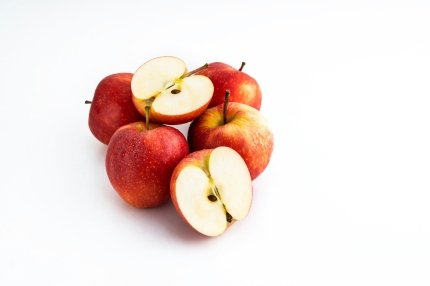
Do you need to wrap each apple in paper?
This is a popular method, but it is not mandatory.
In modern recommendations for home storage, clean, ventilated boxes without individual wrapping are often sufficient.
Paper can limit direct fruit contact, but does not compensate for incorrect temperature or humidity.
Additionally, excessive packaging makes regular inspection difficult.
If you use dividers, they should be clean, dry, and free of excess moisture.
Can you store apples on the balcony in winter?
A balcony can be a temporary storage space, but it has a significant drawback - temperature fluctuations.
During the day, the temperature can rise under the influence of the sun, and drop sharply at night.
Freezing of fruits is especially dangerous.
Glazed balcony
Storage on a glazed balcony is possible if the temperature remains stable and does not drop to values that are dangerous for apples.
It is best to place the boxes away from direct sunlight.
Condensation also needs to be controlled.
Do not place the crop near cold glass or surfaces where the fruit may freeze.
Open balcony
For long-term winter storage, this is a risky option.
Even a well-insulated box without additional temperature control can freeze during prolonged frosts.
Additionally, moisture may accumulate inside the package during thawing.
Therefore, an open balcony cannot be considered a reliable replacement for a refrigerator or cellar.
Can apples be stored with potatoes and other vegetables?
For long-term storage, it is best to store apples separately from many vegetables.
The reason is the ethylene they emit.
Some vegetables are sensitive to this substance.
For example, ethylene can contribute to the yellowing of certain leafy vegetables and affect the quality of produce during storage.
Also, under certain conditions, it can stimulate potato germination.
Can you store apples next to bananas?
If you need to accelerate the ripening of green bananas, the proximity of apples is sometimes used intentionally.
But for long-term storage of supplies, such proximity is undesirable.
It is better not to put different fruits and vegetables in one tightly sealed bag without taking into account their characteristics.
Separate placement also reduces the risk of odor transfer and accidental damage to the fruit.
How often should you check apples during storage?
Even properly selected fruits can start to spoil.
Skin damage is sometimes not noticeable during initial sorting.
In addition, apples may have hidden physiological disorders that only become apparent after several weeks in storage.
Therefore, it is important to regularly inspect the stock.
What to pay attention to
Check if the following have appeared:
soft or wet spots;
mildew;
juice leakage;
pungent smell of fermentation;
significant wrinkling;
unusual darkening of the pulp;
rotting near the stem.
Suspicious apples should be immediately separated from the rest.
If the fruit has mold or signs of rot, it should not be left for further storage.
A practical inspection schedule is approximately once a week , but more frequent inspections may be necessary in case of unstable temperatures or a large number of fruits.
Why do apples become soft, mealy, or dark inside?
A change in texture does not always mean infectious spoilage.
During long-term storage, natural fruit aging processes occur.
The pulp may lose density, and the characteristic crunch may decrease.
But sometimes apples have internal physiological damage.
Darkening of the pulp
Certain varieties may be prone to internal browning under inappropriate temperature or other storage conditions.
For example, Honeycrisp is known to have quality problems associated with temperatures that are too low.
Such problems are not necessarily visible on the skin.
If, after cutting, the flesh has unusually large dark areas, a watery texture, or signs of decomposition, it is better not to use such a fruit for food.
Can you bring back the crunch to a soft apple?
It is impossible to completely restore the original structure of an already aged fetus.
Refrigeration may make the apple more palatable, but it will not restore the damaged cellular structures.
If the fruit has just lost a little density but shows no signs of spoilage, it can be used for baking or heat treatment.
What to do with apples that are not suitable for storage
Not all fruits should be kept fresh until spring.
Slightly bruised but not spoiled apples are best used as soon as possible.
Suitable for this are:
baked apples;
applesauce;
pie filling;
compote;
dried apple slices;
frozen pieces for further cooking.
Before use, the fruits should be inspected and washed.
If an apple has mold, a distinct smell of rot, or signs of fermentation, heat treatment should not be considered a guaranteed way to make it safe.
Can apples be frozen?
Yes, apples can be frozen for later use in cooking.
They are washed, cored, and sliced.
After freezing and thawing, the texture usually changes, so such apples are better used for baking, purees, or other dishes, rather than as a substitute for fresh, crunchy fruit.
The most common mistakes when storing apples
Plant overripe fruits. They usually lose quality faster.
Mixing damaged and healthy apples. This increases the risk of spreading spoilage.
Wash produce before long-term storage. Residual moisture can promote rot.
Keep apples in the kitchen all winter. At room temperature, the fruit ages faster.
Place fruit in an airtight bag. Without proper ventilation, condensation can build up.
Store apples on a frosty balcony. Freezing deteriorates the texture of the fruit.
Ignore varietal characteristics. Not all apples tolerate temperatures close to freezing equally well.
Do not check the stock. One spoiled fruit can become a source of contamination for neighboring ones.
It is assumed that store-bought apples will last another six months. It is not known how long they have been in storage before purchase.
How to preserve your apple harvest until February: a practical scheme
Let's say you picked a few boxes of Idared, Golden Delicious, and early apples in the fall.
It is best to divide the harvest according to its purpose.
Use early fruits as soon as possible.
Among winter varieties, select dense apples without damage.
Put them in clean, ventilated boxes and move them to a cool room.
For most varieties, aim to maintain a stable temperature around 0–4 °C, taking into account specific varietal needs.
Make sure that the fruits do not dry out, but at the same time do not become covered with condensation.
Inspect the boxes weekly and remove apples that show signs of spoilage.
Use fruits that are starting to lose density earlier.
This approach does not guarantee that every apple will be preserved until February, but it helps significantly reduce crop losses.
Conclusion
For long-term storage of apples, the most important factors are the variety, degree of maturity, lack of damage, stable coolness, and high humidity.
Small stocks are convenient to keep in the refrigerator, and large harvests in a basement or cellar with appropriate conditions.
Do not wash apples before planting, leave them in airtight packaging, or allow them to freeze.
Winter varieties can be stored for several months with proper care, but the actual shelf life depends on the initial quality of the fruit and the capabilities of home storage.
FAQ: Frequently Asked Questions About Storing Apples
How to properly store apples for the winter at home?
Select firm, undamaged winter apples, do not wash them before packing and place in clean, ventilated boxes or suitable packaging. Maintain a stable low temperature and high humidity without condensation. Inspect the fruit regularly.
What is the best temperature to store apples?
For many varieties, temperatures around 0–4 °C are suitable. However, some varieties, such as Honeycrisp and McIntosh, may be sensitive to too much chilling. The specific regime depends on the variety and storage conditions.
What varieties of apples are best stored until spring?
For long-term storage, Idared, Golden Delicious, Florina, Renet Symirenko, Fuji, and Granny Smith are often chosen. However, even apples with good keeping quality can spoil quickly if they are picked overripe or stored in heat.
Do you need to wash apples before storing?
No, for long-term storage at home, it is usually better to leave apples unwashed. Excess moisture can contribute to spoilage. However, the fruit should be thoroughly washed under running water immediately before consumption.
Can apples be stored in plastic bags?
Yes, if the bag is not airtight and has ventilation holes. Such packaging can help reduce moisture loss. However, care must be taken to ensure that excessive condensation does not accumulate inside.
Can you store apples on the balcony in winter?
This is only possible if the temperature is stable without the fruit freezing. This is difficult to ensure on an open balcony. Even a glazed balcony needs to be monitored with a thermometer, especially during severe frosts.
Why do apples shrivel during storage?
Most often due to gradual loss of moisture. The problem is exacerbated by high temperatures and low relative humidity. For long-term storage, it is advisable to maintain humidity at approximately 90–95%, preventing water accumulation on the fruit.
Can apples be stored with potatoes?
For long-term storage, it is better to place them separately. Apples emit ethylene, which can affect the quality of some vegetables, in particular, promote the germination of potatoes under certain conditions.
How often should you pick apples in winter?
A good rule of thumb is to check the stock about once a week. At each inspection, remove any fruit that shows signs of wet spots, mold, rot, or fermentation. If the temperature is unstable, you may need to check more often.
How long can apples be stored in the refrigerator?
For regular store-bought apples, the approximate shelf life of good quality is often 1–4 weeks. Freshly picked winter varieties can be stored much longer under proper conditions. The exact shelf life depends on the variety, maturity, and conditions prior to purchase.

