

Carrots can remain firm and juicy for several months, but sometimes lose their elasticity just a week after purchase. Most often, the reason is not the quality of the vegetables themselves, but the wrong storage conditions: too high a temperature, dry air, excess moisture or damage to the roots. It is especially difficult to store carrots in the winter in an apartment. In a warm room, they gradually lose water, shrivel and become soft. In a closed bag with condensation, on the contrary, conditions for the development of rot may arise.
The best conditions for long-term storage of carrots are a temperature of about 0–2 °C and a high relative humidity, approximately 95–100%. Under these conditions, the root crops lose water more slowly and retain their elasticity for longer. At home, the places closest to these conditions are the vegetable compartment of the refrigerator or a properly equipped cellar.
However, the storage method should be chosen depending on the quantity of carrots. For two kilograms bought at the supermarket, a refrigerator is suitable. For a harvest that will last all winter, boxes with wet sand or other cold storage systems may be more practical.
Let's look at seven ways to preserve carrots, explain why they become soft, whether they can be kept in plastic bags, and how to properly freeze root vegetables for soups and other dishes.
At what temperature and humidity do carrots last the longest?
Carrots are a root vegetable with a high water content. After harvest, they continue to breathe and gradually lose moisture.
If the surrounding air is dry, the root crop wilts. If the temperature is too high, physiological processes are accelerated, and the risk of microbial growth may also increase.
According to the recommendations of Iowa State University, the optimal conditions for long-term storage of carrots are approximately 0–2 °C and 98–100% relative humidity.
Under such conditions, a properly prepared crop can be stored for an average of 4–6 months. However, this is not a guaranteed period for every root vegetable.
What happens under different conditions
| Conditions | Possible outcome |
| Around 0–2 °C, high humidity | The best conditions for long-term storage |
| +3…+5 °C | Carrots can be stored well, especially in the refrigerator. |
| +8…+15 °C | Aging is accelerated, the risk of wilting and sprouting increases |
| Room temperature | Root vegetables usually lose their elasticity more quickly. |
| Temperature below the freezing point of tissues | Possible freezing and structural damage |
An important nuance: high humidity does not mean that carrots should lie in water or be soaked in condensate.
For long-term storage, sufficient humidity is required without accumulation of free water on the surface.
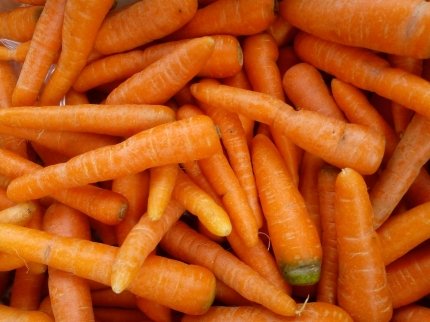
How to prepare carrots for storage after harvest
Proper preparation often affects the result no less than the choice of cellar or container.
First of all, you need to select healthy, sufficiently mature root vegetables without signs of rot.
Carrots with deep cracks, damage, or signs of disease are usually less suitable for long-term storage.
Do I need to trim the tops?
Yes. If carrots are stored with green tops, the leaves continue to lose moisture, which can accelerate the wilting of the root crop.
Agricultural services at universities in the United States and Canada recommend removing the green part before storing the crop.
Depending on the preparation method, you can leave about 1–2 cm of stalks.
There is no need to cut deeply into the top of the root crop itself, damaging its tissues.
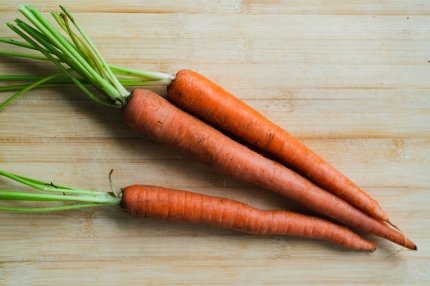
Which carrots to save for quick use
First of all, it is worth using root vegetables that have:
Fresh mechanical damage.
Large cracks.
Broken ends.
Signs of wilting.
Minor surface defects that can be safely removed during preparation.
If the carrot is already rotting, has slippery areas, or an unpleasant odor, it should be thrown away.
You should not try to preserve spoiled vegetables by freezing them.
Do you need to wash carrots before storing?
For long-term storage of the harvest in the cellar, it is usually better to use unpeeled and unwashed root vegetables.
Excess soil can be carefully shaken off or removed without damaging the skin.
Another situation is carrots bought at the store to use within a few weeks.
It can also be stored washed if excess surface moisture is removed after washing and appropriate refrigeration conditions are provided.
The University of Saskatchewan notes that delicately washed carrots can be stored in the refrigerator, but damage during cleaning increases the risk of rot.
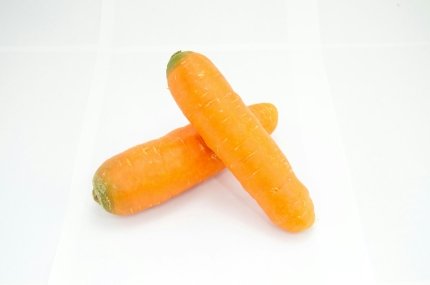
How to properly wash carrots before cooking
The U.S. Food and Drug Administration (FDA) recommends thoroughly rinsing vegetables under running water before peeling and cutting.
This is important even when the skin is planned to be removed.
There is no need to use soap, dishwashing detergents, or household disinfectants.
For heavily soiled root vegetables, you can use a clean vegetable brush.
1. How to store carrots in the refrigerator
For most apartment dwellers, this is the easiest and most predictable way.
The vegetable compartment of the refrigerator helps maintain a lower temperature and appropriate humidity.
At the same time, you should not leave carrots simply on an open shelf: due to water loss, they can quickly shrivel.
Step-by-step storage method
Select healthy root vegetables.
Remove the tops if any remain.
Remove excess surface moisture.
Place the carrots in a vegetable bag with small holes or a suitable container.
If necessary, add a clean paper towel to absorb condensation.
Place the package in the vegetable compartment.
Check the condition of the carrots periodically.
If the paper towel becomes wet, it should be replaced.
The goal is to maintain sufficient moisture around the root crops, but not to allow constant accumulation of water.
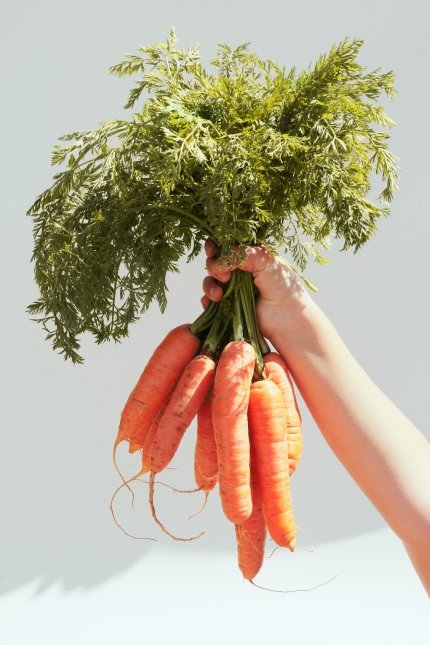
Can carrots be stored in a plastic bag?
Yes, and for a refrigerator this is often a practical method.
The common statement that any plastic bag will inevitably cause carrots to rot is incorrect.
Perforated plastic bags help retain moisture and reduce wilting, according to recommendations from the University of Saskatchewan and Iowa State University.
The problem occurs when condensation accumulates inside, the carrots are constantly wet, or there are already spoiled roots among the carrots.
Therefore, small ventilation holes and regular inspection are of practical importance.
How long can carrots last in the refrigerator?
At home, it is often advisable to use fresh carrots within 2–4 weeks.
With the right temperature and humidity, individual batches can be stored for longer.
However, the actual shelf life depends on freshness at the time of purchase, variety, skin condition, and refrigerator temperature.
You shouldn't expect any store-bought carrots to be guaranteed to remain of good quality for several months.
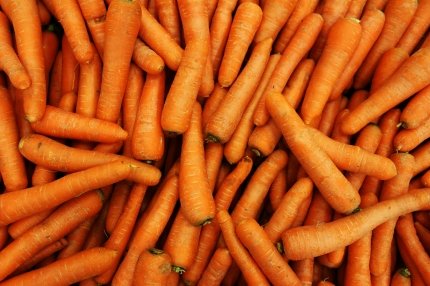
2. How to store peeled carrots in water
If the carrots have already been peeled, the storage requirements change.
After the skin is removed, the internal tissues are in direct contact with the air, so the root vegetable can lose moisture more quickly.
Clean cold water is sometimes used for short-term storage of peeled carrots.
How to do it
Prepare a clean food container with a lid.
Place the peeled carrots in it and pour cold drinking water over them so that the roots are covered.
Place the container in the refrigerator.
The University of Kentucky describes this method for carrots and recommends changing the water approximately every 4–5 days.
However, peeled and chopped carrots have a lower shelf life than whole, intact carrots.
Therefore, it is better to use homemade preparations within the next few days, monitoring the purity of the water and the condition of the product.
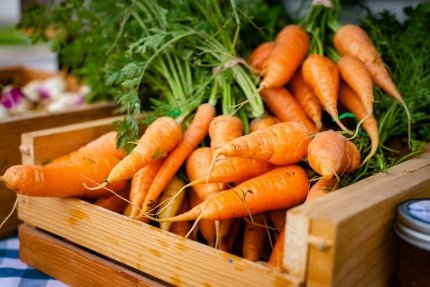
When to throw away carrots in water
If the water becomes cloudy, has an unpleasant odor, mucus, or signs of spoilage, the product should not be used.
You also shouldn't keep peeled carrots in water at room temperature for a long time.
After cutting, vegetables need to be cooled in a timely manner.
This method is suitable for short-term food preparation, not for storing the harvest for the entire winter.
3. How to store carrots in a cellar or basement
A properly equipped cellar is one of the best options for storing a large number of root vegetables.
However, it is not the presence of a basement itself that is important, but its temperature, humidity, and ventilation status.
In a warm, dry basement, carrots can wilt faster than in the refrigerator.
What conditions are needed?
The optimum temperature is approximately 0–2 °C.
Relative humidity is desirable to be very high — around 95–100%.
Under such conditions, root vegetables lose water more slowly.
The room must also be protected from flooding, rodents, and sudden temperature fluctuations.
It is especially important that the carrots do not freeze.
After freezing and thawing, tissues can lose density and the risk of spoilage increases.
How long do carrots last in the cellar?
The University of Iowa gives an approximate time of 4–6 months under properly organized conditions.
However, this applies to a healthy harvest prepared for long-term storage.
If the temperature exceeds approximately +4…+5 °C, root vegetables may germinate and spoil more quickly.
Therefore, it is useful to install a thermometer and hygrometer in the cellar.
4. How to store carrots in sand so they don't wither
Storage in slightly damp sand is one of the traditional methods that has a practical agronomic justification.
The sand helps maintain a moist environment around the root crops and reduces their drying out.
The University of Saskatchewan recommends using slightly damp sand, sawdust, or other suitable materials for cold storage of root vegetables.
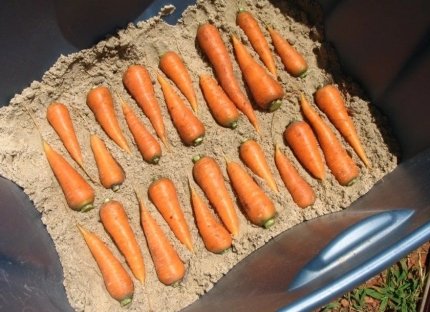
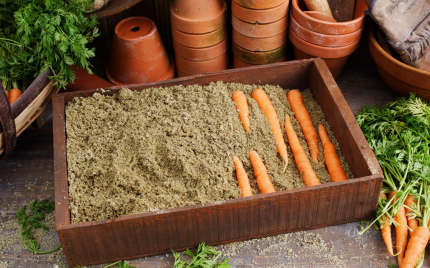
How to put carrots in sand boxes
First you need to prepare a clean, sturdy container.
A layer of slightly moistened sand is poured onto the bottom.
Then, healthy root crops are laid out, preferably without close contact with each other.
The next layer of sand is added on top.
The procedure is repeated until the container is full.
It is important that the sand is moist but not wet.
If water is leaking from it or liquid is accumulating at the bottom, conditions may be conducive to rot.
Do I need to add chalk?
Sometimes it is recommended to add chalk powder to the sand to change the acidity of the environment.
However, for home storage, there is no need to use arbitrary mixtures without proven technology.
Ordinary clean, slightly damp sand can perform its primary function of reducing moisture loss.
There is also no need to use unknown fungicides or other chemical additives.
Which boxes are best suited?
You can use sturdy wooden or suitable plastic containers.
It is important that they can withstand the weight of sand and carrots, do not collapse from moisture, and are clean.
There is no need to place large boxes where flooding is possible.
It is also worth ensuring the ability to periodically check the condition of root crops.
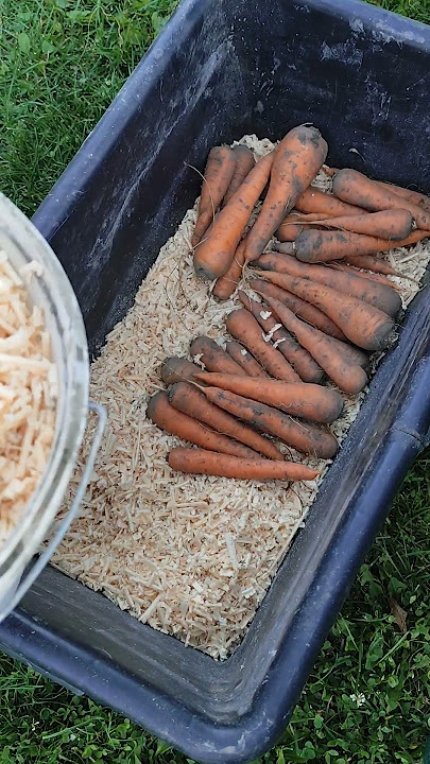
5. How to store carrots in sawdust
Sawdust can perform a similar function to sand: creating an environment around root crops that reduces moisture loss.
However, sawdust must be clean and suitable for use near food.
Material made from painted, varnished, impregnated with protective compounds, or unknown wood cannot be used.
How to prepare sawdust
For storage, slightly moistened material is used.
It should not be wet.
Carrots are laid in layers, sprinkled with sawdust to reduce direct contact of the root crops.
The container is placed in a cold room with a controlled temperature.
It is important to remember that sawdust alone does not provide protection against all bacteria and fungi.
If the root vegetables are already affected by rot, this method will not make them suitable for long-term storage.
6. How to store carrots on the balcony
A balcony is sometimes used instead of a cellar, but it is a less predictable environment.
Even in cold weather, the temperature there can change significantly throughout the day.
During the day, a glazed balcony heats up from the sun, and at night it can cool below freezing.
Can I leave carrots on an open balcony?
For long-term storage, this is a risky option.
If the temperature drops below the freezing point of carrot tissues, the root crops may freeze.
After thawing, they often become soft and lose their characteristic structure.
Repeated freeze-thaw cycles are especially dangerous.
How to use a glazed balcony
A balcony can only be suitable for storage when a stable temperature close to the recommended one is actually maintained there.
To control, you need a thermometer, preferably with a minimum and maximum temperature setting.
Boxes should be protected from sunlight and sudden vibrations.
However, thermal insulation without a heat source does not guarantee protection against prolonged severe frost.
If the temperature is unstable, it is better to use a refrigerator or freezer.
7. How to properly freeze carrots for the winter
Freezing is a practical option for an apartment, especially if you plan to use carrots for soups, stews, and other cooked dishes.
After defrosting, the structure of the root crop changes, so such carrots are usually less suitable for fresh salads.
Do you need to blanch carrots before freezing?
For the best quality preservation, yes.
Blanching means a short treatment with boiling water followed by rapid cooling.
It helps slow down the action of enzymes that can cause color, flavor, and texture changes during frozen storage.
The US National Center for Home Food Preservation recommends the following regimens:
| Carrot shape | Blanching time in boiling water |
| Sliced | 2 minutes |
| Diced | 2 minutes |
| Cut into strips | 2 minutes |
| Small whole carrot | 5 minutes |
After blanching, you should immediately cool the carrots in cold water and dry them thoroughly.
Step-by-step freezing
Choose healthy root vegetables.
Wash and clean them thoroughly.
Cut according to future use.
Blanch for the recommended time.
Cool quickly.
Let the water drain and remove excess moisture.
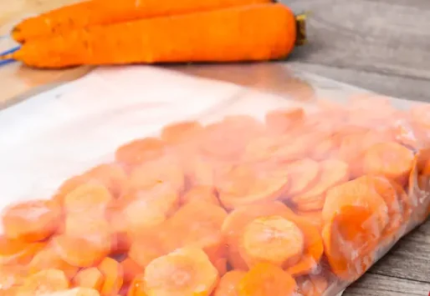
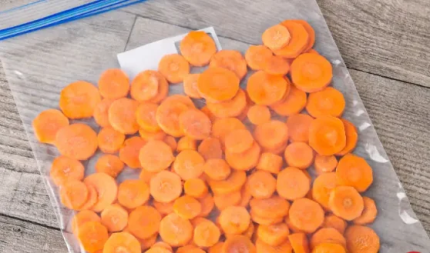
Pack into freezer bags or containers.
Mark the date and place in the freezer.
The optimal freezer storage temperature is approximately −18 °C or lower.
How long do frozen carrots last?
According to Health Canada recommendations, frozen carrots should be used within approximately 10–12 months to maintain proper quality.
This period applies to quality when properly frozen.
At home, the result depends on the tightness of the packaging, temperature stability, and proper preparation.
During long power outages, it is important to monitor the condition of the products in the freezer.
Where is the best place to store carrots: a comparison of methods
The choice depends on the number of root crops and available conditions.
| Way | What quantity is suitable for? | Main advantage | The main disadvantage |
| Refrigerator | Small stock | More stable cooling | Limited space |
| Water container | Peeled carrots for a short time | Helps maintain elasticity | Regular water changes are required |
| Cold cellar | Big harvest | Long-term storage possible | Temperature control required |
| Slightly damp sand | Harvest for several months | Reduces moisture loss | Heavy weight of boxes |
| Clean sawdust | Large stock | Helps maintain moisture | Quality training is needed |
| Balcony | Limited, under stable conditions | Does not take up space in the refrigerator | Risk of freezing and overheating |
| Freezer | Portion blanks | Long-term storage for cooking | The texture changes. |
For a typical city apartment, the most practical combination is a small supply of whole carrots in the refrigerator and some sliced frozen carrots.
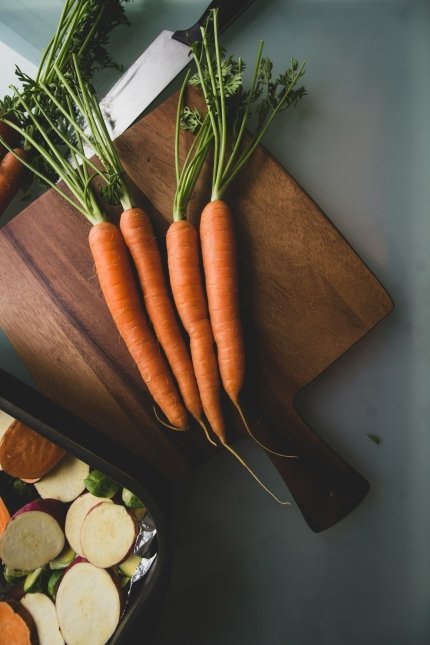
Why do carrots quickly become soft and shriveled?
The main cause of wilting is water loss.
In a warm or dry room, the root vegetable gradually loses elasticity, as its cells no longer maintain sufficient internal pressure.
This does not always mean that the carrots have gone bad.
Can carrots restore their elasticity?
If the carrots are only slightly wilted but show no signs of spoilage, they can sometimes be partially revived by briefly cooling them in clean, cold water.
However, this method does not completely restore the vegetable to its original quality.
If the root crop has become slippery, has an unpleasant odor, or has soft, rotten areas, it cannot be used.
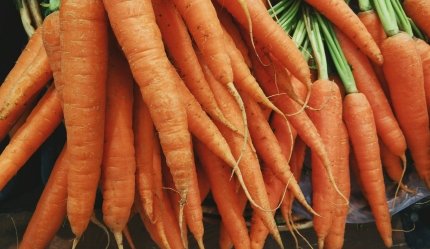
What to do with slightly wilted carrots
If there are no signs of spoilage, it can be used for soup, stew, or baking.
It is important to thoroughly wash the vegetable beforehand and check the condition of the tissues.
Don't confuse normal loss of elasticity with wet rot.
Why do carrots rot during storage?
Rotting may be due to initial contamination by microorganisms, damage to the root crops, or inappropriate conditions.
The combination of excessive moisture, elevated temperature, and poor air circulation is especially dangerous.
How to reduce the risk of rotting
For long-term storage, you need to select healthy carrots and prevent them from being mechanically damaged.
Do not place wet root vegetables in tight, airtight packages where condensation accumulates.
If a spoiled vegetable appears among the stocks, it should be removed immediately and the neighboring ones checked.
University agricultural services emphasize the importance of regular inventory inspections.
Damaged root crops should not be left among a healthy crop for several months.
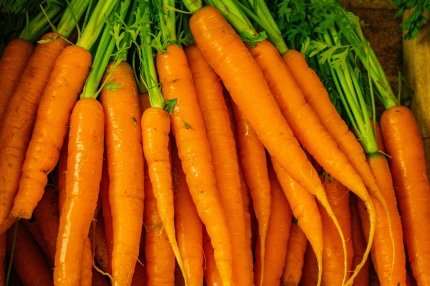
Why do carrots turn bitter during storage?
Not all taste changes are related to decay.
Sometimes carrots acquire an unpleasant bitterness due to the influence of ethylene.
Ethylene is a natural gaseous ripening regulator that is released by many fruits.
For example, apples and pears can be sources of ethylene.
According to agricultural research, prolonged contact of carrots with ethylene can contribute to the formation of a bitter taste.
What not to store carrots with
For long-term storage, it is best to avoid sharing a closed container with apples, pears, and other active sources of ethylene.
This is especially important in cellars and pantries with large stocks.
In a regular refrigerator, it is also advisable to keep carrots in a separate bag or vegetable compartment.
This helps reduce the effects of ethylene and maintain the necessary humidity.
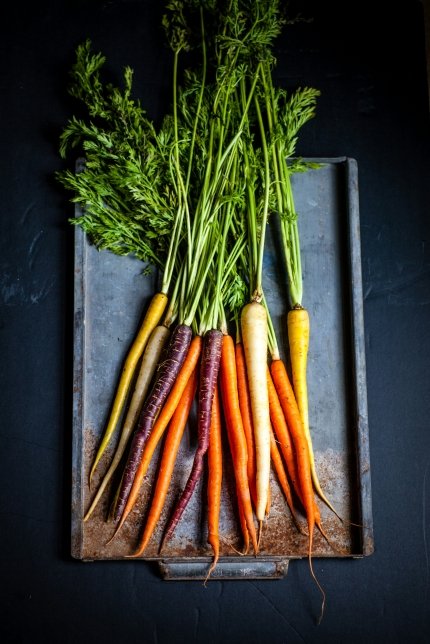
Can carrots be stored with potatoes and onions?
For long-term storage, these vegetables require different conditions.
Carrots need low temperatures and very high humidity.
Onions are best stored in a drier environment with proper ventilation.
Potatoes also have their own temperature requirements depending on the variety and purpose.
Therefore, it is not advisable to put carrots, onions, and potatoes in one tightly closed container.
If they are stored in the same cellar, it is better to provide separate areas.
How to tell if carrots are spoiled
Before use, you need to check the smell, surface, and density of the root crop.
Not every change in appearance indicates danger, but some signs are reason enough to abandon the product.
| Sign | What to do |
| The carrots are a little wrinkled, but remain firm. | Check condition, use soon |
| Minor surface damage | Remove the damaged part before cooking. |
| Soft wet areas | Cast out |
| Slippery surface and unpleasant odor | Cast out |
| Severe rot | Cast out |
| Mold on root vegetables | For a long-term home supply, it is safer to discard |
| Small white roots with no other signs of spoilage | Assess the condition and use in the near future |
For hard vegetables with a small localized area of mold, some food safety guidelines allow for cutting at least 2.5 cm around and below the affected area.
However, this does not apply to root vegetables with rot, slime, or significant mold growth.
If the condition of the carrot is in doubt, especially when you plan to give it to a child, it is better not to risk it.
Can I can carrots for the winter?
Yes, but the method of preservation matters for safety.
Carrots are low-acid vegetables.
For such products, there is a risk of developing bacteria that cause botulism if home canning is done incorrectly.
The US National Center for Home Food Preservation recommends using a special food-grade pressure-controlled autoclave and proven processing modes for canning regular carrots.
Conventional boiling of jars in water is not an equivalent substitute for such a procedure.
Pickled carrots with proven acidity are a separate category of preparations for which other technologies are used.
You should not can carrots according to random recipes without proven acidity and heat treatment parameters.
Seven mistakes when storing carrots
1. Leave the tops
The green part contributes to the loss of moisture from the root crop, so it is better to remove it before long-term storage.
2. Keep carrots uncovered in the refrigerator
Without protection from drying out, it can quickly lose its elasticity.
3. Use a wet sealed bag
Condensation buildup and lack of product condition monitoring can contribute to rotting.
4. Store the harvest in a warm basement
High temperatures accelerate the aging of root crops and increase the risk of germination.
5. Leave damaged vegetables among healthy ones
Root vegetables with cracks and other defects usually need to be used earlier.
6. Store carrots next to apples
Ethylene, which is released by fruits, can contribute to the appearance of a bitter taste.
7. Freeze carrots without preparation for a long time
Without blanching, the quality of vegetables may deteriorate more quickly during frozen storage.
How to organize a supply of carrots for the whole winter
For a household, it is most convenient to divide the harvest into several parts.
Leave a small amount in the refrigerator for future meals.
The bulk of healthy, undamaged root crops can be stored in a cold cellar if the conditions are right.
Carrots that are planned to be used for soups and stews should be pre-chopped, blanched, and frozen.
This approach reduces dependence on a single storage method.
For example, if the temperature in the cellar is unstable in winter, part of the harvest will remain available in the freezer.
At the same time, you should not accumulate more vegetables than you can actually use.
Even under proper conditions, some root vegetables lose quality over time, so stocks need to be checked regularly.
Conclusion
To keep carrots firm, juicy, and usable for as long as possible, they need coolness, high humidity, and protection from mechanical damage.
For a small supply, a refrigerator with appropriate packaging is the most convenient. For a large harvest, a cold cellar and slightly damp sand or sawdust are the best. And for ready-made vegetable preparations, a practical solution is freezing after blanching.
The most important thing is to remove the tops, select healthy root crops, prevent condensation, and regularly check the stocks.
The right combination of temperature, humidity, and preparation allows you to store carrots throughout the winter without unnecessary losses.
FAQ: Frequently Asked Questions About Storing Carrots
What is the best way to store carrots in the refrigerator?
Remove the tops, remove excess surface moisture and place the root vegetables in the vegetable compartment. It is convenient to use a perforated bag or suitable container, which helps reduce moisture loss without accumulating condensation.
How long do carrots last in the refrigerator?
For regular homegrown carrots, it is practical to aim for a few weeks, often around 2–4. Under the right conditions, individual batches can remain of good quality for longer. The period depends on the freshness, temperature and condition of the roots.
Can carrots be stored in a plastic bag?
Yes. Perforated bags can help maintain the right humidity. However, you need to prevent condensation from building up and check the vegetables periodically.
How to store carrots for the winter without a cellar?
For an apartment, it is most convenient to combine a refrigerator and freezer. A small supply is left fresh, and the rest is cleaned, cut, blanched and frozen as needed.
Do I need to wash carrots before storing them in the cellar?
For long-term storage, it is usually best to select unwashed roots, carefully removing excess soil. If carrots are washed, avoid damage and remove excess surface water before planting.
How to properly store carrots in sand?
Use clean, slightly damp sand. Place the roots in layers, sprinkling them so as to minimize contact between them. The container should be kept in a cool place, avoiding freezing or water accumulation.
Why do carrots become soft during storage?
The most common cause is moisture loss in a warm or dry environment. However, softness along with mucus, an unpleasant odor, or wet spots may indicate rot. Such carrots should not be consumed.
Can you freeze raw carrots without cooking?
Freezing without blanching is possible, but quality may deteriorate during long-term storage. To best preserve color, flavor, and texture, it is recommended to blanch sliced carrots for two minutes and small whole carrots for five minutes.
Can carrots be stored with apples?
For long-term storage, it is better to separate these products. Apples emit ethylene, which can contribute to the appearance of a bitter taste in carrots.
How many months can carrots be stored in the cellar?
At temperatures around 0–2 °C, very high humidity and proper preparation, carrots can be stored for approximately 4–6 months. This is an approximate period that depends on the variety, the state of the crop and the stability of the conditions.
The material is for informational purposes only. Improper storage and preservation of vegetables can pose a risk of food poisoning. Self-medication can be harmful to health. If you experience symptoms of food poisoning, you should first consult a doctor.

