
Walnuts can be stored for months, but only under the right conditions. If you leave shelled kernels in an open bag in a warm kitchen, they will gradually lose their fresh aroma, darken, and acquire an unpleasant bitter taste. And insufficiently dried walnuts in their shells can become moldy even in a cool room.
The reason lies in the composition of walnuts. They contain a lot of fat, a significant part of which is unsaturated. Under the influence of oxygen, heat and light, these fats gradually oxidize. That is why nuts require different storage conditions than cereals or flour.
It is best to store shelled walnuts in an airtight container in the refrigerator at a temperature of approximately 0–5 °C. For long-term storage of more than six months, it is more practical to use a freezer at a temperature of −18 °C. Shelled nuts can be kept in a cool, dry place, but they must be thoroughly dried first.
We'll figure out how to preserve your walnut harvest for the winter, what container to choose for peeled kernels, whether you can use a balcony or basement, how to properly freeze nuts, and what signs to look for to determine that they are no longer suitable for consumption.
Why do walnuts turn bitter and spoil during storage?
The main factors that affect the quality of nuts are temperature, oxygen, humidity, and storage duration.
Walnuts contain a significant amount of polyunsaturated fatty acids. These include alpha-linolenic acid, a plant-based omega-3 fatty acid.
These fats are an important component of the nutritional value of the product, but at the same time are sensitive to oxidation.
When fats interact with oxygen, compounds are gradually formed that change the taste and smell of nuts. This process is called oxidative rancidity.
At first, the changes may be almost imperceptible. Over time, the nuts lose their pleasant aroma and acquire a pungent, musty, or chemical odor.
What shortens the shelf life the most?
Heat. At elevated temperatures, chemical reactions, including the oxidation of fats, occur faster.
Oxygen. Prolonged contact with air contributes to the deterioration of unsaturated fats.
Light. Direct sunlight is especially undesirable, as it can accelerate changes in the product.
Moisture. Creates conditions for mold to develop, especially if the nuts are not dried enough.
Kernel damage: Crushed or broken nuts have a larger exposed surface area, so they lose freshness more quickly.
It is important to distinguish between rancidity and mold. These are different processes, although both indicate a deterioration in the quality of the product.
Where is the best place to store walnuts: in the cupboard, refrigerator or freezer?
Storage conditions should be chosen depending on whether the nuts are shelled and how quickly you plan to use them.
For a small amount that will be eaten in the near future, a refrigerator is sufficient.
If you have purchased several kilograms of peeled kernels for baking throughout the winter, it is more advisable to divide them into portions and freeze them.
Nuts in their shells are better protected from external influences, so under certain conditions they can be stored in a cool, dry room.
Comparison of storage methods
| Place | Conditions | Which nuts is suitable for? |
| Kitchen cabinet | Cool, dry, no sun | Small stocks for quick use |
| Pantry | Stable low temperature, dry air | Well-dried nuts in shell |
| Refrigerator | Approximately 0–5 °C | Shelled and unshelled nuts |
| Freezer | Approximately −18 °C | Best for long-term storage |
| Cellar | Only if it is dry, cool and free of pests | Mostly nuts in shell |
| Balcony | Temperature and humidity may fluctuate | Not the most reliable place |
The above conditions primarily concern the preservation of the quality of the product. The actual period depends on the initial freshness, degree of drying, packaging and temperature stability.
How to store shelled walnuts
Peeled kernels require special attention because after the shell is removed, they are in direct contact with the air.
If you buy peeled nuts by weight, it is better to immediately transfer them to a clean, airtight container.
Do not leave kernels in a thin, open package, especially near a stove or oven.
Cold storage
For shelled walnuts, a temperature of approximately 0–5 °C is recommended.
If properly packaged, they can maintain good quality for up to six months, although the specific period depends on the initial condition of the product.
For the refrigerator, the following are suitable:
a glass jar with a tight lid;
airtight food container;
factory packaging, if it is not opened;
special package with a secure lock.
The most important thing is to protect the kernels from moisture, foreign odors, and contact with air.
Walnuts can absorb odors from nearby foods, so they should not be stored open next to fish, onions, smoked meats, or aromatic cheeses.
Can peeled nuts be stored in the cupboard?
It is possible, but this solution is more suitable for small quantities that you plan to use quickly.
In a warm kitchen cabinet, nuts gradually oxidize faster than in the refrigerator.
Particularly undesirable places are above the oven, near the stove or next to heating pipes.
If the kitchen regularly warms up to 25–28 °C, it is not worth leaving a significant supply of cleaned kernels there for several months.
For long-term storage, cold is much more reliable.
How to properly store walnuts in their shells
The shell acts as a natural protective barrier.
It reduces direct contact of the core with the external environment and partially protects it from mechanical damage.
Therefore, unshelled nuts can retain their flavor longer under proper conditions.
However, the shell itself does not guarantee the safety of the product.
If excess moisture remains inside, the kernel can spoil even without noticeable changes on the outside.
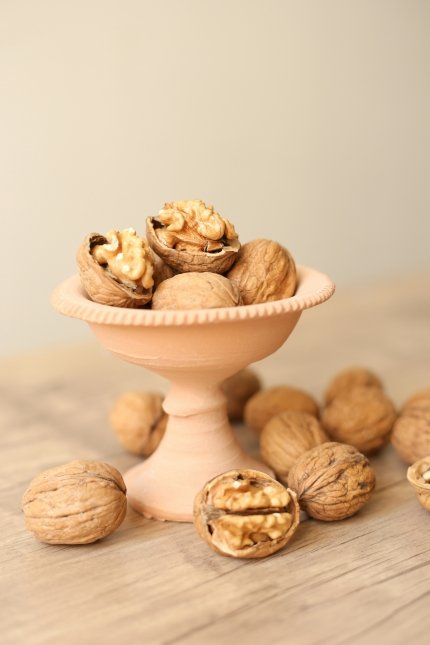
The best conditions for nuts in their shells
For home storage, it is important to ensure:
dry environment;
low and relatively stable temperature;
protection from direct sunlight;
absence of rodents and insects;
sufficient drying after harvesting;
regular stock checks.
In a cool, dry place, properly prepared nuts in their shells can be stored for many months.
However, to preserve the flavor as long as possible, it is advisable to keep even unshelled nuts in the cold.
How to store nuts in their shells
For a dry pantry, you can use mesh bags, clean boxes, or other containers that allow air circulation.
This is especially important if the nuts are recently harvested and still undergoing final drying.
Do not seal wet nuts tightly in plastic bags or airtight jars.
If the nuts are completely dried and intended for the refrigerator or freezer, airtight packaging, on the contrary, helps preserve their quality.
Therefore, packaging requirements depend on the stage of product preparation.
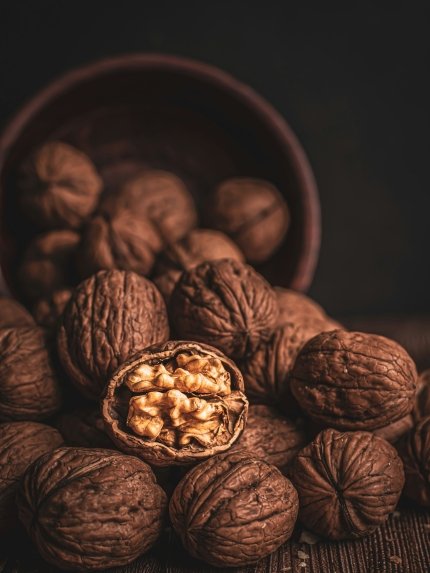
How to dry walnuts after harvesting
If the nuts are harvested from your own garden, proper drying is one of the most important steps in preparing for winter.
Freshly picked fruit may contain too much moisture for long-term storage.
If you immediately put them in a bag and leave them in a warm room, the risk of mold development will increase.
Step-by-step preparation of fresh nuts
Sort through the harvest. Discard fruits with damaged shells, signs of rot, or mold.
Remove the green skin. The outer green skin will crack when ripe. This should be removed before drying.
Clean the surface of the shell. If necessary, you can quickly rinse off any remaining dirt with water.
Spread the nuts in a thin layer. Use mesh trays or another surface that allows air circulation.
Provide ventilation. Air should flow around the nuts during drying.
Control the temperature. The optimal drying temperature for walnuts, according to agricultural experts, is approximately 35–41 °C.
Check for doneness. Crack open a few nuts from different parts of the batch and assess the condition of the kernels and internal partitions.
Home drying may take several days depending on temperature, humidity, and ventilation intensity.
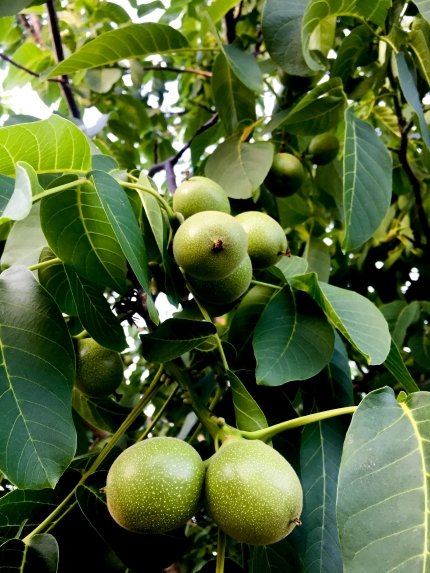
Why you shouldn't dry nuts at too high a temperature
Increasing the temperature accelerates the evaporation of moisture, but excessive heating can deteriorate the quality of the nuts.
At temperatures above approximately 43 °C, the risk of undesirable changes in taste and texture increases.
Therefore, there is no need to try to dry fresh nuts as quickly as possible using a very hot oven.
A regular household oven often does not allow for accurate low temperature maintenance with sufficient air circulation.
For large batches, it is more convenient to use appropriate drying equipment or a well-ventilated area with controlled conditions.
How to tell if walnuts are dry enough
The appearance of the shell does not always provide reliable information about the moisture content of the kernel.
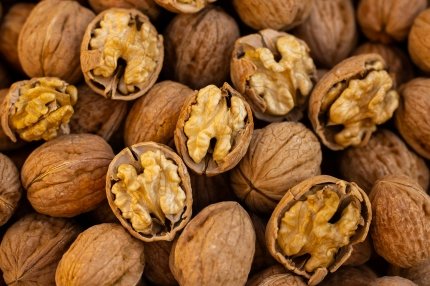
Therefore, to check, you need to crack a few nuts.
A well-dried kernel usually breaks with a characteristic crunch, rather than bending.
Another sign is the internal partition between the halves of the nut. In a sufficiently dry fruit, it becomes brittle and breaks.
If the septum remains elastic or rubbery, the nuts may need additional drying.
It is important to check not one random fruit, but several nuts from different parts of the batch.
Crunch is a household reference, not an accurate measurement of moisture. For large volumes of products, special control methods are used.
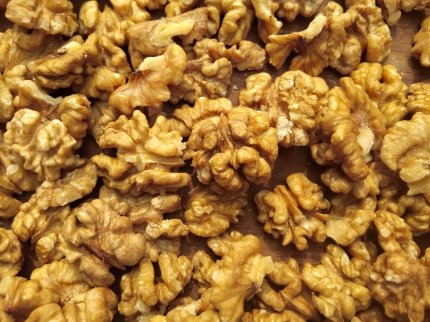
How long can walnuts be stored?
The shelf life depends on whether the nuts are peeled, how fresh they are, what kind of container they are in, and whether the temperature is maintained stably.
For well-dried and high-quality packaged walnuts, the following guidelines can be used.
| Storage method | Estimated shelf life |
| Shelled nuts in a cool cupboard | For short-term use |
| Shelled nuts in the refrigerator | Up to 6 months |
| Shelled nuts in the freezer | More than 6 months, often up to a year or longer |
| Nuts in their shells in a dry, cool pantry | Many months under the right conditions |
| Nuts in their shells in the refrigerator | Up to several months or longer |
| Nuts in their shells in the freezer | For long-term storage |
These terms relate primarily to quality and do not guarantee the suitability of any particular batch.
If the nuts were already old at the time of purchase, the refrigerator will not restore their freshness.
For long-term storage, it is advisable to immediately choose freezing.
Can walnuts be frozen?
Yes. Freezing is one of the most effective ways to preserve the flavor of walnuts for a long time.
Low temperature significantly slows down the oxidation of fats and other processes associated with deterioration of product quality.
At a temperature of around −18 °C, properly prepared nuts can be stored much longer than in a kitchen cupboard.
You can freeze both peeled kernels and nuts in their shells.
However, for home use, peeled kernels are more convenient: they take up less space and do not require splitting after defrosting.
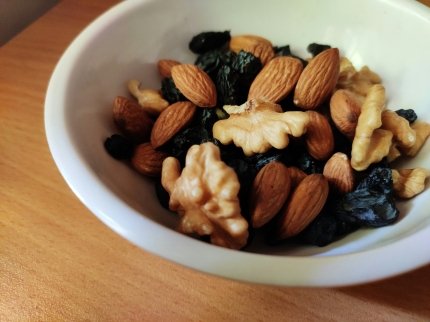
How to properly freeze peeled kernels
Sort through the nuts and remove any damaged or suspicious ones.
Make sure the kernels are dry.
Divide the stock into small portions.
Transfer to freezer bags or airtight food containers.
Remove as much excess air from the bags as possible without damaging the kernels.
Mark the date of freezing.
Place in the freezer at −18 °C.
For home baking, it is convenient to pack nuts in 100–200 g packages.
If you bought two kilograms of kernels, it is better to prepare ten small packages than to freeze the entire volume in one container.
Does the taste of nuts change after freezing?
With proper packaging and a stable temperature, walnuts usually tolerate freezing well.
Their texture remains suitable for baking, salads, cereals, and desserts.
The most common problems arise from damaged packaging, absorption of foreign odors, or condensation after defrosting.
That is why it is important to use airtight containers.
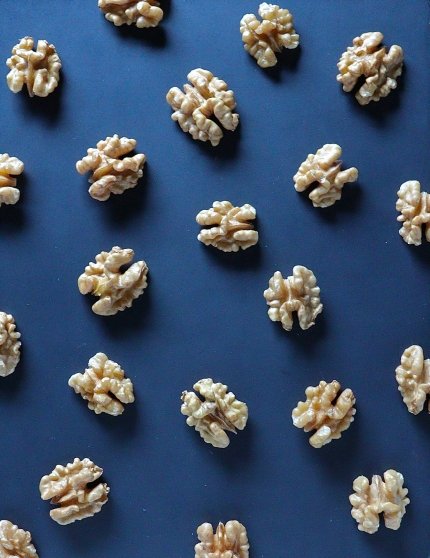
How to properly defrost walnuts
Nuts do not need to be thawed for a long time before use.
For many baked goods, small portions can be added directly after removing from the freezer, if the recipe allows it.
For salads or consumption without additional heating, it is better to let the nuts warm up gradually in a closed container.
This helps reduce the risk of condensation forming directly on the cores.
Why you shouldn't leave frozen nuts uncovered in a warm kitchen
When a cold product comes into contact with warm, humid air, moisture can condense on its surface.
If the nuts are then resealed and stored for a long time, the quality of the product may deteriorate.
Therefore, it is best to defrost only the amount you need.
Repeated freezing in itself does not necessarily make dried nuts unsafe, but repeated temperature changes and moisture exposure can degrade their quality.
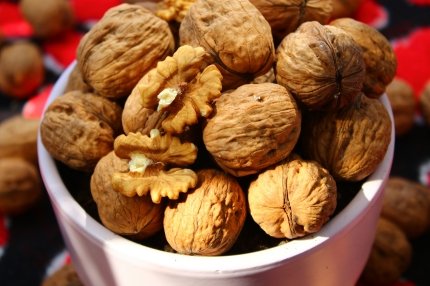
What is the best way to store walnuts: a jar, container, or bag?
The choice of container depends on the storage conditions.
For dry, cleaned kernels that are planned to be kept in the refrigerator or freezer, the main requirement is sufficient tightness.
For recently harvested nuts in their shells that are still drying, on the contrary, air circulation is important.
Glass jars
A glass jar with a tight-fitting lid works well for shelled nuts in the refrigerator.
It does not let in foreign odors and allows you to see the condition of the product.
However, regular glass jars are not always freezer-friendly, especially if they are overfilled or not designed for freezing.
Plastic containers
A high-quality food container with a seal is a practical option for everyday use.
It is convenient to open it, take out the right amount of nuts, and return it to the refrigerator.
Check whether the manufacturer allows the use of a particular container at low temperatures.
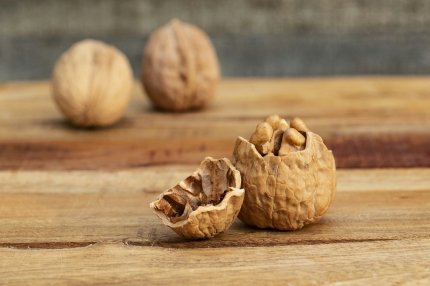
Freezer bags
They take up less space and allow you to divide a large supply into portions.
It is better to use bags specifically designed for the freezer.
Thin, regular bags may not adequately protect the product from air and foreign odors.
Fabric bags
Fabric and mesh bags are best suited for dry nuts in their shells.
Their advantage is ventilation.
However, they do not protect against room humidity, insects, and rodents.
Therefore, they can only be used under appropriate conditions.
Can you store walnuts on the balcony?
The balcony seems like a convenient place for autumn and winter supplies, especially if it's cool there.
However, the temperature and humidity there can fluctuate significantly.
During a thaw, the air becomes more humid, and condensation sometimes forms on surfaces.
On a glazed balcony under the sun, the temperature can rise even in winter.
Due to such changes, it is difficult to ensure stable conditions for nuts.
For short-term storage of well-dried fruits in their shells, a balcony can sometimes be suitable, but only in the absence of moisture and sudden temperature fluctuations.
For cleaned kernels, a refrigerator or freezer is much more reliable.
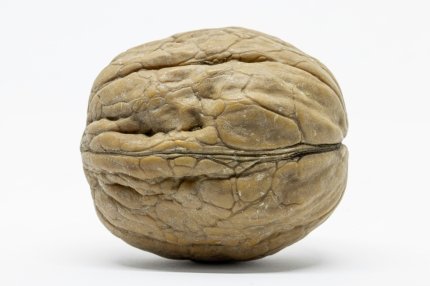
Is a cellar suitable for storing walnuts?
A basement can be suitable for dry nuts in their shells if it is consistently cool and there is no excessive humidity.
However, coolness alone does not guarantee good conditions.
Mold can develop in a damp cellar, especially if the nuts are stored in tight bags without ventilation.
You also need to take into account the presence of rodents and insects.
If the walls are damp, condensation appears on the floor, or the room has a distinct musty smell, it is not worth storing a significant supply of nuts there.
How to properly store ground walnuts
Crushed nuts usually lose freshness faster than whole kernels.
The reason is the increase in the surface area that comes into contact with oxygen.
This is especially true for finely ground nuts for cakes, cookies, and fillings.
Therefore, it is best to grind the kernels immediately before use.
If you need to prepare the nut crumbs in advance, you should place them in an airtight container and keep them in the refrigerator.
For longer storage, you can use the freezer.
Don't leave ground nuts in an open bowl in the kitchen for several days.

Do you need to roast nuts before storing?
Roasting changes the taste and aroma of nuts, but is not a mandatory preparation method for long-term storage.
During heating, substances are formed that give the kernels a characteristic roasted flavor.
However, after frying, the effect of temperature on fats and subsequent packaging conditions must be taken into account.
If you plan to store nuts for many months, it is easiest to freeze high-quality dry kernels without pre-roasting them.
You can brown them immediately before cooking.
How to store already roasted nuts
First, let them cool completely.
Then transfer to a clean airtight container.
To preserve the flavor for a long time, use the refrigerator or freezer.
Do not seal hot nuts in a jar: steam and condensation can moisten the product.
How to tell if walnuts have gone bad
Not all signs of spoilage are equally noticeable.
Sometimes nuts look normal but already have an unpleasant odor due to oxidation of fats.
In other cases, signs of mold may appear on the shell or kernels.
What do fresh and rancid nuts smell like?
Fresh walnuts usually have a mild, characteristic nutty aroma.
Rancid ones may smell like old oil, paint, solvent, or have a sharp, unpleasant odor.
If the kernels have an unusual chemical or musty smell, they should not be consumed.
There is no need to taste suspicious nuts to be completely sure of their unsuitability.
What external signs are dangerous?
Kernels with the following characteristics should be rejected:
visible mold;
fluffy or powdery coating of unknown origin;
traces of insects or larvae;
unusual wetness or slipperiness;
a distinct musty smell;
severe wrinkling and obvious signs of deterioration.
A darker shade of kernel does not always mean moldy, as the color of walnuts naturally varies depending on the variety and growing conditions.
However, the combination of color change with an unpleasant odor, plaque, or moisture is a good reason to discard the product.
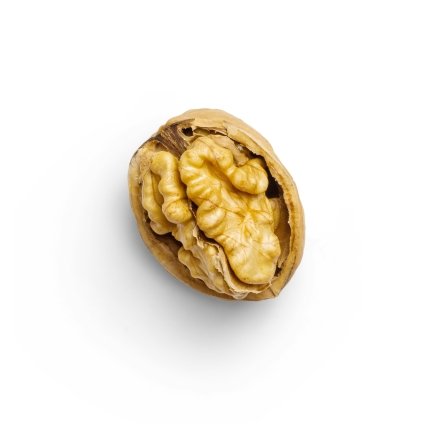
How dangerous is mold on walnuts?
Some molds can produce mycotoxins, toxic substances that can contaminate food.
Among them, aflatoxins are of particular importance, which can be produced by certain species of fungi of the genus Aspergillus.
Nuts are among the products that can be subject to such contamination under adverse conditions.
It is important to understand that not every case of mold necessarily involves the formation of aflatoxins. However, it is impossible to determine the safety of a suspicious kernel at home by its appearance.
Can you remove the moldy one and eat the rest?
If a nut shows signs of mold, it should be thrown away.
You should not try to cut off the affected part or wash the core.
Mycotoxins may be present not only where plaque is visible.
If a few moldy kernels are found in a package, you should carefully assess the condition of the entire batch. If there are signs of widespread contamination, moisture, or a musty smell, it is better not to use it.
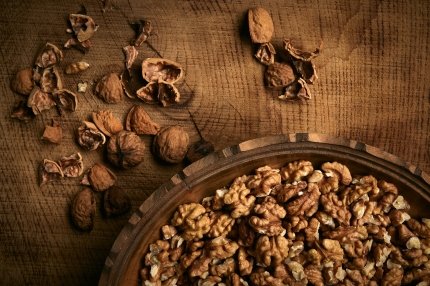
Does frying destroy hazardous substances?
Home roasting does not guarantee the removal of mycotoxins.
Many of these compounds are relatively heat-stable and can be preserved after normal cooking.
Therefore, moldy nuts cannot be considered safe after heating in the oven or in a frying pan.
Can you save rotten walnuts?
If the nuts have acquired a distinct rancid smell and taste, it is impossible to restore them to their original quality.
Soaking in water, roasting, adding honey or sugar do not eliminate fat oxidation products.
Such methods may temporarily mask an unpleasant taste, but do not restore freshness.
You should not use rancid nuts for pies, cakes, or homemade sweets.
It is better to prevent the problem by storing the kernels in the cold and dividing them into small portions.
How to choose walnuts for long-term storage
Even the best conditions do not compensate for poor initial quality.
Therefore, it is important to choose the right product for winter storage.
What to look for when buying
Packaging date: For packaged nuts, check the expiration date and manufacturer's recommendations.
Terms of sale: Kernels that lie in open containers in a warm room for a long time may lose freshness more quickly.
Integrity: Halves and large pieces are usually better for storage than small crumbs.
Smell. Good quality nuts should not have a musty, sour, or pungent chemical smell.
Condition of the packaging. It must be intact, dry and without signs of moisture.
If nuts are purchased in their shells, pay attention to the integrity of the shell.
Cracks, pest holes, or signs of mold increase the risk of kernel spoilage.
What is better to buy: peeled nuts or in shells?
For small quantities used in everyday eating, peeled kernels are more convenient.
If you are buying a seasonal harvest for several months, nuts in their shells can be a practical solution if you have a dry, cool place.
At the same time, the shell increases the volume of the stock, and the quality of the kernel is more difficult to check without splitting.
Shelled nuts are usually more convenient for the freezer because they take up less space.
How to preserve several kilograms of nuts for the whole winter: a practical example
Let's imagine that in the fall you bought three kilograms of shelled walnuts.
If you leave them in a large bag in the kitchen, each opening will increase the contact of the entire supply with air.
It is more convenient to use portioned storage.
For example:
Go through the cores and check their condition.
Set aside 200–300 g for the coming weeks.
Transfer this portion to an airtight jar and refrigerate.
Divide the rest into 150–250 g bags.
Remove excess air and seal the bags tightly.
Mark the date of packaging.
Freeze the stock.
Only take out the amount you need for a specific dish.
This approach helps reduce the frequency of opening large packages and makes inventory control easier.
For nuts in their shells, the principle is similar, but you need to make sure they are completely dried before packaging.
The most common mistakes when storing walnuts
Even high-quality nuts can quickly lose their flavor due to improper conditions.
Storing peeled kernels near the stove. Heat accelerates the oxidation of fats.
Using open packages. Nuts are in contact with air and can absorb foreign odors.
Packaging wet crops. Conditions for mold growth are created inside the container.
Storage on a damp balcony. Temperature changes and condensation can deteriorate the condition of the product.
Storage next to odorous products. The kernels may acquire a foreign aroma.
Grind the entire supply in advance. Nut crumbs come into contact with oxygen more quickly.
Defrosting a large batch. After that, it is more difficult to protect the remainder from moisture and temperature fluctuations.
Trying to restore rancid nuts by roasting them. Unpleasant changes in fats do not disappear with heating.
Ignoring signs of mold. Infected nuts can pose a health risk.
Lack of labeling on packages. Without a packaging date, it is more difficult to control which supplies should be used first.
Conclusion
To prevent walnuts from going bitter and retaining their natural flavor, they need to be protected from heat, oxygen, moisture, and light.
For shelled kernels, an airtight container in the refrigerator is best, and for long-term storage, a freezer is best. Nuts in their shells can be stored in a cool, dry place if they are properly dried after harvesting.
The most important thing is to start with a quality product, divide the stock into small portions, and regularly check its condition. Do not try to restore rancid or moldy nuts: such products should be removed from consumption.
FAQ: Frequently Asked Questions About Storing Walnuts
How to properly store peeled walnuts at home?
It is best to store them in an airtight jar or container in the refrigerator at a temperature of about 0–5 °C. If you plan to use the nuts in a few months, it is more convenient to divide them into portions and freeze them.
How long can walnuts be stored without shells?
When properly packaged and stored at 0–5 °C, shelled nuts can remain in good condition for up to six months. In the freezer, longer. The actual shelf life depends on the freshness of the kernels and the stability of the conditions.
Can walnuts be stored in the freezer?
Yes. Freezing at a temperature of around -18°C helps slow down the oxidation of fats. It is best to pack dry kernels in small portions in airtight bags or freezer-safe containers.
How to store walnuts in their shells for the winter?
First, they need to be properly dried. After that, the nuts can be stored in a cool, dry place, protected from insects and rodents. To preserve the flavor for as long as possible, a refrigerator or freezer is also suitable.
Can you store nuts in a glass jar?
Yes, if the kernels are completely dry and the jar is clean and has a tight lid. This type of container is especially convenient for the refrigerator. Wet or insufficiently dried nuts cannot be hermetically sealed.
Why did walnuts turn bitter?
This may be due to oxidation of unsaturated fats during long-term storage, especially in warm conditions. If the nuts have a distinct rancid, musty, or chemical odor, it is best not to consume them.
How do you know if walnuts are well dried?
Crack a few nuts open. Well-dried kernels will usually break with a crunch, and the internal partitions will become brittle. If they remain elastic, the nuts may need additional drying.
Can walnuts be stored on the balcony?
It is possible only in consistently dry and cool conditions, but a balcony is not the most reliable place. Temperature changes, condensation and humidity can deteriorate the quality of nuts. For peeled kernels, it is better to use a refrigerator.
Can you eat walnuts with mold after roasting?
No. Some molds can produce mycotoxins that are not guaranteed to be destroyed during normal home roasting. Nuts with visible mold should be discarded.
What keeps better: whole kernels or crushed nuts?
Whole kernels usually stay fresh longer because they have less exposed surface area. Crushed nuts come into contact with oxygen more quickly, so it's best to grind them just before use or store them airtight in the refrigerator.

