

A dog in the front seat, a cat in the passenger's arms, or a small dog moving freely around the cabin may seem like ordinary situations. However, even a calm pet can suddenly get scared, jump up to the driver, or end up near the pedals. And during sudden braking, an unsecured pet risks getting injured. Safe transportation of pets in a car requires preparation. You need to choose the right place for the animal, ensure its fixation, maintain a comfortable temperature, and take into account the peculiarities of behavior while driving.
The safest approach is to transport cats and small animals in appropriate, secure carriers, and dogs in special car harnesses or transport boxes. The animal should not move freely around the cabin, be on the driver's lap, or interfere with driving.
For long journeys, getting used to the car, drinking water, regular stops, and preventing motion sickness are also important. If the route crosses a state border, an additional check of the veterinary requirements of the destination country will be required.
Let's consider how to transport dogs, cats, and other pets, what restraints to choose, what to do if an animal gets sick while traveling, and what rules apply in Ukraine in 2026.
Why it is necessary to secure an animal in a car
Even a well-behaved dog that usually lies calmly on a seat can change its behavior due to a loud beep, sudden braking, or an unfamiliar sound.
A cat can hide under the driver's seat, and a small animal can get into the space near the pedals.
This creates a danger for all road users.
According to the recommendations of the American Veterinary Medical Association (AVMA), dogs should be transported using appropriate restraints, and cats should be transported in closed carriers.
Restraint serves two purposes: it limits dangerous movement of the animal and can reduce the risk of injury during a sudden stop.
Why you can't carry an animal in your arms
During a collision or sudden braking, it may be impossible to hold the animal with your hands.
For example, a dog weighing 15 kg continues to move due to inertia during an accident. This poses a threat to both it and the passengers.
You also cannot use the same seat belt for a person and an animal.
A regular car seat belt is designed with the anatomy of a human being in mind, not a dog or cat.
Pets need specially designed products.
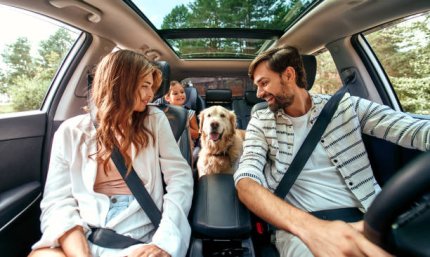
What are the rules for transporting animals in Ukraine in 2026?
The transportation of pets is regulated by general road safety requirements and special rules for transporting animals.
Clause 2.3 "b" of the Road Traffic Rules of Ukraine obliges the driver to be attentive, monitor the road situation and not be distracted from driving.
Therefore, the animal should not obstruct the driver.
The Main Service Center of the Ministry of Internal Affairs separately emphasized in November 2026 that pets should not move freely around the cabin or sit on the driver's lap.
What do the special rules provide?
The procedure for transporting animals is determined by Resolution of the Cabinet of Ministers of Ukraine No. 1402.
In 2025, the government updated regulations regarding the transportation of pets by road.
In particular, paragraph 44 provides for special means for transporting small pets, small dogs and cats weighing up to 10 kg.
At the same time, separate provisions regarding the redemption of passenger seats, muzzles, and accommodation of dogs apply to transportation by carriers. They should not be mechanically transferred to the use of one's own passenger car.
For a personal car, the main thing is to ensure the safe placement of the animal, proper fixation, and the absence of obstacles to driving.
Important: There is no universal fine that automatically applies to every case of transporting a dog without a special harness in a private car. However, violating driving rules or creating a dangerous situation may have corresponding legal consequences.

How to properly transport a dog in a car
The method of transportation depends on the size of the dog, the design of the vehicle, and the available space.
For small dogs, you can use sturdy carriers. For medium and large dogs, you can use car harnesses or special transport boxes.
The main selection criterion is not only comfort, but also the ability of the equipment to hold the animal during sudden braking.
Special car harness
A car harness covers the dog's torso and distributes the load to the appropriate areas of the body.
It is used together with the manufacturer's mounting system to the vehicle.
It is important to choose a harness for transportation, not a regular walking model.
Some products have independent impact test results.
This may be an additional selection criterion.
Do not fasten your dog to the car seat belt by the collar. This can put dangerous strain on the neck during sudden braking.
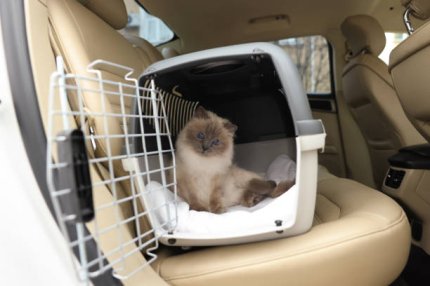
Dog transport box
For large dogs and long trips, a special car box can be a convenient solution.
It must match the size of the animal and be securely attached to the vehicle structure.
The dog should be able to assume a natural body position, turn around, and lie down.
However, an excessively large box is not always safer: during a collision, the animal can move more inside.
Therefore, you need to take into account the recommendations of the manufacturer of a specific model.
How to transport a cat in a car without unnecessary stress
For cats, a closed carrier is usually the best solution.
Unlike many dogs, cats often react acutely to unfamiliar sounds, smells, and movement.
In an open cabin, a frightened animal may try to hide under a seat or escape through an open door.
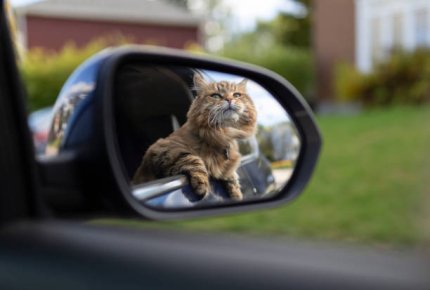
Which carrier to choose?
Preference should be given to a sturdy structure with reliable locks and sufficient ventilation.
It is desirable that the carrier has a solid bottom and is easy to clean.
For long trips, models that open not only from the front, but also from the top can be convenient.
The size should be chosen so that the cat can comfortably sit inside.
Carrying too tightly will cause discomfort.
Where to place the carrier
According to recommendations from veterinary cat behavior experts, one safe option may be to place the carrier on the floor behind the front seat, if the car's design allows it to be installed stably.
Another option is a rear seat with fixation according to the carrier manufacturer's instructions.
Not every carrier is designed for the same method of fastening with a car belt.
Check that the belt is not squeezing the body and that the container cannot tip over.
Do not open the carrier while moving, even if the cat is meowing loudly.
Can I transport an animal in the front seat?
For safe transportation of animals, it is usually best to use the rear of the passenger compartment or a suitably equipped cargo area of the vehicle.
The front passenger seat can be dangerous due to the front airbag.
When it is triggered, the animal risks serious injuries.
The AVMA recommends avoiding transporting dogs in the front seat equipped with an airbag.
In addition, an animal next to the driver can distract him while driving.
The most important thing is to prevent your pet from coming into contact with the controls.
Is it safe to transport a dog in the trunk?
The answer depends on the body type.
In a hatchback, station wagon or SUV, the luggage compartment is often connected to the passenger compartment.
Under certain conditions, a special car box can be placed there.
However, ventilation, appropriate temperature, and secure fastening must be ensured.
It is important to understand that a regular mesh partition primarily restricts the dog's movement into the cabin. It does not necessarily provide sufficient protection for the animal itself during an accident.
Why you can't transport an animal in the trunk of a sedan
A regular closed trunk of a sedan is not designed to transport live animals.
It may have insufficient ventilation, unacceptable temperatures, and a lack of proper protective equipment.
A folded rear seatback does not automatically turn such a trunk into a safe space.
You should not transport a cat or dog in an isolated luggage compartment.
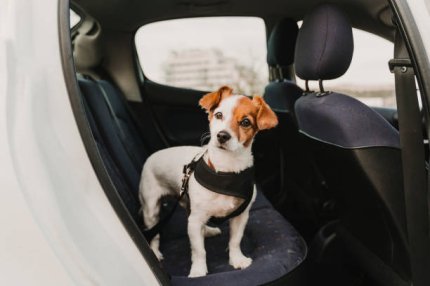
Baby carrier or car harness: what to choose?
The optimal solutions are different for different animals.
| Animal | Practical option | What to look out for |
| Cat | Sturdy closed carrier | Locks, ventilation, fixing |
| Small dog | Baby carrier or car harness | Compatibility with animal weight |
| Medium dog | Car harness or box | Reliability of fastening |
| Big dog | Special transport box | Dimensions and collision protection |
| Rabbit | Ventilated carrier | Silence, temperature, protection from stress |
| Parrot | A suitable fixed cage | Stability and absence of dangerous objects |
You don't need to focus only on the words "automotive" on the packaging.
Check the design, permissible weight, mounting method, and the availability of independent tests, if the manufacturer claims them.
How to train a dog or cat to ride in a car
The first trip should not immediately last several hours.
A sudden change in environment can cause fear even in a calm animal.
Veterinary medicine centers recommend gradual accustoming to being carried and to the car.
Stage 1. Getting to know the carrier
Place the carrier in a familiar place at home.
Allow the animal to explore it on its own.
You can put a familiar bedding or favorite toy inside if it is safe.
There is no need to forcibly confine an animal for a long time.
Stage 2. Getting to know a stationary car
When your pet is calmly in a carrier or harness, you can introduce him to the car without a trip.
It is important that the car is parked in a safe place and that the temperature inside is comfortable.
Stage 3. Short trip
Start with a few minutes of movement.
Gradually increase the duration, focusing on the animal's behavior.
If a dog or cat shows severe fear, there is no need to forcefully continue training.
The duration of addiction is individual.
What to do if your dog or cat is sick in the car
Choking is a common problem when traveling by car with pets.
It may manifest as drooling, frequent licking, restlessness, vomiting, or unusual passivity.
However, similar symptoms sometimes occur due to fear, pain, or other health disorders.
Therefore, it is important not to self-diagnose.
How to reduce the risk of staggering
Plan a smooth ride without sudden acceleration and braking.
You should not give your animal a large portion of food right before the trip.
The CDC recommends that for many pets, you schedule feedings about 3–4 hours before departure.
However, the interval must be adjusted to the individual needs of the animal.
Puppies, kittens, and animals with certain medical conditions may require a different regimen.
Can sedatives be given?
You should not use human medications, sedatives, or anti-nausea medications on your own.
The AVMA recommends discussing medication support with your veterinarian.
Some drugs can affect breathing, heart rate, and other physiological functions.
If an animal regularly vomits in the car or has a severe fear of traveling, a veterinary evaluation is necessary.
What temperature in the cabin is safe for the animal?
A comfortable temperature depends on the species, age, health status, and characteristics of the particular animal.
Dogs with short muzzles, overweight animals, elderly pets, and animals with respiratory problems may be particularly sensitive to overheating.
Why you shouldn't leave your pet in a parked car
Even in relatively cool weather, the interior of a car can heat up quickly in the sun.
According to the CDC, the temperature inside a parked car can increase by about 11°C within the first ten minutes.
A partially open window does not provide sufficient protection.
Do not leave your dog or cat alone in a car, even for a short time, if there is a risk of overheating or hypothermia.
Don't rely solely on remote climate control. A technical malfunction, a low battery, or a system outage can quickly change the conditions inside.
How to recognize overheating
Warning signs may include excessive breathing with the mouth open, weakness, drooling, incoordination, vomiting, or loss of consciousness.
If heatstroke is suspected, emergency veterinary care is required.
The animal must be moved to a cool place and safe cooling initiated without delay in seeking help.
How to organize a long trip with a pet
If the route takes several hours, it is important to plan stops in advance.
The AVMA recommends that during long car trips, you make stops about every two hours to allow your dog to stretch out and relieve himself.
The frequency of stops may vary for different animals.
For example, an older dog or puppy may need them more often.
A cat in a carrier doesn't necessarily need to be walked at every stop.
It is important to consider his usual routine and the risk of escape.
What to bring with you
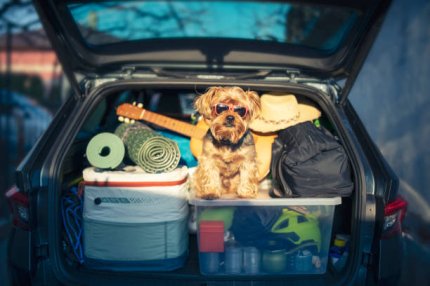
For a long car trip, it is useful to prepare:
Drinking water and a bowl.
Usual food.
Leash and harness.
Cleaning packages.
Bedding and spare absorbent material.
Wipes and cleaning products.
Required veterinary documents.
Medications that the animal receives as prescribed by a doctor.
Contact information of the owner in the address book.
When stopping on a busy road, do not let your pet out before the leash is securely fastened.
You should be especially careful when opening the door if the dog is excited or the cat is scared.
How to transport rabbits, parrots and other small animals
Safe transportation is not only necessary for dogs and cats.
A rabbit, guinea pig, hamster or parrot can also be injured during sudden braking.
For them, it is necessary to use a suitable closed cage or carrier.
It should be stable, ventilated, and securely placed in the car.

Why is it important to consider the characteristics of the species?
For example, rabbits can react acutely to stress and overheating.
Birds are sensitive to sudden changes in temperature, drafts, and certain aerosols.
Rodents may require specific feeding and temperature conditions.
Therefore, for unusual or exotic pets, travel rules must be separately agreed upon with a veterinary specialist who works with the relevant species.
Universal recommendations for dogs should not be used as a ready-made instruction for all animals.
What documents are needed to transport animals abroad?
If a road trip involves crossing a state border, it is necessary to check the veterinary requirements of the country of destination and transit countries in advance.
For dogs, cats, and pet ferrets, regulations typically include identification, rabies vaccination, and appropriate veterinary documentation.
However, specific requirements depend on the country and the nature of the movement.
What is needed to enter the EU from Ukraine?
As of November 2026, the rules for the non-commercial movement of pet animals into the EU are governed, in particular, by Delegated Regulation EU 2026/131, which applies from 22 April 2026.
For the relevant categories of animals, the following are provided:
Microchip identification.
Current vaccination against rabies.
Rabies antibody titer test, if required for the country of origin.
Veterinary certificate of the established sample.
Compliance with additional veterinary requirements of the country of destination.
For animals from countries where antibody testing is required, blood sampling is usually performed no earlier than 30 days after the primary vaccination. A required waiting period after blood sampling also applies.
This means that the preparation of documents may take several months.
Is a veterinary passport enough?
Not always.
The Ukrainian veterinary passport is not a universal replacement for an international veterinary certificate.
The State Food and Consumer Protection Service recommends starting preparations for international travel in advance and checking the requirements of a specific country.
Additional antiparasitic treatments or other procedures may be required for certain areas.
You should not plan to cross the border based solely on the validity of your vaccinations.
The most common mistakes when transporting animals in a car
Even owners with a lot of experience sometimes make mistakes that seem minor.
| Error | Why is this dangerous? |
| Dog sits on driver's lap | May interfere with driving |
| The cat moves freely around the cabin | Can get under the pedals |
| The dog is secured with a strap by the collar. | Possible neck injury |
| The carrier is not secured. | Can move during braking |
| Dog sticking its head out the window | Risk of eye injuries and falls |
| The animal is left alone in the car | Danger of overheating or hypothermia |
| Before the trip, sedatives are given without a prescription | Possible dangerous side effects |
| The animal is transported for the first time over a long distance | Higher risk of severe stress |
| The door is opened without controlling the animal. | The pet may run away |
| Use random fasteners | They may not provide the necessary protection |
The driver's main task is not only to deliver the animal to its destination, but also to ensure proper safety during the entire journey.
How to understand that an animal does not tolerate travel well
Not all animals react to cars the same way.
Some fall asleep peacefully in the carrier, while others may meow, whine, or show anxiety for a long time.
However, not every vocalization signifies a serious problem.
It is important to evaluate behavior in a complex way.
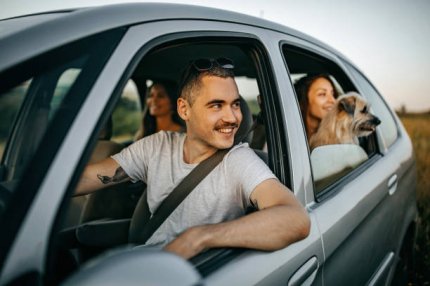
Signs that need attention
Possible signs of stress include trembling, increased salivation, attempts to escape, frequent licking, and restless behavior.
Particular attention should be paid to respiratory disorders, vomiting, severe weakness, and impaired coordination.
If symptoms are severe or unusual, veterinary attention is needed.
Don't just try to "train" your pet to travel by forcing them to stay in the car for long periods of time.
Gradual adaptation should take into account her reaction and health status.
Checklist before traveling with a pet
Check the basic conditions before starting the movement.
The animal is in a carrier, box, or appropriate car harness.
The carrier or restraint system is properly secured.
The animal cannot get to the pedals or interfere with the driver.
The cabin has a comfortable temperature.
Adequate ventilation is provided.
There is drinking water and necessary things.
A leash is prepared for safe stops.
The pet has a means of identification.
Stops are planned during the long route.
Veterinary documents checked, if required.
The animal has no symptoms that could make the trip dangerous.
Conclusion
Proper transportation of pets in a car begins with reliable fixation and a suitable place in the cabin.
For cats and small animals, a carrier is usually best. For dogs, a special car harness or transport box that is compatible with the animal's size and the design of the car is best.
During long journeys, you need to consider temperature, access to water, frequency of stops, and the possibility of swaying.
It is important to remember that even a short trip is not a reason to abandon safety measures.
And for international routes, it is necessary to separately check veterinary requirements and prepare documents in advance.
FAQ: frequently asked questions about transporting animals in a car
Can I transport a dog without a carrier?
Yes, you can use a special car harness with an appropriate fastening system for dogs. It must be suitable in size, hold the animal and not create a dangerous strain on the neck. Rules for public transport may differ.
Can I transport a cat without a carrier?
For your cat's safety, it is recommended to use a closed, sturdy carrier. Free movement in the cabin creates the risk of getting caught under the pedals and escaping during stops.
Can a dog sit in the front seat?
It is usually safer to place your dog in the back. A front passenger seat with an active front airbag may pose an additional risk of injury to the animal.
Can I transport a dog in the trunk?
In a suitably equipped trunk of a station wagon, hatchback or SUV, this may be possible, provided that it is properly ventilated, temperature controlled and secured. The closed, insulated trunk of a regular sedan is not suitable for transporting animals.
How to calm a cat during a car ride?
Gradual habituation to carrying, familiar bedding, a calm environment, and a comfortable temperature help. If the cat regularly shows severe fear, a veterinarian should be consulted regarding further action.
What to give a dog to stop it from shaking in the car?
Anti-nausea medications should only be used under the direction of a veterinarian. Using human medications or sedatives on your own can be dangerous.
How often should you stop when traveling with a dog?
For long car trips, a practical guideline is to stop about every two hours. However, puppies, older dogs, and animals with special needs may require a different schedule.
Can you leave a dog in the car for five minutes?
Never leave your pet unattended in a parked car, especially in hot or cold weather. The temperature inside the car can change quickly, and an open window is not a guarantee of safety.
Is a veterinary passport required to transport an animal through Ukraine?
Different requirements may apply for travel by private vehicle and commercial passenger transport. Carrier regulations require veterinary documents in certain cases. Separate mandatory requirements apply for international travel.
What documents are needed to travel with a cat or dog to the EU?
Typically, a microchip, a current rabies vaccination, an appropriate veterinary certificate and, where applicable, an antibody titer test are required. Additional requirements depend on the country of destination and the circumstances of the movement.
The material is for informational purposes only and is not a substitute for veterinary advice. Self-medication of animals may be harmful to their health. Before using anti-seizure medications, sedatives, or other treatments, consult a veterinarian. Animal transportation regulations and international veterinary requirements are subject to change; please check current conditions before traveling.

