
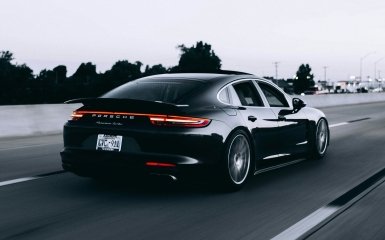
It is impossible to completely protect a car from a missile, drone, debris, fire, or blast wave. A car is not a shelter, cannot withstand direct damage, and should not be the reason why a person goes outside during an attack. But some of the risks can be reduced: choose a safer parking spot in advance, avoid parking near dangerous structures, keep the car clean and covered, check your war risk insurance, and know what to do after damage.
The most important principle: life is more important than a car. The State Emergency Service advises that during an air raid alert, immediately take shelter, and if the signal finds a person in a car, stop so as not to obstruct traffic and go to the nearest shelter. Being outside during an alert is dangerous due to the blast wave and debris.
Practical car protection during wartime consists of several layers: a parking space, physical protection against minor damage, insurance coverage, prepared documents, and the right actions after an incident. No one layer provides a guarantee, but together they reduce the likelihood of loss and help you recover your car or receive compensation more quickly.
What damage most often threatens a car?
During attacks, cars suffer not only from direct hits. In cities, significant danger is posed by debris from missiles and drones, building elements, glass, fragments of balconies, advertising structures, branches, fires on neighboring cars, shock waves, and objects falling from heights.
The blast wave is particularly dangerous to glass. The CDC, in its materials on the consequences of explosions, notes that injuries can be caused by glass fragments, traffic accidents, and damage to buildings and unreinforced structures. For a car, this means the risk of broken glass, dents in the body, damage to headlights, mirrors, roof, panoramic sunroof, tires, wiring, and paintwork.
Some damage may seem minor, but repairs can be expensive. For example, replacing a modern car's headlight, windshield with sensors, panoramic roof, camera, radar, or electronic unit can cost significantly more than it seems upon first inspection.
The main rule: do not save the car during an attack
The most dangerous mistake is to run to move the car when the alarm has already been sounded, explosions are heard, or air defenses are working. The parking spot should be chosen in advance, during a quiet time. In times of danger, the driver must save himself and the people around him.
The State Emergency Service emphasizes: if an alarm catches you in a car, you should stop the car so that it does not create obstacles to traffic, and head for shelter. If there is no equipped shelter nearby, you should go into the nearest accessible building and hide behind two walls.
A car in an open area does not protect a person from debris in the same way as a shelter or a major building. Therefore, even if the car is expensive, new, or working, you should not return to it during an attack, check the alarm, take video, close the windows, or move it closer to the house.
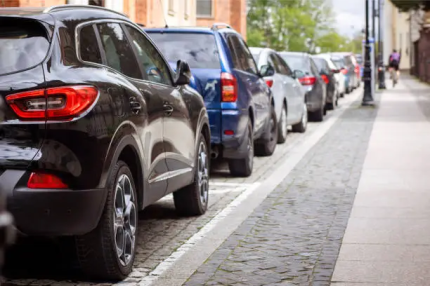
The best place for a car is an underground or public parking lot.
Underground parking usually reduces the risk of damage from debris, glass, light structures, falling branches, and some of the effects of a blast wave. It does not guarantee complete safety, but compared to an open yard, it gives the car more physical protection.
The State Emergency Service explains that shelters can reduce the indirect effects of conventional weapons, i.e. blast waves and fragments, although they do not protect against a direct hit from a rocket, bomb or shell. For a car, the logic is similar: the more major obstacles between the car and the open space, the lower the risk of minor and medium damage.
Optimal parking options:
underground parking;
parking in a main building;
a garage with solid walls and ceilings;
a closed courtyard without large glass facades nearby;
a place away from old trees, shop windows, advertising structures and light canopies;
parking where the car does not block a fire escape, shelter or evacuation route.
If the underground parking lot also serves as a shelter, it can be convenient for the family. But the car should not obstruct walkways, emergency exits, rescue access, or the movement of other people.
Where not to leave your car
A bad parking spot can increase the damage even if the impact is not nearby. The blast wave can break glass, displace light structures, tear off facade elements and break trees. Therefore, it is worth avoiding places where there are objects above or near the car that could fall or scatter.
Unwanted places:
under large windows and glass facades;
near old balconies, air conditioners, signs and billboards;
under emergency trees and dry branches;
next to light metal canopies;
near construction sites and fences;
near garbage containers where a fire could break out;
close to other cars if there is a risk of fire spreading;
in places where the car blocks the passage of special equipment;
near objects that local authorities or services designate as dangerous to stay in during alarms.
If there is no other place, it is better not to park the car under windows and facade elements. Even a few meters of indentation can reduce the risk of damage from glass, plaster, tiles or balcony fragments.
Carport, garage and metal box: what really protects
Not every canopy is a protection. Light corrugated iron, slate, thin plastic or old metal construction may not stop the debris, and during a strong explosion, they themselves become a source of damage. Such structures help more from rain, snow, sun and leaves than from the effects of combat.
A capital garage with strong walls and ceilings is more useful. But it also does not provide a guarantee against direct damage, fire in a neighboring building, or a strong collapse. A metal garage can partially protect against small glass, dust, and individual light fragments, but it has weak points: the roof, gate, ventilation holes, joints, and the general condition of the structure.
Before the season, it is worth checking the garage:
Is the roof leaking?
Are the gates securely fastened?
are there any light objects on the roof;
Are there any fuel, paints, gas cylinders or flammable items stored nearby?
is there a fire extinguisher;
Is it possible to quickly open the garage after the gate is damaged?
Is the exit blocked?
Do not create homemade “armor” from heavy plates, bags, or metal without engineering calculations. An improperly secured structure can fall on cars or people.
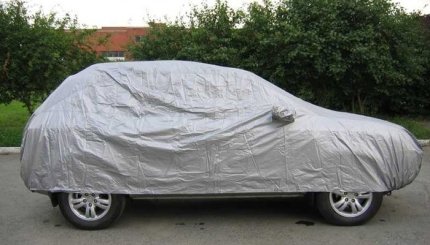
Car cover: when it is useful
A car cover will not protect against a direct hit, a large fragment, fire, or a strong impact. But it can reduce minor damage: scratches from dust, glass, small debris, leaves, light fragments of trim, and also partially protect the paintwork.
Dense, multi-layered covers with a soft inner surface and secure fastening work best. A thin, cheap tarpaulin often protects mainly from dust and precipitation. If it is poorly fastened, the wind moves the fabric across the body, and the dust between the cover and the paint acts as an abrasive.
Terms of use:
put the cover on a clean, dry car;
select the size for a specific body;
fix the straps and edges;
do not leave the awning so that it blows against the paint in the wind;
do not cover hot elements with it after a long trip;
periodically dry and clean the cover itself;
Do not use a damaged awning with hard edges.
For a car parked outdoors, a cover can be a smart extra layer. But the main protection remains the parking space.
Glass, film and panoramic roof
Windshields in modern cars are usually laminated: they have a layer between the glass plates that helps hold the pieces together after a crack. Side glass is often tempered and shatters into many small pieces when broken. NHTSA explains that laminated glass has a significant ability to hold itself together after a crack, while tempered glass has almost no ability to hold itself together after a break.
Protective or armored film on glass can reduce the scattering of small fragments, but it does not turn the car into armored and does not guarantee protection from debris. The film should also not impair visibility, the operation of sensors, cameras, glass heating, or compliance with operating rules.
Particular attention should be paid to cars with a panoramic roof. The large area of glass increases the risk of expensive repairs. If the car is left outside overnight, it is worth avoiding places under trees, facades, balconies and structures that can fall from above.
Will drone detectors or electronic warfare equipment help?
For a civilian car owner, official notifications about alarms, proper parking, and shelter remain a more practical solution. Household or semi-professional detectors do not guarantee timely warning, can be inaccurate, require skills, and do not replace notifications from government services.
Electronic warfare equipment for a civilian vehicle is a complex and expensive topic with legal, technical, and security risks. It is not worth purchasing and installing equipment that can affect radio communications, navigation, or other systems on your own without legal grounds and professional understanding.
The most reliable algorithm for a civilian driver is simpler: monitor official notifications, do not ignore the alarm, do not be in the car during the attack, do not park near obviously dangerous structures, and know the nearest shelter in advance.
War risk insurance: what to check
Physical protection reduces the likelihood of damage, and insurance works with financial consequences. A regular civil insurance policy does not cover the repair of your own car after shelling: the civil insurance policy is intended to compensate for damage to victims of road accidents within the limits of the driver's responsibility. MTIBU explains civil insurance precisely as a mechanism for compensating victims of road accidents.
To damage your own car, you need comprehensive insurance or a separate product with war risks. As of the date of preparation of the material, some Ukrainian insurers offer programs that can cover damage to or destruction of a car due to missiles, UAVs, debris, air defense/missile defense systems, blast wave or fire, but the conditions differ significantly. PZU describes war risk coverage as damage or complete loss of a vehicle due to the direct or indirect impact of missiles, drones, ammunition and their debris within territorial restrictions. ARX in the Iron Dome product also describes losses from the direct or indirect impact of missiles, drones, debris and air defense/missile defense systems.
Before signing a contract, check the text of the terms and conditions, not the product name.
What to ask the insurance company
It is not right to compare policies based on price alone. A cheaper policy may have high exclusions, a low limit, territorial restrictions, or a complicated settlement procedure.
Ask the insurer the following questions:
what events are directly covered: missile, UAV, debris, air defense, blast wave, fire, falling parts of a building;
whether indirect damage is covered, such as debris from a house after an explosion;
what is the territory of the policy;
Are there any exceptions for frontline, de-occupied, or dangerous areas?
what franchise;
what is the limit for one insured event;
Is the age of the car taken into account?
do they insure taxis, company or commercial vehicles;
what documents are required after damage;
whether a police certificate, State Emergency Service, SBU certificate or an extract from the ERDR is required;
Can repairs be started before the inspection?
how is the structural damage of a car assessed;
Is the evacuation, storage and dismantling of the car for repairs covered?
VUSO indicates in its reference that the OSCPV policy covers the driver's liability in the event of an accident, but does not apply to losses from hostilities or war risks; for such risks, the company describes separate CASCO programs. UNIQA also notes that CASCO may include war risks, but the coverage areas and exceptions should be viewed in the terms of a specific contract.
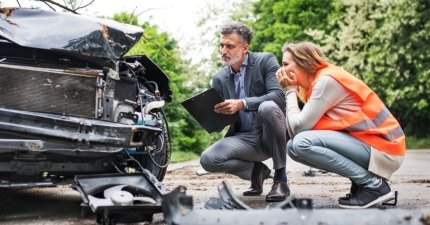
What to do if your car is damaged after shelling
First, safety. Do not approach missile debris, drones, or suspicious objects. The Cabinet of Ministers of Ukraine advises that if you discover missile or drone debris, do not take photos or publish such photos, but immediately call 101 or 102 and wait for the State Emergency Service or the police. The State Emergency Service also warns: explosive objects should not be touched, moved, covered, covered, or attempted to be defused independently.
If the area is already safe and there is no ban from the services, proceed in the following order:
Make sure there is no fire, smell of gas, sparks, or suspicious objects.
Do not get into the car if the glass, wiring, fuel system, electric vehicle battery is damaged, or if there are visible signs of fire.
Call the police or contact the pre-trial investigation authorities if you need to record the event.
Notify the insurance company using the number on the contract.
If possible, take photos of the car from different sides, license plates, VIN, parking location, surrounding damage, and reference to the address.
Do not start repairs before the insurer inspects them, unless the contract allows it.
Save receipts for the tow truck, parking, and emergency work.
Ask the insurer for a written list of documents for payment.
If the car is destroyed or cannot be restored, it still remains registered with the owner. The Main Service Center of the Ministry of Internal Affairs reports that in order to reject a car destroyed as a result of shelling, it is necessary to contact the pre-trial investigation bodies and obtain a document confirming the status of the victim; the service can be provided free of charge by the mobile service centers of the Ministry of Internal Affairs in appropriate cases.
Features for electric vehicles and hybrids
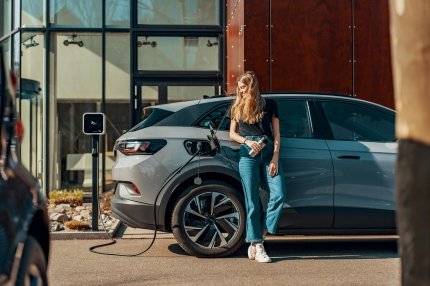
If debris or a blast wave has damaged an electric or hybrid vehicle, special attention should be paid to the high-voltage battery. Do not touch the orange cables, damaged connectors, the battery case, debris under the bottom, and areas where there is smoke, the smell of electrolyte, cracking, or heat.
NHTSA emphasizes that electric and hybrid cars have high-voltage batteries, and after damage, flooding, or suspected battery damage, you should contact the dealer or emergency services; there are separate emergency response guides and rescue sheets for rescuers.
After shelling, it is better not to charge or start the electric vehicle until it is inspected if there is damage to the bottom, battery pack, charging port, wiring, or battery cooling system. Evacuation should be carried out by a service that understands the specifics of electric vehicles.
How to prepare your car in advance
Preparation should not turn into a chaotic “hardening” of the machine. The goal is to reduce vulnerability and facilitate post-incident actions.
Useful minimum:
to keep a tank or charge in reserve;
do not leave documents, keys, equipment and valuables in the cabin;
take a photo of the car, VIN, mileage and body condition;
keep car documents in an accessible place;
have a copy of the policy and the insurer's contact information;
know the nearest shelters near home, work and parking;
do not park in places that interfere with special equipment;
keep a fire extinguisher, first aid kit, gloves, a flashlight and an emergency sign in the car;
remove unnecessary canisters, aerosols, flammable liquids and dangerous objects from the trunk;
check if the alarm is working, but do not run to the car during the alarm.
If the car is parked for a long time, periodically check the tire pressure, battery charge, interior tightness, condition of the cover, and the absence of water inside. After an attack, do not approach the car until the services have allowed you to be on the territory.
Typical mistakes of car owners
The first mistake is to park under a facade with large windows, balconies, or old air conditioners. After a blast wave, these elements often become a source of additional damage.
The second mistake is to consider a canopy as full protection. A lightweight structure may not withstand debris and damage the car itself.
The third mistake is to leave your car close to other cars. In the event of a fire or falling debris, damage can spread between cars.
The fourth mistake is to rely on a civilian car. The OSCPV does not repair its own car after shelling, because its logic is related to liability in road accidents and compensation for victims.
The fifth mistake is to touch the debris or carry it “so as not to get in the way.” Suspicious objects should be examined by specialists from the State Emergency Service or the police.
The sixth mistake is to start repairs before the damage has been recorded and the insurer has been notified. This can make it difficult to receive payment.
The seventh mistake is to stay in the car during an alarm. The State Emergency Service advises leaving the car and taking shelter.
A short checklist for protecting your car during wartime
First of all, choose a parking spot. The best is an underground or public parking lot. If there is none, look for a spot away from glass, facades, trees, billboards, light canopies, and crowds of cars.
The second level is physical protection. A thick cover can help against small glass, dust, and scratches, but not against serious damage. A protective film on the glass can reduce the scattering of small fragments, but it does not make the car armored.
The third level is insurance. Check whether your policy covers war risks, what events are included, what the deductible is, the limit, the territory of validity, and the procedure for documentary confirmation.
Level four — actions after damage. Do not touch the wreckage, call 101 or 102, immobilize the car, contact the insurer, and do not repair the car until it has been inspected if the contract requires a preliminary assessment.

Conclusion
Protecting a car from debris and blast waves during war begins with the right priority: the person goes to cover, the car stays put. The car can be repaired, insured, or replaced. Life has no alternative.
The best strategy for a car is a multi-level one. Park in an underground or major parking lot, do not leave the car near glass facades, old trees, advertising structures and light canopies, do not block driveways for special equipment, use the cover only as auxiliary protection against minor damage and carefully check the CASCO with military risks.
After damage, do not touch the debris, do not get into a potentially dangerous car, do not move suspicious objects, and do not rush to repair before the incident is recorded. The correct parking spot, documents, insurance, and a calm algorithm of actions do not provide an absolute guarantee, but they significantly reduce chaos and financial losses.
FAQ
Is it possible to completely protect a car from debris during war?
No. No parking lot, garage, cover, film, or insurance provides a complete guarantee against a direct hit, large debris, fire, or strong blast wave. The goal of realistic protection is to reduce the risk of damage and financial consequences.
Where is the best place to park a car during air attacks?
The best option is to park in an underground or main parking lot. If there is no such place, choose a parking space away from large windows, facades, balconies, old trees, advertising structures, light canopies, and places that can block special equipment.
What to do if the alarm is triggered in the car?
The State Emergency Service advises stopping the car so as not to obstruct traffic and walking to the nearest shelter. If there is no shelter nearby, you should go into the nearest accessible building and hide behind two walls.
Will a car cover protect against debris?
A cover can reduce scratches from dust, glass, small debris, and light fragments, but it will not protect against a direct hit, large debris, fire, or a serious blast wave. It should be applied to a clean car and secured securely.
Will a protective film on the glass help?
It can reduce the dispersion of small glass fragments, but does not make the car armored and does not guarantee protection against the penetration of fragments. It must be installed in such a way as not to impair visibility, the operation of sensors and compliance with operational requirements.
Does auto insurance cover damage to a car from a missile or drone?
A regular civilian car insurance policy is designed to compensate for damage to victims of a road accident within the limits of the driver's liability. For your own car after shelling, you need comprehensive insurance or separate war risk coverage.
What war risks can insurers cover?
Depending on the contract, this may include damage or destruction of the car due to missiles, drones, debris, air defense/missile defense, blast wave, fire or destruction of buildings. PZU, ARX, VUSO and UNIQA describe such products, but the conditions, deductibles, limits and territories of validity should be checked in the specific contract.
What to do if the car is already damaged by shelling?
First, make sure the area is safe. Do not touch any debris or suspicious objects, call 101 or 102, record the damage with photos and videos, contact the police and insurer, and do not begin repairs until the inspection has been completed, if required by the contract.
Is it okay to touch the debris near the car?
No. The Cabinet of Ministers of Ukraine and the State Emergency Service warn: debris from missiles, drones, or other suspicious objects must not be touched, carried, covered, covered, or disassembled. You must notify the State Emergency Service by calling 101 or the police by calling 102.
What to do if the car is completely destroyed?
It is necessary to contact the pre-trial investigation bodies and obtain a document confirming the status of the injured person. The Main Service Center of the Ministry of Internal Affairs reports that the destroyed car continues to be registered to the owner, so it must be scrapped at the service center of the Ministry of Internal Affairs.

