
In winter, the gearbox operates in conditions that are hardly comfortable: cold transmission fluid is thicker, wheels slip more often, and the driver often rushes and sharply presses the gas before the units have reached normal operating mode. One unsuccessful action does not always immediately “kill” the transmission. But regular mistakes - sharp starts on cold, long skidding in the snow, power shifts or ignoring jerks - can significantly accelerate wear. Below are practical tips on how not to kill the gearbox in winter and not to create unnecessary loads on it.
Why is the gearbox more difficult in winter?
Main winter risk factors:
Thicker transmission fluid - it circulates more slowly in cold weather.
Slippery surface - snow and ice provoke skidding and sudden changes in load.
Short trips - the gearbox does not always have time to warm up.
Sudden driver actions - starting "to the floor", kickdown and switching D/R under load create additional stress.
Specific recommendations depend on the type of transmission and car model, so it is worth considering the manufacturer's instructions.
How to start driving in the cold
It is usually not necessary to warm up a modern car for a long time while stationary. At the same time, it is not worth moving off abruptly immediately after starting.
Optimal tactics:
Start the engine and let it run briefly while you clean the windows, mirrors, and headlights.
Make sure the inspection is safe.
Move smoothly, without sudden acceleration.
For the first few kilometers, avoid high revs, kickdown, and sharp accelerations.
While the units are cold, do not create excessive load.
The gearbox warms up while driving, so after starting it is better to drive calmly and not to keep the car idling for a long time.
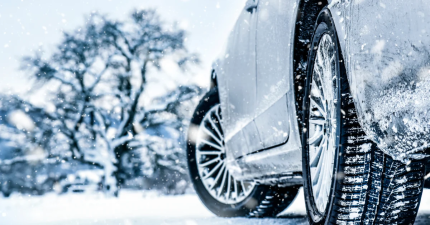
Automatic transmission: what not to do in winter
Do not shift from D to R until you have come to a complete stop.
Do not engage reverse gear while the car is still rolling forward, and vice versa. This is especially common when trying to "rock" the car in the snow.
Required:
stop the car completely;
press the brake;
set the selector to the desired mode;
press the gas smoothly.
Switching D/R under load can create unnecessary shocks to transmission components.
Do not start abruptly on cold weather.
Kickdown immediately after driving off is undesirable. While the working fluid is cold, the gearbox may work harder.
For the first few minutes, move smoothly, without sudden accelerations.
Don't abuse N mode
During short stops in traffic or at traffic lights, there is usually no need to constantly switch DND on. It is enough to hold the car with the brake, unless the manufacturer's instructions provide otherwise.
For long stops or parking, use modes according to the manufacturer's recommendations.
Manual transmission in the cold: typical mistakes
In cold weather, the oil in a manual transmission can thicken, so the first shifts sometimes feel heavier.

Do not force the switch.
If the gear does not engage easily:
fully squeeze the clutch;
move the lever to neutral;
try again without jerking;
Go smoothly.
Forced engagement of the transmission increases the load on the synchronizers and the shifting mechanism.
Don't keep your foot on the clutch
Driving or waiting with the clutch half-pressed accelerates wear on its components. The pedal should not be used as a footrest.
Don't skid for long.
If the wheels are spinning but the car is not moving, the transmission, clutch and tires will heat up and wear out. It is better to stop the spinning and give the wheels better grip on the road.
CVT and robot: why is smoothness needed
The CVT and robotic gearbox also do not like sudden starts, prolonged slippage, and shock loads.
CVT
For CVT, the following are undesirable:
sharp starts;
prolonged skidding in the snow;
towing heavy trailers without the manufacturer's permission;
aggressive acceleration from cold;
sharp D/R switching when trying to get out of the snow.
The basic rules are smooth throttle, minimal slippage and proper fluid maintenance.
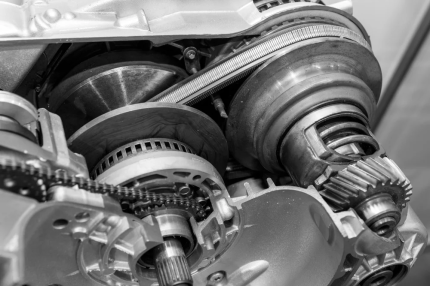
Robotic box
Robotic gearboxes can have one or two clutches, so their behavior varies. The general rule is not to force the gearbox to work at the clutch limit for a long time.
In traffic jams and on climbs it is worth:
keep a sufficient distance;
avoid constant crawling;
use the parking brake or hill hold system, if provided by the car;
Do not provoke sudden jerks while parking.
If the car is stuck in the snow
Attempts to get out with heavy throttle and rapid forward and reverse shifting can overheat the transmission.
Safer:
Check to see if the car has sunk to the bottom.
Clear the snow from around the wheels.
Align the wheels.
Place sand, gravel, special tracks or other material to improve traction.
If the manufacturer allows it, rock the car smoothly, switching direction only after a complete stop.
Take breaks between attempts.
If there is a burning smell, a warning on the panel, or the box starts to work unusually, the attempts should be stopped.
Transmission fluid: what to check before winter
Before the cold season, it is worth checking:
are there any leaks?
fluid level, if it can be checked properly;
fluid condition according to manufacturer's procedure;
car service history;
recommended fluid type and tolerance.
Don't just pour in any available oil or change the fluid "just in case." The wrong product or maintenance procedure can damage the transmission.
If the service history of a used car is unknown, it is better to contact a service that works with a specific type of transmission.
Signs that the box needs to be shown to the master
A slight stiffness of operation in severe frost is possible. But diagnostics are required if:
strong shocks during shifting;
delay in engaging D or R;
slippage;
the smell of burning;
howling, humming, or grinding;
jerks that do not disappear after warming up;
transmission errors on the panel;
traces of liquid under the car.
The earlier the problem is detected, the higher the chances of getting by with maintenance rather than expensive repairs.
A short checklist of winter habits
In winter it is worth:
to move smoothly;
avoid sudden accelerations for the first few kilometers;
do not switch D/R until the vehicle comes to a complete stop;
do not skid in the snow for a long time;
do not keep your foot on the clutch;
do not force the gear lever;
monitor leaks and the condition of the transmission fluid;
react to jerks, impacts and the smell of burning;
follow the manufacturer's recommendations;
Do not postpone diagnostics when the behavior of the box changes.
FAQ
Do I need to warm up the automatic transmission before driving?
It is usually not necessary to stand still for a long time, unless the manufacturer recommends otherwise. After starting, you can clear the car of snow and start moving smoothly. Avoid sudden acceleration and kickdown for the first kilometers.
Can I drive immediately after starting in cold weather?
Yes, but be careful. Let the engine run briefly, and after starting, avoid sudden acceleration until the engine and transmission have warmed up.
Is N mode on an automatic harmful in traffic jams?
N mode itself is not harmful, but constantly switching to DND unnecessarily makes no sense. For short stops, it is usually enough to hold the car on the brake.
What to do if the car is stuck in the snow?
Clear the snow from around the wheels, straighten the steering wheel, improve traction, and try to move off smoothly. Do not press the gas pedal to the floor. If you smell burning or the car does not move, stop trying and seek help.
Do I need to change the oil in the gearbox before winter?
Not necessarily. It is more important to follow the manufacturer's regulations, use the correct fluid, and monitor the condition of the transmission.
Why is the box pushing on cold?
The cause may be cold fluid, specific features of the specific gearbox, worn bearings, problems with the hydraulic unit, clutch or electronics. If the knocks are severe or do not disappear after warming up, diagnostics are required.
What is worse for the gearbox: skidding or hard starts?
Both actions create additional stress. Slipping can lead to overheating, and sudden starts can cause shock loads. For transmission life, smooth throttle and minimal slippage are better.
Are the rules the same for a CVT, a robot, and a classic automatic?
The basic rules are the same: smoothness, gradual loading, and no prolonged slippage. However, the nuances depend on the design. A CVT is sensitive to slippage, a robot is sensitive to excessive clutch operation, and a classic automatic is sensitive to sudden shifts and overheating.
Conclusion
To preserve the gearbox in winter, a few rules are enough: do not load it sharply immediately after starting, avoid prolonged slippage, do not switch D/R while driving, and respond to malfunctions in a timely manner.
Smooth starting, the right transmission fluid, compliance with regulations, and timely diagnostics will help reduce transmission wear during the cold season.
Disclaimer: This material is for informational purposes only. Specific recommendations for warm-up, fluids, towing, and maintenance vary by vehicle model and transmission type. For exact procedures, please refer to the manufacturer's instructions or contact a qualified service center.

