
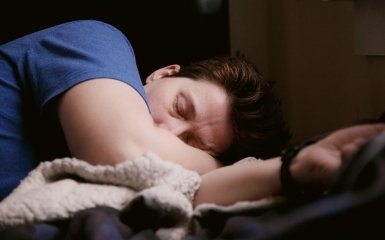
After a night of air raids, explosions, or a few hours of disrupted sleep, it's normal to feel groggy, think more slowly, react more strongly to sounds, and not be as productive as you normally would. The reason is the simultaneous effect of two factors: sleep deprivation and acute stress.
You can't fully compensate for a sleepless night with coffee, a cold shower, or exercise. The most effective way to recover is sleep. But if you have to work, take care of a child, or take care of urgent matters in the morning, you can organize your day in a way that reduces the strain on your body, increases your safety, and doesn't ruin the next night.
The main rule after a hard night is not to demand your usual productivity from yourself. Lack of sleep actually impairs attention, reaction speed, and working memory. This is a physiological effect, not a weakness of character.
What happens to the body after a night of anxiety
In times of danger, the body goes into mobilization mode.
May appear:
rapid heartbeat;
muscle tension;
shallow breathing;
increased alertness;
difficulty falling asleep;
stronger reaction to sharp sounds.
Even after the air alarm is over, the brain may still act for some time as if the threat is still relevant.
If, at the same time, a person slept for three to four hours or did not sleep at all, the consequences of sleep deprivation are added:
drowsiness;
slower reaction;
difficulty concentrating;
more errors;
deterioration of short-term memory;
irritability;
headache;
feeling of "fog in the head".
The more often such nights are repeated, the more difficult it is for the body to fully recover between them.
Why it's hard to fall asleep after shelling, even when it's quiet
It seems logical: if a person is exhausted, they should immediately fall asleep.
In practice, the opposite situation may occur after severe anxiety.
You returned from hiding, went to bed, but:
listen to every sound;
check the message;
read the news;
you replay the events of the night in your head;
waiting for another alarm.
This state of heightened alertness after a dangerous situation may be a normal acute reaction to stress.
There is no need to demand instant relaxation from yourself.
The task in the first stages is simpler: to gradually return the feeling of the present moment and create conditions in which the body can rest as soon as the level of arousal decreases.
1. First, assess how sleepy you are.
Before planning your day, ask yourself a practical question:
How safe is it for me to do my usual activities today?
This is especially important for:
driving a car;
working with mechanisms;
work at height;
complex medical or technical tasks;
activities where a mistake could harm others.
With significant sleep deprivation, microdreams are possible—short involuntary episodes of sleep lasting from fractions of a second to several seconds. A person may not even be aware that they have occurred.
That is why the phrase "I am acting normally" does not always mean that the reaction and attention have truly remained normal.
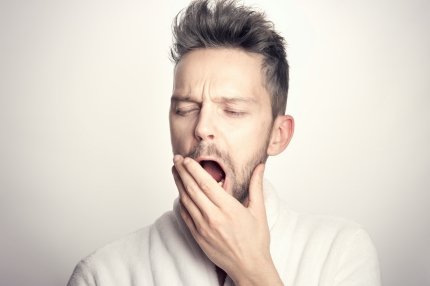
If your eyes are closing, you miss traffic signs, you don't remember the last few minutes of your trip, or you're constantly yawning, don't get behind the wheel . Coffee doesn't guarantee safe driving when you're severely sleep-deprived.
2. Don't start your morning by endlessly reading the news.
After a hard night, it's natural to want to understand:
What happened;
where were the hits;
Is everything okay with your loved ones?
What is the situation now?
You need to check important information.
But there's a difference between a security check and an hour of non-stop feed updates.
Excessive consumption of distressing news can maintain psychological stress even after the immediate danger has ended.
Practical scheme:
Check official information and loved ones.
Make sure there is no immediate threat right now.
Put your phone away for at least 20–30 minutes.
Eat, take a shower, open a window, or go for a short walk.
The news won't go away, and the brain needs time without a new stream of threatening signals.
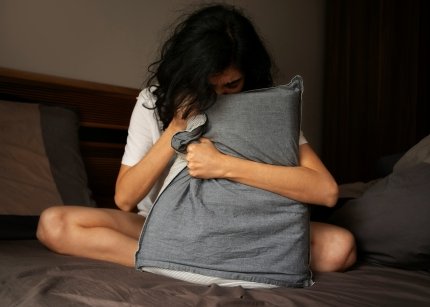
3. Pay attention to what is happening now
After severe stress, grounding techniques can help — simple exercises that shift attention from anxious thoughts to the real surroundings and body sensations.
One of the options:
feel your feet on the floor;
pay attention to the support of the chair;
note the air temperature;
name a few objects you see;
listen to the sounds around you;
Move your fingers slowly.
The point is not to convince yourself "not to be afraid."
You are simply giving your brain additional information about the present moment.
A simple body contact exercise
Sit or stand comfortably.
Please note:
which foot presses harder against the floor;
how the back touches the chair;
where are the shoulders most tense now;
Is the jaw clenched?
Can you relax your fingers a little?
Perform the exercise without rushing for one to two minutes.
If these techniques make you feel more uncomfortable or anxious, stop. There is no one-size-fits-all exercise.
4. Don't force yourself to "breathe deeper"
The advice to "take a very deep breath" doesn't always work.
When you are anxious, you may already be breathing too fast. Breathing too deeply and rapidly can make you feel dizzy or short of breath.
A safer principle is calm, comfortable breathing without forcing .
You can:
Take a normal breath through your nose.
Exhale slowly.
Repeat several times at a comfortable pace.
There is no need to hold your breath forcefully or try to achieve a special state.
If walking, talking, showering, or silence helps you more, choose those.
5. Reduce your plan for the day
After a practically sleepless night, it's a bad moment for a decision:
"I'll drink some coffee now and do everything I planned."
Sleep deprivation impairs the very functions that are needed for complex work: attention, information processing speed, working memory, and error control.
Review your to-do list and divide it into three categories:
Need it today.
It can wait until tomorrow.
You can cancel or delegate.
Leave the bare minimum.
If possible, move:
difficult negotiations;
important financial decisions;
work with high responsibility;
long trips;
optional meetings.
Reducing the workload on such a day is a rational adaptation to sleep deprivation.
6. A short daytime nap can help
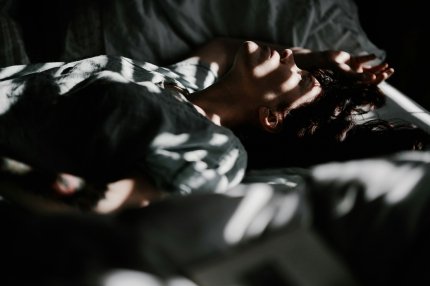
If possible, after a sleepless night, you can take a nap during the day.
A short nap of about 15–30 minutes can temporarily improve alertness and reduce sleepiness.
This is a good option if you need to get through a workday and can't afford a long sleep.
After waking up, sleepiness may persist for some time, so you should not drive or perform dangerous work immediately after a nap.
What if you want to sleep for three hours?
After an almost sleepless night, such a need is completely understandable.
If you have the opportunity to get a full night's sleep during the day and the security situation allows it, rest can be a priority.
But a long late afternoon nap sometimes makes it difficult to fall asleep the next night.
Therefore, the choice depends on the degree of sleep deprivation.
After a small loss of sleep, a short nap is more often appropriate.
After a virtually sleepless night, the body's need for sleep may be much greater.
7. Coffee is okay, but it won't replace sleep.
Caffeine temporarily increases alertness and can help with drowsiness.
But it doesn't restore body functions the way sleep does.
After a hard night, the main mistake is to drink coffee throughout the day to "make it" until the evening.
Caffeine can last for hours. In studies, even a large dose taken about six hours before bedtime has been shown to impair sleep at night.
In practice, this means: use coffee moderately in the morning and don't try to compensate for lack of sleep with endless cups or energy drinks.
People who experience caffeine-related symptoms should be especially careful:
tremor;
palpitation;
anxiety;
problems falling asleep.
After a night of stress, these feelings can be even more unpleasant.
8. Eat and don't forget about water
After a restless night, appetite can be unstable: one person doesn't feel like eating at all, while another craves very sweet or fatty foods.
You don't need to have the "perfect healthy morning."
It's enough to eat normally.
A simple meal that includes:
white;
complex carbohydrates;
vegetables or fruits;
water.
For example:
omelette + bread + vegetables;
porridge + yogurt + fruit;
buckwheat + egg or meat + salad.
Regular nutrition and sufficient fluid intake are among the basic recommendations for supporting the body during stress.
9. Light activity is better than strenuous exercise.
After a sleepless night, it is sometimes advised to "get a good workout to cheer yourself up."
This is not necessarily a good plan.
If a person is very sleepy, coordination and reaction time may be impaired. Intense training with heavy weights or technically difficult exercises may not be appropriate.
Instead, calm activity often helps to boost your mood a bit:
a short walk;
light warm-up;
stretching;
ordinary everyday movements.
Daylight also helps maintain circadian rhythm, so if the security situation allows, it is worth going outside for a short while.
10. Don't try to "calm down" with alcohol
After shelling, you may want to drink in the evening to relax or fall asleep faster.
Alcohol can indeed make you sleepy, but sleep quality often deteriorates. Sleep may become more fragmented and there may be more awakenings.
After a sleepless night, the body needs the highest quality sleep possible.
Alcohol interferes with this.
Similarly, you should not start taking sleeping pills or sedatives on your own after a traumatic event. Some of these drugs carry significant risks and should only be used under medical supervision.
How to spend your next evening
After a sleepless night, you may feel like going to bed at 6:00 PM.
Sometimes your body really needs to sleep early. But shifting your schedule too much can lead to waking up in the middle of the night.
A more practical option:
reduce evening workload;
to stop work early;
limit news;
don't drink caffeine late at night;
dim the lights;
prepare things in case of a new alarm;
Go to bed a little earlier than usual.
For most adults, a guideline is at least about seven hours of sleep per night, with many needing 7–9 hours.
After a significant deficiency, the body may need a longer recovery period.
One good night helps, but after several nights of chronic sleep deprivation, full recovery may take longer.
Prepare your sleeping space for the next possible alarm.
Part of the nighttime anxiety arises from the thought:
"What if it all happens again?"
It is impossible to completely eliminate this uncertainty.
But you can reduce the number of decisions you have to make at night.
Prepare in advance:
charged phone;
power bank;
documents;
water;
warm clothes;
necessary medications;
things for the child;
route to a safe place.
When the algorithm is already known, there is less need to make decisions under high stress during the next alarm.
The priority always remains official safety regulations and staying in a designated safe place during a threat.
What to do if you need to work after a sleepless night
If taking a day off is impossible, try changing the workday itself.
In the morning
Do the most important work while your energy levels are highest.
Reduce multitasking
One task at a time reduces the number of errors.
Write down everything important.
Don't rely on memory after a few hours of sleep.
Double-check critical decisions
Especially numbers, payments, documents, and important messages.
Take short breaks.
A few minutes of movement, water, or fresh air are better than sitting continuously until you are completely exhausted.
And most importantly, postpone everything where a mistake could have serious consequences, if possible.
Normal reactions after a scary night
After severe stress for a certain period of time, the following may occur:
anxiety;
irritability;
tearfulness;
difficulty concentrating;
increased alertness;
unwillingness to be alone;
sleep problems;
stronger reaction to sounds;
re-rolling of the experience.
Such reactions after a dangerous event do not in themselves indicate post-traumatic stress disorder.
In many people, the intensity of symptoms gradually decreases.
What matters is their duration, severity, and impact on daily life.
When post-shelling stress requires professional help
It is worth seeking professional help if, after the events you experienced:
anxiety remains very strong;
sleep is regularly disturbed;
recurring nightmares;
intrusive memories or flashbacks occur;
you avoid anything that reminds you of the event;
you cannot work or take care of yourself normally;
you are constantly in a state of danger even in relatively safe conditions;
symptoms do not get better or get worse.
Thoughts of self-harm, suicide, or feeling that you cannot stay safe are especially concerning and require immediate professional help and the presence of another responsible person.
7 mistakes after a sleepless night
1. Try to work at a normal pace
Attention capabilities actually decrease after sleep deprivation.
2. Driving when very sleepy
Microsleep can occur spontaneously. Coffee does not guarantee a safe reaction.
3. Drinking coffee until late at night
This can ruin the next night and continue the cycle of sleep deprivation.
4. Read the news continuously
Safety information is needed, but endless consumption of disturbing content can maintain stress.
5. Demanding instant peace from yourself
After a real threat, the body may need time to lower its alertness level.
6. Using alcohol as a sleeping pill
It can worsen sleep quality.
7. Ignore prolonged symptoms
If sleep problems, anxiety, or exhaustion persist, seeking help is a rational step.
Recovery plan after a night in shelter
If it's difficult to think, use the simplest algorithm possible.
After the call: make sure the situation is safe, drink some water, and put off endless news reading.
Morning: Eat, assess your sleepiness level, and cut short your day.
During the day: more light and light activity, less critical decisions and multitasking.
If you feel very sleepy: take a short nap if possible.
Caffeine: in moderation and best in the morning.
In the evening: reduce information load and prepare the conditions for early, quality sleep.
Sometimes it's enough to just get through the day without any additional exhaustion.
Conclusion
After a night in shelter, there is no technology that can bring the body back to a state of full recovery in ten minutes. If you have barely slept, the main resource that is lacking is sleep.
Grounding, calm breathing, a short walk, food, water, daytime naps, and reducing information overload can make the day easier. But they are auxiliary tools.
The most important thing after a hard night is to reduce your demands on yourself, avoid performing dangerous tasks while very sleepy, and give your body the opportunity to recover as soon as it is safe to do so.
Important: the material is for informational and educational purposes only and does not constitute medical or psychological advice, diagnosis or treatment recommendations. Self-medication, self-administration of sleeping pills or sedatives can be harmful to health. If, after the events experienced, anxiety, insomnia, intrusive memories, exhaustion or other symptoms persist, worsen or interfere with daily life, be sure to consult a doctor or a qualified mental health professional.
FAQ
How to recover quickly after a sleepless night?
It is impossible to fully compensate for lost sleep in a few hours. Reducing stress, food, water, daylight, light exercise, a short daytime nap and a full night's sleep help.
How much sleep do you need after a sleepless night?
There is no universal number. The need depends on the duration of sleep deprivation and previous sleep patterns. For most adults, the usual need is about 7–9 hours, and after significant sleep loss, the body may need additional recovery.
Should you sleep during the day after a night in shelter?
Yes, if you haven't had much sleep. A short nap of about 15–30 minutes can increase alertness. After a night of almost no sleep, the need for sleep may be greater.
Can I drink coffee after a sleepless night?
Yes, if you can tolerate caffeine. It's best to consume it in moderation and not late at night, as it can interfere with your next night's sleep. Coffee is not a substitute for rest.
Why is every sound scary after shelling?
After a real danger, the body may remain in a state of heightened alertness for some time. This can be an acute reaction to stress. If it does not subside for a long time or significantly interferes with life, it is worth consulting a specialist.
How to calm the nervous system after anxiety?
You can use simple grounding techniques: feeling the support under your feet, paying attention to objects around you, doing a few slow movements, or breathing calmly. They help bring your attention to the present moment, but they are not a substitute for sleep and professional help if needed.
Can you exercise after a sleepless night?
A light walk or warm-up may be appropriate. If you are very sleepy, it is best to avoid exercises that require precise coordination, heavy weight, or quick reactions.
Is it okay to drive after a night without sleep?
If you are very sleepy, no. Lack of sleep slows down your reaction time and can cause uncontrollable microsleeps. If you can barely keep your eyes open, it is safer to choose another mode of transportation or sleep first.
Does alcohol help you fall asleep after a stressful night?
Alcohol may make you sleepy, but it can also impair the quality and continuity of your sleep. It should not be used as a way to recover from stress.
When should you consult a psychologist after shelling?
If anxiety, insomnia, nightmares, intrusive memories, high alertness or avoidance persist, increase and affect work, relationships or daily life, it is advisable to consult a qualified professional.

