
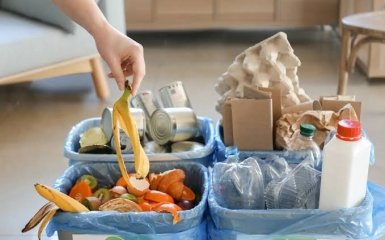
It’s hard to completely eliminate plastic from our daily lives. It’s used in food packaging, household appliances, medical devices, clothing, and thousands of other products. But a significant portion of plastic waste comes from items we use for only a few minutes: bags, cups, bottles, disposable tableware, and packaging.
Points of attention
- Reducing single-use purchases and reusing items helps prevent plastic waste.
- Reusable bags, bottles, cups, and containers reduce waste when used regularly.
- Good plastic products should not be replaced prematurely: glass, metal, and paper also require resources for production.
You can reduce their number without expensive eco-friendly products, a radical change in lifestyle, or a complete rejection of convenience.
The most effective way to reduce plastic waste is to buy less disposable items, reuse suitable items, and properly sort unavoidable packaging.
A reusable shopping bag, your own water bottle, food containers, and thoughtful food storage can go a long way toward reducing waste. However, replacing all plastic with glass, metal, or paper isn't always the best option for the environment.
Let's consider 15 practical habits that will help reduce plastic consumption at home, at work, in the store, and during everyday shopping.
Why it's important to reduce plastic waste
Plastic has become one of the most common materials due to its strength, light weight, affordability, and ability to be used for a variety of tasks.
However, these same properties create difficulties after the products have reached the end of their service life.
Many plastic materials degrade slowly in the environment, and some packaging is not recycled due to complex design or contamination.
According to the Organization for Economic Co-operation and Development (OECD), approximately 353 million tons of plastic waste were generated worldwide in 2019. Of this, only about 9% was actually recycled.
This is historical data, not an estimate of current recycling levels in 2026. However, it demonstrates the scale of the problem.
Why recycling doesn't solve the problem completely
Not every plastic product can be economically and technologically recycled.
Packaging can consist of several layers of different materials. Additional challenges include food residue, dyes, adhesives, and additives.
Furthermore, the possibility of recycling depends on local infrastructure.
That is why the US Environmental Protection Agency (EPA) identifies waste prevention and reuse as higher priority approaches compared to recycling.
Simply put: it is better not to create unnecessary waste than to create it first and then look for a way to dispose of it.
1. Use one reusable bag instead of constantly buying bags
Plastic bags are one of the simplest types of disposable packaging that can be partially eliminated.
For regular shopping, a durable reusable bag that is easy to fold and carry with you is suitable.
It can be textile, polypropylene or made of other suitable material.
The most important characteristic is not the name of the fabric, but its durability.
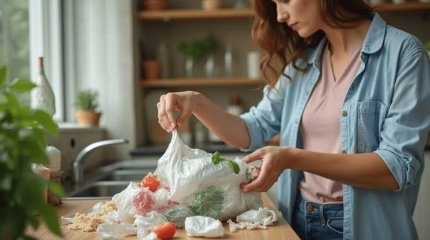
Is a cloth shopper really more environmentally friendly than a plastic bag?
Not always from the first use.
Producing reusable bags also requires materials, water, and energy.
A review of life cycle studies prepared by the United Nations Environment Programme shows that the environmental benefit of reusable bags depends on the material and the number of uses.
Some cotton bags require a significant number of reuses to offset the impact of production on certain environmental indicators.
Therefore, there is no need to buy several new shoppers just for the sake of environmental friendliness.
It's best to regularly use the bag you already have at home.
2. Avoid individual bags for each fruit or vegetable
It's easy to pick up a dozen small bags at the supermarket, even when buying a small amount of food.
At the same time, apples, bananas, lemons, and some other items can often be weighed and transported without individual packaging, if store rules allow it.
For small products, you can use reusable bags.
They are suitable, for example, for nuts, individual fruits or vegetables.
How to choose grocery bags
It is worth paying attention to the possibility of washing, the strength of the seams and the suitability of the material for specific products.
Reusable packaging must be clean.
It is especially important not to use the same contaminated bag for raw meat and products that will be consumed without further heat treatment.
You should also not refuse protective packaging where it is necessary for hygiene or safe transportation.
3. Carry your own water bottle
If a person regularly buys bottled water in small quantities, a reusable bottle can significantly reduce waste.
For example, if instead of using five disposable bottles a week you use your own, you can avoid buying approximately 260 bottles in a year.
This is a conditional calculation that depends on actual habits.
Which reusable bottle to choose?
A plastic, metal or glass bottle designed for repeated contact with drinking water is suitable.
The advantages of different materials vary:
Stainless steel is strong, but can be heavier.
Glass does not absorb odors, but it can break.
High-quality food-grade plastic is lightweight and easy to transport.
There's no need to throw away a working, reusable plastic bottle for a new metal one.
It is more important to keep it clean, wash the lid regularly, and not use a damaged product.
4. Use your own coffee cup
Disposable cups often appear to be paper, but many models have an inner plastic layer.
It helps retain fluid, but can make it difficult to process.
Therefore, replacing a plastic cup with a paper cup does not necessarily mean the complete elimination of plastic waste.
For regular coffee purchases, you can use a reusable cup or thermos.
When a reusable cup makes sense
It brings the greatest benefit with frequent use.
If a person buys coffee to go several times a week, their own cup can replace a significant number of disposable ones.
However, it also needs to be washed, so the environmental performance depends on the service life and care method.
Not every coffee shop accepts your own dishes. This may depend on the establishment's sanitation rules, equipment, and internal policies.
5. Plan your shopping to avoid unnecessary packaging
Spontaneous purchases are often accompanied by a large amount of small packaging.
For example, instead of one planned meal, a person buys several snacks, each of which is individually packaged.
Planning a menu and shopping list helps you better understand the amount of products you need.
However, it is important not to go to the other extreme.
Why big packaging isn't always more environmentally friendly
Buying large packaging sometimes reduces the amount of plastic per unit of product.
But if half the food spoils, the environmental advantage may disappear.
Food production also requires significant resources.
Therefore, it is more rational to buy the amount of food that can actually be used before the expiration date.
For perishable foods, protective packaging sometimes helps reduce food waste.
6. Choose products without unnecessary layers of packaging
Not every product needs an additional box, film, and individual bag.
For example, some household goods can be purchased without decorative packaging that has no practical function.
When choosing, it is worth assessing the amount of material and the possibility of its recycling.
This is especially true for products where the packaging is significantly larger than the product itself.
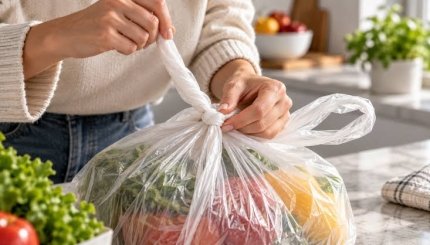
Why not all paper packaging is better than plastic
Paper requires wood, water, and energy to produce.
Glass and metal also have their own environmental footprint.
Therefore, replacing one disposable material with another does not always provide a significant reduction in environmental impact.
The best solution is often to avoid unnecessary packaging or to reuse it.
7. Replace plastic wrap with reusable containers
Cling film is convenient, but it is mostly used once.
Containers with suitable lids can be used to store ready-made meals.
This helps reduce the use of cling film and protects food from drying out and contamination.
Glass or plastic: which is better for products?
Both materials can be suitable for food storage.
The main thing is that the container is intended for the appropriate application.
For example, not every plastic product can be used in a microwave oven.
Similarly, not all glass containers can withstand sudden temperature changes.
Old disposable packaging doesn't have to automatically be converted into permanent hot food containers.
For reuse, products specifically designed for this purpose are better suited.
8. Don't throw away usable plastic containers
One of the most common mistakes in an eco-friendly lifestyle is to immediately replace all plastic containers with glass ones.
However, manufacturing new containers also requires resources.
If plastic containers are in good condition, undamaged, and reusable, they can continue to be used.
It is much more important to clean them properly and not exceed permissible temperatures.
When the container needs to be replaced
Replacement is warranted if there are cracks, significant deformation, damaged seals, or areas that cannot be properly cleaned.
You should also not use containers for food that were previously used to store household chemicals.
Even after washing, it may not be suitable for contact with food.
9. Use reusable wipes instead of disposable ones
Paper towels and wet wipes are convenient, but with constant use they create a large amount of waste.
Additionally, some wet wipes are made from synthetic fibers that contain plastic.
For most everyday tasks, you can use cloth wipes.
For example, separate cloths for kitchen surfaces, furniture, and the bathroom.
Is microfiber eco-friendly?
Microfiber collects dust well and can be durable.
However, synthetic fabrics can release microplastic fibers during washing.
Therefore, there is no need to buy many new microfiber cloths if you already have suitable cotton cloths at home.
It is more beneficial to use existing inventory for as long as possible and take proper care of it.
At the same time, in situations where special hygiene measures are required, disposable materials may still be justified.
10. Use reusable packaging for household chemicals
Shampoos, soaps, dishwashing detergents, and laundry detergents are often sold in plastic bottles.
Some manufacturers offer concentrates, interchangeable packaging, or refill systems.
Such solutions can reduce the total amount of packaging, especially if the main bottle is used many times.
However, it is necessary to compare not only the appearance of the container, but also the actual amount of material.
Why is it important to keep the markings?
Do not pour household chemicals into beverage bottles.
This creates the risk of accidentally using dangerous content.
Refilling is only permitted for compatible containers intended for the respective product.
It must contain the product name and necessary information on safe use.
Particular care should be taken with concentrates, pipe cleaners and disinfectants.
11. Ditch unnecessary disposable accessories
Plastic straws, disposable utensils, drink stirrers, and decorative accessories are often used for only a few minutes.
The easiest way to reduce the amount of such trash is to not take items that are actually unnecessary.
For example, a drink does not always require a straw, and food at home can be consumed with ordinary reusable utensils.
Do I need to buy metal tubes?
Not necessarily.
If a person rarely uses straws, the best alternative may be to avoid them altogether.
For those who need straws regularly, there are reusable options made from different materials.
However, metal models can be uncomfortable or unsafe for some users. It is important to consider individual needs, cleanability, and the safety of the material.
Disposable plastic straws remain necessary for some people with disabilities or medical conditions.
12. Choose products with the possibility of repair and replacement of parts
Plastic waste is not only generated through packaging.
Broken household appliances, toys, accessories, and furniture parts can also contain significant amounts of plastic.
Therefore, it is important to consider the durability of products.
For example, a mop with a replaceable nozzle may last longer than a model that needs to be thrown away completely after the working part wears out.
Is durable plastic always worse than other materials?
No.
Plastic can be lightweight, strong, and corrosion-resistant.
In some products, its use helps reduce weight, material consumption or energy consumption.
Therefore, environmental friendliness must be assessed taking into account the service life and full life cycle.
Instead of automatically rejecting plastic items, it is more practical to choose things that will last a long time and will not need to be replaced quickly.
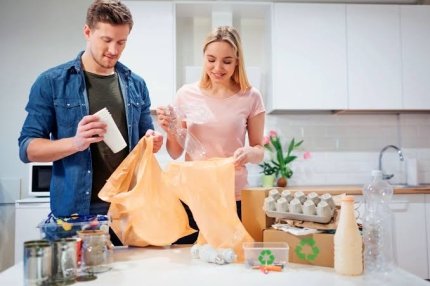
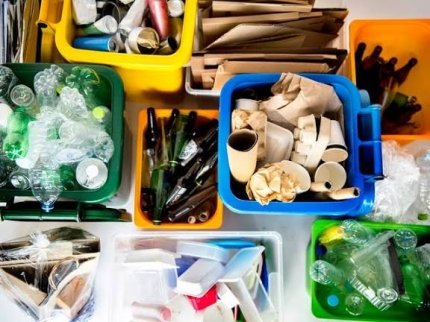
13. Sort plastic packaging correctly
Sorting helps direct suitable materials for recycling.
However, separating waste at home alone does not guarantee that it will be recycled.
This requires appropriate infrastructure, technologies, and demand for secondary raw materials.
What do the numbers on plastic packaging mean?
On some products you can see a number in a triangular marking.
It helps to determine the type of polymer.
| Marking | Material | Where is it used? |
| 1 — PET | Polyethylene terephthalate | Beverage bottles, some food packaging |
| 2 — HDPE | High density polyethylene | Bottles and canisters |
| 3 — PVC | Polyvinyl chloride | Individual films and other products |
| 4 — LDPE | Low density polyethylene | Bags and flexible packaging |
| 5 — PP | Polypropylene | Containers, lids, some packaging |
| 6 — PS | Polystyrene | Individual trays and disposables |
| 7 — Other | Other polymers and blends | Various specialized products |
Important: The number does not guarantee that a specific item will be accepted for recycling .
For example, the same polymer can be used in a rigid bottle and a thin film, for which there are different technological requirements.
Before sorting, you need to consider the rules of the local recycling operator.
Do I need to wash plastic before returning it?
Usually, the packaging needs to be freed from food residue and liquids.
However, cleaning requirements may vary.
It is not always necessary to spend a significant amount of hot water to perfectly wash containers.
It is important that the packaging meets acceptance requirements and does not contaminate other materials.
14. Don't trust the labels "bio" and "ecoplastic" without checking.
Products labeled "biodegradable," "compostable," or "made from plant-based materials" are increasingly appearing in stores.
However, these concepts are not identical.
What is bioplastic?
Various materials can be called bioplastics.
Some are made partially or completely from biological raw materials, but do not necessarily decompose in natural conditions.
Others are only able to biodegrade under certain conditions of temperature, humidity, and the presence of microorganisms.
Can composted plastic be thrown into regular compost?
Not always.
The European Commission explains that a significant portion of composted plastic is destined for industrial composting.
Such facilities create controlled conditions that may not be available in a home compost pile.
Therefore, the label "compostable" does not mean that the product will decompose quickly in a forest, river, or ordinary soil.
The material must be disposed of in the manner prescribed by the manufacturer and through an available waste management system.
15. Buy less unnecessary things
The most effective eco-habit is sometimes not related to new accessories at all.
It consists in refusing purchases that are not really necessary.
For example, there is no point in buying another reusable container if you already have several suitable ones at home.
It's also not necessary to replace working plastic organizers with wooden ones just for the sake of appearance.
Why reducing consumption is more important than replacing material
To produce any new product, resources are required.
This applies not only to plastic, but also to glass, metal, cotton and paper.
Therefore, it is advisable to assess whether a new item is really needed and how long it will be used.
This approach is consistent with the principles of the circular economy, a model in which materials and products are tried to be kept in use for as long as possible.
Which alternatives to single-use plastic are truly practical?
Not all replacements are equally convenient and environmentally sound.
The choice depends on frequency of use, durability, cleaning conditions, and availability of recycling.
| Disposable item | A practical alternative | What to consider |
| Shopping package | Reusable bag available | Use regularly |
| Water bottle | Reusable bottle | Wash after use |
| Coffee cup | Own cup | Compatibility with institution rules |
| Cling film | Container with lid | Food suitability |
| Disposable utensils | Regular table set | Convenience of transportation |
| Paper towels | Cloth napkins | Regular washing |
| Detergent bottle | Variable packaging or concentrate | Compatibility of packaging and dosage |
| Disposable razor | Interchangeable blade system | Service life and safety |
| Cheap brush | Model with interchangeable nozzle | Availability of spare parts |
The best alternative doesn't necessarily have to be expensive or made from a natural material.
What's more important is that it truly replaces disposable items over the long term.
Is plastic dangerous to human health?
Common claims about the dangers of any plastic need clarification.
Plastic is a large group of materials with different properties.
The safety of a particular product depends on the polymer, additives, food contact conditions, temperature, and intended use.
Can you heat food in a plastic container?
Only containers for which the manufacturer allows a suitable heating method may be used.
According to the FDA, some plastic products are not suitable for microwave use because they may deform or melt under the heat of the food.
Therefore, you should not heat food in random disposable containers.
If you are not sure about the suitability of the packaging, it is better to transfer the product to a suitable container.
What is known about microplastics?
Microplastics are small plastic particles smaller than five millimeters in size.
They can be formed during the breakdown of larger plastic products or enter the environment from other sources.
Microplastics are found in water, air, and food.
The World Health Organization points to the need for further research into its effects on the human body.
At this time, it cannot be reliably stated that any contact with microplastic necessarily causes a specific disease.
At the same time, reducing plastic pollution has obvious environmental significance.
Five mistakes when transitioning to a life with less plastic
Throw away all available plastic
If items remain functional and safe for use, replacing them prematurely creates additional waste.
It is more practical to replace things gradually, after their service life has expired.
Buy lots of new eco-friendly products
An eco-friendly lifestyle doesn't require a separate set of expensive accessories.
Excessive purchases go against the very idea of reducing consumption.
Always consider paper better than plastic
Disposable paper packaging also requires resources for production and disposal.
The benefit must be assessed taking into account the specific product and method of use.
Reuse any food packaging
Not all disposable packaging is designed for long-term use.
It is especially dangerous to use containers for food products that have been used after household chemicals or to heat unsuitable plastic.
Consider sorting sufficient
Recycling is important, but it is not a substitute for reducing consumption.
If the amount of disposable packaging is constantly increasing, sorting alone will not solve the problem.
How to reduce plastic waste in one month
The transition to new habits doesn't have to be abrupt.
It is more convenient to gradually change the actions that are repeated most often.
| Period | What to change |
| First week | Use an existing shopping bag and water bottle |
| Second week | Review disposable packaging in the kitchen and organize food storage |
| Third week | Replace some disposable wipes and accessories with reusable ones |
| Fourth week | Customize sorting and view shopping habits |
It is important not to try to get rid of every plastic item.
It's better to identify two or three habits that actually reduce waste.
For example, a person who buys water in disposable bottles every day may get a more noticeable result from one reusable bottle than from replacing a dozen rarely used kitchen accessories.
How to understand whether you have really managed to reduce plastic use
To evaluate the result, you don't need to keep complex statistics.
You can compare the number of disposable bags, bottles, and packaging that accumulate at home during the week.
Another indicator is the frequency of purchasing disposable goods.
For example, if you used to buy several bottles of water every week and now use a reusable container, the result is easy to notice.
However, it is important not to confuse reducing plastic waste with reducing overall environmental impact.
For example, replacing single-use plastic items with large quantities of new glass or metal products can require significant resources.
Therefore, it is worth evaluating not only the material, but also the number of purchases, service life, and the need for reuse.
Conclusion
Reducing plastic use does not require a complete abandonment of modern materials.
Simple solutions can provide the greatest practical benefit: a reusable bag, your own water bottle, fewer disposable tableware, proper food storage, and thoughtful packaging sorting.
At the same time, it is not necessary to replace functional plastic items with new ones. Environmentally responsible consumption primarily involves reducing unnecessary purchases and extending the service life of existing items.
The best habit is not the one that allows you to completely get rid of plastic in one day, but the one that helps you consistently produce less waste over many years.
FAQ: Frequently asked questions about going plastic-free
How to reduce the use of plastic in everyday life?
The easiest way to start is with single-use items that you use regularly. For example, replace plastic bags with reusable bags, buy less water in plastic bottles, and use containers instead of plastic wrap. It's also important to avoid buying unnecessary items.
What can replace plastic bags?
Reusable cloth or other durable bags are suitable for regular shopping. You can use special bags for individual fruits and vegetables. However, the most environmentally friendly solution is to use the bag you already have for as long as possible, rather than constantly buying new ones.
Do we need to completely abandon plastic?
No. Plastic remains an important material in medicine, food processing, transportation, and other areas. The main goal is to reduce unnecessary single-use and ensure proper waste management.
Which is more environmentally friendly: glass or plastic?
There is no clear answer. Glass can be reused and recycled, but it is heavier and requires resources to produce. Plastic is lighter and often more impact-resistant. The environmental impact depends on the number of uses, transportation, and disposal.
Are plastic food containers safe?
Containers intended for contact with food can be used according to the manufacturer's instructions. It is important not to heat plastic that is not suitable for microwave use and to replace damaged products.
Do biodegradable bags decompose in nature?
Not necessarily. Many biodegradable materials require special conditions of temperature, humidity, and microbiological activity. Some are intended only for industrial composting. Therefore, they cannot be disposed of in the natural environment.
Can any plastic with a triangle on the packaging be recycled?
No. The number on the label usually indicates the type of polymer and does not guarantee recyclability. Acceptance depends on local infrastructure, the shape of the product, its condition and the requirements of the recycler.
Are reusable bags really better than disposable bags?
Reusable bags can have a lower environmental impact if used frequently enough. The number of uses required depends on the material, manufacturing and disposal method. Therefore, it is important not to accumulate many shoppers, but to use one regularly.
How to reduce the amount of plastic in the kitchen?
You can use suitable reusable containers, eliminate excess plastic wrap, plan your shopping and choose products without unnecessary layers of packaging. At the same time, you should not sacrifice food safety or buy too large portions that may spoil.
Are microplastics dangerous for humans?
Microplastics are found in various environmental components, including water and food. Their potential health effects are being investigated, but the available data are insufficient to draw firm conclusions about all possible effects. Reducing plastic pollution remains an important environmental challenge.

