
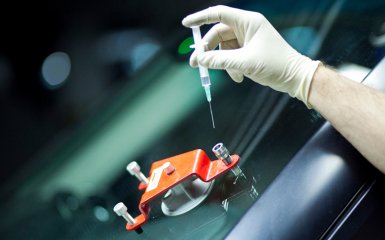
The hood is the first to absorb stones, sand, ice and road dirt. Therefore, small chips appear on it even in careful drivers. Some of these defects can be touched up with your own hands without completely painting the part. But the result depends on the depth of the damage, the correct selection of paint and patient preparation.
Points of attention
- Chips on a car hood need to be repaired in a timely manner to cover exposed metal or soil, reduce the visibility of the defect, and prevent corrosion.
- Local repair of hood chips requires cleanliness, accuracy, and appropriate materials, including paint according to the car code, clear varnish, and primer for deep damage.
- When choosing a paint for your hood, it is best to use paint that matches the car's code, as this will provide the most accurate shade. Before applying, test the paint on an inconspicuous area.
Do-it-yourself repair of chips on a car is not always “like from the factory.” Its main task is to cover the exposed layer, reduce the visibility of the defect, and prevent corrosion.
Why chips on the hood need to be repaired on time
A chip is not just a cosmetic problem. A car's paintwork is made up of several layers: varnish, base coat, primer, and metal or other material of the part. When a stone pierces these layers, water, salt, dust, and chemicals enter the damage.
If the chip has reached the metal, rust may appear over time. It can spread under the paint, causing a small spot to turn into a bulge or stain. In that case, simply touching up may not be enough.
Timely touch-up of car chips helps:
to cover exposed metal or soil;
slow down the development of corrosion;
make the defect less noticeable;
maintain a neat appearance of the hood;
avoid more expensive body repairs in the future.
Assess the depth of the damage
Before removing chips on the hood, you need to understand how deeply the LFP is damaged. The set of materials and the technology itself depend on this.
Only the varnish is chipped.
If you see a shallow scratch or dull spot but the paint color hasn't changed, it's likely that only the paint is damaged. In this case, local polishing is sometimes sufficient. It's not always necessary to paint the area.
Damaged base paint
If a lighter or darker spot is visible in the center of the chip, but the metal is not visible, the damage has reached the paint or primer layer. This usually requires touch-up paint according to the car code, and after drying, a thin layer of varnish.
Soil or metal visible
A gray, white, or black layer may be factory primer. A shiny or dark solid base often indicates exposed metal. It is advisable to seal such a chip as soon as possible, especially if the car is operated in the winter or is often parked outdoors.
Is there rust or swelling?
A red spot, roughness, or swelling around a chip is a sign of corrosion. In this case, simply applying paint over the top is not enough: the rust must be carefully removed and the surface prepared. If the swelling is large or the paint is peeling, it is better to contact a body shop.
What to prepare for chip repair
Local hood repairs don't require a professional camera, but they do require cleanliness, accuracy, and the right materials.
Basic set:
car shampoo or mild detergent;
clean microfiber cloths;
bodywork degreaser or other compatible product;
masking tape;
paint by car code;
clear varnish for automotive LFP;
metal primer if the chip is deep;
thin brush, applicator, toothpick or special car repair pencil;
fine-grained abrasive or sanding sponge for spot work;
polishing paste for final leveling;
nitrile gloves, eye protection, and a respirator if necessary.
It is best to work in a dry, clean, well-ventilated area. Do not repair chips in direct sunlight, rain, strong winds, or on a hot hood.
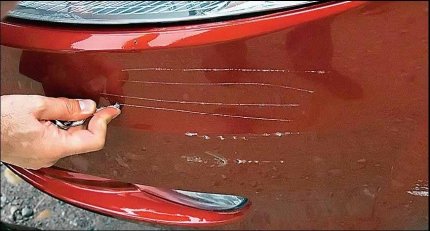
How to choose paint for the hood
The most reliable option is to paint by car code. The color code is usually indicated on the body information plate, in the service documentation, or can be determined by the VIN at a dealer or specialized auto paint store.
It is important to understand: even the right paint may differ slightly from the actual color of the hood. Reasons:
factory shades may have variations;
varnish and base fade over time;
previous repairs may have changed the tone of the part;
metallic and pearlescent depend on the angle of application and lighting;
Too thick a layer of paint makes the stain darker or more noticeable.
Before applying to the hood, it is advisable to test the paint on an inconspicuous area or a separate plate. This is especially important for silver, pearl white, red and complex dark colors.
Step-by-step instructions: how to remove a small chip
Below is a basic scheme for a small chip without active rust. Always check the manufacturer's instructions before using a specific primer, paint or varnish: drying times and material compatibility may vary.
1. Wash the hood
Thoroughly wash away dust, sand, insect tracks and road grime. Failure to do so can cause dirt to get into the chip or under the applicator and impair adhesion.
After washing, wipe the hood with a clean microfiber and let the area dry completely.
2. Inspect the chip in good light.
Assess for metal, dirt, rust, or cracks around the defect. If the chip is very small, you can take a close-up photo of it to make it easier to see the edges of the damage.
3. Degrease the surface
Apply the degreaser to a cloth, not pour it directly onto the hood. Carefully wipe the area around the chip. Do not use harsh household solvents without understanding their action: they can damage the paint or leave marks.
4. Protect the area around
You can apply masking tape around the defect, but not too close to the chip itself. This is to prevent paint from accidentally spreading across the hood. For very small spots, it is sometimes more convenient to work without tape, but as carefully as possible.
5. Apply the paint in a thin layer
Don't try to fill the chip in one go. It's better to apply several very thin coats with drying breaks than one thick blob. For spot chips, it's convenient to use a toothpick or thin applicator: the paint should go right into the depression, not in a wide spot around it.
The paint should gradually fill the chip almost to the level of the surrounding coating, but taking into account the fact that there will still be varnish on top.
6. Add clear coat
Once the base coat has dried according to the material's instructions, apply a thin coat of varnish. This protects the base and adds shine. Excess varnish can create a bump that is harder to smooth out later.
7. Let the repair stand
Do not rush to polish the area immediately. The varnish needs to harden. The exact time depends on the material, temperature and humidity. Refer to the manufacturer's instructions and allow for extra time.
What to do if the chip has reached the metal
A chip on the metal on the hood requires a more careful approach. The main mistake is to immediately cover it with paint without removing traces of corrosion and not using primer where it is needed.
The algorithm could be as follows:
Wash and dry the hood.
Carefully clean the chip from dirt and loose paint particles.
If there is rust, carefully remove it with a fine abrasive or a special tool for small defects.
Degrease the area.
Apply a thin layer of primer compatible with the metal and subsequent paint.
After the soil has dried, apply the paint in thin layers.
Seal with clear varnish.
After complete drying, carefully polish if necessary.
How to stop rust on a chip completely depends on its depth. If the corrosion has already penetrated the paintwork, a spot repair may be a temporary solution. In this case, a professional assessment is required.
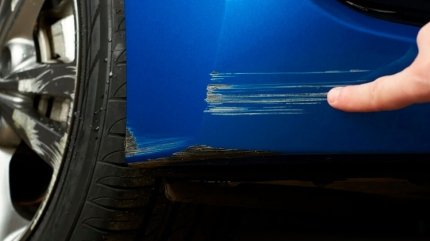
How to smooth and polish the repair area
After tinting, sometimes a small bump of varnish or paint remains. It can be made less noticeable, but caution is required here.
What is important:
do not sand the fresh coating until it is completely dry;
do not use a coarse abrasive for a small chip;
do not press hard on one point;
don't try to "even everything out in a minute";
It's better to do less than to rub the varnish around the defect.
Polishing after tinting should be gentle. For a beginner, it is safer to limit yourself to light hand polishing with finishing paste after sufficient exposure. If the defect is located in a prominent place and the color is complex, aggressive sanding can make the stain more noticeable.
Common mistakes when repairing chips
Do-it-yourself paintwork repairs often go wrong not because of bad paint, but because of haste.
The most common mistakes:
Applying paint over dirt or wax. The paint may not adhere well.
Lack of degreasing. Even an invisible film interferes with adhesion.
Too thick a layer. A drop forms that falls into the eyes.
Ignoring rust. Corrosion can continue to develop under the new layer.
Selecting paint "by eye." The shade often doesn't match.
Working in the sun or a hot hood. The material may dry unevenly.
Polishing too early. Fresh paint is easily damaged.
Use of random products. For example, nail polish or household enamels are not a complete replacement for automotive materials.
Car repair pencils may be convenient, but they're not magic. On large or deep chips, the pencil often leaves a noticeable blob, especially if you apply a lot of material at once.
When is it better to contact a painter?
Not every defect is worth repairing in a garage. Sometimes local touch-up only partially masks the problem.
It is better to go to a body shop if:
there are a lot of chips, and the hood looks "beaten with sand";
there is swelling of the paint or noticeable rust;
the damage is large and has uneven edges;
the car is new, expensive or has a very complex color;
the hood has already been painted, and it is unknown what materials were used;
you need the most unnoticeable result;
there is doubt whether the aluminum hood or other specific surface is damaged.
A professional painter can offer spot repairs, touch-up painting, or full hood painting. The choice depends on the number of defects, color, condition of the paint, and the expected result.
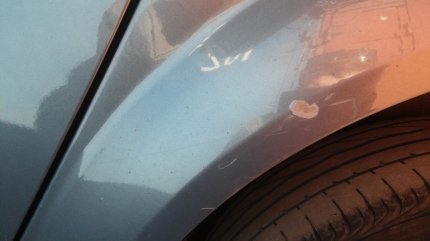
How to prevent new splits
It is impossible to completely protect the hood from stones, but the risk can be reduced.
Practical tips:
Keep a greater distance behind trucks and cars without mudguards;
do not press against the flow on gravel or road repair sections;
wash the hood regularly, especially after reagents and dirt;
do not wipe dry dust with a rag - this scratches the varnish;
Seal small chips before rust appears;
consider anti-gravel film for the front of the hood;
use a protective wax, sealant, or other coating as additional care.
Protecting the hood from chips does not make the LFP invulnerable. Film, wax or ceramic coating can reduce the effects of minor impacts, but a strong stone impact can still leave a mark.
Conclusion
It is possible to remove chips on the hood with your own hands if the defects are small, there is no serious rust, and the owner is willing to work carefully. The main stages are simple: wash, assess the depth, degrease, apply primer if necessary, then paint according to the car code and varnish.
The best results come not from a thick coat of paint, but from thorough preparation, the right materials, and patience. If there are a lot of chips, swelling, or a barely noticeable repair, it's safer to call a professional painter.
FAQ
Can a chip on the hood be removed without painting?
If only the clear coat is damaged, local polishing sometimes helps. If the chip has reached the paint, primer, or metal, touch-up painting is usually required.
Is it necessary to apply soil?
If exposed metal is visible, a primer is usually needed for better adhesion and protection. If only the base is damaged and the primer is not broken through, paint and varnish are sometimes sufficient. Refer to the condition of the chip and the material instructions.
What to do if the chip already has rust?
Rust should be carefully removed before applying primer and paint. If the corrosion has spread under the coating or there is swelling, it is best to take the car to a body shop.
Can I use nail polish instead of car paint?
No, nail polish is not designed for automotive LFP, ultraviolet light, temperature changes, and road chemicals. It may vary in color, stick poorly, or make subsequent repairs difficult.
Why is the paint code still different?
The color of a car changes due to burn-in, the age of the paint, previous repairs, and application characteristics. For metallics and pearlescents, the shade also depends on the viewing angle and the location of the particles in the paint.
When can I polish the tinted area?
The exact time depends on the paint, varnish, temperature and humidity. Do not polish a fresh coat immediately. Allow to dry completely according to the material manufacturer's instructions.
Can school buildings be repaired in winter?
This is only possible under appropriate conditions: in a dry, clean and sufficiently warm room. In frost, condensation or high humidity, materials may not adhere well and may take a long time to dry.
If there are a lot of chips, should I paint the entire hood?
If the hood is covered in dozens of chips, local touch-up paint can look patchy. In such a situation, professional painting or repair with the right technology often gives a better result.
Disclaimer: The material is for informational purposes only. When working with auto chemicals, use gloves, ventilation, and follow the manufacturers' instructions. Complex damage to the LFP, corrosion, or large defects should be evaluated by a body shop.
undefined

