
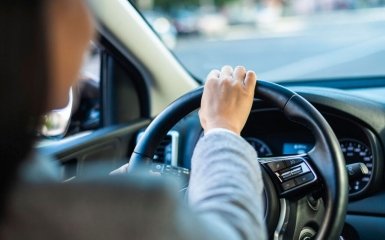
Taxi drivers know well where a car imperceptibly “eats up” extra liters: sharp starts, rushing between traffic lights, underinflated tires, long waits with the engine running, chaotic routes, excess cargo in the trunk, and late service. For a driver who drives many kilometers every day, even a difference of 0.5–1 liter per 100 km quickly turns into tangible money.
Points of attention
- In the city, the most fuel is consumed on constant starts and accelerations.
- Soft start saves fuel, reduces wear on tires, brakes, clutch, and transmission, and makes the ride more comfortable for passengers.
- Every extra kilogram needs to be accelerated after the traffic light, lifted up on the rise, stopped with the brakes, and accelerated again.
Fuel economy does not mean driving slowly or dangerously. On the contrary, most fuel-efficient driving techniques are based on smoothness, predictability, a safe following distance, and proper vehicle maintenance. The EPA recommends driving more slowly, avoiding sudden acceleration and braking, reducing idling, not carrying too much, using less air conditioning, maintaining your vehicle’s service, and checking tire pressure to improve fuel economy.
For an ordinary driver, these rules work the same as for a taxi. The only difference is in the scale: a taxi driver sees savings per day, a private owner - per month or season. The best result is not given by one “secret life hack”, but by a system of several habits.
What search intent does this topic have?
The intent is mixed: informational, instructional, and practical-commercial. A person wants not just to find out why a car consumes a lot of fuel, but to get a clear set of actions: how to drive, what to check, when to turn off the engine, how to use the air conditioner, whether tire pressure affects it, how to plan a route, and what mistakes increase fuel consumption.
Therefore, the material should answer the main question: how to reduce gasoline, diesel, or gas consumption without compromising safety, vehicle life, and comfort.
Soft start: why sharp accelerations burn money
In the city, the most fuel is consumed by constant starts and accelerations. When the driver sharply presses the gas pedal, the engine receives more fuel for rapid acceleration. If there is a red light or traffic jam 200–300 meters ahead, the energy of this acceleration simply turns into heat on the brakes.
The DOE notes that aggressive driving—speeding, hard acceleration, and hard braking—can reduce fuel economy by 30% on the highway and up to 40% in stop-and-go traffic. The Alternative Fuels Data Center also cites a range of 15–30% fuel economy loss on the highway and 10–40% in stop-and-go traffic due to aggressive driving.
A practical habit of a taxi driver is not to start “into the floor” if the flow stops anyway. It is better to move off smoothly, gain speed without jerking, and look further than the car in front: at a traffic light, a pedestrian crossing, a bus stop, road repairs, or the tail end of a traffic jam.
Soft start saves fuel, reduces wear on tires, brakes, clutch, and transmission, and makes the ride more comfortable for passengers.
Distance helps save money
A safe distance is needed not only to avoid accidents. It gives you time to react calmly. When a driver drives too close to the car in front, he is forced to repeat every jerk: gas, brake, gas, brake. As a result, fuel consumption increases, but the average speed hardly changes.
Ukrainian traffic rules require the driver to maintain a safe distance and interval depending on the speed, road conditions, load, and condition of the vehicle. To save money, it works very simply: the more time you have to react, the easier it is to roll smoothly, rather than constantly braking.
In the city, look not at the bumper of the car in front, but at 3-5 cars ahead. If you see that the flow is stopping, it is enough to let off the gas earlier. In many modern cars, when driving in gear without pressing the accelerator, the fuel supply can decrease sharply or temporarily stop. The British Vehicle Certification Agency advises to remove your foot from the accelerator in advance during deceleration, leaving the car in gear, as in many cars this activates the almost zero fuel supply mode.
Uniform speed on the track
On the highway, the main enemy of economy is not the distance covered, but high speed and air resistance. The faster the car goes, the more energy is needed to overcome aerodynamic resistance. That is why the difference between 100 and 130 km/h can be much more noticeable than it seems while driving.
The DOE gives an example: for a passenger car, fuel economy at 80 mph, or about 129 km/h, is about 27% lower than at 60 mph, or about 97 km/h. In its fuel economy article, the DOE also notes that average fuel economy typically deteriorates rapidly after 50 mph, or about 80 km/h.
This does not mean that you should drive unnaturally slowly and obstruct the flow. Economical speed should correspond to the road, the rules, the weather and safety. But if the choice is between a steady 100–110 km/h and constant jerks to 130–140 km/h with braking before each deceleration, the first option is almost always more profitable.
The Ministry of Internal Affairs of Ukraine reminds that a safe speed is the speed at which a driver can control the car in specific road conditions; there are also established restrictions for settlements, roads outside them, and highways. Economy should not be the reason for violating the rules or dangerous driving.
Cruise control: when it helps and when it doesn't
On a flat road, cruise control helps maintain a steady speed and avoid “walking” on the gas pedal. The DOE indicates that using cruise control while driving on the highway helps maintain a steady speed and, in most cases, limits fuel consumption.
But cruise control is not always the most economical. On a wavy road, in the mountains or in heavy traffic, the system can sharply increase the gas to maintain the set speed. An experienced driver sometimes acts more gently: he loses speed a little on the rise, does not accelerate before a short descent and does not provoke unnecessary braking.
It is best to use cruise control on flat areas with predictable traffic flow. In the city, on slippery roads, in rain, fog or heavy traffic, it is better to control the speed manually.
Tire pressure: a small thing that constantly affects fuel consumption
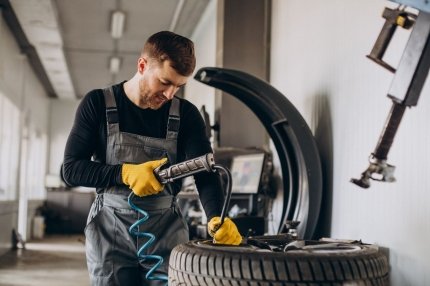
An under-inflated tire deforms more during movement. This increases rolling resistance, the engine requires more energy, and the tire heats up and wears out faster. For a taxi driver, this is a daily loss of money, for a private owner - an imperceptible but regular overpayment.
The EPA notes that underinflated tires increase wear, reduce fuel economy, and increase emissions; check the vehicle's placard or driver's door pillar for the correct pressure. NHTSA recommends checking the pressure in all tires, including the spare, at least once a month and only on "cold" tires, after the vehicle has been parked for at least three hours.
The DOE estimates that proper pressure can improve fuel economy by an average of 0.6% and potentially up to 3%; each 1 psi drop in pressure below recommended can reduce fuel economy by an average of about 0.2%.
It is not worth over-inflating tires “to save money.” This worsens grip, comfort, braking, and even wear. The guideline is not the maximum pressure on the tire sidewall, but the car manufacturer’s recommendation.
Excess cargo and trunk storage
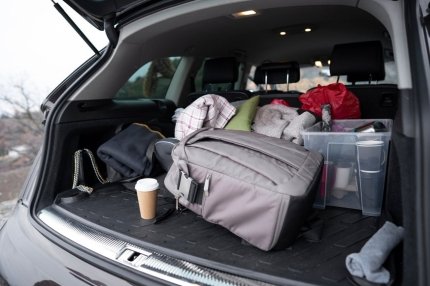
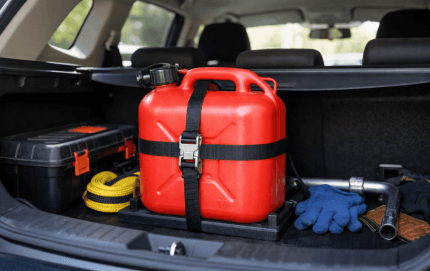
Every extra kilogram must be accelerated after the traffic light, lifted up on the hill, stopped with the brakes and accelerated again. In a taxi, the trunk often has to be free for passengers, so professional drivers rarely carry unnecessary things. Ordinary drivers often keep tools, canisters, old fluids, seasonal items, unnecessary child seats, chains, jacks, boxes and sports equipment in the car.
The EPA explicitly cites excess cargo in the trunk as a factor that reduces MPG. The DOE adds that removing unnecessary cargo can improve mileage per gallon, and that roof cargo impairs aerodynamics; rear cargo boxes or platforms have less of an impact than overhead boxes.
Smart thrift doesn't mean putting away a first aid kit, fire extinguisher, emergency stop sign, or a tool you need on the road. It's worth putting away something that has been sitting around for months without any use.
Roof rack and aerodynamics
On the highway, extra air resistance can cost more than extra weight. An empty roof rack, crossbars, bike rack, or box all change the airflow around the car. At city speeds, the effect is less pronounced, but on the highway, it’s much more noticeable.
The Vehicle Certification Agency cites an example where a roof box can add about 22% to fuel consumption at 62 mph and 39% at 75 mph, and even empty crossbars can add about 7% at highway speeds.
The rule is simple: if you don't need a rack, box or bike rack this week, it's best to remove it. This is a free savings that is especially noticeable on long routes.
Idling: when it is better to turn off the engine
Taxi drivers are often waiting for a passenger, an order, boarding, payment or the door to open. If the engine is running all this time, fuel is wasted without moving. For a short stop, this may seem like a small thing, but over the course of a day, these minutes can add up.
The DOE notes that idling can use a quarter to a half gallon of fuel per hour, depending on the vehicle, accessories, climate and other conditions. A separate DOE report states that even 10 seconds of idling can use more fuel than stopping and restarting the engine.
In real life, you don't need to fanatically turn off the engine at every second of pause. But if the wait is going to last a minute or more, and the engine isn't needed for safety, heated windows, interior cooling, or special equipment, it's often more cost-effective to turn it off.
The start-stop system in modern cars is designed for this very purpose. If it is working and provided for by the manufacturer, turning it off “because it’s better for the engine” without a specific reason is not always rational.
Air conditioning or open windows
Air conditioning puts a strain on the engine, but open windows at high speeds worsen aerodynamics. Therefore, there is no universal answer to “always turn off the air conditioning.” Taxi drivers usually act according to the situation: in the city, they first ventilate the cabin, and at speed, they keep the windows closed and use the climate moderately.
The DOE recommends driving briefly with the windows open in hot weather to let hot air out of the cabin, then using the air conditioning; at lower speeds, you can open the windows, and on the highway, it is better to use the air conditioning with the windows closed. The EPA also lists high levels of air conditioning and other accessories as factors that worsen fuel economy.
Practical techniques:
do not immediately turn the air conditioner on to maximum in a hot cabin;
first open the doors or windows for 30–60 seconds;
use recirculation after primary cooling;
do not keep the temperature too low;
close the windows on the highway;
park in the shade or use a sunshade.
Driver comfort is also important. An overheated cabin impairs concentration, so economy should not lead to fatigue and a dangerous reaction.
Route: shorter is not always cheaper
The navigator often offers the shortest route in kilometers, but a route with less traffic jams, fewer traffic lights, more even speed, and better road surface may be more economical. Taxi drivers understand this well: sometimes an extra 1–2 km on a free road is more profitable than 20 minutes in heavy traffic.
The Alternative Fuels Data Center explains that route optimization helps reduce distance traveled, traffic stops, time in traffic, and extra miles; for fleets, apps and telematics help with this. For the private driver, the role of telematics is often fulfilled by simple traffic navigation.
Before your trip, you should check out:
are there any traffic jams;
where are the roadworks;
Are the streets blocked?
how many traffic lights are on the route;
is there a detour with smoother traffic;
Is the navigator leading you through a bad primer?
Is it possible to combine several things into one trip?
The EPA recommends combining several short trips into one longer one, as a series of short trips is often less fuel-efficient. This is especially true in the winter, when a cold engine takes longer to reach efficient operation.
Technical condition: economical driving will not save a faulty car
Even the most careful driver cannot compensate for engine failure, brake jamming, bad spark plugs, old filters, improper lubrication, problems with injectors, sensors, thermostats, or wheel alignment. Taxi drivers with high mileage often understand better than others: preventive maintenance is cheaper than excess fuel and subsequent repairs.
The EPA notes that a well-maintained vehicle is more fuel-efficient, safer, and has lower emissions; drivers are advised to follow the manufacturer's maintenance schedule and use the recommended grade of motor oil. The DOE indicates that keeping the engine in good condition can yield an average of about a 4% improvement in fuel economy, and fixing a serious problem, such as a faulty oxygen sensor, can increase mileage by at least 40%.
Especially check:
air filter;
spark plugs;
injectors;
oxygen sensors;
thermostat;
tire pressure;
ascent and collapse;
condition of brake calipers;
lubricant of the required viscosity;
engine errors;
fuel system.
If consumption has increased sharply without changing the route and driving style, diagnostics are needed first, not the search for a “magic” additive.
Correct gear shifting
On a car with a manual transmission, gearing is very important. Driving in too low a gear keeps the engine at high revs and increases fuel consumption. Shifting too early under load is also harmful: the engine can “pull from the bottom” with vibrations, detonation or poor response.
The Vehicle Certification Agency recommends that when accelerating, shift up to a higher gear earlier, when the engine is comfortable with it, and use moderate pressure on the accelerator; the required rpm depends on the vehicle, load, and road gradient.
For automatic transmissions, the logic is similar: smooth acceleration allows the transmission to shift into a higher gear sooner. Eco mode can smooth out the throttle response and optimize shifting, but it doesn’t replace common sense. When overtaking, entering an expressway, or in a dangerous situation, power is more important than minimal fuel consumption.
Fuel, octane number and additives
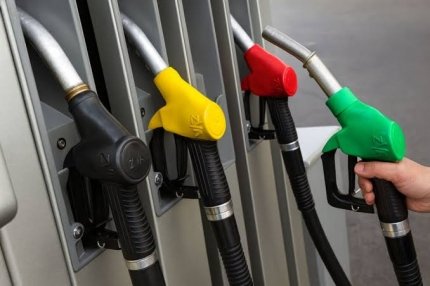
Many drivers believe that more expensive gasoline automatically reduces fuel consumption. In fact, you should use the type and octane rating recommended by the car manufacturer. If your engine is designed to run on regular gasoline, switching to premium fuel will not necessarily save you money.
The FTC warns that regular octane is the recommended grade for most vehicles, and using a higher octane gasoline than the manufacturer recommends does not provide any benefit. The DOE also points out that using the manufacturer's recommended grade of motor oil can improve fuel economy, but this should be a recommendation from the manual, not an experiment.
You should be careful with additives. Some products have limited effect, some are useful only for specific systems and symptoms, and some may not be suitable for modern engines with catalysts, particulate filters, or sensitive fuel equipment. If the car is in good condition, the best “additive” is high-quality fuel, timely service, and a normal driving style.
How to calculate real savings
An on-board computer is useful, but for an honest assessment, it's better to keep a simple log. Record your mileage, fuel consumption, price, route, season, tire pressure, and driving style. Compare not just one day, but at least 3–5 fill-ups.
The formula is simple: divide the number of liters by the mileage traveled and multiply by 100. For example, if after refueling you drove 520 km and filled up with 42 liters, the average consumption is 8.1 l/100 km.
You need to evaluate fuel economy under the same conditions. You shouldn't compare winter traffic jams with summer highways, short-distance trips with long-distance warm-up, or city trips with autobahns. The EPA emphasizes that real fuel economy always depends on many factors: driving style, speed, idling, load, air conditioning, condition of the car, tires, traffic jams, temperature, and road conditions.
Hybrids, diesel, gas and electric vehicles: what's changing
The principles of smooth driving work for all types of cars, but the effect is different.
Hybrids can be more economical in the city than on the highway because they recover some of the energy during braking and reduce idling losses. The EPA notes that a hybrid can have better fuel economy in the city due to the recovery of braking energy and reduced idling.
In diesel engines, it is important to avoid constant short trips without warming up and to monitor the condition of the injection system, EGR, turbine and particulate filter. In gas cars, the consumption in liters is often higher than in gasoline, so you need to calculate not only l/100 km, but the cost of 100 km. In electric cars, similar principles affect the range: sharp acceleration, high speed, air conditioning, heating and tire pressure are also important.
What not to do to save money
Fuel economy shouldn't come at the expense of safety. Unsafe practices can save you money and create the risk of accidents or repairs.
It is not worth it:
drive too slowly and obstruct the flow;
turn off the engine while driving;
drive in neutral down a hill in a modern car;
overinflate tires;
turn off headlights, wipers or heated windows when they are needed;
drive without air conditioning until the driver overheats;
delay maintenance;
use questionable additives;
refuel with fuel of unknown quality;
taking shortcuts through dangerous yards, roadsides, or bad roads.
The Ministry of Internal Affairs of Ukraine advises that in difficult weather conditions, you should check the technical condition of your car, brakes, tires, and lighting, keep a safe distance, do not exceed speed, and avoid sudden maneuvers. These rules are more important than any savings.
Practical checklist for fuel-efficient driving
For everyday use, a simple algorithm is enough:
Move smoothly.
Look at the road further than one car ahead.
Keep a safe distance.
Let off the gas before the traffic light.
Avoid braking suddenly and unnecessarily.
Keep a steady speed on the track.
Don't carry unnecessary things in the trunk.
Remove the roof rack or box when not needed.
Check tire pressure once a month.
Turn off the engine during long waits.
Use air conditioning wisely.
Plan your route taking traffic jams into account.
Combine short trips.
Maintain your car according to regulations.
Keep a spending journal for at least a month.
This approach does not require additional costs. It works because it eliminates the main causes of overspending.
Typical driver mistakes
The first mistake is to accelerate to a red light. This does not reduce time, but increases fuel consumption and brake wear.
The second mistake is driving too close to the car in front. The distance allows you to move more smoothly.
The third mistake is to ignore tire pressure. TPMS can only be triggered when the pressure drops significantly, so a manual check is still necessary. NHTSA emphasizes that even in cars with a pressure monitoring system, the driver should perform a monthly check.
The fourth mistake is to always carry a roof rack. At speed, this noticeably affects fuel consumption.
The fifth mistake is to warm up the engine for a long time on the spot. For many modern cars, long idling warm-up is not an economical solution.
The sixth mistake is to turn off the air conditioner at all costs. On the highway, open windows can be less beneficial, and an overheated driver can be less attentive.
The seventh mistake is to look for savings in fuel with a higher octane rating when the manufacturer does not require it.
The eighth mistake is not considering the full picture. Fuel consumption in liters is important, but repair costs, tires, brakes, time in traffic jams, and the life of the car also matter.
Conclusion
Taxi drivers save fuel not because of a secret, but because of discipline. They move off more smoothly, do not accelerate before stopping, keep their distance, choose a route with less downtime, monitor tire pressure, do not carry unnecessary things, and turn off the engine during long waits.
For the average driver, these techniques yield the same result: lower fuel consumption, a smoother ride, less wear and tear, and more control over your car. It's best to start simple: check your tire pressure, remove unnecessary items from the trunk, stop making sudden starts, keep track of your fuel consumption, and plan your trips based on traffic.
Economical driving should remain safe. You should not drive unnaturally slowly, turn off necessary systems, over-inflate tires, or ignore the rules. Real economy is when a car uses less fuel without risk to the driver, passengers, or the car's life.
FAQ
How to really reduce fuel consumption in the city?
Smooth starts, early release of gas at traffic lights, a safe distance, avoiding hard braking, shorter idling, and a route without heavy traffic jams work best. The EPA advises avoiding hard stops and starts, idling, excess weight, and poor vehicle condition.
Does smooth driving really save fuel?
Yes. The DOE notes that aggressive driving with hard acceleration and braking can reduce fuel economy by up to 30% on the highway and up to 40% in stop-and-go traffic.
What speed is the most economical on the highway?
The exact speed depends on the vehicle, engine, transmission, aerodynamics, tires, and load. The DOE indicates that the fuel economy of a passenger car at 80 mph is about 27% lower than at 60 mph, and the best fuel economy is usually achieved at the lowest speed in the highest gear.
How often should you check your tire pressure?
NHTSA recommends checking the pressure in all tires, including the spare tire, at least once a month and with cold tires after the vehicle has been parked for at least three hours. The correct pressure should be taken from the vehicle's placard or manual, not from the tire sidewall.
Do I need to turn off the engine while waiting?
If the wait is going to be significantly longer than a short pause and the engine is not needed for safety, defrosting the windows, or cooling the cabin, it is often a good idea to turn it off. The DOE notes that even 10 seconds of idling can use more fuel than stopping and restarting the engine.
What is more economical: air conditioning or open windows?
In the city, you can briefly ventilate the cabin through the windows at low speeds. On the highway, open windows impair aerodynamics, so moderate use of air conditioning with the windows closed is often more practical. The DOE recommends opening windows at lower speeds and using air conditioning at highway speeds.
Does a roof rack affect fuel consumption?
Yes, especially at speed. The Vehicle Certification Agency cites the example that a roof box can significantly increase fuel consumption at highway speeds, and even empty crossbars can add air resistance.
Does cruise control help save money?
On a flat road, it often does, because it maintains a constant speed. The DOE notes that cruise control on the highway helps maintain a constant speed and in most cases reduces fuel consumption. In mountains, heavy traffic, or on slippery roads, it is better to control the speed manually.
Is it worth pouring in more expensive gasoline to save money?
It's a good idea to use fuel with the octane rating recommended by the car manufacturer. The FTC warns that for most cars, using gasoline with a higher octane rating than recommended does not provide any benefit.
Why did the consumption suddenly increase?
The causes can include cold weather, traffic jams, short trips, low tire pressure, faulty brakes, a dirty filter, problems with sensors, injectors, spark plugs, or the oxygen sensor. The DOE notes that fixing a serious problem, such as a faulty oxygen sensor, can significantly improve fuel economy.

