
Water is not only wasted when we shower, do laundry or wash dishes. Some of the consumption remains unnoticed: the tap runs while we brush our teeth, the toilet flushes slowly, and the washing machine starts for a few things. Over the course of a month, such habits can add hundreds of liters to our total consumption. Saving water does not necessarily mean limiting personal hygiene or giving up familiar comfort. Often, it is enough to change the way we use plumbing, install an inexpensive aerator or load household appliances correctly.
The most effective ways to save water at home are to eliminate leaks, reduce the time the faucet is running, use water-saving plumbing fixtures, and run the washing machine and dishwasher with optimal loads.
For example, reducing daily shower time by three minutes at a consumption of 8 liters per minute allows one person to use approximately 720 liters less per month.
Let's look at where the most water is consumed, what ways to save money really work, and how to calculate their impact on utility bills.
How much water does a person consume per day and where is it spent?
The amount of household water consumption depends on the number of residents, type of plumbing, household appliances, and habits.
According to estimates by the U.S. Environmental Protection Agency (EPA), a significant portion of the water inside residential buildings is used in bathrooms.
A lot of water is consumed especially through toilets, shower systems, and faucets.
However, American indicators should not be automatically transferred to every Ukrainian apartment: plumbing, household habits, and water supply conditions may differ.
To understand the scale, it is enough to look at the costs of individual devices.
| Household action | Consumption example |
| Shower for 10 minutes | 80 l at a flow rate of 8 l/min |
| Shower for 5 minutes | 40 l at a flow rate of 8 l/min |
| Open tap for 3 minutes | 18 l at a flow rate of 6 l/min |
| One full toilet flush | For example, 6 liters |
| One economical drain | For example, 3 liters |
| Modern dishwasher cycle | Approximately 10–13 liters for many models |
| Washing | Depends on machine, program and load |
The values given are examples and not universal standards. The actual consumption of a particular faucet, shower head or household appliance may vary significantly.
1. Check for hidden leaks
Before changing your household habits, you should make sure that water is not being wasted due to faulty plumbing.
Sometimes even a small leak gradually leads to significant losses.
Especially often, imperceptible malfunctions occur in toilet flush mechanisms, faucets, and pipe connections.
The EPA estimates that common household leaks can cause significant water loss, and fixing common problems can reduce household bills by about 10%. This is an average for the United States, not a guaranteed savings for every home.

How to check for meter leaks
The easiest way is to use a water meter.
Turn off all taps and appliances that use water.
Record the meter readings.
Do not use water for about two hours.
Recheck the readings.
If they have changed even though water has not been used, there may be a malfunction or other unnoticeable consumption.
Before checking, you need to take into account the operation of the boiler, reverse osmosis system, humidifier, or other equipment connected to the water supply.
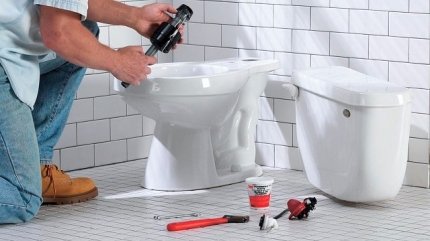
How to find a leak in a toilet
One way to check is to add a few drops of food coloring to the tank and leave the water on for about ten minutes.
If discoloration appears in the bowl, this may indicate a leak in the drain mechanism.
After checking, the water must be flushed to avoid staining the plumbing.
Defective seals and valves should be repaired or replaced with suitable parts.
2. Install the aerators on the faucet
An aerator is a small nozzle on the end of a faucet that changes the nature of the water flow and can limit its flow rate.
Water-saving models help reduce consumption without significantly compromising convenience when washing hands or other daily activities.
However, not every aerator is equally effective.
The result depends on the design, water pressure and initial flow rate of the mixer.
How to check how much water a faucet uses
You will need a container of known volume and a stopwatch.
For example, if 1 liter of water is collected in 10 seconds, the flow rate is:
1 × 60 / 10 = 6 liters per minute.
If after installing the aerator the flow rate decreases to 4 liters per minute, each minute of faucet operation will save approximately 2 liters.
In 10 minutes of total daily use, the difference will be 20 liters, or about 600 liters in 30 days.
This is a hypothetical example. If the faucet already has an economy mode, an additional nozzle may not provide a noticeable result.
Where is the best place to install an aerator?
It can be most beneficial in the bathroom, where water is regularly used for hand washing and other short procedures.
In the kitchen, it is important to consider the nature of use.
To fill a pot with a certain amount of water, an aerator will mostly increase the waiting time rather than reduce the required volume.
Therefore, its advantages are most noticeable where water often flows unnecessarily.
3. Shorten your shower time and check your shower head
Showering can be one of the biggest sources of daily water consumption.
Especially if the watering can has a high throughput and the water remains open throughout the procedure.
For example, at a flow rate of 10 liters per minute, a fifteen-minute shower requires approximately 150 liters.
If you reduce it to eight minutes, the consumption under the same conditions will be 80 liters.
How much can you save on a shorter shower?
Let's consider an example for one person.
The initial shower duration is 10 minutes, the new one is 7 minutes. Water consumption is 8 liters per minute.
Daily savings:
3 × 8 = 24 liters.
In 30 days:
24 × 30 = 720 liters, or 0.72 m³.
For two people with similar habits, the potential savings would be approximately 1.44 m³ per month.
The actual result depends on the number of showers and the actual flow rate of the shower head.
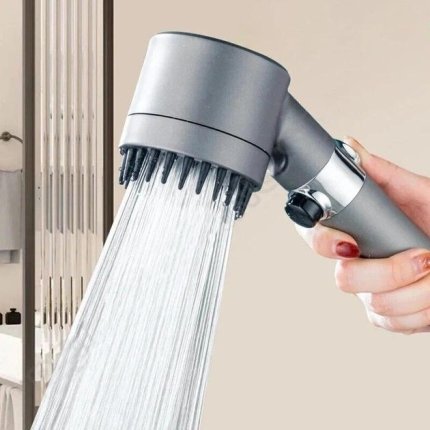
Does a water-saving shower head help?
Yes, if the new device really reduces water consumption.
For example, the American WaterSense program requires certified showerheads to have a maximum flow rate of approximately 7.6 liters per minute.
This is 20% less than the corresponding American standard for conventional watering cans.
However, the specific savings depend on which model is being replaced.
You don't need to focus only on the labels "eco" or "turbo." A more important indicator is the declared water flow rate in liters per minute.
4. Use a water-saving toilet flush
A cistern can waste a significant portion of a household's water.
According to the EPA, toilets account for about 30% of domestic water use in the average American home.
For Ukraine, the proportion may differ, but the principle remains the same: every extra liter during flushing accumulates throughout the day.
What are the benefits of a double flush?
Many modern tanks have two modes.
For example, one uses 3 liters, the other uses 6 liters.
If instead of a full 6-liter flush, a 3-liter flush is used in appropriate situations, the difference will be 3 liters per press.
With five such uses per day, the savings will be 15 liters, or approximately 450 liters per month.
However, you should not try to save money by not rinsing enough.
Pressing the button again may negate the expected savings.
Should I put the bottle in the tank?
Sometimes it is advised to put a plastic bottle in the tank to artificially reduce its volume.
This method is not universally safe.
A foreign object may interfere with the operation of the float, valves, or drain mechanism.
It is better to use the manufacturer's recommended adjustment or install a compatible dual flush system.
5. Use the dishwasher correctly
A common myth claims that washing dishes by hand is necessarily more economical.
In fact, modern dishwashers can use significantly less water, especially when fully loaded.
In a 2026 test by British consumer organization Which?, water consumption was compared between different dishwashing methods.
For 14 sets of dishes, the researchers obtained approximately the following indicators:
Hand washing - 63 liters.
A typical dishwasher program is about 13 liters.
Economy mode - about 9.7 liters.
These are the results of a specific comparison methodology and not a guarantee of equal savings for any machine or hand washing method.
How to reduce dishwasher water consumption
The most important thing is to load the appliance correctly.
There's no need to run an almost empty machine several times a day if the dishes can be safely stacked for a single cycle.
It is also worth using Eco mode when it corresponds to the type of pollution.
In many models, the economy program runs longer but may use less water and electricity.
Do I need to rinse the dishes before loading?
For many modern models, it is enough to remove large food residues.
Pre-rinsing each plate under an open tap often creates unnecessary costs.
However, you need to take into account the instructions for the specific dishwasher.
6. Wash dishes by hand without the tap constantly running
If there is no dishwasher or there are very few dishes, hand washing can also be organized more economically.
The main mistake is to leave the water running throughout the entire procedure.
At a flow rate of 8 liters per minute, ten minutes of continuous tap operation means approximately 80 liters of water.
How to wash dishes with less waste
A practical option is to collect water in a sink or a separate container for washing.
After cleaning, the dishes can be rinsed in an appropriate way, without leaving the tap open unnecessarily.
It is important not to use too much detergent as this can increase rinsing costs.
However, saving should not compromise hygiene.
Dishes after handling raw meat, poultry, and other potentially dangerous foods should be thoroughly cleaned.
You should not use dirty water to rinse dishes that have already been washed.
7. Run the washing machine with the optimal load
Washing machines differ in the amount of water they use during a single cycle.
The costs are affected by the drum design, program type, temperature and amount of laundry.
Models certified under the US ENERGY STAR program use, on average, approximately 30% less water compared to conventional machines in the same class.
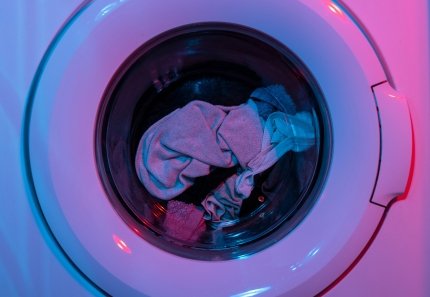
These indicators depend on the certification conditions and cannot automatically apply to every washing machine in Ukraine.
Why you shouldn't wash two items in separate cycles
If you run the machine with a minimum amount of clothes each time, the total water consumption may increase.
It is more practical to accumulate enough things for an appropriate load.
At the same time, there is no need to overload the drum.
Excessive amounts of clothing may impair the quality of the wash and require a repeat cycle.
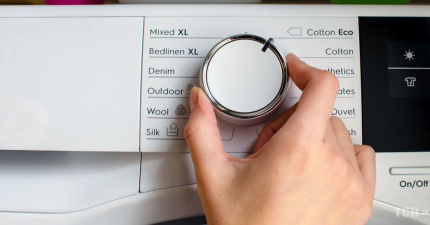
Does Eco mode save more water?
Often yes, but not always to the same extent.
Economy programs can run longer, using less water or lower temperatures.
Short mode is not necessarily the most economical: sometimes it is designed for a small load and has a different resource consumption logic.
Therefore, it is worth reviewing the program table in the passport of a specific model.
8. Turn off the water when brushing your teeth and shaving
This is one of the simplest habits that does not require additional purchases.
When the tap is constantly open, water is wasted even at times when it is not actually needed.
For example, if a faucet passes 6 liters per minute, and a person leaves it open for about two extra minutes twice a day, the losses will be:
6 × 4 = 24 liters per day.
In 30 days - 720 liters.
Do you need to save water when washing your hands?
The necessary duration and quality of the hygiene procedure should not be reduced.
You can turn off the water while soaping your hands, but you must rinse them properly afterward.
Likewise, you shouldn't save water at the cost of insufficient cleaning of your razor, toothbrush, or other personal hygiene items.
The goal is to eliminate unnecessary leakage, not to worsen the outcome.
9. Use water wisely when cooking
Cooking habits also affect consumption.
For example, a long continuous stream of water is sometimes used to wash vegetables, although the process can be organized differently.
A clean container of water is suitable for pre-cleaning some vegetables.
However, final washing of products that will be consumed raw must be carried out in accordance with food safety regulations.
How to wash vegetables and fruits
The FDA recommends washing fresh vegetables and fruits under running drinking water.
You don't need to use soap or regular household detergents for this.
Therefore, saving money should not mean replacing proper rinsing with repeated immersion in contaminated water.
You can shorten the duration of the continuous flow, remove soil beforehand with a suitable brush, and do not open the tap more than necessary.
Is it possible to save water when cooking?
For some dishes, less water than we are used to using is sufficient.
For example, vegetables can be steamed if this method is suitable for the recipe.
However, you should not arbitrarily reduce the amount of water when cooking cereals, pasta, or other foods if this will affect the result.
Savings must be combined with proper cooking technology.
10. Do not defrost food under a constant stream of water.
Sometimes frozen meat or fish is placed under an open faucet to speed up defrosting.
This method can lead to significant water waste.
In addition, improper defrosting increases the risk of microorganisms developing on the surface of the product.
How to defrost safely and economically
One of the most convenient ways is to transfer the product from the freezer to the refrigerator in advance.
This takes more time, but allows you to maintain the proper temperature.
Another acceptable option is defrosting in cold water in an airtight container with regular water changes.
After such defrosting, the product must be cooked immediately.
You should never leave raw meat on the kitchen table overnight.
11. Save water when cleaning your apartment
Daily cleaning of floors and furniture does not always require large amounts of water.
Moreover, excessive moisture can damage some coatings.
This is especially true for wooden floors, laminate flooring and furniture made from wood panels.
How to wash floors for less money
Instead of constantly rinsing the rag under the open tap, you can use a bucket with the appropriate amount of water.
For minor contamination, local cleaning is sometimes sufficient.
For example, a stain near the kitchen table doesn't necessarily have to be removed by washing the entire apartment.
At the same time, contaminated water should be replaced regularly.
You should not transfer microorganisms from the bathroom to kitchen surfaces by using the same cloth without proper cleaning.
12. Use rainwater and reclaimed water where safe.
In a private house, part of the needs for technical water can be covered by precipitation.
Rainwater is sometimes collected for watering ornamental plants or other non-potable purposes.
However, it is not necessarily pure.
According to the CDC, rainwater can contain microorganisms and chemical contaminants, even if it appears clear.
What is rainwater suitable for?
If the collection is properly organized, it can be used, for example, for watering ornamental plants that are not eaten.
It is better to use water of certified drinking quality for drinking, cooking, and washing fruits and vegetables.
The rainwater collection tank must be protected from debris, insects and pollution.
It is also important that the process water system does not have a dangerous connection to the drinking water supply.
Can water be reused after washing?
So-called gray water is used household water, for example after a shower or some other processes, but not toilet drains.
It may contain detergent residues, fats, salts and microorganisms.
Therefore, without a special cleaning system, its reuse has limitations.
The Royal Horticultural Society of Great Britain notes that in certain situations, greywater can be used for short-term ornamental plants, but does not recommend its use for edible crops due to the risk of contamination.
You should not store such water for more than 24 hours without a proper treatment system.
What are the most effective ways to save water?
Efficiency depends on initial conditions.
For example, replacing an old shower head can provide significant savings if it leaks a lot of water.
Instead, installing a new aerator on an already economical faucet sometimes hardly changes consumption.
| Way | Potential outcome | Implementation costs |
| Leakage elimination | From small to significant savings | Depends on the fault |
| Closing the tap | Reducing excess flow | No additional costs |
| Shorter shower | Savings depend on minutes and usage | No additional costs |
| Aerator | Less water consumption by the mixer | Usually small |
| Economical shower head | Cost reduction per minute | Moderate |
| Double toilet flush | Less water for individual flushes | Depends on the design |
| Optimal loading of equipment | Fewer unnecessary cycles | No additional costs |
| New water-saving technology | Potential long-term savings | Significant |
There is no need to immediately buy a new washing machine just to reduce water consumption.
If the old equipment is in good condition, it is advisable to first optimize its use.
How to calculate water savings in liters and hryvnias
To evaluate the result, you need to know three indicators:
How many liters can be saved in one action?
How often does it repeat?
How much does a cubic meter of water cost according to your tariff?
One cubic meter equals 1000 liters.
Example of calculation for a family
Let's say two adults shorten their showers by three minutes every day.
The flow rate of the shower head is 8 liters per minute.
Savings per day:
2 × 3 × 8 = 48 liters.
In 30 days:
48 × 30 = 1440 liters, or 1.44 m³.
If the conditional total cost of water supply and wastewater disposal is 50 UAH per cubic meter, the savings will be equal to:
1.44 × 50 = 72 UAH per month.
This is an illustrative calculation, not the current tariff for a specific city.
In the case of hot water, the energy consumption for heating it can be further reduced.
Why do you need to check tariffs separately?
In Ukraine, water supply and wastewater tariffs may vary depending on the locality, supplier, and consumer category.
In addition, the bill may include separate components: the volume of cold water, drainage, hot water or energy for its heating, and subscriber service.
Therefore, savings should be calculated based on actual payment terms.
Fixed payments, which do not depend on cubic meters used, do not automatically decrease with consumption.
How to check how much water your family is actually saving
The most reliable way is to compare meter readings for the same periods.
For example, you can record your cold and hot water usage for one month, change a few habits, and check the next result.
However, you need to take into account the number of people at home, travel, guests, and seasonal changes.
If the family was on vacation one month and constantly at home the next, a direct comparison will not show the real effectiveness of the new habits.
A simple home experiment
To get started, three measurements are enough:
Determine the actual flow rate of the shower head.
Check whether the water meter changes when there is no water use.
Compare monthly consumption after changing habits.
It is not necessary to install a complex smart home system.
A regular meter, measuring container, and short notes already allow you to evaluate the result.
What mistakes prevent you from saving water?
Some popular tips seem effective, but in practice may yield minimal results or create other problems.
Purchase of new equipment without payment
A water-efficient washing machine may use less water, but it costs a lot to buy.
If the current equipment is in good condition and used correctly, the payback period for replacement using water alone can be long.
Excessive flow reduction
Very low pressure does not always provide savings.
If you have to rinse the soap off twice as long due to insufficient consumption, the result may be less than expected.
Savings on hygiene
You cannot reduce necessary hand washing, dishwashing, or other hygiene procedures just for the sake of using less water.
It is necessary to reduce unnecessary losses, not the quality of cleaning.
Using questionable water for food
Rainwater or recycled household water does not become potable just because it looks clean.
Without proper cleaning and control, it can be dangerous.
How to teach children to save water without strict restrictions
Children can gradually learn simple rules for the rational use of resources.
For example, turn off the tap when washing hands, do not leave the water running unnecessarily, and inform adults about a faulty faucet.
At the same time, there is no need to turn regular hand washing or bathing into constant monitoring of every liter.
For young children, adequate hygiene, a safe temperature, and adult supervision are important.
It is more practical to explain that water should not flow unnecessarily than to demand that all procedures be performed as quickly as possible.
You can also show your child the difference between an open faucet and a closed one when soaping.
Such a visual example helps to understand the principle of saving without complex calculations.
What to do first: a weekly water saving plan
It is not necessary to change all your daily habits at once.
You can start with a simple plan that doesn't require significant expenses.
| Day | Action |
| Monday | Record meter readings |
| Tuesday | Check the faucets and the drain tank |
| Wednesday | Measure the flow rate of a shower head |
| Thursday | View dishwashing habits |
| Friday | Check the washing machine modes |
| Saturday | Set up an economical drain and aerators if necessary |
| Sunday | Summarize changes and determine which habits are comfortable |
After that, you should continue your normal lifestyle, but maintain the new rules.
After a month, you can compare the meter readings and assess which changes gave the greatest results.
Conclusion
Saving water at home doesn't necessarily require expensive equipment or a noticeable reduction in comfort.
It's best to start by checking your plumbing, measuring your actual water usage, and eliminating unnecessary leaks. After that, you can evaluate the benefits of aerators, water-saving shower heads, dual flushes, and energy-saving modes on your appliances.
Even small changes can have a significant impact if they are repeated daily. The key is to evaluate savings based on actual meter readings and not sacrifice hygiene and safety for the sake of reducing consumption.
FAQ: Frequently asked questions about saving water
What is the easiest way to save water at home?
The simplest ways are to turn off the tap when you don't need water, shorten your shower time, fix leaks, and load your washing machine and dishwasher correctly. Most of these changes don't require any additional costs.
How much water can you save by taking three minutes less shower time?
At a consumption of 8 liters per minute, this will save 24 liters per shower. If you do this every day, you can use approximately 720 liters less in 30 days. The actual result depends on the shower head.
Does an aerator really help save water?
Yes, if it limits the water flow compared to the original faucet. For example, reducing the flow from 6 to 4 liters per minute saves 2 liters per minute. However, the efficiency depends on the design and the pressure.
Which is more economical: a shower or a bath?
A short shower can usually use less water than a full bath. However, a long shower with a powerful shower head can sometimes use just as much. To make a proper comparison, you need to know the volume of your bath and the flow rate of your shower head.
Does a dishwasher save more water than hand washing?
Modern dishwashers often use less water, especially when fully loaded. In a 2026 test, the machine used about 10–13 liters for 14 place settings, compared to about 63 liters for hand washing using the standard method.
How to check if there is a water leak in the apartment?
Make sure all taps are closed and appliances are not using water, record the meter readings, and check them again in about two hours. If the readings have changed without water being used, this may indicate a leak.
Does Eco mode on a washing machine always use less water?
It is not always the same. The economy mode can reduce water and energy consumption, but the result depends on the model and type of program. A short wash is not necessarily the most economical. You need to take into account the characteristics of the specific machine.
Can I water houseplants with water after washing vegetables?
Sometimes, clean, residual water, free of salt, detergents, and unwanted contaminants, can be used. However, water from washing produce may contain soil, microorganisms, or other impurities. It should not automatically be considered safe for all plants or for reuse.
Can I use rainwater instead of tap water?
Rainwater may be suitable for certain technical purposes, such as watering ornamental plants. However, without proper treatment and testing, it should not be used for drinking, cooking, or washing food.
How to calculate water savings per month?
It is necessary to determine the volume of water saved in liters, convert it to cubic meters, divide by 1000, and multiply by the appropriate tariff. For hot water, there may be additional heating costs, and fixed subscription fees do not decrease in proportion to consumption.
The material is for informational purposes only. Recommendations for water reuse, plumbing, and household hygiene do not replace professional instructions. Water of appropriate quality should be used for drinking and cooking. Self-medication can be harmful to health; in case of symptoms of poisoning or infection, you should first consult a doctor.

