
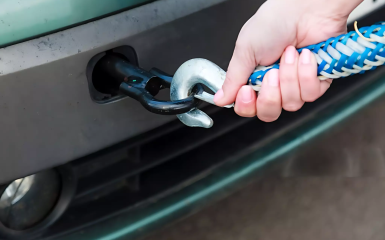
The car broke down on the road, the battery died, the engine won't start, or after an accident the car needs to be removed from the roadway. With a car with a "mechanics" everything is relatively simple, but towing a car with an automatic transmission requires more caution.
Points of attention
- Automatic transmissions require a special approach when towing due to their design features and potential risks of overheating and damage to the transmission.
- The first rule of safely towing a car with an automatic transmission is to check the manufacturer's instructions, which describe the rules and recommendations in detail.
- Avoid jerking when towing, raise the drive axle if possible, and adhere to the posted speed limits.
The reason is not that the automatic transmission is “afraid of everything.” The problem is another: when towing, some of the mechanisms can rotate without proper lubrication and cooling. In some designs, this quickly increases the risk of overheating and damage to the transmission.
Why is an automatic transmission sensitive to towing?
An automatic transmission works differently than a manual transmission. In a classic automatic transmission, hydraulics, a pump, clutches, planetary gears, a torque converter, and transmission fluid play an important role. In a CVT, a robotic gearbox, or a dual-clutch transmission, the design is different, but the risk of improper towing can also be significant.
When the engine is running, the transmission pump usually circulates fluid. It lubricates, cools, and helps control the operation of components. If the engine is off and the drive wheels are turning the transmission components, lubrication and cooling may not be sufficient.
That is why towing a car with an automatic transmission cannot be evaluated according to the principle of “put N and everything is safe.” The N mode allows the car to roll, but does not guarantee that all components inside the transmission are working normally.
Rule number one: check the manufacturer's instructions
The main answer to the question of whether it is possible to tow a car with an automatic transmission is contained in the instructions for your model. Not for a "similar car", not from a forum, not from the words of a neighbor, but in the manufacturer's manual.
The emergency transportation section usually states:
Is towing on wheels allowed?
which axle can be left on the road;
do you need to lift the drive wheels;
what are the speed and distance restrictions;
how to put the selector in neutral if the car won't start;
which warnings apply to all-wheel drive, electronic selector or hybrid system.
There is no universal safe speed or distance for all automatic transmissions. For one model, short slow towing may be acceptable, for another the manufacturer may only require a platform or a specific axle lift.
If you don't have the manual at hand, a safer tactic is to not experiment and call a tow truck for a car with an automatic transmission.
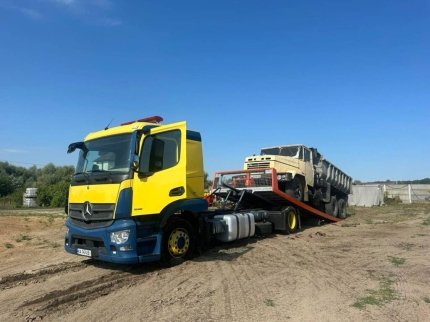
When is it better to call a tow truck immediately?
Towing with a cable is not always the best solution. In many situations, a platform or a special tow truck with the correct wheel lift significantly reduces the risk to the transmission.
It is better to choose a tow truck if:
the car has four-wheel drive, and the manufacturer directly does not allow towing on wheels;
a variator, robotic gearbox or complex transmission with electronic control is installed;
there is a transmission fluid leak or suspected damage to the box;
after a road accident, the suspension, wheels, drives or transmission elements are deformed;
the wheels are locked or rotate with a loud noise;
selector is not translated to N;
the car needs to be transported far;
the engine does not start, and the instructions require towing only with the engine running;
There are critical transmission warnings on the panel.
When in doubt, it is worth choosing not "we'll somehow manage to get it done", but a method that will not force the drive wheels to rotate the gearbox without proper operation.
If towing is allowed: basic algorithm
If the manufacturer allows towing a car with an automatic transmission, proceed calmly and without haste.
The basic order is as follows:
Make sure the car can be moved safely: there are no leaks, locked wheels, or severe mechanical damage.
Turn on the ignition or the mode that unlocks the steering wheel and allows you to use the hazard warning lights.
Move the selector to N mode, if permitted and possible.
Check that the parking brake is released.
Turn on the emergency alarm if it is working.
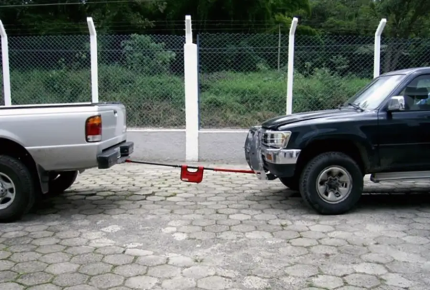
Use a working tow rope or a hard clutch as appropriate for the situation.
Agree with the tractor driver about signals, route, and speed.
Move smoothly, without jerks, sudden starts and braking.
Stop if you hear any suspicious sounds, smell of burning, or loss of control.
Important: If the engine is not running, the power steering and brakes may not work or may have limited function. Driving such a car is much more difficult and the braking distance may increase.
TOP 5 practical rules that reduce the risk to the transmission
1. Don't pull too far
Even if towing an automatic transmission in neutral is permitted, it is usually an emergency way to move the car, not an alternative to a tow truck for tens of kilometers. The longer the transmission elements rotate without regular lubrication, the higher the risk of overheating and wear.
The practical approach is simple: if you need to remove a car from a dangerous place, pull over to the side of the road, or get to the nearest safe point, that's one situation. If you need to drive across the entire city or between settlements, a platform is better.
2. Do not exceed manufacturer's limits
Different manuals may have different speed and distance limits. Do not transfer recommendations from one model to another. Even the same type of gearbox may have different requirements depending on the drivetrain, year of manufacture and design.
If the exact restrictions are unknown, movement should be as slow and short as possible, and if possible, it is better to avoid towing on wheels.
3. Avoid jerking
Jerking is one of the worst-case scenarios for transmissions, drives, mounts, and tow eyes. A sudden pull on the cable creates shock loads that can damage not only the transmission, but also the suspension or bodywork.
The tow truck driver should start moving very smoothly. The driver of the towed vehicle should keep the cable slightly taut, control the distance, and avoid sudden braking.
4. If possible, raise the drive axle or use a platform
If the car is front-wheel drive, the risk to the transmission is often reduced by raising the front axle. If it is rear-wheel drive, the rear axle is raised. But this rule cannot be automatically applied to all cars, especially all-wheel drive.
For all-wheel drive vehicles, crossovers with clutches, complex 4x4 systems, and some hybrids, a platform is often the safest solution. Improperly lifting one axle can cause problems for the transfer case, clutch, or electronic systems.
5. After towing, check the behavior of the box
Even if everything went well without any obvious problems, after a forced towing, you should listen carefully to the car.
They should be alert:
the smell of burning or overheated liquid;
delays when shifting gears;
jerks, jolts, skidding;
extraneous hum or grinding;
transmission fault message;
liquid stains under the car.
If such symptoms appear, do not continue active operation. It is better to contact a service center for automatic transmission diagnostics.
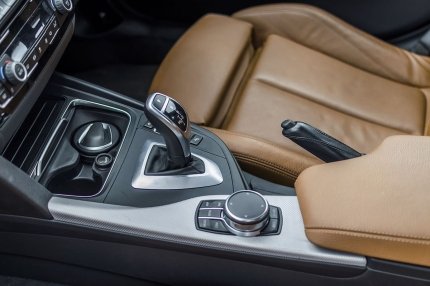
What you can't do with an automatic car
The most common mistakes often arise from experience with a manual transmission. But automatic transmissions have different rules.
It is not worth it:
starting a car "from a tow truck" - this is not a normal way to start an automatic transmission;
tow a car in P mode;
tow the car if the selector does not shift to N;
tow with the parking brake on;
towing a car for a long time with the engine not running, if the manufacturer does not allow this;
tow a car with obvious damage to the wheels, drives or suspension;
ignore the smell of burning, extraneous sounds or signals on the panel;
use sharp jerks to "push" the car out of place.
Another mistake is to think that short towing definitely has no consequences. Sometimes it really goes without problems, but it all depends on the design and condition of the transmission.
Special cases: CVT, robot, DSG/DCT, 4x4 and electronic selector
Not all "automatics" are the same. When drivers say automatic transmission, they often mean any transmission without a clutch pedal, but technically they can be different systems.
CVT variator
Towing a CVT requires special care. CVTs use a belt or chain, pulleys, and hydraulic control. Improper transportation can increase the risk of damage, which is why many cars with CVTs have strict restrictions set by the manufacturer.
Robotic gearbox and DSG/DCT
Robotic transmissions can have their own requirements for selector position, power to electronics, and clutch release. If the battery is completely discharged, sometimes even shifting into neutral can be a problem.
All-wheel drive
Towing a four-wheel drive vehicle is especially risky if some of the wheels are spinning and some are not. This can put stress on the transfer case, clutches, or differentials. For many of these vehicles, a platform is the best option.
Electronic selector
In modern cars, the selector may be electronic. If there is no power, the box may remain in P. In such cases, the manual usually describes the emergency unlocking procedure, but it differs depending on the model.
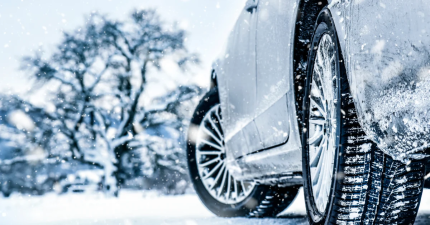
If the car is stuck in snow, mud or sand
Trying to "pull" a car with an automatic transmission can be dangerous for the transmission, drives, and towing brackets. Especially if the wheels are dug in, the car is sitting on the bottom, or one wheel has strong traction and the other is slipping.
What is better to do:
clear the space in front of the wheels;
place material under it for better adhesion;
disable aggressive skidding;
do not overheat the transmission with repeated attempts;
pull smoothly, without sudden tension on the cable;
If the car doesn't move, don't force it to continue.
It is better to spend time preparing or calling for help than to have an automatic transmission failure after towing or damaged drives after a few jerks.
Signs that diagnostics are needed after towing
After an emergency transport, it's not always immediately clear whether everything is okay. But there are symptoms that shouldn't be ignored.
Seek diagnostics if you notice:
the gearbox shifts harder than before;
there were delays when switching from P to D or R;
the car jerks during start-up;
the revs are increasing, but the acceleration is weak;
a new noise has appeared while driving;
the fault indicator on the panel has lit up;
Traces of liquid are visible under the car.
An early inspection does not guarantee that repairs will not be needed, but it can help identify a problem before it becomes more expensive.
Conclusion
How to tow an automatic without damage? The main rule is not to rely on myths. Mode N does not automatically make towing safe, and the permissibility depends on the specific model, type of transmission and drive.
If the instructions allow for short towing, move slowly, smoothly, and for the shortest distance. Avoid jerking, do not start the car “from a tow truck,” and do not tow a car with obvious damage. If in doubt, a four-wheel drive, CVT, electronic selector, or long distance tow truck is usually safer than experimenting with an expensive gearbox.
FAQ
Can I tow a car with an automatic transmission in neutral?
Sometimes it is possible, but not always. Mode N allows the wheels to rotate, but does not guarantee normal lubrication of all transmission components. You need to check the instructions for the specific model.
What speed is safe for towing a car with an automatic transmission?
There is no universal speed. Manufacturers may set different limits. If the exact data is unknown, it is better not to tow a car on wheels or to move only a very short distance to a safe place.
Is it possible to start a car with an automatic transmission from a tow truck?
No, this is not a standard way to start a car with an automatic transmission. It is better to use a jump starter, a "cigarette lighter" according to the manufacturer's instructions, or a tow truck.
Do you need a tow truck for a car with a CVT?
This is often the safest option. Towing a CVT may have strict restrictions, so you should follow the manufacturer's instructions. When in doubt, it is better to choose a platform.
Can I tow a four-wheel drive car?
Depends on the design of the all-wheel drive. In many cases, improper towing can damage the transmission. For 4x4 and AWD, a platform or method explicitly authorized by the manufacturer is often recommended.
What if the selector doesn't go to N?
Do not pull the car by force. Check the instructions for emergency selector release. If the procedure is impossible or you are unsure, call a tow truck.
Does short towing damage an automatic transmission?
A short, slow towing trip, as permitted by the manufacturer, may be safe. But if the car has damage, fluid leaks, locked wheels, or unknown limitations, the risk increases even over a short distance. What to check after towing?
Pay attention to the smell of burning, jerking, shifting delays, extraneous noises, errors on the panel and fluid leaks. If there are any symptoms, it is better to have the automatic transmission diagnosed.
Disclaimer: The material is for informational purposes only and does not replace your vehicle manufacturer's instructions or professional diagnostics. Before towing, check the recommendations for your specific car model.

