
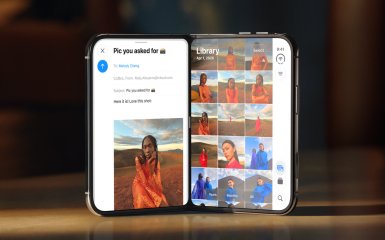
Apple has officially unveiled the iPhone Duo, the first foldable iPhone in a book format. It's a new type of device in Apple's lineup: when folded, it works as a compact smartphone with an external screen, and when unfolded, it turns into a large display for videos, working with two apps, notes, games, video calls, and editing content.
As of this writing, the official name of the device is iPhone Duo, not iPhone Ultra or iPhone Fold. Apple calls it the first foldable iPhone in a press release, and points to a 7.6-inch internal display, 5.4-inch external screen, A20 Pro chip, titanium construction, Apple Intelligence support, dual batteries, eSIM-only design, and a starting price of $1,999 in the US.
The main question for the buyer: the iPhone Duo should not be perceived as "a regular iPhone with a larger screen", but as an expensive device for those who need a combination of a smartphone and a small tablet. It opens up new scenarios, but has obvious compromises: high price, more complex design, greater weight, specific accessories, dependence on application adaptation and the risks of the first generation of a new format.
What search intent does this topic have?
The intent is mixed: informational, news, comparative, and partly commercial. The user is looking for what exactly Apple has shown, is it really the first foldable iPhone, what is it called, what are its specifications, how much does it cost, when will it be released, how does it differ from the iPhone 18 Pro Max, and whether it makes sense to wait for it in Ukraine.
Therefore, the material should not give a brief retelling of the presentation, but a clear answer: who is the iPhone Duo designed for, what are its real advantages, where Apple has focused on design and software, what characteristics have already been officially confirmed, and what conclusions should be drawn with caution until independent reviews appear.
What is iPhone Duo?
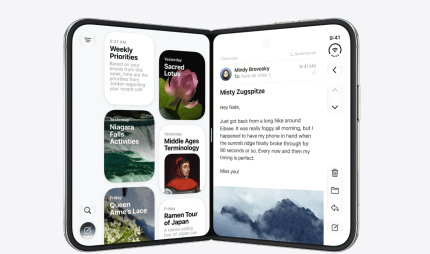
The iPhone Duo is Apple's foldable smartphone with two displays. It has a 5.4-inch Super Retina XDR display on the outside and a 7.6-inch foldable OLED display on the inside. When folded, the device is closer in size to a compact smartphone, and when unfolded, it's closer to a small tablet. Apple compares the closed format to the size of a passport.
The "book" format means that the smartphone opens horizontally. This distinguishes it from "clamshells" such as vertical foldable models, where the main idea is to make a large smartphone more compact in your pocket. In the case of the iPhone Duo, the focus is different: the user gets an external screen for quick actions and a large internal screen for tasks where space is important.
In practice, this can be convenient for reading, mail, calendar, video calls, working with documents, running two applications side by side, viewing photos, editing short videos, taking notes, and presentations. But for a person who mostly writes in messengers, browses social networks, and takes photos, a classic iPhone may be simpler and more profitable.
Displays: The main reason for the iPhone Duo's existence
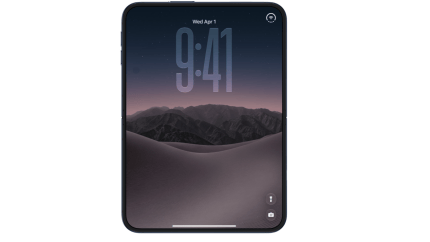
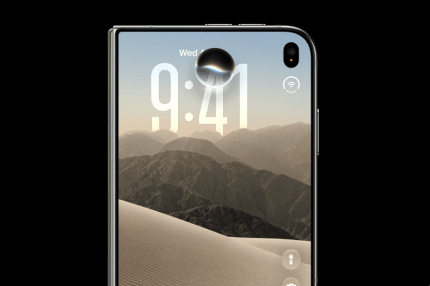
The iPhone Duo's internal display is 7.6 inches diagonally, with a resolution of 1878 × 2670 pixels and a density of 430 ppi. The external display is 5.4 inches, 1398 × 2034 pixels, 460 ppi. Both screens support ProMotion with adaptive refresh rate up to 120 Hz, Always-On, HDR, True Tone, P3 wide color, anti-glare coating and peak brightness up to 3000 nits outdoors.
An important feature is the same aspect ratio for both screens. Apple explains this as a way to make the transition between the external and internal display more natural: content scales proportionally, and the user does not experience a sharp change in interface logic.
For everyday use, this means three scenarios. The first is a quick action on the external screen: reply to a message, check directions, make a call, pay for a purchase, view notifications. The second is to open the smartphone for work: open mail and calendar, Safari and notes, messenger and document. The third is to use the folding form as a stand for photos, videos or FaceTime.
Fold, hinge and strength
In foldable smartphones, the main technical issue is not the sheer size of the screen, but the durability of the hinge and internal display. Apple says the iPhone Duo has a precision hinge that holds the center of the display open, and a magnetic system ensures a secure closure.
The case is made of Grade 5 titanium, the back is protected by Ceramic Shield, and the external display features Ceramic Shield 2, which is said to be three times more scratch-resistant than the previous generation. Apple also lists an IP68 rating under IEC standard 60529: submersion up to 6 meters for up to 30 minutes in controlled conditions.
The inner display is protected by a protective coating and a nanotextured layer of a custom polymer that Apple says is up to 40% stiffer than other materials in the industry. The structure includes glass above and below the folding panel, special adhesives to allow the layers to move during bending, and a titanium plate for added rigidity.
But the buyer should exercise caution. IP68 does not mean absolute waterproofness, and a folding display is inherently more sensitive to mechanical damage, sand, dust, falls, and improper pressure on the screen. The real durability of the first generation will be shown by mass use, not presentation statements.
Dimensions, weight and ergonomics
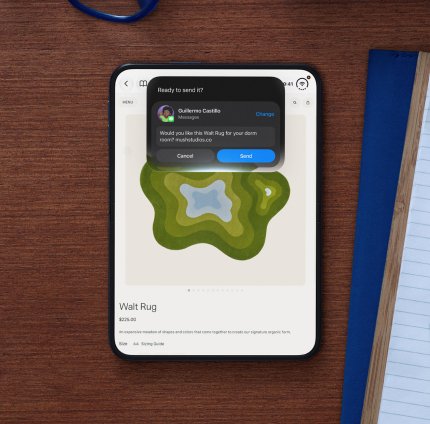
According to Apple's specifications, the iPhone Duo is 164.6 mm wide, 117.8 mm high, and 5.2 mm thick when unfolded. When folded, it is 84.1 mm wide, 117.8 mm high, and 11.3 mm thick. It weighs 254 g.
This is an important practical detail. When unfolded, the device is very thin, but when folded, it is thicker than a regular iPhone. The weight of 254 g will be felt in your pocket, in your hand, during long calls and shooting with one hand. For some users, this will be an acceptable price for a large screen. For others, it is a reason to stay on the Pro Max or a more compact model.
You also need to consider the width of the folded device. 84.1 mm is larger than many regular smartphones, so typing with one hand may not be as comfortable. Before buying, it is advisable to hold the iPhone Duo in person, and not judge it only by the photo.
A20 Pro chip and performance
The iPhone Duo is powered by the A20 Pro, the same class of chip as the iPhone 18 Pro. Apple claims a 6-core CPU, 7-core GPU with Neural Accelerators, Dual 16-core Neural Engine, hardware ray tracing, and a new heat dissipation system with a custom evaporation chamber.
According to Apple, the A20 Pro in the iPhone Duo delivers up to 35% better sustained performance compared to the iPhone 17 Pro, the CPU is up to 20% faster than the A19 Pro, the GPU is up to 40% faster and more power efficient, and the new neural unit has twice the processing power for local AI models.
This is important for the user in several scenarios: running two applications simultaneously, playing games on a large display, editing photos and videos, Siri AI, local Apple Intelligence features, video calls, multi-window Safari, and longer sessions without rapid overheating.
iOS 27 and multitasking
The real value of a foldable iPhone doesn't come from the hinge, but from how well the system can use the larger screen. Apple has adapted iOS 27 for the iPhone Duo, with controls, the Dock, app navigation, and Dynamic Island repositioning themselves to work better on the internal display. When open, the device can display two Home Screen pages and a Today View with widgets.
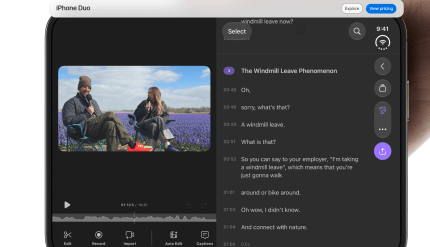
A key feature is Split View on iPhone. For the first time on iPhone, you can open two apps side by side, quickly switch between them, run two windows of the same app, like Safari, and save pairs of apps for later use.
This is the most practical argument in favor of the iPhone Duo. For example, you can read a contract and write comments at the same time, look at a map and correspond, compare two products in Safari, hold a video meeting and see materials side by side, transfer data from mail to notes, or plan a trip with the calendar and browser on the same screen.
Apple Intelligence and Siri AI
The iPhone Duo gets Apple Intelligence and a new Siri AI. Apple describes it as more personal, conversational, and contextual: Siri can interact with what's on your screen, search for information in messages, emails, photos, and other apps, assist with text, and respond to queries, drawing on local and cloud processing.
Apple also says that Apple Intelligence uses on-device processing and Private Cloud Compute to protect privacy. Some features vary by language, region, and launch stage. The press release notes that Siri AI is available in beta with iOS 27, and the availability of individual features may vary by language and country.
For a Ukrainian user, this is a critical nuance. Even if the device is technically available, not all AI functions may work in Ukrainian or be available in a specific region immediately after the start of sales. Before buying, it is worth checking the list of languages, regional restrictions, and support for the necessary services.

Cameras: what the first foldable iPhone can do
The iPhone Duo features a 48MP Dual Fusion camera system. The 48MP main camera has a 26mm focal length, ƒ/1.6 aperture, sensor-based optical stabilization, and supports 24MP and 48MP photos. It also offers a 12MP optical-quality 2x Telephoto with a focal length of 52mm. The second rear camera is a 48MP Fusion Ultra Wide with a 120° field of view and support for 48MP macro photography.
The iPhone Duo is not just about the camera specs, but also about new scenarios through dual displays. The user can take selfies with the main cameras and see themselves on the external display. Duo Preview allows the person in front of the camera to see the frame, and Smart Take uses local AI models on the A20 Pro to automatically take photos when people pose.
Video capabilities are also strong: Apple claims 4K120 fps in Dolby Vision on the 48MP Fusion Main camera, Cinematic effects after shooting up to 60 fps, Audio Mix with algorithms for voice and the ability to isolate music, Time-lapse in 4K Dolby Vision HDR, and shooting with the smartphone unfolded as a mini tripod.
There are two front zones: an external 12MP Center Stage camera and an internal under-display FaceTime camera. The internal camera is needed for video calls on the big screen, while the external one is better suited for regular selfies and calls in folded mode.
Battery and charging
The iPhone Duo has two built-in lithium-ion batteries. Apple claims up to 24 hours of typical use, up to 44 hours of video playback on the external display, and up to 31 hours of video playback on the internal display. For streaming video, it claims up to 37 hours on the external display and up to 26 hours on the internal display.
Fast wired charging delivers up to 50% in about 20 minutes with a 60W adapter and compatible USB-C cable. Wireless charging via MagSafe can deliver up to 50% in about 30 minutes with a 35W adapter. Adapters sold separately.
A practical caveat: battery life will depend on which screen is used more often. The larger internal display is more convenient for work and content, but it requires more power. Therefore, people who plan to use the iPhone Duo as a mini-tablet for several hours a day should wait for real-life battery tests.
eSIM-only, Wi-Fi 7 and Apple modems
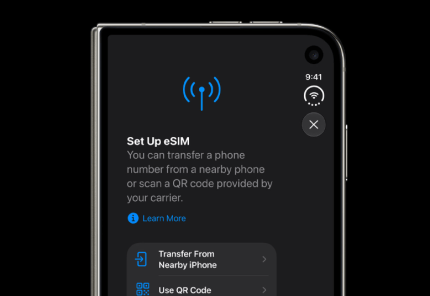
The iPhone Duo has an eSIM-only design worldwide. Apple explains this by saving internal battery space, as well as the flexibility and security of eSIM. The company points out that eSIM is supported by more than 500 carriers worldwide, but to use it, you need a carrier and a data plan that supports eSIM.
Apple also announces the N1 chip for Wi-Fi 7, Bluetooth 6, and Thread, and the C2 as the next generation of its own cellular modem system with AI-enhanced connection quality and reliability. In the US, the C2 supports mmWave.
For buyers in Ukraine, eSIM-only is one of the points that you need to check before buying. If you are used to moving a physical SIM card between phones, use multiple numbers, or often travel abroad, it is worth checking in advance whether your operator supports eSIM, the conditions for number recovery, roaming, and the availability of the necessary profiles.
Apple Pencil: who can use it?
Apple announced that later this year the iPhone Duo will support the Apple Pencil with USB-C. This opens up scenarios that were previously atypical for the iPhone: handwritten notes, quick sketches, signing documents, marking up PDFs, editing screenshots, working with ideas, plans and presentations.
But stylus support doesn't make the iPhone Duo a full-fledged iPad replacement for everyone. The 7.6-inch internal screen is useful for short notes and edits, but for drawing, long notes, design, or teaching, the iPad will remain more convenient due to its larger display and more stable work surface.
Price and start of sales
iPhone Duo starts at $1,999 in the US. Available in 256GB, 512GB, 1TB and 2TB storage options. Available in Star White and Night Sky. Pre-orders in over 70 countries and regions begin October 16, with availability starting October 23. Sales are expected to begin in 28 additional countries and regions on October 30.
In the UK, Apple is listing a starting price of £1,999, along with accessories: iPhone Duo Case for £79 and iPhone Duo Folio with Kickstand for £129.
The Ukrainian price should not be mechanically calculated at the dollar rate. In the local market, it may depend on delivery times, channel officiality, warranty, taxes, seller's margin, shortage, color, and memory capacity. The earliest batches of new Apple devices often cost more than the conventional conversion of the American price.
Who does the iPhone Duo make sense for?
iPhone Duo is best suited for those who will really use the big screen. These can be executives, entrepreneurs, journalists, marketers, designers, product managers, travelers, students, bloggers, photographers, people with a lot of mail, documents, video calls and notes.
The device makes sense if you often:
work with two applications at the same time;
reading large documents on your phone;
edit texts, tables, presentations or PDFs;
make video calls and watch materials at the same time;
you watch a lot of videos on the go;
want to take selfies with the main camera;
you use your smartphone as your main work device;
willing to pay for the new format and the risks of the first generation.
If your phone is all about messaging, calling, photos, banking, navigation, and social media, the iPhone 18 Pro or iPhone 18 Pro Max might be a better fit. Apple says the iPhone 18 Pro starts at $1,199 and the iPhone 18 Pro Max starts at $1,299 in the US, so the difference with the iPhone Duo is significant.
Is it worth buying the first generation?
The first generation of a new format always attracts enthusiasts, but it's not suitable for everyone as a primary phone for several years. Even when the specifications look strong, there are issues that can't be fully assessed until mass reviews: hinge durability, internal display scratch resistance, repair costs, battery behavior, heating, third-party app adaptation and everyday wear comfort.
The foldable smartphone market remains niche. Reuters, citing IDC, writes that foldable smartphones should account for less than 3% of the global smartphone market in 2026, and even Apple's exit will not necessarily quickly change this share in 2027.
This doesn't make the iPhone Duo a weak product. But it does explain why it's a smart purchase. This is a device for people who clearly understand why they need a foldable screen, and don't just want "the most expensive iPhone."
What to check before buying
Before ordering the iPhone Duo, it's worth going through a short checklist.
Check:
whether your operator's eSIM works;
whether you need the 256GB, 512GB, 1TB or 2TB version;
Are you ready for the weight of 254 g?
Is it comfortable for you to hold a folded phone with a width of 84.1 mm?
Is there an official warranty in the country of purchase?
how much does AppleCare or local insurance cost;
Are the required Apple Intelligence features available in your language?
Are your work applications adapted to the big screen?
do you need an Apple Pencil?
is there a protective case and folio for sale;
Are you comfortable with the price, including taxes and shipping?
It's worth looking at independent reviews after the sales launch. The presentation shows the capabilities well, but real tests better answer everyday questions: how long does the battery last, is the crease noticeable, how does the internal display scratch, is it comfortable to write on, does the case heat up, how do the apps work, and how much does it cost to protect the device.
Main advantages of iPhone Duo
The first advantage is a large internal display in a pocket-sized format. At 7.6 inches, it's the largest screen in iPhone history, giving you more space for content, work, and multitasking.
The second is iOS integration. Split View, optimized Apple apps, a new Dock, Dynamic Island customization, and dual Safari windows can make the iPhone Duo more useful than just a "foldable screen."
The third is cameras and new shooting scenarios. The external display as a viewfinder for the main cameras, Duo Preview, Smart Take, FaceTime on two displays, and handheld video shooting all take advantage of the physical form of the device.
Fourth, the power of the A20 Pro. The chip, vapor chamber, 2nm process, and new neural unit create a reserve for AI, gaming, multitasking, and a long life cycle.
Main disadvantages and risks
The first drawback is the price. At $1,999 in the US for the base model, the iPhone Duo is the most expensive iPhone to start with. The AP also calls it the most expensive iPhone with a starting price of $1,999.
The second is the first generation. Even if Apple has been preparing a product for a long time, first-wave buyers always actually test the new format in real life.
The third is the weight and thickness when folded. 254g and 11.3mm thickness may be noticeable to those who are used to thinner and lighter models.
Fourth - repairs. The foldable screen, hinge, two displays, titanium construction and folding camera will almost certainly make repairs more expensive than repairing a classic iPhone. Before buying, it is worth checking the terms of service, AppleCare, insurance and availability of spare parts in the country of use.
Fifth, regional restrictions. eSIM, Apple Intelligence, Siri AI, satellite features, iPhone Handoff, and certain services may vary by country, carrier, language, and regulatory environment. Apple explicitly states that some features may not be available in certain languages or regions.
Conclusion
The iPhone Duo is the most significant change to the iPhone form factor in years. Apple entered the foldable smartphone market not with an experimental clamshell, but with a book-sized device: an external 5.4-inch screen for quick actions and an internal 7.6-inch display for work, videos, games, notes, and multitasking.
Its strengths are the large screen, A20 Pro, adapted iOS 27, Split View, new camera scenarios, Apple Pencil support, dual batteries, eSIM-only design and quality integration with the Apple ecosystem. Its weaknesses are the high price, weight, complex design, potentially expensive repairs and typical first-generation risks.
The iPhone Duo is worth buying for those who have long wanted an iPhone with the capabilities of a small tablet and are willing to pay for the new format. However, if you need the most practical, predictable, and most affordable iPhone for everyday use, the iPhone 18 Pro Max or previous Pro models may be a smarter choice.
FAQ
What is the official name of the first foldable iPhone?
The official name is iPhone Duo. In Apple's materials, it is presented as iPhone Duo, the first foldable iPhone. The names iPhone Ultra or iPhone Fold remained part of previous expectations and rumors, and not the final brand of the product.
What screen does the iPhone Duo have?
The iPhone Duo has two screens: an internal 7.6-inch OLED folding display with a resolution of 1878 × 2670 pixels and an external 5.4-inch OLED display with a resolution of 1398 × 2034 pixels. Both support ProMotion up to 120 Hz, Always-On, HDR, and peak brightness up to 3000 nits outdoors.
How much does the iPhone Duo cost?
In the US, the iPhone Duo starts at $1,999 for the base model. In the UK, the starting price is £1,999. Ukrainian prices may vary due to exchange rates, taxes, shipping, warranty, shortages, and retailer policies.
When will iPhone Duo sales start?
Apple announced pre-orders starting October 16, 2026 in over 70 countries and regions, and sales will begin on October 23. Sales are scheduled to begin on October 30 in 28 other countries and regions.
What memory versions does the iPhone Duo have?
There are four configurations available: 256GB, 512GB, 1TB, and 2TB. For most users, 256GB will be enough if you use iCloud heavily, but for 4K video, a large photo library, gaming, and file management, you'll want to look toward 512GB or 1TB.
What cameras are installed in the iPhone Duo?
The smartphone features a 48MP Dual Fusion camera system: a 48MP Fusion Main with 2x optical-quality Telephoto and a 48MP Fusion Ultra Wide with 120° angle and macro. There is also an external 12MP Center Stage camera and an internal under-display FaceTime camera for calls on the big screen.
Does the iPhone Duo support Apple Pencil?
Yes, Apple has announced that later this year the iPhone Duo will support the Apple Pencil with USB-C. This will be useful for taking notes, sketching, signing documents, and quick markups on the big screen.
Does the iPhone Duo have a physical SIM card?
No. The iPhone Duo is an eSIM-only design worldwide and does not support physical SIM cards. Before purchasing, you should check whether your carrier supports eSIM and whether you are comfortable using this format when traveling.
Is the iPhone Duo water and dust resistant?
Apple lists an IP68 rating under IEC standard 60529: up to 6 meters of immersion for up to 30 minutes under controlled conditions. But that doesn't mean it's completely invulnerable. Water, drops, sand, and mechanical pressure can damage the device, especially given its complex design.
Is it worth buying the iPhone Duo immediately after sales start?
The iPhone Duo should be bought immediately by enthusiasts who want their first foldable iPhone and are willing to pay the high price and risks of the first generation. A more cautious option is to wait for independent reviews of the battery, screen, fold, hinge, repairability, heat, and app performance in real life.

