
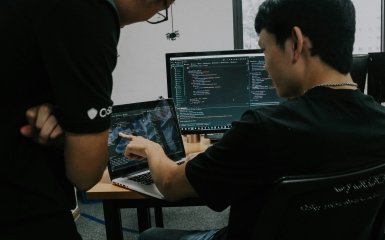
Choosing IT courses in Odessa is often complicated by advertising, loud promises, and dozens of different formats: offline, online, hybrid, intensive, long programs, courses "from scratch," and career bootcamps. To avoid making a mistake, you should look not only at the price or name of the school, but also at the content of the training, the experience of the mentors, the amount of practice, and the honesty of career support.
Where to start choosing IT courses in Odessa
Before comparing IT schools in Odessa, define your own goal. "I want to go into IT" is too general a statement. Different areas require different skills, learning pace, and mindset.
Ask yourself a few questions:
Do I want to write code, test a product, analyze data, work with design, or manage processes?
How much time per week can I realistically allocate to classes and homework?
Do I need offline IT courses in Odessa or is it more convenient to study online?
Do I have basic English to read documentation and vacancies?
What result do I expect: to try a direction, make a portfolio, prepare for a junior position?
A good course should be at your starting level. If the program is advertised as "learning IT from scratch," it should explain the basic concepts and not immediately require experience with code, Git, frameworks, or test documentation.
How to understand which IT direction is right for you
There is no universally "easiest" path to enter IT. Each has its own requirements and competition at the junior level.
The following options can be considered:
QA Manual - suitable for those who pay attention to details, like to check product logic, write test cases, and analyze errors.
Frontend is a direction for those who are interested in interfaces, HTML, CSS, JavaScript, and user interaction with a site or application.
Backend - is more related to server logic, databases, APIs, and architecture.
UX/UI Design - suitable for people interested in design, user behavior, prototypes, and the visual structure of a product.
Data Analytics - requires analytical thinking, working with tables, queries, visualizations, and business logic.
Project Management in IT - may be close to those who have experience in communications, process organization, planning, and working with teams.
Before paying for a full course, it's a good idea to take a short introductory module, open lesson, or free materials. This will help you understand whether the style of work in a particular field suits you.

What should a quality course program be like?
The program is one of the main selection criteria. It should not be just a list of trendy technologies, but a consistent route: from the base to practical tasks and the final project.
For programming courses in Odessa or online format, it is important that the program explains:
who is the course suitable for;
what starting knowledge is needed;
what topics are studied and in what sequence;
how much practice will there be;
what tools are used;
what result the student will be able to show upon completion.
Signs of a strong program
A strong program usually has the following features:
clear structure of modules;
a clear balance of theory and practice;
homework with verification;
working with real or near-real tasks;
final project for the portfolio;
explanation of which skills meet the requirements of the junior level;
regular updating of topics in accordance with changes in technologies and vacancies.
For example, Frontend Odesa courses should not only list HTML, CSS, and JavaScript, but also show how the student gradually moves from layout to interactive components, working with APIs, Git, and project deployment.

Signs of a weak or superficial program
The following signals may alert you:
the program is described in general terms without specific topics;
many promises, but little information about the task;
there is no mention of a homework review;
the course tries to cover too many technologies in too short a time;
it is not explained what the student should do independently between classes;
there are no examples of final projects or portfolios.
If the school cannot clearly explain why this particular program structure leads to the stated outcome, it is worth asking additional questions.
How to check mentors and teachers
Mentors in IT courses are just as influential as the program itself. It is important that the instructor not only knows the topic, but also knows how to explain, give feedback, and work with beginners.
What to check:
Does the mentor have practical experience in the relevant field?
Is it possible to find his professional profile on LinkedIn, GitHub, Behance or other open sources?
Is there experience working with real products or teams?
how feedback is organized;
whether the mentor checks homework personally or through assistants;
how many students are in the group.
It's good when a school holds an open lesson or gives you the opportunity to see the teaching style. The same specialist can be a strong practitioner, but not always a comfortable teacher for beginners.

Practice, portfolio and homework: what should be in the curriculum
Internship in IT courses is not an additional bonus, but the basis of training. Especially if the goal is to prepare for the junior level.
Quality training typically includes:
regular homework;
checking the work with specific comments;
correcting errors after review;
individual or team projects;
working with tools used in the profession;
preparation of materials for the portfolio.
For developers, GitHub with projects and a clear history of work may be important. For UX/UI - Behance or another format for presenting cases. For QA - test documentation, bug reports, checklists, examples of working with test management tools. For Data Analytics - dashboards, analytical reports, SQL queries or visualizations.
A portfolio after IT courses does not guarantee a job, but it helps show the employer that the student not only listened to lectures, but also completed practical tasks.
Employment after IT courses: what the school can really give
The phrase "IT courses with employment" needs careful scrutiny. Career support can be helpful, but it does not equal a job guarantee.
Realistic support may include:
help with resumes;
LinkedIn profile design;
tips for GitHub, Behance or portfolio;
preparation for technical and HR interviews;
training interviews;
analysis of test tasks;
explanation of how to search for junior-level vacancies;
access to career events or partnership vacancies.
It's worth asking the school directly: what exactly does "placement" mean in your program? Is it a guarantee, an internship, a recommendation, access to vacancies, or advice from a career specialist?
The result depends not only on the course. The level of English, regular practice, quality of the portfolio, activity in job search, soft skills and the situation in the market are important.

Online, offline or hybrid: which format to choose in Odessa
Odesa offers a choice between local offline groups, online learning, and hybrid programs. Each format has its advantages and limitations.
Offline IT courses in Odessa can be convenient for those who value discipline, live communication, networking, and the opportunity to ask questions in the classroom. But you need to take into account the road, schedule, and accessibility of the location.
Online IT courses in Odesa are suitable for people who want to save time on the road, watch recordings and study from anywhere. At the same time, the online format requires more self-discipline.
A hybrid format can combine the advantages of both models: part of the classes can be held online, and practical meetings, workshops, or networking can be held offline.
Choose a format not based on the "best/worst" principle, but based on where you can actually study and practice regularly.
How to check reviews, payment terms, and contract
Reviews about IT schools in Odesa can be useful, but they should be read critically. A rating without details says little about the quality of education.
Pay attention to:
whether the person describes a specific course and direction;
Does it mention the program, mentors, practice, feedback?
when a review is left;
are there different opinions, not just the same positive formulations;
how the school responds to criticism;
Do the reviews promise unrealistically fast results?
Before paying, carefully check the conditions:whether there is a contract or a public offer;
how refunds work;
Is it possible to postpone studies?
will there be recordings of classes;
for what period is access to the materials open?
what happens if a student misses a class;
Is career support included in the price?
If important terms are only explained verbally, ask for written confirmation.

Checklist before paying for the course
Before choosing junior IT courses or an IT retraining program, go through a short checklist.
Ask schools:
What level of training is the course designed for?
What topics are included in the program and how much time is allocated for each module?
How many practical tasks will there be during the training?
Who checks homework?
What experience does the mentor have?
Will there be a final project for the portfolio?
What exactly is included in career support?
Are there recordings of classes and access to materials after completion?
What are the conditions for refunds or transfer of tuition?
How much time do you need for independent work each week?
If most of the questions are answered vaguely, it is worth comparing the course with other options.
Common mistakes when choosing IT courses
The most common mistakes are not due to lack of information, but to haste.
Here's what to avoid:
choose a course only because of the discount;
believe in guaranteed work without specifying the conditions;
ignore English;
not checking the experience of mentors;
do not watch the program in detail;
not planning time for homework;
choosing a direction just because it seems "easy";
Compare courses only by price, not by content and support.
A good course doesn't hide the fact that learning requires effort. If you are promised quick results without practice, homework, and independent work, this is a reason to be wary.

Conclusion
Choosing IT courses in Odessa is easier if you evaluate them systematically: program, mentors, practice, portfolio, class format, payment terms, and career support. A strong course does not automatically guarantee a job, but it can provide structure, feedback, practical tasks, and a clear route to the first professional level.
The best solution is to take your time with the payment, compare several programs, ask specific questions, and honestly assess your own time for studying. Success depends on a combination of a quality school and regular personal work.
FAQ
Is it possible to start studying IT from scratch?
Yes, many courses are designed for beginners. But "from scratch" does not mean "without effort." You need regular classes, practice, independent reading of materials, and the gradual formation of a portfolio.
What direction in IT is the easiest to start?
There is no universally easiest direction. QA, Frontend, UX/UI, Data Analytics, or Project Management have different requirements. It is better to choose a direction based on your interests, type of tasks, and willingness to develop the necessary skills.
Is English required for IT courses?
It is advisable to have at least a basic level. English helps to read documentation, understand tool interfaces, pass interviews, and work with international materials.
Is it better to choose offline IT courses in Odessa?
Offline can be convenient for discipline, live communication, and networking. But a quality online or hybrid format can also be effective if there is practice, feedback, and a clear learning structure.
Do IT courses guarantee employment?
Typically, courses can provide career support, but they don't guarantee a job. It's worth clarifying what exactly the school means: consultations, internships, partner vacancies, mock interviews, or other forms of assistance.
How much time should you spend studying?
It depends on the major, program, and starting level. In addition to classes, there is almost always time for homework, review, project work, and portfolio preparation.
How to check the mentor before the start of the course?
Look at professional experience, open profiles, portfolios or projects, teaching style in an open lesson. Also ask how the mentor checks assignments and whether they provide individual feedback.
Should I choose the cheapest course?
Price is important, but it shouldn't be the only criterion. Compare the program, the amount of practice, the experience of the mentors, the learning environment, access to materials, and the actual content of the career support.
Disclaimer: The material is for informational purposes only and does not constitute a guarantee of employment or individual career advice. The learning outcome depends on the program, the market, your skills, time for practice, and your activity in job search.

