
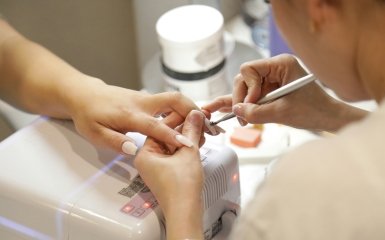
A beautiful manicure is not only about the shape of the nails and an even coating. First of all, it is a safe procedure: clean tools, proper sterilization, careful work of the master and materials that do not pose unnecessary risks to the skin and nails. If you are looking for where to get a manicure in Khmelnytskyi, you should not focus only on beautiful photos on social networks or the nearest address. It is better to check a few practical things before making an appointment and carefully look at the process during your first visit.
Where to start looking for a master in Khmelnytskyi
You can start your search with Google Maps, local directories, Instagram pages, recommendations from friends, and city groups. But reviews and photos are just the first filter, not a guarantee of quality.
To find a manicure salon in Khmelnytskyi or a private master, make a short list of 3-5 options and check them against the same criteria:
are there real photos of the works without excessive retouching;
Is there any neatness visible near the cuticle and side rollers?
Does the master write about sterilization of instruments?
can I ask questions before the recording;
is there a clear price list or at least a price range;
Does the master respond calmly and specifically, without irritation?
Are there any reviews not only about the design, but also about cleanliness, punctuality, and comfort?
It's not necessary to look for the "most popular" option. For your first time, it's better to choose a master who openly explains the process, doesn't pressure the client, and doesn't promise the impossible.
Sterility of instruments: what should alert you and what should reassure you
Sterility is a key criterion for a safe manicure. During the procedure, tools may come into contact with the skin, microcracks, or accidental cuts, so their treatment should not be a formality, but a systematic practice.
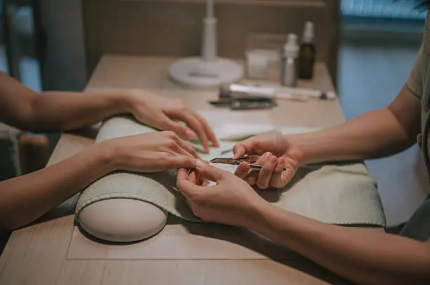
A good sign is when the master takes the metal tools out of the individual kraft package and opens it in front of the client. The package usually has an indicator that changes color after sterilization. The indicator itself does not replace the entire control process, but it shows that the package has undergone temperature treatment.
Situations where tools:
lying open on the table before you arrive;
they come out of the drawer without a package;
have dust, skin or rust residue;
used immediately after the previous client;
"simply wiped" before the procedure without further sterilization.

Disinfection and sterilization are not the same thing
Disinfection reduces the number of microorganisms on a surface. Sterilization is aimed at treating instruments much deeper and is required for metal objects that may come into contact with the skin.
For the client, a simple rule is this: metal scissors, nippers, pushers, and other reusable tools should go through a full processing cycle, not just wiping with liquid. If the master calmly explains the stages, this is a good sign.
What should be disposable
Not all materials can be sterilized efficiently. Some consumables must be disposable or individual for each client.
Such materials typically include:
files or interchangeable files for files;
buffs;
orange sticks;
napkins and cotton pads;
finger separators;
gloves, if the master uses them;
disposable attachments or caps for hardware manicure, if provided by the manufacturer.
If the saw looks worn, has signs of previous use, or the technician pulls it out of the general pile, it's worth asking questions. This is normal - the client has the right to understand what they are working with.
How to assess workplace cleanliness
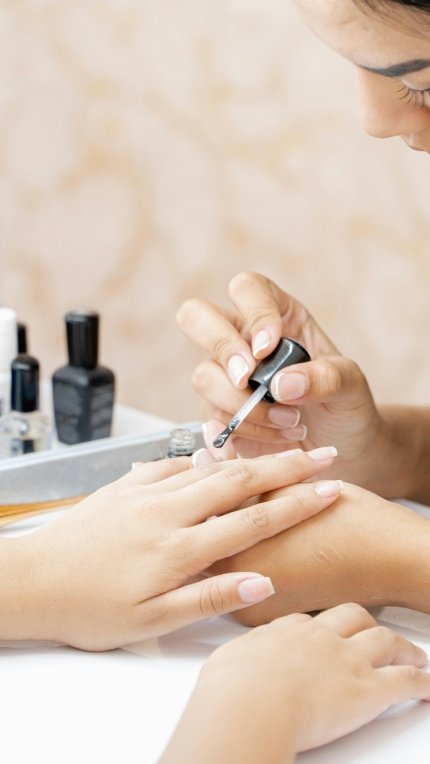
A clean table doesn’t always equal sterility, but it says a lot about the attitude towards the process. Before the procedure, the work area should be cleaned after the previous client: free of dust, scraps, stains, used wipes, and exposed instruments.
Pay attention to the following details:
Does the master wipe the surface before work?
Is there a separate place for clean and used tools?
Are sterile bags not lying next to dirty materials?
Is the curing lamp cleaned?
Does sawing dust accumulate on the table, lamp, or router?
is there a container for used disposable materials;
Does the master wash or treat his hands before the procedure.
For a nail studio in Khmelnytskyi, as for any salon, it is not the "expensive" interior design that is important, but a clear organization of the workplace. Even a small office can be safe if the processes are well-established.
How to check the wizard before recording
A professional manicurist in Khmelnytskyi should not be offended by basic questions about sterilization, materials, and experience. On the contrary, calm answers often indicate responsibility.
Before recording, you can clarify:
how metal instruments are sterilized;
Are Kraft packages opened at the customer's premises?
which materials are used once;
Do you have experience working with sensitive cuticles or thin nails?
how a craftsman removes the old coating;
what to do if you see an injured or suspiciously changed nail;
Is it possible to do a simple manicure without a complex design for the first visit?
The portfolio is also important. Evaluate not only the drawings and trendy designs, but also the technical part: are there any leaks under the cuticle, uneven architecture, excessively thick coating, or redness of the skin in the photo.
A good sign is when the master does not undertake any procedure under any conditions. If there is a suspicion of inflammation, injury, fungal infection or allergic reaction, the responsible specialist may advise you to consult a doctor first, rather than masking the problem with a coating.
Manicure materials: what the client should look for
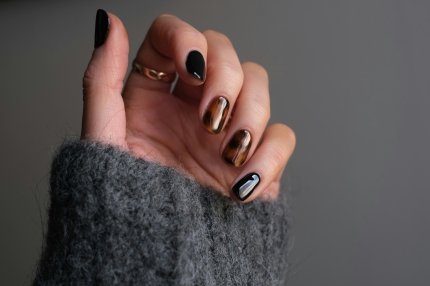
Manicure materials include bases, tops, gel polishes, degreasers, primers, removers, oils, and creams. The client is not required to understand the chemical composition of each product, but can check the obvious things.
Pay attention to whether:
the bottles are labeled;
materials do not look worn or frayed;
the master does not mix unknown products without explanation;
the funds are kept closed;
there is no sharp unusual odor that causes discomfort;
The technician asks about previous allergic reactions to gel polish or manicure products.
Gel polish itself is not “bad” or “good” for everyone. The reaction depends on the quality of the materials, the application technique, the condition of the nails, the correctness of removal and individual sensitivity. Problems often arise when the coating flows onto the skin, does not polymerize well in the lamp, is removed by aggressive filing or is applied to an already damaged nail plate.
If you have ever had itching, rash, swelling, burning, or peeling after the treatment, please inform your specialist before the procedure. In such cases, you should be especially careful and consult a dermatologist if necessary.
During the procedure: signals that should not be ignored
A manicure shouldn't be painful. Mild discomfort is possible at times, but sharp pain, burning, blood, or a feeling of severe cutting are reasons to stop the procedure and clarify what's going on.
Signals that should not be tolerated:
the master presses hard with a milling cutter or saw;
the nail becomes hot while being cut;
the cuticle is cut until it bleeds;
the coating flows onto the skin;
there is a strong burning sensation in the lamp, and the master ignores the complaint;
disposable materials look used;
The master works in a hurry and does not respond to your comments.
If a cut occurs, the area should be treated and contaminated materials disposed of. Do not continue the procedure “as if nothing happened,” especially if there is bleeding or pain.
Salon, nail studio or at-home technician: which is safer?
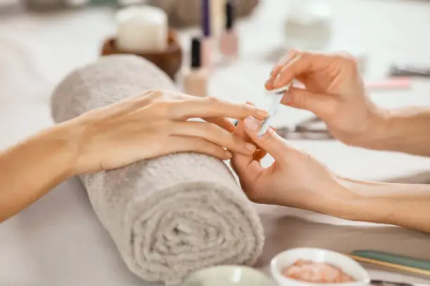
The format of work itself does not guarantee safety. A salon may have a beautiful interior, but weak sterilization control. A home master can work very responsibly if he has a separate clean workplace, sterilization equipment and a clear procedure for processing instruments.
Compare not the format name, but specific criteria:
Is there sterilization of reusable instruments?
whether the instruments are opened at the client's premises;
Are disposable materials used?
Is the workplace clean?
Does the master take notes without undue haste?
Is there transparent communication regarding materials and procedures?
Are you willing to refuse coverage if the nail or skin looks problematic?
If this is your first time going to a nail salon, you can sign up for a basic service: a hygienic manicure or a simple coating without a complex design. This will help you evaluate the process without unnecessary time and expense.
Checklist of questions before recording
Before choosing where to get a manicure in Khmelnytskyi, ask a few short questions. They shouldn't sound like an interrogation - it's a normal concern for your own safety.
Ask:
How do you sterilize manicure tools?
Do you open the kraft package at the customer's place?
What materials are disposable?
Do you use a new file or a replacement file for each client?
How do you remove the old coating: with a machine, liquid or a combination?
What do you do if the nail is damaged or there is inflammation near the cuticle?
What brands of bases, tops and gel polishes do you use?
Can I come without a cover, just for a hygienic manicure?
Are there any recommendations after the procedure?
What to do if the coating chips off in the first few days?
Answers should be clear. If the technician avoids explanations, responds aggressively, or belittles the question about sterile manicure tools, it is better to look for another option.
When is it better to postpone a manicure?
Sometimes the best solution is to skip the manicure altogether. A coating may mask the problem, but it won't fix it.
The procedure should be postponed if there is:
severe redness or swelling near the nail;
pain, throbbing, pus, or drainage;
fresh nail injury;
significant peeling of the nail plate;
suspicion of fungal infection;
rash, itching, or reaction after previous coverage;
cracks or wounds on the skin around the nails.
In such cases, it is best to consult a dermatologist or family doctor. A manicurist may notice a problem, but should not diagnose or prescribe treatment.
FAQ
How do you know that the instruments are truly sterile?
Ask to open the individual kraft package in your presence. Pay attention to the integrity of the package, the indicator, the cleanliness of the tools, and whether they were open before your arrival. You can also ask how the processing is done after each client.
Is it safe to get a manicure done by a master at home?
It can be safe if the craftsman has a separate clean workspace, sterilizes reusable tools, uses disposable materials, and answers questions openly. The fact of working from home is not a problem in itself, but the processes should be organized professionally.
Can I ask the craftsman to open the craft package in my presence?
Yes. This is a normal request. The responsible craftsman usually opens the package himself in front of the client or calmly responds to such a question.
What to do if you cut your skin during a manicure?
Ask to stop work and treat the area. If there is blood, the instruments and materials that came into contact with it should be removed or treated according to regulations. If pain, swelling, pus, or increased redness occurs after the procedure, consult a doctor.
Does the craftsman have to show certificates?
Certificates may confirm training, but they do not guarantee quality work. It is more important to evaluate the practice: sterilization, cleanliness, portfolio, communication, and how the master behaves in non-standard situations.
Is gel nail polish dangerous?
For many people, gel polish is a familiar procedure, but the risks can increase with incorrect application, poor removal, use of questionable materials, or individual sensitivity. If there is itching, rash, pain, or peeling after the coating, it is worth taking a break and consulting a dermatologist.
How often can you get a manicure with a coating?
This depends on the condition of the nails, their growth rate, the technician's technique, and the type of coating. Do not wear the material longer than the technician recommends, as architectural shifts and peeling can increase the risk of damage.
When should you see a dermatologist after a manicure?
If you experience severe redness, swelling, pain, pus, itching, rash, cracks, peeling of the nail, or discoloration that does not go away, it is best to consult a dermatologist. Do not try to cover the problem with a new coating.
Conclusion
You should choose a safe manicure in Khmelnytskyi not only based on the photos of the designs and a convenient location. Start by checking sterilization, disposable materials, cleanliness of the workplace, and communication with the master. Ask a few questions before the appointment, see how the tools are opened, and don't ignore pain or discomfort during the procedure.
The best craftsman is not the one who promises perfect coverage under all conditions, but the one who works carefully, explains the process, and puts the client's safety above speed or design.
Disclaimer: The material is for informational purposes only and does not replace medical advice. If you experience any signs of inflammation, allergic reaction, injury, or other worrisome symptoms after a manicure, please consult a dermatologist or family doctor.

