
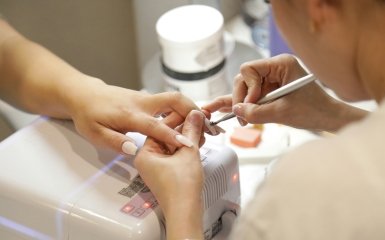
A good coating in the photo does not mean that the procedure will be safe. For a manicure, not only the shape, color and design are important, but also the sterility of the tools, the condition of the workplace, the quality of the materials and how the master responds to your questions. If you are looking for where to get a manicure in Ternopil, you should not focus only on the nearest location, a free window or the lowest price. A safe manicure is a procedure after which the nails look neat, and the skin is not injured, does not hurt and does not cause anxiety.
Where to start looking for a manicure in Ternopil
It is better to start your search for a master or salon from several sources, rather than from a single ad. In Ternopil, clients usually search for manicures through maps, social networks, recommendations from friends, local groups, and master profiles.
Evaluate several things at once:
Is it convenient for you to get to the salon or office?
are there any current photos of the works;
Are the workplace, tools, and materials visible?
is there a clear price list;
Does the technician answer questions about sterilization?
Do the reviews look realistic and not one-size-fits-all?
The query "manicure in Ternopil" may give many options, but not all of them are equally safe. Beautiful designs in the portfolio are a plus, but they do not replace hygiene and a professional approach.
Don't choose a nail technician based solely on the phrases "urgently available," "cheapest," or "the coating is guaranteed to last a month." The duration of wear depends on the condition of your nails, the technique of work, the materials, and your care after the procedure.
How to check the sterility of instruments
Sterility of tools is a key criterion for a safe manicure. During the procedure, the master works close to the skin, sometimes microtraumas are possible. Therefore, the tools must undergo not just “wiping”, but a full treatment.
In professional practice, it is common to talk about several stages: cleaning, disinfection, drying, packaging and sterilization. The specific methods may vary, but the client has the right to ask questions and receive a clear answer.
Signs of a responsible approach:
tools are stored in individual packages;
the package is opened in the presence of the client or immediately before the procedure;
the master can explain exactly how he processes the tools;
there are no used tools from the previous client at the workplace;
Scissors, nippers, and pushers do not lie openly in a common box.
What to ask before recording
Normal questions should not cause irritation. Before making an appointment for a manicure in Ternopil, you can write or ask by phone:
"How do you sterilize instruments?"
"Do you open the toolbox at the customer's place?"
"Are the files and buffs disposable?"
"What is included in the cost: removal, reinforcement, repair?"
"What materials do you use for the base and top?"
You don't need to know all the technicalities of sterilization. But the answer "we're all clean, don't worry" without details is a weak argument.
What should alert you in the office?
It is better to refuse the procedure if you see:
the tools are lying open without packaging;
the master takes a saw that shows traces of previous use;
the table was not cleaned after the previous customer;
there is no antiseptic or the master does not treat his hands;
when asked to explain sterilization, they respond aggressively;
The craftsman works with a damaged or dirty tool.
This doesn't mean that every flaw will automatically lead to problems. But it is a signal to the customer that security may not be a priority here.
Disposable materials: what should not be reused
Not everything in a manicure is sterilized. Some materials must be disposable or individual for a specific client.
Such materials typically include:
saws;
buffs;
orange sticks;
napkins;
gloves;
disposable guns;
finger separators;
replaceable caps and abrasives for pedicure.
Some practitioners offer a personal set of files and buffs that are kept separately for the client or given to them after the procedure. This may be an acceptable option if the storage is truly individual and the materials are not used for other people.
If the file looks worn, has stains or nail dust, it's best to ask for a new one. This is a normal request, not a "picky eater."
How to evaluate a master based on portfolio, reviews and communication
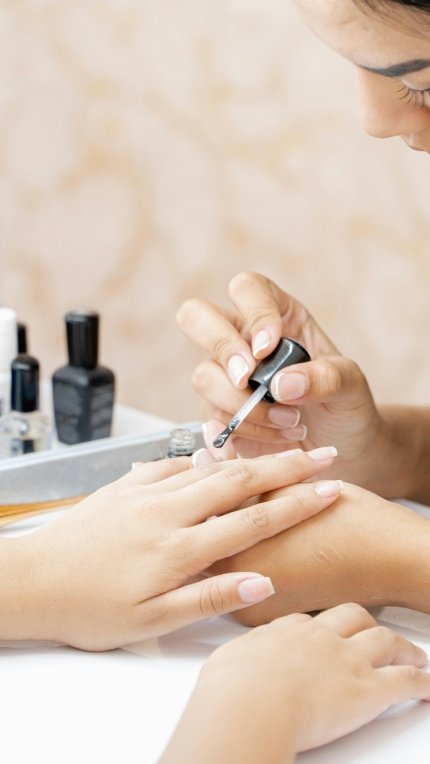
The portfolio of a manicurist in Ternopil is worth looking at more carefully than just “do you like the design or not?” Evaluate the technical details:
whether the shape of the nails is even;
is there no flooded cuticle;
are there any visible cuts and redness?
whether the coating has no bumps and dips;
Is the area near the side rollers neat?
Are there any photos after a few weeks of wearing it, not just immediately after the procedure?
It's good if the profile includes not only processed photos, but also videos, stories from the work process, explanations about sterilization and materials. This increases trust, although in itself it is not a guarantee.
Reviews should also be read critically. Those where customers describe specifics are useful: cleanliness, communication, wearing of the coating, the technician's reaction to the problem. Short, uniform comments without details do not always give a real idea.
Communication is a separate criterion. A good nail technician will not discount your questions, will not pressure you into choosing a procedure, and will explain if a certain design or length is not suitable for the condition of your nails.
Manicure materials: what to look for
A quality manicure depends not only on technique, but also on materials. Base, top, gel polish, degreasing and removal products must be labeled, suitable for use, and stored properly.
The client doesn't have to understand all the brands. But it's worth paying attention to the obvious things:
the vials have labels, rather than looking like unknown poured liquids;
materials should not have a sharp, unusual odor;
the master should not mix the means chaotically without explanation;
expired or thickened materials are a bad sign;
When complaints of burning or discomfort occur, the technician should respond, not just say "bear with it."
There is no one-size-fits-all brand. Some people may have an individual reaction to the components of the materials. If you have experienced itching, rash, swelling, nail peeling, or severe burning after previous treatments, tell your nail technician before starting work. If necessary, it is better to consult a dermatologist.
Signs of a safe procedure during a visit
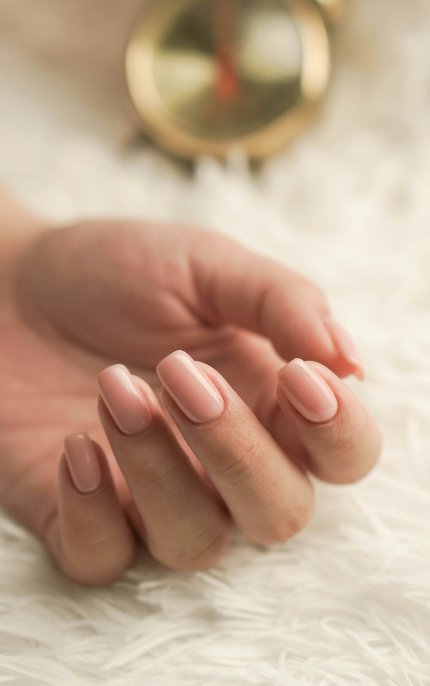
During your first visit, pay attention not only to the result, but also to the process. A safe manicure usually looks calm, consistent, and unhurried.
Signs of a good process:
the master processes his own and the client's hands;
the work surface is clean;
instruments are prepared for the procedure;
disposable materials are new;
the cuticle is processed carefully;
the master does not file the nail aggressively;
removing the old coating is not accompanied by pain;
During polymerization in the lamp, the master reacts to a strong burning sensation.
A slight, short-term feeling of heat in the lamp sometimes occurs, especially with certain types of bases or thickness of material. But a strong burning sensation that makes you suddenly pull your hand out should not be ignored. The master should change his approach: reduce the layer, take a break, or choose a different material.
Pain, blood, deep cuts, and the phrase "everyone does it" are not the norm for quality service.
Red flags: when it's better to leave or not sign up
Sometimes the best decision is not to start the procedure, especially if you see several alarming signs at once.
It is worth refusing an appointment or visit if:
the craftsman cannot explain how he processes the tools;
they refuse to show you the sterile package;
Files and buffs are clearly reused for different clients;
the office is dirty, there is a lot of dust, there are leftover materials on the table;
the master works in a hurry and does not listen to your feelings;
you are offered to cover a nail with pain, a greenish spot, pus or peeling without consulting a doctor;
unmarked or suspicious materials;
The client is shamed for asking about sterility.
A safe service is not built on trust “at your word.” A professional master usually understands why the client is interested in hygiene.
How much should a quality manicure cost and why price is not the main criterion
Manicure prices in Ternopil may vary depending on the region, the experience of the master, the complexity of the design, consumables, rental, duration of the procedure, and the level of service. It is incorrect to call a universal "correct" price.
At the same time, the very low cost may be a reason to ask additional questions. The cost of a safe procedure includes not only the varnish and the work of the master, but also sterilization, disposable materials, high-quality bases, disinfection, training, and time.
A high price also does not guarantee a perfect result. Therefore, it is better to look at a combination of factors:
transparent price list;
clear description of the service;
cleanliness of the workplace;
adequate duration of the procedure;
quality communication;
real reviews;
willingness to explain sterilization and materials.
Before booking, check whether the price includes removal of the previous coating, strengthening, crack repair, design, French or extensions. This will help avoid unpleasant surprises after the procedure.
Who should be especially careful?
A manicure is not a medical procedure, but it does involve the skin and nails. Therefore, some clients should be more careful.
Caution is needed if you have:
cracks, wounds or inflammation near the nails;
pain, swelling, pus, or severe redness;
change in nail color or structure;
suspected fungal or bacterial infection;
allergic reactions after previous coatings;
conditions in which the skin heals more slowly;
very thin or injured nails after aggressive removal.
In such cases, you should not mask the problem with gel polish. It is better to consult a doctor or dermatologist first. A manicurist may notice the problem and recommend a consultation, but should not diagnose or prescribe treatment.
For teenagers, it is important to choose the most delicate care possible without aggressive cutting and excessive length. If this is the first manicure, it is better to start with a hygienic procedure or a light coating, rather than with complex extensions.
Checklist before booking a manicure in Ternopil
Before choosing a manicure salon in Ternopil or a private master, go through a short checklist.
Ask yourself:
Does the craftsman have an up-to-date portfolio?
Is there neatness visible, not just design?
Are there any reviews with specific details?
Is the price clear?
Have you answered your question about sterility?
Do they use disposable files and buffs?
Do they open the tools at the client's premises?
Is communication comfortable?
Are they promising unrealistic durability of the coating?
Are you willing to refuse coverage if the nail looks problematic?
During your visit, please note:Is the workplace tidy?
Are hands treated?
or new consumables;
Is there any pain during work?
Is the master in no hurry?
Does it respond to your discomfort?
If most of the answers are positive, that's a good sign. If there are several doubts at once, it's better to look for another option.
FAQ
How do you know that the instruments are sterile?
The easiest sign for the client is that the instruments are stored in an individual package, which is opened in your presence or immediately before the procedure. The master should also calmly explain how cleaning, disinfection and sterilization are carried out.
Is it safe to get a manicure done by a master at home?
The format of work itself does not determine safety. A home master may work responsibly, while a salon may have shortcomings. It is important to evaluate sterilization, disposable materials, cleanliness of the place, quality of communication, and condition of tools.
Can I ask the craftsman to open the craft package in my presence?
Yes, this is a normal request. A professional craftsman usually understands that the client cares about safety. If the request causes irritation or is refused without explanation, this is a reason to be wary.
What to do if you cut your cuticles during a manicure?
Ask the technician to stop, treat the area, and not continue aggressive work on the injured area. If pain, swelling, pus, increased redness, or discomfort persist after the procedure, you should see a doctor.
Is it normal for my nail to burn in the lamp?
A brief heat is sometimes possible, but a strong burning sensation should not be tolerated. Notify the technician immediately. The cause may be a thick layer of material, the characteristics of the base, the condition of the nail plate, or other factors.
How to check gel polish materials?
Pay attention to the labeling of the bottles, the condition of the materials, the smell, the storage, and the technician's response to your questions. You don't have to know all the brands, but unknown, unlabeled liquids poured out are a bad sign.
Should I get a manicure if my nail has changed color or hurts?
It's best not to cover a problematic nail with gel polish without first finding out the cause. Pain, discoloration, peeling, pus, or severe redness are all reasons to see a doctor or dermatologist.
How to choose a manicure in Ternopil if there are no recommendations from friends?
Compare several masters by portfolio, reviews, price transparency, answers about sterilization and materials. Don't sign up right away just because of the pretty photos. Ask a few practical questions first.
Conclusion
A safe manicure in Ternopil is not only a beautiful color and fashionable design. It is a clean workplace, sterile tools, disposable consumables, understandable materials, neat technique and respect for the client's feelings.
The best guide is a combination of several factors: a portfolio, real reviews, calm communication, a transparent price, and the master's willingness to explain the process. If something raises doubts, you have the right to ask questions or refuse the procedure.
Disclaimer: This material is for informational purposes only and is not intended to replace medical advice. If you have pain, inflammation, pus, suspected infection, an allergic reaction, or noticeable nail changes, please consult a dermatologist or other medical professional.

