
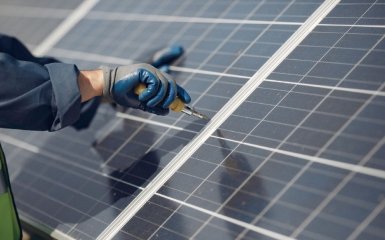
A solar power plant may consist of high-quality panels, a powerful inverter, and a modern battery, but perform much worse than the owner expected. The reason often lies in mistakes made during the design and installation of the equipment.
Ignored shading, an incorrectly selected inverter, poor electrical contacts, or insufficient ventilation can reduce electricity production for years. And some installation violations create much more serious risks — from equipment damage to fire.
Points of attention
- Shading, orientation, and tilt angle of the panels affect the output of a solar power plant, so they need to be evaluated at the design stage.
- The inverter and the number of panels in the strings are selected taking into account the permissible voltages, currents, and temperature conditions.
- High-quality cables, compatible connectors, electrical protection, and reliable mounting reduce the risk of breakage and fire.
The most dangerous mistakes in installing solar panels are related to incorrect calculation of electrical parameters, poor-quality cable connections, lack of proper protection, and unreliable mounting structures.
At the same time, some problems can be prevented even before purchasing the equipment. To do this, it is important to understand how a home solar power plant works, what characteristics affect its performance, and what needs to be checked before starting it up.
Why a solar power plant may perform worse than expected
The power of solar panels specified by the manufacturer is determined under standardized laboratory conditions. In real operation, illumination, temperature and other parameters are constantly changing.
For example, a power plant with ten 500W panels has an installed capacity of 5kW. However, this does not mean that it will produce 5kW throughout the entire daylight hours.
Actual generation is affected by geographic location, season, weather conditions, panel orientation, and the efficiency of electrical components.
Therefore, it is important to distinguish between natural energy losses and installation deficiencies.
Heating of photovoltaic cells or reduced light levels in winter are normal factors in the operation of the system. However, incorrect string configuration, incompatible connectors or regular shading due to poor module placement can be the result of faulty design.
The problem is that such failures often do not cause the station to shut down immediately. It continues to operate, but gradually loses performance or reliability.
Mistake #1. Installing panels without a detailed shading analysis
Solar panels should receive as much useful solar radiation as possible. However, in practice, they are often placed where it is convenient to install them, rather than where the highest output will be.
The main sources of shading are trees, chimneys, ventilation shafts, neighboring buildings, and roof overhangs.
Why even a small shadow affects generation
In a traditional string system, several solar modules are connected in series.
If one panel receives significantly less light, its electrical characteristics may limit the current in the corresponding circuit.
Therefore, partial shading sometimes causes disproportionately large losses in production.
Modern modules have bypass diodes that help reduce the effects of uneven lighting. However, they cannot completely eliminate losses.
Under certain adverse conditions, shading or element defects can also cause local overheating - so-called hot spots.
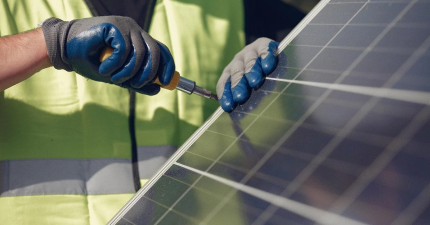
How to properly check shading
The most important thing is to evaluate lighting throughout the year.
For example, a roof that is fully illuminated by the sun in June may be partially shaded by a neighboring house in December.
Specialized modeling programs are used for complex roofs. They allow you to assess the movement of shadows in different seasons and determine the feasibility of installing modules in specific areas.
If partial shading cannot be avoided, power optimizers, microinverters, or panel separation between independent MPPT inputs can sometimes help.
However, additional electronics do not compensate for the physical absence of sunlight.
Mistake #2. Incorrect orientation and angle of the panels
For Ukraine, the southern orientation of solar modules usually provides high annual electricity production.
However, this does not mean that any deviation from south automatically makes the power plant inefficient.
Eastern and western roof slopes may also be suitable for installing solar power plants.
Why maximum generation doesn't always mean maximum benefit
Let's imagine two private houses with identical equipment.
In the first, most electricity is consumed during the day, when air conditioners, pumps, and household appliances are actively operating.
In the second, the main workload falls on the morning and evening hours.
For the first house, peak generation at noon can be particularly beneficial. For the second, an east-west orientation sometimes allows for better alignment of generation with consumption schedules.
This is especially true for battery-free systems where excess energy is not stored.
What angle to choose?
The optimal slope depends on latitude, orientation, and seasonal needs.
For many stationary installations in Ukraine, angles of approximately 25–40 degrees may be practical, but there is no universal value.
On flat roofs, a smaller angle sometimes allows for more compact module placement. However, mutual shading of rows, water drainage, and wind loads must be taken into account.
The correct approach is to compare the projected annual output for different configurations, rather than focusing on one recommended angle.
Mistake #3. Incorrect choice of inverter power
The inverter converts the direct current of solar modules into alternating current, which is used by household appliances.
One of the common mistakes is to choose an inverter solely based on the total rated power of the panels.
In fact, it is necessary to consider operating voltages, currents, MPPT characteristics and load mode.
What happens if the inverter has less power?
Let's assume that solar modules with a total power of 6 kW and an inverter with a nominal output power of 5 kW are installed.
Under favorable conditions, a solar field can produce more energy than an inverter can convert into alternating current.
In this case, the inverter limits the output power. This phenomenon is called clipping , or peak generation limitation.
However, exceeding the DC power of the panels over the AC power of the inverter is not necessarily an error.
In many properly designed systems, this ratio allows for more efficient use of the inverter in the morning, evening, and in moderate light.
The optimal value depends on the design of the power plant and the permissible parameters of the equipment.
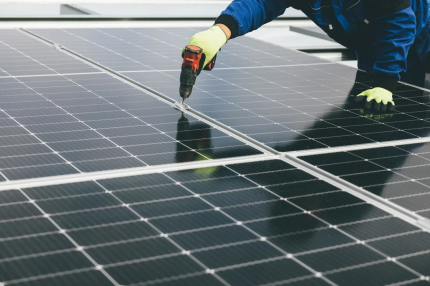
Should I install an inverter with a large margin?
Excessive inverter power also does not guarantee better results.
Some models may operate at lower efficiency under light loads. In addition, a more powerful device usually costs more.
If future expansion of the solar plant is planned, a capacity reserve may be justified.
But it needs to be determined according to specific plans, not according to the principle of "the more, the better."
Mistake #4. Incorrect number of panels in the thong
A string is a group of solar panels connected in series.
During such a connection, the voltage of the individual modules is added, and the circuit current depends on the characteristics of the connected elements.
Each inverter has an allowable input voltage range and an MPPT operating range.
What is the danger of too high voltage?
The open circuit voltage of solar modules usually increases with decreasing temperature.
If the number of panels in the string is determined without taking winter conditions into account, in frosty weather the voltage may exceed the permissible value for the inverter.
This creates a risk of damage to the electronics.
The opposite situation occurs when there are too few panels. In this case, there may not be enough voltage for MPPT to work effectively, especially at high module temperatures.
During design, you need to check:
Maximum open circuit voltage at low temperature.
Minimum operating voltage at high temperature.
Allowable input current of the inverter.
Number of MPPT inputs.
Compatibility of electrical characteristics of panels.
Calculations are performed according to the technical specifications of specific equipment.
Mistake #5. Using inappropriate cables and poor-quality electrical connections
Electrical connections are one of the most important parts of a home solar power plant.
Even a small increase in contact resistance can cause local overheating.
Under adverse conditions, damaged or incorrectly connected conductors can create an electric arc.
A feature of direct current is that such an arc can be maintained even at a current insufficient to trigger conventional overload protection.
Why specialized solar cables are needed
Cables on the roof are exposed to ultraviolet light, moisture, and temperature fluctuations.
For external DC lines, specialized cables are used, in particular, type H1Z2Z2-K, designed for appropriate operating conditions.
The conductor cross-section is selected based on the current, route length, routing method, and allowable voltage drop.
Cables should not hang freely under panels, touch sharp edges, or be in areas where water accumulates for a long time.
Why is it dangerous to combine different MC4 connectors?
Solar panel connectors often have a similar design, but may differ in contact geometry and seals.
The mechanical ability to connect two connectors does not mean their electrical compatibility.
Studies of the reliability of photovoltaic systems conducted by the US National Renewable Energy Laboratory (NREL) identify incorrect crimping, connector incompatibility, and incomplete contact fixation among the typical causes of connector failures.
Therefore, it is necessary to use compatible components and the tools provided by the manufacturer.
Important: Solar panel connectors cannot be disconnected under load unless they are designed for this mode.
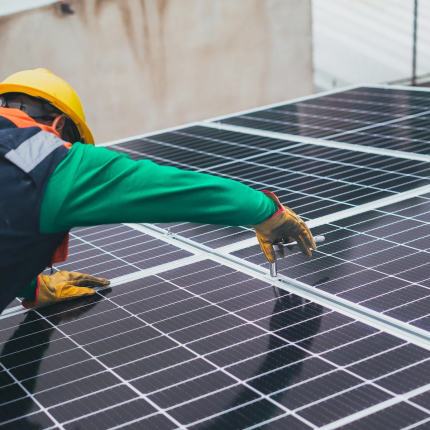
Mistake #6. Insufficient grounding and improper surge protection
A solar power plant must have electrical protection that is appropriate for its design.
At the same time, protective grounding, overvoltage protection, and overcurrent protection perform different functions.
They cannot be replaced with each other.
Why is protective grounding needed?
Depending on the system design, metal module frames, mounting elements and equipment housings require an appropriate protective connection.
This helps reduce the risk of dangerous touch voltage and ensures that the intended protective devices operate.
The specific scheme is determined by the equipment protection class, the power plant design, and applicable regulations.
There is no universal value of grounding resistance that automatically guarantees the safety of any home solar power plant.
Why grounding does not replace lightning protection
Impulse overvoltages can occur due to lightning events or switching processes.
To limit them, special surge protection devices are used - surge protectors, or SPDs.
Depending on the project, such devices are installed on the DC and AC sides.
The type and characteristics of protection are determined by the parameters of the electrical installation, the presence of external lightning protection, and the conditions of the equipment location.
The international standard IEC 62548-1:2023, as amended in 2025, covers requirements for the design of photovoltaic arrays, including cable lines, protective devices, and grounding.
However, even properly installed protection devices do not guarantee the safety of equipment in the event of any direct lightning strike.
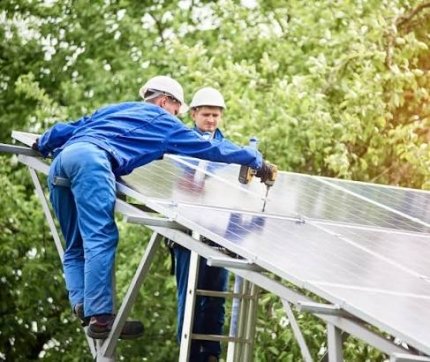
Mistake #7. Insecure fastening of panels and improper sealing of the roof
Installing solar modules on a roof requires assessing its load-bearing capacity.
In addition to the mass of the panels themselves, you need to take into account the weight of the mounting structures, snow loads, and wind effects.
Old wooden roofs, light canopies, and flat roofs with ballast systems require special attention.
Why wind load can be dangerous
During strong winds, solar modules are affected not only by pressure, but also by lift.
If the fasteners are not designed for the appropriate loads, they may loosen or damage the roof structure.
The distance between the supports, the attachment points and the tightening torque of the connecting elements are important.
How to avoid roof leaks
Some mounting designs involve passing fasteners through the roofing material.
In such places, appropriate seals and sealing technologies must be used.
Incorrect installation can cause water to penetrate the thermal insulation or wooden structures.
The consequences sometimes do not appear immediately, but several months after installation.
If the roof needs major repairs in the coming years, it is more advisable to do it before installing the power plant.
Mistake #8. Installing the inverter without sufficient cooling
The inverter generates heat during operation. Even modern devices with high efficiency have some losses during electricity conversion.
If the equipment is installed in a poorly ventilated area, its temperature may increase.
Many models have a thermal power limitation function. In this mode, the inverter reduces generation to avoid critical overheating.
Under adverse conditions, a protective shutdown is possible.
Typical placement disadvantages include installation in direct sunlight, in a cramped cabinet without ventilation, or near heat sources.
The manufacturer specifies the permissible ambient temperature, minimum mounting clearances, and ventilation requirements.
For example, an inverter in a metal room under a roof in the heat can operate at a much higher temperature than the same model in a cool technical room.
Therefore, the installation location must be determined during system design.
Mistake #9. Lack of generation control and maintenance
Solar panels have no moving mechanical parts, but the power plant still needs monitoring.
Contamination, gradual aging of components, damaged cables or inverter malfunctions can affect output.
What to control
Most modern inverters support remote monitoring.
It is useful to track:
Generation per day, month and year.
Current system power.
MPPT operating parameters.
Fault messages.
Battery status, if provided.
Consumption and exchange of energy with the network if appropriate meters are available.
An inexplicable drop in generation may indicate a technical problem, but it should be assessed taking into account weather conditions.
For example, lower output in November compared to July does not in itself indicate a malfunction.
How often should a solar power plant be inspected?
The frequency of professional inspection depends on the manufacturer's documentation and operating conditions.
During maintenance, the condition of mounting structures, cable routes, protective devices, and the inverter is checked.
After severe storms, hail, or other extreme weather events, an unscheduled inspection may be necessary.
Clean the panels as needed according to the manufacturer's recommendations. Do not use abrasive materials or aggressive agents that may damage the surface.
Mistake No. 10. Launching a solar power plant without acceptance tests
Completion of installation does not mean that the power plant is ready for safe operation.
Before starting, it is necessary to carry out electrical checks as specified in the project and confirm the correctness of the equipment settings.
The international standard IEC 62446-1 defines the requirements for documentation, inspection and acceptance testing of grid-connected photovoltaic systems.
Depending on the configuration of the solar power plant, checks may include DC circuit polarity, string voltage, insulation resistance, protective connections, and inverter operation.
What documents do you need to receive after installation?
The owner of the power plant must be provided with the electrical diagram, passports of the installed equipment, warranty documents, instructions, and results of the required tests.
It is also important to gain access to the monitoring system.
If the power plant uses a battery or supports backup power, the corresponding operating modes must be checked separately.
In Ukrainian conditions, this is especially important, since a conventional grid-connected solar power plant usually automatically shuts down after the external power grid disappears.
To power a home during outages, a system with appropriate capabilities for autonomous operation and safe separation from the external network is required.
How to determine whether an already installed solar power plant is working properly
One indicator of current power is not enough to assess the quality of the installation.
For example, if a 5 kW power plant produces only 3 kW at a certain point, this does not necessarily indicate a malfunction.
The cause may be the temperature of the modules, lighting, cloudiness, or inverter limitations.
Instead, a systematic deviation of actual production from a reasonable forecast requires verification.
Specialized models are used to assess performance. In particular, the European PVGIS system allows predicting the output of a photovoltaic installation taking into account the geographical location, orientation and characteristics of the system.
However, no model takes into account all local factors. For example, small objects that cast shadows on a roof may require separate analysis.
Example of losses due to incorrect installation
Let's say the estimated annual output of the power plant is 6,500 kWh.
Due to poor panel placement, the actual result under the same calculated weather conditions is 8% lower.
The under-received electricity will be:
6500 × 0.08 = 520 kWh per year.
Over ten years, this would roughly correspond to 5,200 kWh, assuming a constant level of losses.
This is an example of a calculation, not a universal assessment of the consequences of installation errors.
What to check before ordering solar panel installation
A high-quality commercial offer should contain not only a list of modules, an inverter, and installation materials.
It is important to obtain technical justification for the chosen configuration.
| What to check | Why is this important? |
| Generation forecast by month | Allows you to estimate seasonal production |
| Shading analysis | Helps avoid hidden losses |
| Placing panels on the roof | Determines the efficiency and availability of service |
| String calculation | Confirms compatibility with inverter |
| Mounting structures | Ensure mechanical reliability |
| Cables and connectors | Affects losses and electrical safety |
| Protective equipment | Reduces the risks of emergency modes |
| Warranty and service | Determine the terms of further service |
It is especially important to find out whether the cost includes full commissioning and testing of electrical parameters.
Low initial cost does not always mean savings if you later have to redo cable routes, change the placement of panels, or replace the inverter.
Can I install solar panels myself?
Installing a solar power plant involves working at height and DC electrical circuits that may be under dangerous voltage.
Even after the inverter is turned off, the sun-lit modules are able to continue generating electricity.
Therefore, disconnecting cables, checking contacts, or changing the electrical circuit yourself without proper training can be dangerous.
Design, electrical connection and acceptance testing of a stationary solar power plant must be performed by qualified specialists in compliance with technical documentation and applicable standards.
Conclusion
Proper installation of solar panels determines not only their performance, but also the reliability of the entire home power plant.
The greatest attention should be paid to the analysis of shading, compatibility of panels and inverter, quality of cable connections, electrical protection and mounting structures.
A significant portion of problems can be avoided at the design stage. And acceptance tests and subsequent monitoring help to detect malfunctions in a timely manner and maintain the efficiency of the solar power plant during operation.
FAQ: Frequently Asked Questions About Installing Solar Panels
What are the most common mistakes when installing solar panels?
The main mistakes are incorrect module placement, unaccounted for shading, unsuitable inverter, incorrect string configuration, poor quality cables and connectors, insufficient electrical protection and unreliable mountings. They can reduce output or create risks for the equipment.
Can one shaded panel reduce the output of the entire solar power plant?
Yes, in systems with series connection of modules, partial shading can affect the entire string. The amount of loss depends on the design of the panels, the location of the shadow and the electrical configuration. Bypass diodes and optimizers can reduce the negative impact, but do not eliminate it completely.
Can solar panels be installed on a roof that is not south-facing?
Yes. East and west orientations can also provide efficient generation. The optimal location is determined by the projected annual production, seasonal conditions, and electricity consumption schedule.
Can I connect more panels to an inverter than its rated power?
In many systems, it is allowed to exceed the nominal DC power of the solar array above the AC power of the inverter. However, the permissible values of voltage, current and other requirements of the manufacturer must be observed. At high generation, the inverter may limit the output power.
Why do solar panels produce less electricity in hot weather?
As the temperature of silicon photovoltaic cells increases, their efficiency usually decreases. This is a normal physical characteristic and not necessarily a malfunction. Proper ventilation of the modules helps to limit overheating.
Do solar panels need to be grounded?
The requirements for protective connections and grounding are determined by the system design, the protection class of the equipment and the applicable standards. The metal parts of many photovoltaic installations require a suitable protective connection. The specific scheme is determined during the design.
Can improper installation of solar panels cause a fire?
Yes. Damaged insulation, poor electrical contacts, arcing and improperly selected protective devices can pose hazards. Proper design, installation and maintenance significantly reduce these risks.
Why does the solar inverter often turn off?
The reasons may be overheating, external power grid parameters, insulation failure, inappropriate string voltage or other faults. The exact cause is determined by the inverter messages and the results of professional diagnostics.
Do solar panels work during a power outage?
A conventional grid-connected solar power plant usually stops operating after a power outage. Backup power requires a system that supports stand-alone operation and safe disconnection from the grid. A hybrid inverter with a battery is often used for this purpose.
How often does a solar power plant need to be maintained?
The frequency is determined by the manufacturer's recommendations and operating conditions. It is necessary to regularly monitor the generation, as well as conduct professional inspections of electrical connections, fasteners, protective equipment and the inverter. Additional inspection may be required after severe storms or hail.

