

A set of quality car tires can cost a significant portion of the family budget. Especially if you need to prepare your car for winter, and the old tires are already worn out. Then the driver is faced with a difficult choice: buy new tires of an inexpensive brand, look for a used set from a well-known manufacturer, or spend money on all-season tires once.
Each option has advantages, but the cheapest offer is not always the most profitable.
Points of attention
- The choice of tires depends on the climate, routes, and mileage: new seasonal sets have predictable condition, while high-quality all-season tires may be suitable for the city and mild winters.
- Used tires are cheaper, but before buying, you need to check the date of manufacture, tread, sidewalls, even wear, and possible repairs.
- It is worth comparing independent tests of specific models and dimensions: a well-known brand or marking does not guarantee equally good grip under all conditions.
For example, used winter tires may have adequate tread depth but be old or poorly maintained. A new budget model may be inferior to higher-quality counterparts on wet asphalt. And all-season tires that work well in the city may not be effective enough on snowy mountain roads.
The best tires aren't necessarily the most expensive. But choosing them solely based on price, brand recognition, or tread life is dangerous.
Tests by the German automobile club ADAC in 2026 confirm that the difference between models can be significant. When testing winter tires in size 225/50 R17, the braking distances of the best and worst participants on wet asphalt differed by more than ten meters.
We figure out which tires to buy for Ukrainian roads, when all-season tires are appropriate, whether used tires can be trusted, and how to correctly calculate the costs for several years of operation.
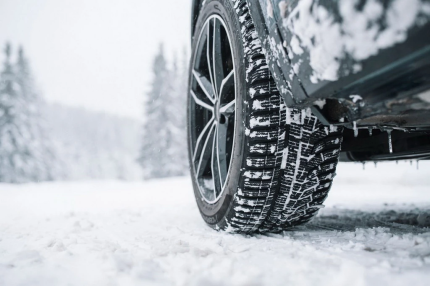
Which tires are better to buy: new, used or all-season?
Before comparing prices, you need to determine the terms of use of the car.
For a driver who drives around the city every day and may leave the car at home during heavy snowfall, the requirements will be the same.
For someone who regularly travels on highways, transports their family, or drives mountain roads in winter, it's different.
| Version | Main advantages | Main disadvantages |
| New seasonal tires | Known condition, full resource, wide selection of models | Initial costs for two sets |
| Used seasonal tires | Lower purchase price, opportunity to find a quality model | Unknown history, wear, aging and possible hidden defects |
| New all-season tires | One set per year, fewer seasonal tire changes | Compromised performance in extreme conditions |
An important nuance: all-season tires are also different.
Some models show quite acceptable results in independent tests, while others have serious shortcomings even in moderate winter conditions.
Therefore, you should compare specific models, not just rubber categories.
New winter tires: when it's worth paying more
New winter tires are the most predictable option for a driver who regularly operates a car in the cold season.
Provided that it is properly stored before sale, the buyer receives a set without prior road wear, with full tread height and a known date of manufacture.
However, even among new tires, the difference in safety can be significant.
Why not all new winter tires are equally safe
In September 2026, ADAC published the results of testing 16 models of winter tires in the size 225/50 R17.
Only four received an overall rating of “good.” Another six demonstrated such serious deficiencies that the experts deemed them unsatisfactory.
The tests on wet roads were particularly revealing.
The best models stopped a test car from 80 km/h in about 35 meters. The worst took almost 12 meters longer.
This is the difference that, in a real road situation, can determine the consequences of emergency braking.
It is important to note that it was not only little-known manufacturers that had poor results. Among the models with serious flaws were also tires from well-known brands.
The main conclusion: the manufacturer's name alone does not guarantee a high level of safety. What matters is the specific model, its generation, and test results.
Is it worth buying budget new tires?
Yes, if a specific model demonstrates acceptable characteristics and meets the requirements of the car.
Cheap tires are not necessarily dangerous.
However, savings should be based on technical specifications, not just the minimum price.
For example, if two models cost about the same, but one performed well on wet asphalt and the other had handling problems, the choice is obvious.
Compare independent tests, preferably in your own dimension.
Results from a different size cannot always be directly transferred to the desired model.
Used tires: when savings are justified, and when it is better to refuse
Used tires are attractive primarily because of their price.
On the secondary market, you can find models from well-known manufacturers much cheaper than new ones.
However, the main problem is that the buyer often does not know the real history of operation.
The tire may have experienced a severe impact, prolonged driving with insufficient pressure, overloading, or improper storage.
Even if it looks good on the outside, its internal condition may be unsatisfactory.
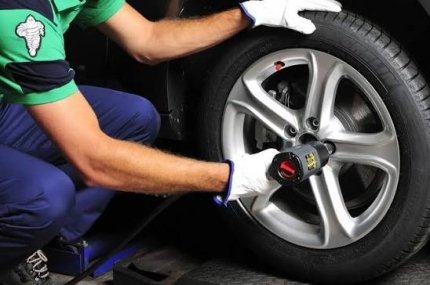
Can a used premium tire be better than a new budget one?
Theoretically yes, but there is no universal rule.
A quality tire from a well-known manufacturer may have better design and performance than a weak budget model.
However, wear and tear and aging change its properties.
Test results for a new tire cannot be automatically applied to a used one that is several years old.
That is why the statement “old Michelin is always better than new cheap tires” has no basis.
It is necessary to assess the actual condition of a specific set.
How to properly check used tires before buying
It is worth starting the review before payment.
Ask the seller to provide photos of each tire from both sides, pictures of the tread, and markings with the date of manufacture.
But photos are no substitute for a physical inspection.
1. Check the DOT production date
The age of a tire is determined by the four-digit production date code, which is usually located on the sidewall.
For example, the designation 3623 means that the tire was manufactured in the 36th week of 2023.
The first two digits are the week, the last two are the year.
The full date code is sometimes located on only one side of the tire.
As of October 2026, a tire with this code is just over three years old from the date of manufacture.
At the same time, the DOT does not show how many kilometers the tire has traveled or how it was stored.
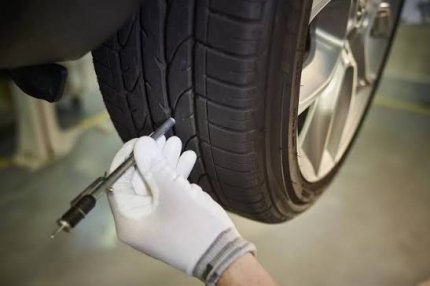
2. Measure the tread depth
For winter tires, tread depth is of particular importance.
With wear, properties on snow and wet surfaces deteriorate.
The German ADAC recommends replacing winter and all-season tires when the remaining tread depth becomes less than 4 mm.
For summer tires, a practical safety guideline is often considered to be around 3 mm.
These are recommendations, not universal legal requirements.
When buying a used winter set, it is advisable to look for tires with sufficient tread life beyond the recommended replacement limit.
For example, a tire with 6 mm of tread remaining may have a significantly longer potential life than a similar tire with 4.5 mm.
But you can't draw a conclusion about safety based on this figure alone.
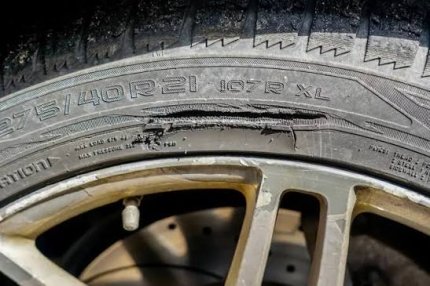
3. Inspect the sidewalls and interior surface
It is worth refusing the purchase if there is:
swelling or deformities;
cuts with cord damage;
signs of delamination;
numerous or deep cracks;
traces of unsafe or poor-quality repairs;
noticeable deformations of the frame.
Pay special attention to the sidewall.
Not every tire damage can be safely repaired.
If in doubt, a qualified tire specialist should inspect the tire, preferably by inspecting the inner surface of the removed tire.
4. Assess the evenness of wear
If one part of the tread is significantly more worn than the other, this may indicate problems with suspension geometry, pressure, or operation.
Even if the average tread depth seems adequate, uneven wear can affect the vehicle's handling.
Therefore, it is worth measuring the tread in several places along the width and circumference of the tire.
How many years can car tires be used?
There is no single exact service life for all tires.
It depends on the composition of the rubber compound, climate, storage conditions, mileage, and nature of operation.
ADAC recommends not using winter tires older than about eight years, even if they still have tread, as the winter properties of the rubber deteriorate over time.
For summer tires, the organization advises aiming for a term of up to eight to ten years.
Manufacturer Continental also recommends retiring car tires older than ten years from the date of manufacture, including spares.
But this does not mean that a tire is automatically safe at the age of six, and necessarily unusable after eight.
Damage, cracks, significant wear or other defects may require replacement much sooner.
When buying used tires, evaluate the age, condition, and remaining life together.
All-season tires: can you drive on the same set all year round?
High-quality all-season tires are designed for use in a variety of weather conditions.
They can provide acceptable grip on dry and wet asphalt, as well as on snow under appropriate conditions.
Their main advantage is the ability to do without two seasonal sets.
However, all-season tires remain a compromise.
In severe frosts, deep snow or difficult mountain routes, specialized winter tires usually have advantages.
In the summer heat, high-quality summer models, in turn, can provide better performance on dry and wet asphalt.
What the ADAC all-season tire test showed in 2026
In June 2026, ADAC tested 16 all-season models in size 185/65 R15.
Only one received an overall rating of "good."
Seven models received satisfactory ratings, three were mediocre, and five were unsatisfactory.
The winner was Continental AllSeasonContact 2. Pirelli Cinturato All Season SF 3 and Michelin CrossClimate 2 also showed high results.
At the same time, some models showed serious problems with grip on winter roads, despite the presence of appropriate markings.
This confirms once again: an all-season tire is not automatically safe for any winter just because the manufacturer calls it all-season.
For whom all-season tires can be beneficial
All-season tires are a good idea to consider if the car is mainly used in the city and winter roads are regularly cleared.
It is also important whether you can cancel your trip during heavy snowfall or ice.
For example, the owner of a small city car who drives a few thousand kilometers per year and rarely goes on the highway may consider a quality all-season model as an economical alternative to two sets.
But for regular winter trips through the Carpathians, night highway routes, and roads that are poorly cleared of snow, you should prefer full-fledged winter tires.
There is no universal annual mileage limit below which all-season tires are necessarily the best choice.
The climate, routes and characteristics of the specific model remain decisive.
How to understand tire markings: M+S, 3PMSF, DOT
The sidewall of a car tire contains information about dimensions, load, permissible speed, and other characteristics.
For winter and all-season tires, the M+S and 3PMSF markings are particularly important.
What does M+S mean?
The M+S marking comes from the English words Mud and Snow - mud and snow.
It indicates certain design features of the tire.
However, the M+S designation itself does not confirm that the tire has passed a standardized snow grip test.
Therefore, it is not worth focusing only on it.
What does 3PMSF mean?
3PMSF is a mountain icon with three peaks and a snowflake inside.
It means that the tire meets the specified requirements for snow grip according to standardized tests.
This is a more important indicator of suitability for winter conditions than the M+S label.
But the presence of 3PMSF does not guarantee equally good results on wet asphalt, ice or dry roads.
How to read tire size
For example, the marking 205/55 R16 91H means:
| Marking | Value |
| 205 | Nominal tire width in millimeters |
| 55 | Profile height as a percentage of width |
| R | Radial design |
| 16 | Disc mounting diameter in inches |
| 91 | Load index |
| H | Permissible speed index |
The size, load index and other characteristics must meet the requirements of the vehicle manufacturer.
You should not select tires based solely on their mounting diameter.
What is the minimum tread depth allowed in Ukraine?
As of October 2026, paragraph 31.4.5 of the Road Traffic Rules of Ukraine establishes the minimum residual tread depth for passenger cars - 1.6 mm.
If the remaining amount is less, the vehicle cannot be operated with such tires.
However, the legal minimum does not mean that a tire with a depth of 1.7 mm provides sufficient safety in all weather conditions.
In particular, on wet roads, a worn tread is less able to shed water, which increases the risk of aquaplaning.
For winter conditions, 1.6 mm is also not a reasonable practical guideline.
That is why ADAC recommends replacing winter and all-season tires before they reach 4 mm.
Is it mandatory to install winter tires in Ukraine?
As of October 2026, there is no general rule in Ukraine that obliges all drivers of passenger cars to switch to winter tires from a specific calendar date.
There is also no separate fine imposed solely for using summer tires in winter.
But this does not cancel the requirements for the serviceability and technical condition of the wheels.
The patrol police recommend switching to tires suitable for winter conditions in a timely manner.
A steady decrease in temperature to approximately +7 °C is often cited as a practical guideline.
This is not a universal physical threshold beyond which all summer tires suddenly lose grip. The surface temperature, precipitation, and properties of the specific rubber compound are important.
For trips abroad, you need to check the winter requirements of the destination country and transit countries separately.
How to calculate which tires are actually more profitable
When choosing tires, you should look not only at the price of the set, but also at the total cost of operation.
For example, let's imagine two options.
The first is a cheaper used kit with a small remaining life.
The second is more expensive new tires, which, under the right conditions, can last for several seasons.
If used tires have to be replaced the next year, the initial savings may disappear.
What to include in the total cost
Consider:
the price of four tires;
delivery;
installation and balancing;
possible diagnostics of used tires;
seasonal storage;
expected service life;
the cost of the next replacement.
For two seasonal sets, you need to consider regular shoe replacement or purchasing additional discs.
For all-season tires, some of these costs may be lower.
However, one set is used all year round and is constantly wearing out.
Therefore, all-season tires will not necessarily last as many calendar years as each of two separate seasonal sets.
Which tires to choose depending on your budget and driving conditions
| Operating conditions | A feasible option |
| Daily city trips, mild winter | High-quality all-season tires with proven performance |
| Regular intercity routes in winter | New set of full winter tires |
| Mountain roads, frequent snowfalls | Specialized winter tires of the appropriate type |
| Limited budget | New models with acceptable independent ratings or thoroughly tested used tires |
| High annual mileage | Separate summer and winter sets with durability in mind |
| Rare short trips | Assessing the feasibility of high-quality all-season rubber |
These are general guidelines, not a guarantee of safety.
For all-wheel drive vehicles, electric vehicles, and high-powered vehicles, it is especially important to follow the manufacturer's tire requirements and the allowable difference in tire wear.
Is it possible to install two winter tires and leave two summer tires?
This solution may seem like an attractive way to save money, but it creates a dangerous difference in traction between the axles.
For example, if the front wheels have good traction in the snow, but the rear wheels have much worse road holding, the car may become unstable during cornering or braking.
Therefore, for winter operation, four suitable tires, coordinated in type and characteristics, should be used.
ADAC recommends installing four tires of the same type and model.
If you are replacing only two tires of the same type and characteristics, it is usually recommended to install the higher-quality pair on the rear axle for better directional stability.
However, you need to take into account the specific requirements of the automaker.

Five mistakes when buying car tires
1. Buy only by brand. Even well-known manufacturers have models with different characteristics. Focus on independent tests.
2. Evaluate used tires only by the tread. The date of manufacture, damage, and previous use are equally important.
3. Treat all all-season tires the same. Some models have serious shortcomings in snow or wet asphalt.
4. Buying tires with the wrong size or load index. Even if the tire physically fits the rim, it may not meet the requirements of the vehicle.
5. Ignore installation and maintenance. Incorrect pressure, damaged rims, and suspension problems can impair the vehicle's handling and accelerate tire wear.
Checklist before buying new or used tires
Check the basic parameters before paying.
| What to check | What to look out for |
| Size | Compliance with vehicle manufacturer requirements |
| Load index | Not lower than permissible for the vehicle |
| Seasonality | Compatibility with climate and routes |
| 3PMSF marking | Availability of standardized confirmation of winter properties |
| DOT | Production date of each tire |
| Protector | Residual depth and wear uniformity |
| Sidewalls | No swelling, deep cuts or deformations |
| Repair history | Absence of dangerous or questionable interventions |
| Independent tests | Results of the desired model and dimension |
| Full cost | Price, delivery, installation and expected service life |
When purchasing used tires remotely, choose the option of inspection before final acceptance of the product.
Don't rely solely on the seller's wording of "almost new" or "one season of use."
When to change tires and how to extend their life
You need to check the condition of your tires regularly, not just before the change of season.
Inspect tires for damage and monitor pressure according to the vehicle manufacturer's recommendations.
If the tread wears unevenly, it is worth checking the condition of the suspension, wheel geometry and pressure.
After installing the wheels, it is necessary to adhere to the manufacturer's recommended tightening torques and other requirements.
Tires that are not in use should be stored in a dry, cool place, away from direct sunlight and heat sources.
You should not continue to use a tire just because it has not yet reached the legal minimum wear.
Safety depends on the condition of the entire set, not just the tread depth of one tire.
Conclusion
The choice between new, used, and all-season tires depends primarily on the roads, weather conditions, mileage, and available budget.
New seasonal tires provide more predictable performance and full service life. Used tires can reduce initial costs but require careful inspection. Quality all-season tires can be a practical solution for moderate climates, but are not always suitable for difficult winters.
The biggest mistake is to evaluate safety based on one parameter: price, brand, age, or tread remaining.
Before purchasing, it is worth checking independent tests of a specific model, determining real operating conditions, and calculating the full cost of use.
It is possible to save money on tires. But savings should be based on the right choice, not on sacrificing the necessary level of safety.
FAQ: Frequently asked questions about choosing car tires
What is better to buy: new budget or used premium tires?
There is no universal answer. A new budget model may have a known condition and full resource, but weak performance in certain conditions. A used premium tire may be of high quality, but its properties depend on age, wear and previous operation.
Is it worth buying used winter tires?
This option should only be considered after a thorough inspection. You should check the date of manufacture, tread depth, even wear, sidewalls, and possible repairs. If you have any doubts about the condition, it is better to refuse the purchase.
What is the minimum tread depth for winter tires?
In Ukraine, the legal minimum for passenger cars is 1.6 mm. However, for safety reasons, ADAC recommends replacing winter tires when the tread becomes less than 4 mm.
How many years can you drive on winter tires?
There is no single guaranteed period. ADAC recommends not using winter tires older than about eight years due to deterioration of properties over time. Damage or significant wear may require replacement earlier.
Can I drive on all-season tires in winter?
Yes, if the tires are suitable for the weather conditions and have the necessary characteristics. For winter, it is advisable to choose models with the 3PMSF marking and good results from independent tests. In difficult winter conditions, specialized tires are usually safer.
What is the difference between M+S and 3PMSF?
M+S is a designation related to the tire's design for mud and snow, but without the mandatory standardized confirmation of winter performance. 3PMSF means passing specific snow tests.
When should you change summer tires to winter tires in Ukraine?
A practical guideline is a sustained cooling of approximately +7 °C, but actual weather conditions must be taken into account. As of October 2026, there is no general legally established date for the mandatory transition to winter tires in Ukraine.
Is it more profitable to buy all-season tires instead of two sets?
For low mileage and moderate weather conditions, this may be economically feasible. However, you need to consider the rate of wear, the characteristics of the specific model, and the conditions of winter driving.
Can winter tires be installed only on the front wheels?
This is not recommended. The difference in grip between the axles can impair the vehicle's stability. A coordinated set of four matching tires is required for winter use.
What is the most important thing to look for when buying tires?
First of all, check the size and index for the vehicle, seasonality, condition, date of manufacture and independent test results. For used tires, a professional inspection for hidden defects is especially important.
Important: The material is for informational purposes only. Recommendations for car tires do not replace technical diagnostics and the requirements of the vehicle manufacturer. Incorrectly selected, worn or damaged tires can pose a threat to road safety. Before installation, check the permissible characteristics for your vehicle, and if in doubt, contact a qualified specialist. Information on legislative requirements and test results is provided as of October 2026.

