

Kitchen towels, cutting boards, silicone spatulas and food containers may look perfectly good even after a long time of use. However, external cleanliness does not always mean that the item is easy to wash away food residues and microorganisms. Items that are constantly in contact with water, raw meat, vegetables and ready meals require special attention. Dirt can accumulate in cracks, deep scratches, seals and hard-to-reach joints, which are difficult to remove with ordinary washing.
The most common items to check are kitchen towels, cutting boards, dish brushes, silicone utensils, food containers, and removable parts of household appliances. However, not every item needs to be thrown away after a certain number of weeks: for many things, the condition of the material and the ability to be thoroughly cleaned are crucial.
Let's look at ten kitchen items that need regular replacement or special care, and explain how to tell when they're no longer worth using.
Why do kitchen items get dirty even after washing?
In the kitchen, microorganisms can get onto surfaces from food, hands, water, and cooking utensils. Their presence alone does not mean that the object is dangerous. However, some bacteria can cause foodborne infections if they get into food.
Cross-contamination is especially important.
This is the name given to the transfer of microorganisms from raw products or contaminated surfaces to other products, particularly those that are ready to be consumed.
For example, after cutting raw chicken, a person wipes the cutting board with a kitchen towel and then wipes a clean plate with the same towel. This use creates a risk of transferring microorganisms.
A study by NSF International on home kitchen hygiene found potentially dangerous microorganisms on various household items, including blender seals, kitchen spatulas, and other tools.
The main problem is often not the age of the item, but rather irregular cleaning and damage that prevent it from being washed properly.
1. Kitchen towels and reusable napkins
A cloth towel seems like a harmless kitchen accessory. However, it is constantly in contact with wet hands, water droplets, work surfaces, and sometimes food residue.
If a towel remains wet for a long time, it creates favorable conditions for the preservation and reproduction of certain microorganisms.
How often should you change a kitchen towel?
For towels that are actively used during cooking, a rule of thumb is to replace them with clean ones every day .
If the fabric has become dirty, damp, or has come into contact with raw meat juice, it should be washed earlier.
Reusable table cloths should be changed even more frequently depending on usage.
Towels should be washed according to the fabric manufacturer's recommendations, using the appropriate setting and drying them completely after washing.
When to throw in the towel
Worn fabric itself is not necessarily dangerous. However, replacement is warranted if the towel has a persistent unpleasant odor after washing, has signs of mold, or is so damaged that it is difficult to clean properly.
A useful habit is to use separate towels for hands, clean dishes, and cleaning.
This helps reduce the risk of transferring contaminants between different surfaces.
2. Cutting boards with deep cuts and cracks
Plastic and wooden cutting boards gradually wear out under the action of knives.
Over time, grooves appear on the surface, in which small particles of food can remain.
The problem becomes especially noticeable when the board can no longer be thoroughly cleaned with a regular brush.
How to understand that it is time to replace the board
The USDA recommends replacing boards that are excessively worn or have deep grooves that are difficult to clean.
Signs of need for replacement:
Deep scratches that contain food particles.
Cracks or delamination of the material.
Significant surface deformation.
Persistent odor after thorough washing.
Damage that made the board unstable.
There is no universal lifespan. A quality board can last for years if properly cared for, while intensive daily cutting can damage the surface much faster.
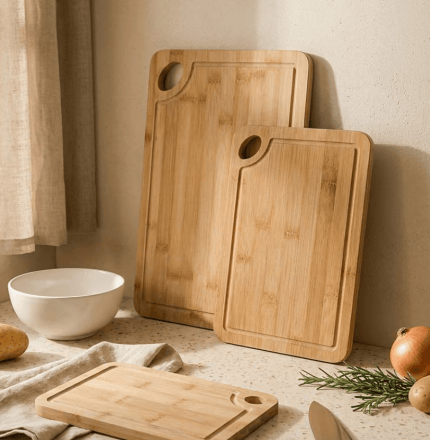
Is a wooden or plastic board safer?
Both materials can be suitable for food contact with proper cleaning.
The main thing is the condition of the surface and compliance with hygiene rules.
It is advisable to use a separate board for raw meat, poultry and fish. Another one should be reserved for vegetables, bread and ready-made foods.
After each use, the board should be washed, rinsed and dried completely. Not all wooden products are dishwasher safe, so you should follow the manufacturer's instructions.
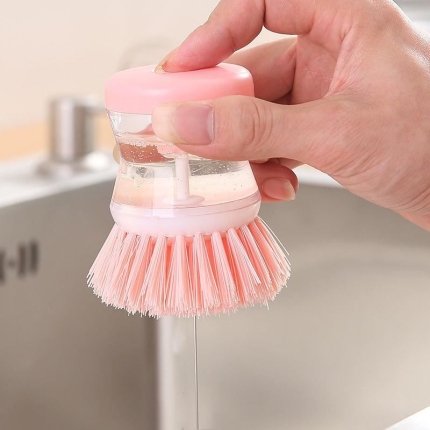
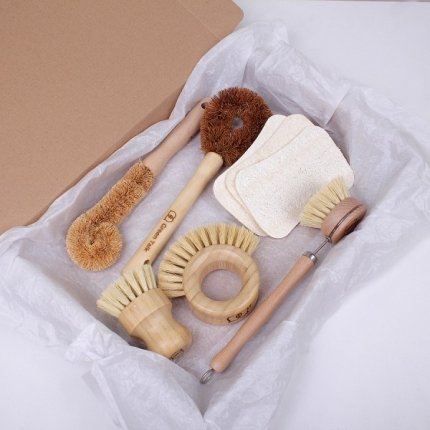
3. Dishwashing brushes
Many people change their sponges regularly, but use the same dish brush for years.
Brushes have a definite advantage: the bristles usually dry faster than the porous material of a traditional sponge.
However, food debris can also accumulate between them.
This is especially true for brushes with thick bristles and complex connections between the working part and the handle.
When to change your brush
There is no exact universal interval.
The brush should be replaced if the bristles are severely deformed, start to fall out, the object has acquired a persistent odor, or dirt has formed between the parts that cannot be cleaned.
After use, the brush should be rinsed of product residue and left to dry.
Some models are dishwasher safe. This should be checked against the manufacturer's recommendations.
For convenience, you can choose brushes with a replaceable working nozzle. Then you won't have to replace the entire tool due to bristle wear.
4. Silicone spatulas, spoons and cooking brushes
Silicone kitchen utensils are convenient for cooking, especially when working with non-stick cookware.
However, not all such items are equally easy to clean.
Two-component tools, where the silicone working part is connected to a plastic or metal handle, require the most attention.
Where pollution accumulates
Moisture, grease or food particles may remain at the joint.
If the structure can be disassembled, it must be cleaned according to the instructions.
An NSF International study found E. coli, yeast, and mold on some kitchen spatulas that weren't washed thoroughly enough.
This does not mean that all silicone tools are dangerous. The risk depends on the design, condition of the item, and care instructions.
When should the blade be replaced?
The main signs are silicone ruptures, peeling of the working part, cracks, deformation, and contamination that cannot be removed.
If sticky areas appear on the surface or the material begins to collapse, you should not continue to use such a tool.
For frequent cooking, solid silicone spatulas without complex joints where food residue accumulates can be practical.
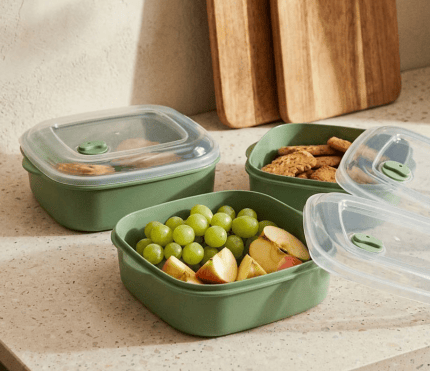
5. Food containers and their seals
Reusable food containers help store prepared meals, lunches, and leftovers.
However, regular heating, cooling, washing, and mechanical stress gradually affect the condition of the materials.
Plastic lids and rubber seals can be particularly vulnerable.
Why you need to check the covers
The seal ensures a tight fit of the lid, but food residue can accumulate in its grooves.
If the design allows, the seal should be periodically removed and cleaned.
Containers should be washed thoroughly after each use and dried completely before closing.
When a container is no longer worth using
Replacement is required if there are cracks, significant deformation, damage to the seal, or surfaces that cannot be properly cleaned.
A scratch in itself does not always mean that the plastic has become dangerous. What matters is the depth of the damage, the condition of the material, and its suitability for the conditions of use.
Not all plastic containers are microwave or dishwasher safe. High temperatures can damage products that are not intended for such use.
You should also not reuse disposable packaging for hot dishes without confirming its suitability.
6. Removable blender and chopper seals
Blenders are often washed right after making a smoothie or sauce. However, a quick rinse of the bowl doesn't always clean all the parts.
Special attention should be paid to sealing rings, knife attachment points, and joints where food can get into.
Why it's not enough to just pour water into a bowl
If food residue gets under the seal, normal washing of the inside of the bowl may not remove it.
In a study by NSF International, blender seals were among the items found to harbor potentially dangerous microorganisms.
If structurally possible, the bowl should be disassembled and cleaned according to the manufacturer's instructions.
Before cleaning, the appliance must be disconnected from the power supply.
When to change the gasket
Signs of wear include cracks, hardening, loss of elasticity, deformation, and leakage.
If the seal is damaged, it should be replaced with a compatible part and not attempted to repair with household adhesives.
Important: Not all blenders allow the user to remove the blade assembly or seal themselves. In such cases, follow the instructions and do not forcefully disassemble the sealed mechanism.
7. Drinking water filter cartridges
A water filter may appear to be working even after its life has expired.
That is why it is not enough to assess its condition only by the taste or transparency of the water.
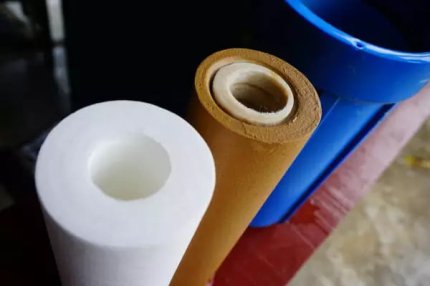
Various technologies are used in household systems: mechanical filtration, activated carbon, ion exchange, membranes, and combination cartridges.
Each type has its own limitations.
Why filters need to be changed on time
As you use it, the mechanical filter may become clogged with dirt particles.
Activated carbon gradually loses its available capacity to retain certain substances.
At the same time, water does not always change its smell or taste when the cartridge resource is exhausted.
Therefore, you need to focus on the resource specified by the manufacturer: the amount of water passed or the maximum operating time.
How often to change the cartridge
There is no universal rule of “once a month” or “every three months”.
The frequency depends on the filter model, the quality of the source water and the intensity of use.
For pitchers, flow systems, and reverse osmosis, service times can vary significantly.
Do not install any random cartridge just because it fits. Proper compatibility and cleaning performance must be confirmed by the manufacturer.
8. Reusable water bottles, straws, and lids
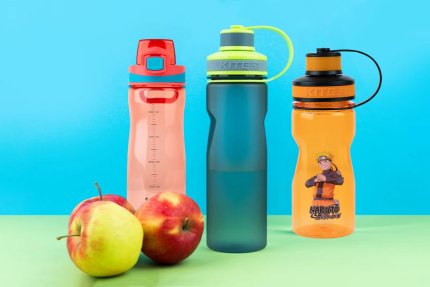
Reusable bottles have become a common accessory at home, at work, and on the go.
However, sometimes they are only rinsed with water without cleaning the lid, spout, and tube.
These are the parts that can remain wet and contain beverage residue.
Bottles that contain not only water, but also juices, tea, or milk drinks require especially careful care.
How to properly clean a bottle
It is advisable to wash a bottle from which you drink regularly every day, using an appropriate detergent.
If the design allows, you need to disassemble the lid, remove the seal and wash the tube with a special brush.
After washing, all parts must be completely dry.
Don't immediately seal a wet bottle tightly and leave it in the cupboard.
When to buy a new bottle
Replacement is required if the body is cracked, there is damage in the areas where it comes into contact with the beverage, the lid no longer closes tightly, or the tube cannot be properly cleaned.
If the manufacturer sells replacement tubes or seals, sometimes it is enough to replace only the damaged part.
This allows you to avoid unnecessary costs and continue to use a suitable case.

9. Dish drying racks and mats
After washing, dishes are often left on a special textile or silicone mat.
Its job is to collect water droplets and protect the countertop.
However, with constant humidity and insufficient drying, such an accessory can acquire an unpleasant odor.
Why is it important to dry the rug?
If the surface remains wet after each dishwashing, moisture may accumulate under the mat.
This is especially undesirable for wooden or water-sensitive countertops.
Textile rugs should be washed regularly according to instructions and dried thoroughly.
Silicone options should be washed on both sides, paying attention to recesses and relief areas.
When to replace
If a textile rug has a persistent odor after washing, signs of mold, or damaged seams, it is best to replace it.
For silicone models, cracks, material destruction, and areas that can no longer be cleaned are important.
It's not necessary to buy a new mat every month. It's much more important not to leave it constantly wet.
10. Tin can openers and tools with complex mechanisms
A manual canning knife is often stored in a drawer for years, even if it is only quickly rinsed after use.
However, food particles may remain in the area of the cutting wheel or blade.
Such contamination is difficult to notice, especially if the tool has several moving parts.
How to properly care for a can opener
After use, the tool must be cleaned according to the instructions, paying attention to the cutting part.
If the manufacturer allows washing in a dishwasher, you can use the appropriate mode.
The can opener must be completely dry before storage.
It is also necessary to check the condition of the mechanism.
If the tool is rusting, has trouble opening cans, has a damaged blade, or cannot be cleaned, it is a good idea to replace it.
It is also important to note that a damaged canning knife can leave sharp edges on cans, increasing the risk of cuts.
How often should you replace kitchen items: a quick table
For some items there are recommended maintenance intervals, for others physical wear and tear is the deciding factor.
| Subject | How often to clean | When to replace |
| Dish-cloth | Change to clean daily or sooner | Persistent odor, mold, unusable condition |
| Cutting board | After each use | Deep grooves, cracks, excessive wear |
| Dish brush | After use, with regular sanitizing | Deformed bristles, persistent odor |
| Silicone spatula | After each use | Cracks, peeling, inaccessible for cleaning joints |
| Food container | After each use | Cracks, deformation, damage to the seal |
| Blender seal | According to the instructions after use | Loss of elasticity, cracks, leaks |
| Water filter | Maintenance according to instructions | After the declared resource is exhausted |
| Reusable bottle | Daily with regular use | Damage to the housing or parts |
| Dish mat | Regularly, with complete drying | Mold, persistent odor, material destruction |
| Opener | After each use | Corrosion, blade damage, faulty mechanism |
These are guidelines for home use and not universal life spans. If the manufacturer specifies other care or replacement requirements, these should be taken into account.
What's really more important: washing regularly or buying new more often?
There is a common belief that for kitchen hygiene it is necessary to constantly buy new sponges, towels and other accessories.
However, frequent replacement does not compensate for improper use.
For example, a new towel can get dirty within the first day if it is used to wipe surfaces after raw meat and then clean dishes.
In contrast, a quality, undamaged cutting board can remain usable for years with proper care.
Cleaning, sanitizing, and disinfection are not the same thing
Cleaning means removing dirt, grease, and food residue using water and detergent.
Sanitation is aimed at reducing the number of microorganisms to an appropriate level.
Disinfection involves the destruction or inactivation of many infectious agents on surfaces using designated agents.
Not every kitchen item needs daily disinfection, but surfaces that have come into contact with raw meat or other potentially contaminated foods should be properly cleaned and sanitized if necessary.
For contact with food, only products approved for the respective application should be used, following the instructions regarding concentration, exposure time and rinsing.
Four mistakes that make kitchen items become unusable faster
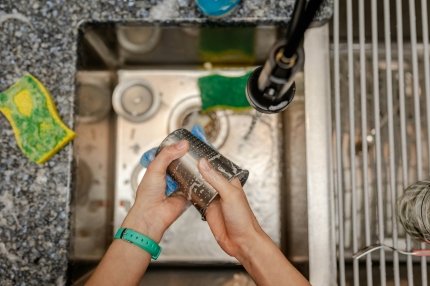
Even expensive accessories can wear out prematurely due to improper care.
Storing wet items in a closed cabinet
If the brush, container or mat is not dried after washing, moisture will remain in the recesses and joints.
It is better to store kitchen items so that after cleaning, water can drain freely and the surfaces can dry.
Using the wrong temperature
Not every plastic container, silicone accessory, or kitchen item is designed for high temperatures.
Washing in a dishwasher or heating in a microwave oven contrary to instructions may cause deformation.
Use of abrasives
Stiff metal brushes and abrasive powders can damage surfaces, especially plastic and some coatings.
Scratches not only spoil the appearance, but also make cleaning difficult.

Using the same item for different tasks
For example, one napkin can be used to wipe the countertop, sink, and dining table.
It is these habits that contribute to cross-contamination.
It is safer to separate tools for raw foods, ready-to-eat foods, and cleaning.
Which kitchen items should you check first?
Not all things require the same attention.
The highest priority is given to items that come into direct contact with products that will not undergo further heat treatment.
For example, a salad board or a container with a ready-made meal requires particularly thorough cleaning, as food can immediately end up on the table after contact with them.
The next category is items that regularly stay wet: kitchen towels, brushes, sealers, and drying racks.
Separately, it is necessary to monitor the condition of drinking water filters, because the exhaustion of their resource cannot always be determined by the appearance or taste of the water.
In households where cooking is done for young children, pregnant women, the elderly, or those with weakened immune systems, kitchen hygiene should be taken especially seriously.
How to organize kitchen maintenance without unnecessary expenses
To maintain cleanliness, it is not necessary to check the condition of all kitchen items every week.
It is much more practical to combine daily cleaning with periodic inspection.
You should use clean towels every day, wash items after contact with food, and leave them to dry completely.
Once a week, it is useful to pay attention to brushes, mats, tool joints, and removable parts of household appliances.
During regular cleaning, it is worth inspecting containers, boards, and kitchen accessories for cracks and deformations.
For water filters, it is convenient to record the cartridge installation date and its stated lifespan.
This approach allows you to replace things when it is truly necessary, rather than relying on random advice about a universal service life.
Conclusion
The most important rule of kitchen hygiene is to not use items that can no longer be properly cleaned.
Kitchen towels need to be replaced frequently with clean ones, water filters need to meet their stated lifespan, and boards, containers, brushes, and silicone utensils need to be regularly inspected for damage.
Proper cleaning, thorough drying, and timely replacement of worn parts help reduce the risk of cross-contamination, extend the life of kitchenware, and avoid unnecessary purchases.

FAQ: Frequently Asked Questions About Replacing Kitchen Items
How often should you change your kitchen sponge?
For traditional sponges, it is often recommended to replace them about every one to two weeks, but the actual lifespan depends on the intensity of use and care. If the sponge has a persistent odor, breaks down, or remains heavily soiled, it should be replaced sooner.
How often should you wash kitchen towels?
If the towel is used frequently, it is advisable to change it to a clean one every day. If it has come into contact with raw meat juice, has become dirty or very wet, it should be replaced immediately. After washing, the fabric should be completely dry.
How do you know when it's time to throw away a cutting board?
The main signs are deep cuts, cracks, deformation and areas that are difficult to clean. The age of the board is not the only criterion. If the surface is excessively worn, it is better to replace it.
Do I need to change plastic containers every year?
No, there is no universal rule for annual replacement. A quality container can last a long time if used as intended. Replacement should be considered if cracks, significant deformation, damaged seals, or other defects appear.
Can scratched plastic containers be used?
Minor surface scratches do not necessarily make a container unsafe. However, deep damage that leaves dirt behind makes cleaning difficult. If the item can no longer be cleaned properly, it should be replaced.
How often should you change your water filter?
It depends on the specific model and its resource. The manufacturer may specify the period in months or the permissible volume of water passed. Do not expect a deterioration in taste: some contaminants cannot be determined organoleptically.
Do I need to disassemble the blender after each use?
If the manufacturer provides removable parts for cleaning, they must be washed according to the instructions. Particular attention should be paid to seals and knife attachment points. Sealed assemblies that are not intended for disassembly by the user should not be opened independently.
Is it safer to use a silicone spatula than a wooden one?
Safety depends not only on the material, but also on the quality of the product, its condition and proper care. Silicone tools with cracks or hard-to-reach joints can accumulate dirt. Wooden ones also need careful cleaning and drying.
How to remove an unpleasant odor from a kitchen brush?
The brush should be thoroughly rinsed, cleaned appropriately, and dried completely. If the odor persists after proper cleaning or the bristles are deformed, it is best to replace the tool. Do not mask the odor with scented products.
Is it necessary to disinfect all kitchen items every day?
No. For many items, thorough washing after use and complete drying is sufficient. Additional sanitization may be required after contact with potentially hazardous contaminants. Only use products and methods appropriate for the specific surface.
The material is for informational purposes only. Recommendations on kitchen hygiene are not a substitute for medical advice. Self-medication can be harmful to health. If you experience symptoms of a foodborne infection, you should first consult a doctor.

