
Preparing your car for the cold season doesn't start when the glass is already frozen in the morning, but a few weeks before the steady cold snap sets in. It's during this period that you should check your tires, battery, coolant, wipers, lights, brakes, door seals, locks, bodywork, and a basic emergency kit in the trunk.
Winter puts more strain on your car than you might think. Cold weather can sap battery power, tire pressure drops, summer windshield washer fluid can freeze, old windshield wipers can reduce visibility, and low coolant can pose a risk to your engine. NHTSA notes that as temperatures drop, tire pressure and battery power drop, and gasoline and diesel engines need more energy to start in cold weather.
This checklist will help you prepare your car for fall, frost, sleet, ice, road salt, and short daylight hours. It is suitable for most passenger cars, but the final requirements for fluids, pressure, tires, battery, and service should always be checked with the manual for your specific model.
When to start preparing your car for winter
The best time to prepare is before the first night frosts and massive queues at tire fitting. For Ukraine, a practical guideline is the end of September, October, or early November, depending on the region, weather, and average daily temperature.
Don't wait for the first snow. It's the day when drivers are looking for free tire fitting, buying washer fluid, checking batteries, and remembering old windshield wipers. If you do this in advance, the preparation will be cheaper, calmer, and of higher quality.
For everyday city driving, a basic check is sufficient: tires, pressure, battery, fluids, lights, wipers, brakes, and an emergency kit. For trips on the highway, in the mountains, out of town, or over long distances, more in-depth preparation is required: chassis condition, spare tire, jack, tow rope, warm clothes, flashlight, charged phone, water, food, and a route plan.
Tires: the main element of winter safety
Tires are the first thing to start with. In winter, they determine how a car brakes, starts, maintains its trajectory, and responds to steering. Even good brakes and electronic systems cannot compensate for poor traction.
Michelin recommends switching to winter tires when the temperature drops below 7°C: in these conditions, summer tires become less effective, while winter tires maintain better rubber flexibility and grip on cold, wet, snowy or slippery surfaces.
For Ukraine, as of the date of preparation of the material, it is important to take into account the requirements of the Traffic Regulations. The Road Traffic Regulations prohibit the operation of passenger cars and trucks up to 3.5 tons if the residual height of the tire tread pattern is less than 1.6 mm; tires with damage that exposes the cord, delamination of the carcass, delamination of the tread or sidewall are also prohibited. The note to the section on wheels and tires states: if the vehicle is constantly operated on slippery roads, it is recommended to use tires that match the condition of the roadway.
In practice, 1.6 mm is not a comfortable margin for winter, but the minimum permissible limit for operation for a passenger car. For real winter grip, it is better not to bring the tires to extreme wear. If the tread is already shallow, the rubber is old, there are cracks, cuts or uneven wear, it is better to replace the tires before the cold weather.
What to check on tires before winter
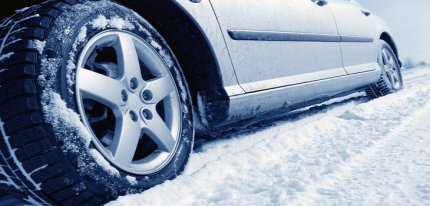
Before installation, inspect each tire individually. It is important to check:
tread residue;
date of production;
cuts, cracks, swelling, "bumps";
uniform wear;
car size compliance;
load and speed index;
M+S, 3PMSF or other winter marking;
condition of valves;
balancing;
pressure after installation.
NHTSA advises checking tire pressure at least once a month and before long trips, doing so on cold tires, and inspecting the tread and sidewalls for cuts, punctures, bulges, cracks, and other damage.
Tire pressure: why does it drop in winter
As the temperature drops, tire pressure also drops. This can cause your car to steer more poorly, take longer to brake, wear out your tires more, and use more fuel.
The correct pressure should be found not on the sidewall of the tire, but in the vehicle manual or on a sticker in the driver's door opening. The NHTSA clearly warns: the pressure indicated on the tire is the maximum pressure it can withstand, not the recommended pressure for a specific vehicle.
Check the pressure before driving, when the car has been parked for at least a few hours. After driving, the air in the tire warms up, the reading will be higher, and the driver may mistakenly lower the tire pressure.
Battery: check before frost
A weak battery often "dies" right after the first serious cold snap. In the summer, it can still start the engine, but in the winter, it can't handle it anymore, because the cold reduces its performance and the engine needs more current to start.
AAA notes that cold weather is hard on a battery: At 5°F, or about -15°C, a fully charged battery can deliver about half of its rated amp-hour capacity, and an engine needs more current to start in the cold.
Before winter, it is worth checking:
battery voltage;
starting current under load;
terminal condition;
the presence of oxidation;
battery mounting;
generator operation;
condition of the drive belt, if any;
battery age.
If the starter turns more slowly, the headlights dim during start-up, the car has been sitting idle for a long time, or the battery has been dead for more than 4-5 years, it is better to do the test before the frost. It is cheaper and safer than looking for a "lighter" in the morning before work.
Antifreeze and cooling system
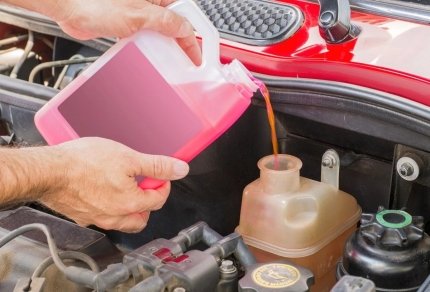
Coolant in winter protects the engine not only from overheating, but also from freezing. If the system contains old, diluted or unsuitable coolant, the radiator, pipes, pump, thermostat or even the engine block may be damaged in severe frost.
NHTSA recommends making sure your vehicle has enough coolant, meets manufacturer specifications, and inspect the cooling system for leaks, test the fluid, and drain or replace it if necessary. AAA notes that antifreeze often needs to be mixed 50/50 with water for cold weather operation, and the strength of the mixture can be tested with a simple tester.
Do not add "any antifreeze by color." Color is not a universal technical standard. You should focus on the car manufacturer's specifications: type of fluid, tolerance, replacement interval, and compatibility with system materials.
Washer, wipers and heated glass
Poor visibility in winter is no less dangerous than bad tires. Snow, slush, salt, dirt, chemicals, and short daylight hours require working windshield wipers, high-quality winter fluid, and efficient windshield cleaning.
NHTSA recommends filling your tank with a high-quality winter fluid with a de-icing component before winter, checking your defrosters and all wipers, and replacing worn blades. AAA also warns against using your wipers as an ice scraper, as frost, sun, and ice removal can damage the rubber on the blades.
What to do before the cold weather:
drain or use summer washer fluid;
fill in winter washer fluid with a temperature reserve;
check the injectors;
make sure that the liquid does not freeze on the glass;
replace the brushes if they are streaking or squeaking;
check the windshield ventilation;
check the rear window and mirror heating.
If the tank is still filled with summer fluid, don't wait for frost. After freezing, the tank, pump, pipes or injectors may be damaged.
Lights: headlights, taillights, turn signals and fog lights
In autumn and winter, drivers often drive in the dark, rain, fog, and sleet. Therefore, working lights are not a formality, but a safety requirement.
NHTSA advises checking headlights, brake lights, turn signals, hazard lights, interior lights, and, if necessary, trailer lights.
Before winter you need:
clean the headlights from deposits and cloudiness;
check the low and high beam;
check the brake lights;
check the turn signals and hazard lights;
make sure that the number plate light is working;
adjust the headlights if they shine too low or are blinding;
Check the fog lights and rear fog light.
If your headlights are yellowed or very cloudy, replacing the bulbs won't always solve the problem. Sometimes polishing or replacing the optics is necessary.
Brakes, suspension and steering
On slippery roads, any malfunction in the brakes, shock absorbers, suspension or steering becomes more noticeable. The car may take longer to stop, have poorer steering control, react nervously to the ruts or pull to the side when braking.
Before the cold weather, you should check:
brake pad thickness;
condition of discs or drums;
brake fluid level and condition;
tightness of the brake system;
handbrake operation;
condition of shock absorbers;
backlash in the suspension;
CV joint dust boots;
tie rods and tips;
camber-toe after repair or uneven tire wear.
Ukrainian traffic regulations prohibit the operation of vehicles with a number of technical malfunctions, including in the brake system, steering, lighting devices, windshield wipers, wheels and tires.
If the car brakes jerkily, you hear a grinding sound, the pedal has become soft, the steering wheel shakes at speed, or the car pulls to one side, it is better not to postpone the service until the cold weather.
Engine oil, filters and cold starting
Motor oil thickens in the cold. If it is old or does not match the season and engine tolerance, cold starting becomes more difficult, and the engine operates with a higher load in the first seconds. This is especially true for diesels, turbo engines, older gasoline engines, and cars that are left outside overnight.
Before winter, it is worth checking:
when was the last time the oil was changed;
whether the viscosity meets the manufacturer's recommendations;
Is the replacement interval approaching?
air filter condition;
the condition of the fuel filter, especially on diesel engines;
no leaks;
operation of spark plugs or glow plugs.
You should not switch to "winter" oil on your own without consulting your car's manual. Modern engines often have specific tolerances, and the wrong oil can do more harm than good.
Diesel in winter: fuel, filter and glow plugs
Diesel cars require special attention. In winter, the problem is often not only the battery, but also the fuel, fuel filter and glow plugs. If the tank contains summer diesel fuel, it can thicken in the cold. If the filter is old and contains water or dirt, starting and engine operation will deteriorate.
What to do:
refuel with winter diesel fuel at reliable gas stations;
do not leave the minimum fuel level in the tank;
replace the fuel filter if the interval is approaching;
check the glow plugs;
check the battery;
avoid questionable additives without manufacturer's recommendation.
If the car is regularly driven on short routes, the diesel engine may not have time to warm up in the winter. This is bad for the battery, exhaust system, particulate filter and overall reliability.
Body, seals, locks and doors
Cold weather means water, snow, salt, sand, reagents, and constant temperature changes. If you don't prepare your body and seals, you can end up with frozen doors, locks, the fuel filler flap, the trunk lid, or creaking in the cabin.
Before winter it is useful to:
wash the car, including the arches and sills;
inspect for paint chips;
treat minor damage to the LFP;
apply wax or protective coating;
clean the drains;
lubricate the rubber seals with silicone;
check locks and handles;
Put the lock defroster not in the car, but at home or in your bag.
Do not pour hot water on a frozen lock or glass. The sudden change in temperature can damage the glass, paintwork or seals.
Interior, floor mats and moisture inside the car
In winter, a lot of moisture from shoes, snow, and wet clothes gets into the cabin. If left unchecked, it can cause windows to fog up, create odors, wet carpets, and dirt and corrosion can accumulate underneath.
NHTSA recommends using thicker or rubber mats in winter slush, but emphasizes that improperly installed mats can interfere with the gas or brake pedals, so you need to use clamps and choose the right size mats.
Check that the driver's mat does not slide forward and does not get under the pedals. This is a small thing that can become really dangerous in an emergency situation.
Emergency kit in the trunk
Even a well-prepared car can get stuck in the snow, get stuck in traffic, get a flat tire, or fail to start after a long period of parking. Therefore, having a winter kit in the trunk is not a safety precaution, but a normal part of preparation.
NHTSA recommends that you have a shovel, ice brush and scraper, sand or other abrasive material in case you get stuck, jump leads, a flashlight, emergency markers, a first aid kit, blankets, a phone charger, water, food, and necessary medications in your car. AAA also includes jump leads, a flashlight, batteries, signaling devices, a warm blanket, scraper, a first aid kit, water, snacks, and a tow rope in its winter emergency road kit.
Minimum set for the city:
ice scraper;
snow brush;
gloves;
flashlight;
charging cable and power bank;
small shovel;
starting wires;
tow rope;
first aid kit;
water;
a warm thing or blanket.
For the trail, add an thermal blanket, food supplies, a reflective vest, an emergency stop sign, spare washer fluid, a pump or compressor, a tire repair kit, and an extra phone charger.
Electric cars and hybrids in winter
Electric cars and hybrids also need winter preparation. The cold affects the traction battery, range, charging speed, and energy consumption for heating the interior.
The EPA notes that electric vehicle range can be significantly reduced by cold weather, use of auxiliary systems, including air conditioning, and high speeds. The U.S. Department of Energy advises electric vehicle owners to park indoors whenever possible, warm up the interior and battery before driving through preconditioning, do so while charging, and maintain a sufficient charge level before driving.
For an electric car before the cold weather it is worth:
check the condition and pressure of the tires;
plan a power reserve with a reserve;
charge the car before long trips;
use preconditioning, if available;
warm up the interior from the mains, not from the battery while on the road;
check the operation of the charging port;
do not leave the car with a low charge for a long time in frost;
have plenty of time to recharge.
The same basic things are important for hybrids as for gasoline cars: a 12 V battery, tires, antifreeze, lights, wipers, and brakes.
How to prepare your car for a long winter trip
Before hitting the road, don't just fill up with gas and a windshield washer. A long winter trip requires a plan.
Check the weather forecast, road conditions, route, gas stations, charging stations, rest stops, and alternate routes. NHTSA advises checking local weather and traffic conditions before setting off, postponing non-essential trips if roads are in poor condition, and for long-distance trips with winter forecast, leaving earlier or changing the time to avoid the worst conditions.
Before the trip:
fill the tank to full or almost full;
charge your phone and power bank;
inform your loved ones about the route;
check the spare tire and jack;
take warm clothes;
clean the headlights and license plates;
check tire pressure;
fill in the winter washer;
Do not drive to the limit of fuel or battery life.
If the road is slippery, the main thing is to take your time. Increase your distance, avoid sudden maneuvers, brake smoothly, and do not rely entirely on electronic systems.
What to do if your car is stuck or stalled in winter
If your car has stopped in the snow, frost, or on the highway, think first about the safety of people, not the car. Turn on the hazard warning lights, put up an emergency stop sign, and move the car out of the lane if possible.
NHTSA advises staying with the car in a winter emergency, not overexerting yourself, making the car visible, and also remembering the risk of carbon monoxide poisoning: the exhaust pipe should be cleared of snow, and the engine should not be left running for a long time with the windows closed or in a closed space.
If the engine is running for heating, check the exhaust pipe periodically. Snow blocking the exhaust pipe can create a dangerous situation in the cabin.
Typical mistakes when preparing a car for winter
The first mistake is to think about tires after the first snow. Queues, rush, and shortage of the right size can make you buy something that doesn't really fit.
The second mistake is to focus only on the minimum legal tread. For winter roads, it is not the formal limit that is important, but real grip.
The third mistake is not checking the battery. If the battery is weak, frost will quickly reveal its condition.
The fourth mistake is leaving summer washer fluid in the tank. Once the fluid freezes, the problem can become more expensive than one can of winter fluid.
The fifth mistake is using the windshield wipers as an ice scraper. This quickly damages the rubber and impairs visibility.
The sixth mistake is not checking the antifreeze. Old or improperly diluted fluid can pose serious risks to the cooling system.
The seventh mistake is leaving a slippery mat in the cabin. If it interferes with the pedals, it is dangerous.
The eighth mistake is going on a long trip without a shovel, rope, water, a flashlight, and a charged phone.
A short checklist for preparing your car for cold weather
Before winter, check:
winter or all-season tires suitable for real-world conditions;
remaining tread and tire damage;
pressure in all wheels and spare tire;
battery and charging system;
antifreeze, its level and frost resistance;
winter washer fluid;
wipers, nozzles and windshield washer;
headlights, stop lights, turn signals and hazard lights;
brakes, suspension and steering;
motor oil and filters;
fuel filter and glow plugs for diesel;
door seals, locks and fuel filler flap;
rubber mats of the correct size;
emergency kit in the trunk;
documents, insurance, first aid kit, fire extinguisher and emergency stop sign.
Conclusion
Preparing your car for the cold season is not a single action, but a series of checks on everything that affects starting, visibility, traction, braking and road safety. The most important thing is not to wait for the first snow. It is better to check the tires, battery, antifreeze, washer, wipers, lights and brakes in advance.
A basic technical inspection and winter kit are enough for a city car. For highways, mountainous areas, night trips, and long routes, you need a larger supply: a working spare tire, a shovel, a rope, a flashlight, warm clothes, water, food, a power bank, and a full tank or sufficient battery charge.
A well-prepared car doesn't make winter roads easy, but it does give the driver more control, better visibility, a more stable start, and less chance of finding themselves in a dangerous situation because of a little thing that could have been checked in advance.
FAQ
When should you prepare your car for winter?
It's best to start before the first night frosts: in September, October, or early November, depending on the region and weather. Don't wait for the first snow, as that's when tire fitting lines, shortages of popular tires, and urgent breakdowns begin.
When to switch to winter tires?
A practical guideline is when the temperature consistently drops below 7°C. Michelin explains that at temperatures below 7°C, winter tires are more effective than summer tires in winter conditions because their rubber performs better on cold surfaces.
Are winter tires mandatory in Ukraine?
As of September 9, 2026, Ukrainian traffic regulations determine the minimum tread height, prohibit a number of tire damages, and recommend using tires that correspond to slippery road conditions if the car is constantly operated in such conditions. A separate calendar date for the mandatory transition to winter tires is not set in the cited section of the traffic regulations.
What is the minimum tread allowed for a passenger car?
For cars and trucks with a maximum permissible weight of up to 3.5 tons, the traffic regulations prohibit operation if the residual tread height is less than 1.6 mm. For real winter driving, it is better to have a larger reserve, because worn tires perform worse on snow and wet roads.
Why does tire pressure drop in winter?
As temperatures drop, so does tire pressure. NHTSA recommends checking your tire pressure at least once a month and before long trips, doing so on cold tires, and using the manufacturer's recommendations, not the maximum pressure listed on the tire.
How do you know that the battery will not survive the winter?
Signs of risk: slow starting, dim light during start-up, battery age over 4-5 years, long idle times, oxidized terminals or previous charging problems. AAA notes that cold reduces battery performance, and an engine in cold weather requires more current to start.
Which washer fluid should I fill in winter?
Winter washer fluid with a margin above freezing is required. NHTSA recommends filling the reservoir with a quality winter fluid with de-icer before winter, as well as checking the wipers and windshield washer.
Do I need to change antifreeze before winter?
Not always. If the fluid is fresh, meets the manufacturer's specifications, and has sufficient frost resistance, you can leave it alone. But it's worth checking the level, condition, system tightness, and freezing point. NHTSA recommends testing the coolant and replacing it if necessary.
What to put in the car for the winter?
At a minimum: a snow brush, scraper, gloves, flashlight, jump leads, tow rope, small shovel, first aid kit, water, warm clothing, power bank, and charging cable. NHTSA also recommends carrying abrasive material in case you get stuck, blankets, food, and necessary medications.
How to prepare an electric car for cold weather?
You need to check your tires and pressure, plan your range with a reserve, charge your car before trips, use cabin and battery pre-conditioning while charging, park indoors if possible, and don't leave your car with a low charge in freezing temperatures. The U.S. Department of Energy recommends warming up your EV before a trip while it's still plugged in.

