
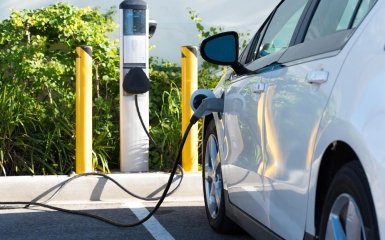
A used electric car can be a great buy if it fits your daily commute, has a healthy battery, a clear history, affordable charging, and good service in your city. But the savings quickly disappear if you buy a car after a serious accident, flooding, with a degraded battery, slow charging, or no convenient charging at home or work.
Points of attention
- Battery condition is a classic criterion when buying a used electric vehicle; it is important to check SOH, range, and charging status.
- Before buying an electric car, you need to assess the availability of convenient charging at home or on the route to avoid unforeseen difficulties.
- The feasibility of buying a used electric car depends on daily mileage, range, availability of service, and price, taking into account possible additional costs.
In 2026, buying an electric car in Ukraine has become less financially simple than before. Since January 1, 2026, operations on the import and supply of electric cars in Ukraine are subject to VAT in the general procedure; the State Tax Service separately announced the cancellation of the VAT exemption for vehicles with electric engines. This has changed the economics of imports, so before buying, you need to consider not only the price in the ad, but the full cost: customs clearance, delivery, certification, repair, charging infrastructure, insurance and future liquidity.
As of September 10, 2026, a used electric car should be considered not as a fashionable alternative to a gasoline car, but as a specific tool for a specific scenario. For the city, daily trips of 30–100 km, home charging and predictable routes, it can be a very smart purchase. For regular routes, cold regions, lack of charging, frequent long trips and a minimal budget for diagnostics, the risks are much higher.
What search intent does this topic have?
The intent is mixed: informational, commercial, comparative, and instructional. A person wants to understand whether it is profitable to buy an electric car with mileage now, which models to look at, how to avoid buying a problematic battery, how much the car actually travels, where to charge it, and what to check before paying.
Therefore, the correct answer is not “yes” or “no.” A used electric car is worth buying if, after inspection, four things converge: real range, battery condition, access to charging, and price, taking into account possible expenses.
When a used electric car is really profitable
An electric car works best where the car drives predictable routes every day and charges without any extra effort. For example, the owner lives in a private house or has a parking space with a socket or charging station, drives up to 100 km every day, sometimes drives between cities, and can plan charging in advance.
The EPA explains that the range of an electric vehicle is typically less than that of a gasoline-powered car on a full tank, but it is often sufficient for most drivers' daily needs; however, cold weather, air conditioning, high speeds, and driving style can significantly reduce the range on a single charge.
A used electric car makes sense if:
there is a home or work charger;
daily mileage is predicted;
real winter range covers your route with plenty of room;
the battery is in normal health;
the car was not seriously damaged;
there is an available service;
the price is lower than the gasoline or hybrid analogue, taking into account the risks;
you are ready to plan long trips around charging stations.
If an electric car is purchased only because of cheaper electricity, but will have to be charged at expensive high-speed stations, the economy may be significantly weaker.
When is it better to take your time with a purchase?
An electric car with mileage may not be suitable if you do not have a stable charging, you often drive on the highway, you need a large range in the winter, and your budget allows you to buy only an old model with a small battery. You should be especially careful with cars from auctions after an accident, flooding, fire, damage to the battery case, or without a clear history.
NHTSA warns that hybrid and electric vehicle batteries should not be exposed to standing water; there are separate warnings regarding risks and safe storage for damaged lithium-ion batteries after flooding.
You should not buy an electric car if:
the seller does not provide the VIN for verification;
no battery diagnostics;
the power reserve is not confirmed “in words”;
the car has traces of repair of the power battery;
the charging port is unstable;
there are no customs clearance and certification documents;
the model is rare, and parts and service are difficult to find;
the price is suspiciously low for no apparent reason.
A cheap electric car can only be profitable when its risks are already taken into account in the price and technically verified.
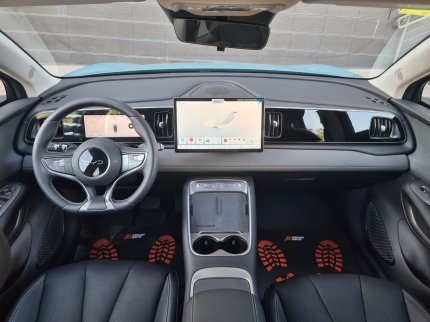
The most important thing is the condition of the traction battery
In a gasoline car, the buyer first of all looks at the engine, transmission, body and mileage. In an electric car, the main expensive component is the traction battery. Its condition determines the range, charging speed, liquidity and future value of the car.
The metric to look for is SOH, or state of health of the battery. It shows how much usable capacity is left compared to a new battery. NIST, in a paper on the used EV market, emphasizes that it is the history of the battery, its SOH, and remaining life that are invisible to the buyer that create information asymmetry in the used EV market.
Geotab published an updated analysis of real-world EV battery data in 2026 and found an average degradation rate of about 2.3% per year; however, charging behavior has emerged as a significant factor. This is an average, not a guarantee for a specific vehicle. Two identical models from the same year may have different battery life due to climate, frequent fast charging, prolonged storage at 100%, or deep discharges.
How to check a battery before buying
Ask for a diagnostic report that shows SOH, available capacity, battery errors, module temperature, charging history, cell balance, and power limits. For some models, this is done through dealer equipment, for others, through a specialized service, OBD adapter, and special software.
You need to check:
SOH batteries;
actual available capacity;
high-voltage system errors;
voltage difference between modules or cells;
battery temperature after driving and charging;
fast charging limitations;
history of warranty campaigns;
traces of dismantling the battery case;
damage to the bottom in the battery area.
If the seller refuses an independent diagnosis, this is a good reason not to continue negotiations.
Real range: don't just believe the numbers in advertising
The official range is a guideline, not a promise. The EPA explains that official range figures are based on specific test cycles, and the real result is affected by air conditioning, cold weather, high speeds and aggressive driving.
For a used car, you need to calculate not the new passport mileage, but the range, taking into account degradation, winter, tires, speed, and heating. If a new car had a conventional 250 km range, then after a few years, in winter, on the highway and with the cabin heated, it may travel much less.
The DOE notes that cold weather can significantly reduce the efficiency of electric vehicles; some estimates suggest that all-electric vehicles can lose as much as 40% of their efficiency in cold conditions. This doesn’t mean that every electric vehicle will lose that much in the winter, but winter storage should be conservative.
A rule of thumb: if your daily commute is 80 km, don't buy a car that "according to the seller" can travel 90 km in the winter. You need a reserve of at least 30–50%, especially for frost, traffic jams, detours, and battery aging.
Charging: an issue that needs to be addressed before buying
An electric car becomes convenient when charging is part of everyday life. The ideal scenario is home charging at night. Then the car charges while it is stationary and does not require separate trips to the station.
If there is no home charging, you need to check the stations near your home, work, supermarkets and on main routes. Not only the points on the map are important, but also the power, tariff, availability, connector type, queues, payment method and the actual condition of the equipment.
Before buying, check:
Is it possible to charge a car at home?
Will the power grid withstand it?
is there grounding and protection;
how much does it cost to install a charging station;
what fast charging stations are nearby;
what connector does a particular car have;
does it support DC fast charging;
what is the real maximum charging power;
Is charging limited due to battery errors?
Older electric cars with small batteries and slow charging may be fine for the city, but inconvenient for long-distance travel. Modern models with heat pumps, larger batteries, and fast charging are suitable for a wider range of drivers, but they cost more.
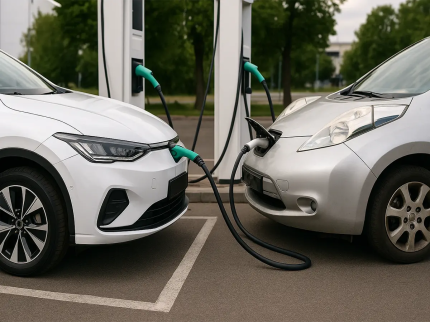
Battery warranty: what to check
Many electric vehicles have a separate battery warranty, often longer than the general car warranty. But the terms depend on the manufacturer, market, year of manufacture, mileage, country of sale and service history.
Tesla for many models states a warranty on the Battery and Drive Unit for 8 years or a specified mileage depending on the version with a minimum retention of 70% of the battery capacity during the warranty period. Nissan for the LEAF and Ariya in the UK information about electric vehicles also states an 8 year or 100,000 mile warranty on the battery condition if the capacity drops below 9 out of 12 segments.
Before buying, you need to find out:
Is the warranty valid for this VIN?
in which country was the car sold new;
whether the warranty is transferred to the new owner;
what are the mileage restrictions;
what capacity threshold is covered;
Are there any notes about service campaigns?
whether there was any interference with the battery outside of the official service.
You shouldn't automatically believe the phrase "the battery is still under warranty." This needs to be verified with documentation.
Road accident, flooding and auction history
Many used electric cars in Ukraine are imports from the USA, Europe, Korea or China. Some arrive after insurance accidents. This is not always a bad thing: slight damage to the body may be acceptable if the repair is transparent. But for an electric car, it is critical whether the battery, power electronics, high-voltage wiring, cooling system and charging port are damaged.
NHTSA has a tool to check recalls by VIN; recalls are issued when the manufacturer or NHTSA determines that a vehicle, equipment, or tire poses an unreasonable safety risk or does not meet minimum standards. It is also worth checking the VIN for auction history, insurance records, service campaigns, and photos of damage.
Red flags:
a blow to the bottom;
damage to the thresholds near the battery;
traces of flooding;
corrosion on high-voltage connectors;
charging errors;
airbags replaced without documents;
uneven gaps after repair;
lack of photos before repair;
“pure” description without historical confirmation.
It's best to be extra careful with an electric car after flooding. Even if it starts and charges, the effects on the battery and electronics may become apparent later.
What to check besides the battery
An electric vehicle has fewer parts than a combustion engine vehicle, but that doesn't mean it's not prone to breakdowns. The DOE notes that all-electric vehicles require less maintenance due to fewer moving parts and fluids, and brakes often last longer due to regenerative braking. But the suspension, tires, brakes, air conditioning, electronics, bodywork, and interior remain common areas of risk.
Before the deal, check:
chassis;
tire condition and uneven wear;
brake discs and calipers;
recovery work;
heat pump or electric heater;
air conditioning;
charging port;
on-board charger;
fast charging;
12-volt battery;
multimedia and updates;
keys, application and account binding;
operation of all cameras and sensors;
glass, headlights, body panels;
errors in control units.
Don't ignore your brakes. They may wear out more slowly due to recuperation, but idle time and moisture can cause the discs and calipers to corrode.
Which models to look at more carefully
Caution is needed not because of the brand, but because of the combination of age, battery, charging and service. Old Nissan Leaf without active thermal management of the battery can have noticeable degradation, especially after hot climates. Old BMW i3 have a specific body and expensive parts. Some Teslas after the US may have damage, blocked functions or a complicated repair history. Rare Chinese models may have problems with catalogs, firmware, body parts and service.
This doesn't mean that such cars can't be bought. It just means that they need to be inspected more thoroughly and the price compared to the risks.
A safer approach is to look for a model for which your city has service, spare parts, diagnostic experience, specialized technicians, and a friendly community of owners.
Ukrainian market in 2026: what to consider
After the abolition of the VAT exemption, the demand for electric vehicles in Ukraine changed. According to a report by Ukravtoprom, quoted by Interfax-Ukraine, in August 2026, the Ukrainian car fleet was replenished with 4.2 thousand electric vehicles, which is 47% less than in August 2025; at the same time, December 2025 was the last month of customs clearance of electric vehicles without VAT and showed a sharp jump in demand.
For the buyer, this means several things. First, some cars may have been rushed in late 2025, so you need to carefully check the quality of selection and repair. Second, prices after the change in tax conditions may be less predictable. Third, used cars with a good battery and a transparent history may hold their price better than problematic “cheap” options.
Before making a decision, it is worth checking the current taxes, registration rules, certification, insurance costs, and charging prices on the date of purchase, as conditions may change.
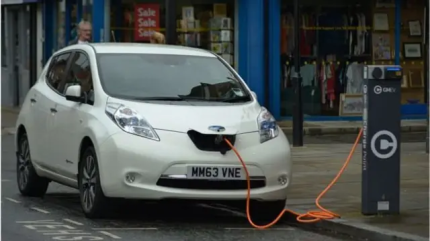
How to calculate whether an electric car is right for you
Don't start with the model. Start with the cost table. Compare an electric car with a gasoline or hybrid car in the same class.
Enter the following into the calculation:
purchase price;
delivery and customs clearance if the car is imported;
certification;
post-auction repairs;
diagnostics before purchase;
insurance;
a charging station at home;
electricity at home;
fast charging tariffs;
winter decrease in range;
tires;
suspension;
future liquidity;
possible battery or charging port repair.
A used electric car is often more profitable if you do a lot of city driving and have cheap overnight or home charging. If your annual mileage is low, there is no home charging, and you have to charge your car frequently at expensive stations, the financial advantage may be less.
Step-by-step checklist before buying
Determine your actual daily mileage.
Calculate your winter supply with a reserve.
Check your home or work charger.
Choose models with available service in your city.
Check VIN, auction history, photos before repairs and recalls.
Order battery diagnostics from SOH.
Check fast and slow charging.
Inspect the bottom and battery case.
Check for high voltage errors.
Take a test drive in the city and at speed.
Check the heat pump or heater.
Calculate the total cost of ownership.
Check the battery warranty by VIN.
Do not pay a deposit without documents and diagnostics.
Typical buyer mistakes
The first mistake is to look only at the price. The cheapest electric car often has the most expensive hidden risks.
The second mistake is to believe the advertised range. You need to calculate the actual mileage in your climate, with an old battery, winter, and heating.
The third mistake is not checking fast charging. The car may charge from an outlet, but have a problem with the DC port or power limitation.
The fourth mistake is buying without SOH. Mileage on the odometer is not a substitute for battery diagnostics.
The fifth mistake is ignoring the 12-volt battery. In many electric vehicles, a weak 12-volt battery creates strange errors and problems with starting systems.
The sixth mistake is buying a rare model without service. Savings at the entrance can turn into a long wait for parts.
The seventh mistake is not checking warranty campaigns and recalls. This is especially important for electric vehicles because of the battery, charging, and electronics.
Conclusion
A used electric car in 2026 can be a good buy, but only after a sober inspection. The most important criteria are battery condition, real range, the ability to charge without stress, a transparent history, no serious damage, and affordable service.
It is worth buying if the car covers your daily trips with a winter reserve, has a confirmed SOH, normal charging, verified VIN and a working high-voltage system. It is better to refuse or bargain hard if there are traces of flooding, a blow to the battery area, lack of diagnostics, an unclear history, problems with fast charging or a model without service support.
The right purchase of a used electric car starts not with an ad, but with your scenario: where to charge, how much to drive, how often to go on the highway, how much reserve you need in the winter and how much it will cost to own outright. If these answers coincide with a specific car, an electric car with mileage can be a practical and financially sensible solution.
FAQ
Is it worth buying a used electric car now?
Yes, if you have a convenient charger, a projected daily mileage, sufficient winter power reserve, and the ability to check the battery before the deal. If there is no charger, the car is old, the battery has no diagnostics, and the history is opaque, it is better not to rush.
What is the most important thing to check in a used electric car?
The main thing is the state of the traction battery: SOH, available capacity, high-voltage system errors, fast charging, module temperature and traces of interference. NIST describes SOH and remaining battery life as a key information problem in the used electric vehicle market.
What is the normal battery SOH?
There is no universal limit, as it all depends on the age, model, battery, price and your routes. But the lower the SOH, the lower the real range and liquidity of the car. Geotab in 2026 indicated an average battery degradation of about 2.3% per year based on real telematics data.
Why does an electric car travel less in winter?
Cold weather affects the battery, interior heating, tires, and overall efficiency. The EPA notes that cold weather, the use of additional systems, and high speeds can significantly reduce the range of an electric vehicle.
Can I buy an electric car after a traffic accident?
It can only be considered after a high-quality diagnosis. It is especially important to check the battery case, bottom, high-voltage wiring, charging port, airbags, body geometry and errors in the electronics. A blow to the battery area is a serious risk.
Is an electric car dangerous after flooding?
Yes, the risk is high. NHTSA warns that hybrid and electric vehicle batteries should not be exposed to standing water, and damaged cars with lithium-ion batteries after flooding require special care.
Is it cheaper to maintain an electric car?
Often, because BEVs have fewer moving parts and many of the fluids found in internal combustion engines. The DOE notes that the electrical system typically requires minimal scheduled maintenance, and the brakes can last longer due to recuperation. But tires, suspension, air conditioning, electronics, and bodywork still incur costs.
Is it necessary to have a home charger?
Not necessarily, but with home charging, an electric car is much more convenient and often more profitable. Without it, you need to check the stations near your home, work and on your routes, tariffs, types of connectors, power and real availability.
Is there a warranty on the battery of a used electric vehicle?
May apply if the term and mileage have not expired, and the warranty terms are maintained for a specific VIN. For example, Tesla specifies 8 years or a specified mileage for many models with a minimum of 70% battery capacity remaining during the warranty period.
What has changed for electric vehicles in Ukraine in 2026?
From January 1, 2026, electric vehicles in Ukraine will be subject to VAT in the general manner, and the previous VAT exemption for vehicles with electric engines has been abolished. This must be taken into account when importing, purchasing, and comparing prices.

