
In the fall, gardeners often stop watering as soon as the temperature drops. It seems that shorter days, cooler nights, and regular rains provide plants with enough moisture. However, a dry fall can be just as dangerous for some crops as the summer heat. Late cabbage, broccoli, winter garlic, fall greens, and young seedlings continue to need moisture even when the air temperature drops significantly. At the same time, empty beds that have already been harvested usually do not need regular irrigation.
The main rule of autumn watering is to focus not on the calendar, but on the condition of the soil, the needs of specific plants, and the amount of natural precipitation.
Overwatering in the fall can be even more dangerous than in the summer. Due to slower evaporation, the soil stays wet longer, and with insufficient drainage, the roots can suffer from a lack of oxygen.
We analyze whether you need to water your garden in September, October, and November, how much water your plants need, how to properly prepare your beds for winter, and when you should stop watering completely.
Why plants need less water in the fall
In autumn, the conditions on which water consumption by plants depends gradually change.
The air temperature drops, daylight hours shorten, and solar radiation becomes less intense.
This usually slows down the evaporation of water from the soil surface.
At the same time, transpiration, the process by which plants evaporate water through their leaves, decreases.
However, this does not mean that the root system completely stops absorbing moisture.
As long as a plant continues to grow, form leaves, roots, or other organs, water remains necessary for its development.
Why watering may be unnecessary in rainy autumn
If rainfall regularly moistens the soil to a sufficient depth, additional irrigation is not necessary.
This is especially true for heavy loamy areas where water remains for longer.
However, light rain does not always provide sufficient moisture to the roots.
For example, after a brief rainfall, the top few centimeters of soil may appear wet, even though the deeper layers will remain dry.
That is why it is necessary to check not only the weather, but also the actual soil moisture.
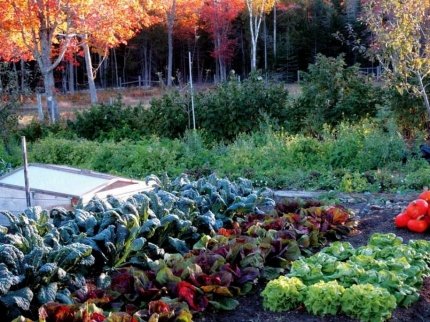
What plants in the garden need to be watered in the fall?
The need for water depends on whether the culture continues to actively develop.
For convenience, autumn plantings can be divided into several groups.
| Culture | Is autumn watering necessary? | What to consider |
| Late white cabbage | Yes, due to lack of rainfall | Moisture is especially important during head formation. |
| Broccoli and cauliflower | Yes | Lack of water can impair crop quality |
| Spinach, salad, arugula | Yes | They have a relatively shallow root system |
| Carrots and beets of late crops | As needed | Uniform moisture is important during growth. |
| Winter garlic | After planting, if the soil is dry | Waterlogging must not be allowed. |
| Garden strawberry | During a prolonged drought | Especially important for young plantings |
| Young trees and shrubs | Yes, in a dry autumn | Root zone needs moisture |
| Empty beds | Usually not | Exception: new planting or special agrotechnical work |
These are general guidelines. Specific needs depend on the plant's stage of development, soil type, and weather conditions.
How to properly water cabbage in the fall
Late varieties of cabbage can continue to form heads until the onset of cold weather.
For normal growth, they need a relatively uniform supply of moisture.
If the soil dries out for a long time, plants may slow down in development.
But excessive watering is also undesirable.
Under unfavorable conditions, humidity fluctuations can be one of the factors causing heads to crack.
When cabbage needs water
Check the moisture at a depth of approximately 10–15 centimeters.
If the soil is noticeably dry and no rain is expected, the plants may need watering.
It is better to apply water directly to the root zone.
There is no need to water the leaves regularly, especially in the evening when they can remain wet for a long time.
For cabbage that is planned to be harvested in the near future, it is important to avoid sudden changes in humidity.
Do you need to water carrots and beets in the fall?
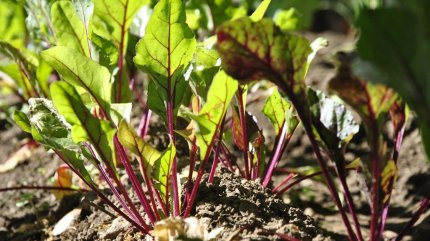
Late root crops continue to use water until active growth is complete.
During prolonged drought, lack of moisture can negatively affect their development.
However, in the fall, it is not necessary to water carrots and beets according to the summer schedule.
If the soil is already sufficiently moist, additional water will not improve the quality of the crop.
What to consider before collecting
Do not allow the soil to dry out for a long time followed by sudden excessive moisture.
Such fluctuations can contribute to cracking of root crops.
If there is little time left before harvesting, decisions about watering should be made based on the actual condition of the soil.
There is no need to specifically water the bed before digging up root crops.
In heavy, wet soil, harvesting can be more difficult, and the root crops themselves can become more contaminated.
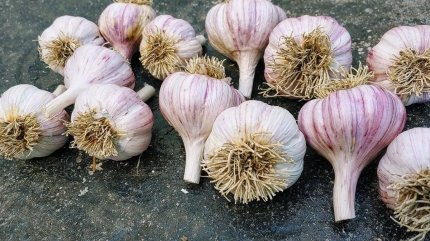
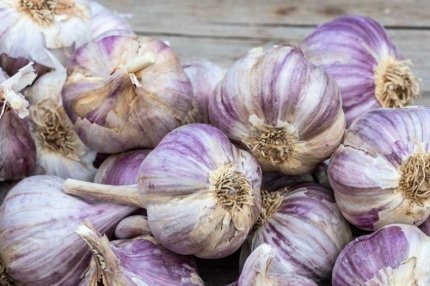
Is it necessary to water winter garlic after planting?
Winter garlic is planted in the fall so that it has time to form a root system before winter.
Root development requires available soil moisture.
Therefore, moderate watering may be required after planting in a dry area.
How to water winter garlic correctly
If the soil is loose, dry, and has not received any rainfall, the bed should be moistened so that the water penetrates to the depth of the cloves.
If the soil is already moist, additional watering is not needed.
It is especially important to avoid water stagnation on heavy soils.
Garlic needs good drainage, as excessive moisture can promote the development of rot.
After planting, the bed can be mulched with a suitable material, such as clean straw.
Mulch helps reduce temperature fluctuations and moisture loss.
Do I need to water garlic in November?
There is no universal rule that winter garlic must be watered every week until frost.
After rooting, its need for water decreases.
If November is rainy, additional watering is usually not needed.
During prolonged dry weather, the solution depends on soil moisture.
There is no need to add water to frozen ground.
How to water autumn greens
Spinach, lettuce, arugula, and other leafy greens can grow well in cool weather.
However, many of them have shallow root systems.
Because of this, the topsoil should not dry out completely during active growth.
Even moisture is especially important after sowing, when the seeds germinate.
Why you shouldn't water your greens with a strong stream
A powerful stream of water can erode soil, expose roots, and damage young plants.
A watering can with a fine diffuser or drip irrigation are convenient for such plantings.
If autumn greens are growing under agrofibre or in a small greenhouse, you need to check the soil moisture separately.
Protective cover can change the conditions of evaporation and precipitation.
Is it necessary to water empty beds after harvesting?
If potatoes, tomatoes, cucumbers and other vegetables have already been harvested on the site, regular watering usually makes no practical sense.
There are no longer any crops that actively use water in an empty bed.
Therefore, after the end of the season, the automatic irrigation system should be reconfigured or turned off for the appropriate zone.
However, there are exceptions.
When an empty bed still needs to be moistened
If you plan to sow green manure crops in the fall, the soil must contain enough moisture for the seeds to germinate.
The same applies to planting winter crops.
Sometimes moistening is necessary for certain technological operations with soil.
However, there is no need to water an empty plot just because "the ground should be wet in the winter."
Such moisture is especially undesirable in areas with poor drainage.
Is it necessary to water siderats in the fall?
Mustard, phacelia, rye and other cover crops are used to cover the soil, accumulate organic matter and reduce the risk of erosion.
After sowing, they need moisture to germinate.
If the soil is dry and no rain is expected, the crops can be watered carefully.
After seedlings emerge, the need for additional irrigation will depend on the weather and plant development.
But you shouldn't waste large amounts of water on green manure crops that have already completed active growth.
It is also necessary to take into account the winter hardiness of a particular crop.
Some green manures die after severe frosts, while others can continue growing under favorable conditions.
How to check if watering is needed: a simple soil test
One of the most common mistakes is to assess moisture content based solely on the appearance of the soil.
The top layer can dry out from the wind, while there is enough moisture deep down at the roots.
The opposite situation is also possible: after a short rain, the surface is wet, but the lower layers remain dry.
Checking with a garden shovel
Choose a spot close to the plant without damaging the main roots.
Carefully dig up the soil about 10–15 centimeters.
For trees and large shrubs, it is necessary to assess the moisture of the deeper root zone.
Take some soil and squeeze it in your hand.
Approximate signs:
If the soil is dry, crumbles easily, and does not feel cool, watering may be necessary.
If the soil is moderately moist, but not sticky or waterlogged, additional irrigation can often be postponed.
If the soil is too wet, water is oozing out of it, or it turns into a sticky mass, there is no need to water.
It is important to consider the type of soil.
Sand, even with sufficient moisture, may not form a dense clump, while clay easily clumps together.
Therefore, it is necessary to evaluate a set of characteristics.
How much water does a garden need in the fall?
There is no single norm for all cultures.
The amount of water depends on root depth, soil moisture, rainfall, temperature, and plant development stage.
For the active growth of many vegetable crops, a guideline of about 25 millimeters of water per week, taking into account rainfall, is often used.
But in the fall, this need usually decreases.
You should not automatically transfer summer norms to October or November.
How to convert millimeters of precipitation to liters
To calculate irrigation, it is convenient to remember a simple ratio:
1 millimeter of water = 1 liter per square meter.
Accordingly, 10 millimeters of irrigation is 10 liters of water per square meter of bed.
For example, if 15 millimeters of rain fell in a week, the plants have already received approximately 15 liters of water for each square meter of horizontal surface.
However, not all water will necessarily remain available to the roots.
Some may drain, evaporate, or infiltrate below the main root zone.
That is why the amount of precipitation needs to be assessed together with the condition of the soil.
How soil type affects fall watering
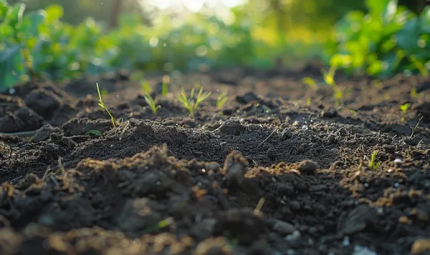
Different soils accumulate and retain moisture differently.
This affects the frequency of watering and the risk of overwatering.
Sandy soil
Sand usually lets water through quickly.
Because of this, the topsoil and root layers can dry out faster.
During dry autumns, plants in sandy areas sometimes need more frequent moisture checks.
However, they should be watered not according to the calendar, but according to the needs of the crop.
Loamy soil
Loams usually have more balanced properties regarding water retention and air permeability.
With a favorable structure, they provide plants with a sufficient supply of available moisture.
After autumn rains, additional watering may not be needed for a long time.
Heavy clay soil
Clay can hold a lot of water, but some of this moisture is bound by soil particles and not always available to plants.
With excessive humidity, the air pores fill with water.
Because of this, the roots may experience oxygen deficiency.
Therefore, on heavy soils it is especially important to prevent water stagnation.
If puddles remain on the surface for a long time after rain, the problem must be solved primarily by improving drainage.
When is it better to water the garden in the fall: in the morning or in the evening?
During the cool season, it is usually more practical to water in the morning or early afternoon.
This allows water to penetrate the soil before the evening temperature drops.
If the leaves get wet during watering, they will have more time to dry.
Prolonged wetting of the leaf surface can create favorable conditions for some fungal and bacterial diseases.
Why evening watering is not always successful
In autumn, the nights become longer and colder.
In light winds and high humidity, leaves can remain wet for many hours.
This is especially undesirable for crops prone to leaf diseases.
However, evening watering itself does not necessarily lead to disease.
The method of water supply, weather conditions, and specific crop are important.
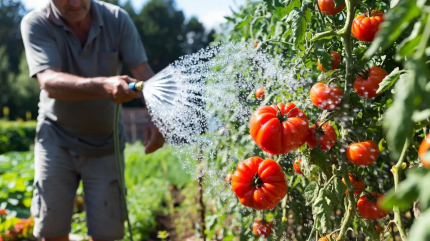
It is best to direct water to the roots rather than spraying it all over the plant.
Drip irrigation, watering can or hose: which is better in the fall?
The choice depends on the area of the garden and the number of plants.
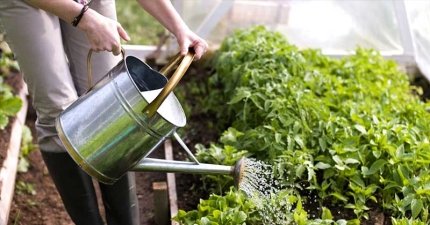
A watering can is convenient for small beds.
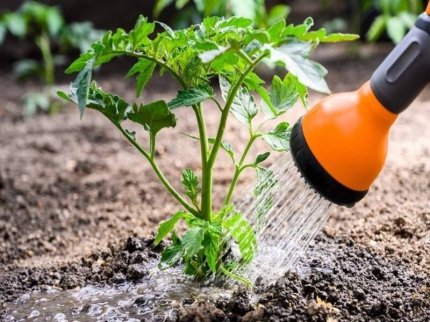
It allows you to control the amount of water and direct it directly to the base of the plants.
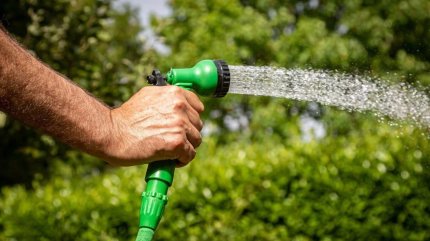
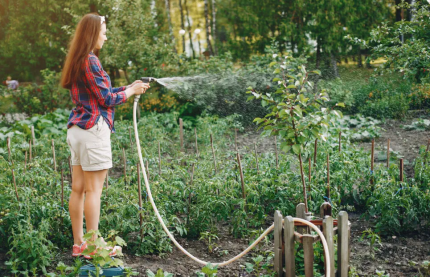
For larger areas, you can use a hose with a suitable nozzle.
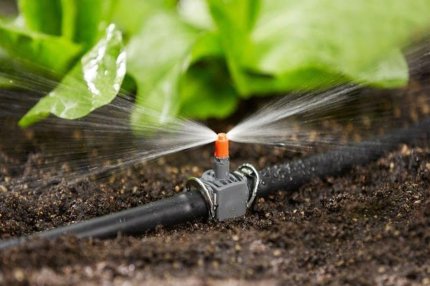
Drip irrigation is especially useful where you need to ensure uniform moisture in the root zone without constantly wetting the leaves.
Why you shouldn't use a strong jet
A powerful stream of water can erode the ground, expose roots, and compact individual areas of soil.
This is especially undesirable for young shoots of autumn greens and recently planted garlic.
It is better to water slowly so that the water has time to penetrate the ground.
If it immediately runs down the surface, increasing the pressure will not solve the problem.
Is moisture-charging irrigation necessary in the fall?
Moisture-charging irrigation is a relatively deep moistening of the soil before the winter period.
It is used mainly for certain perennial plantings, particularly trees and shrubs, if the autumn was dry.
The goal is to ensure there is sufficient available moisture in the root zone before the soil freezes.
However, moisture-charging irrigation does not need to be automatically carried out in every garden .
For empty vegetable beds, it usually doesn't have the same practical purpose.
What trees and shrubs can it be useful for?
Young seedlings that have not yet formed a well-developed root system need attention first.
It is also important to check the humidity near evergreen plants.
Thuja, spruce, and other evergreens can lose water even in the cold season, especially in sunny and windy weather.
If the soil is frozen, the roots cannot normally compensate for this loss.
Therefore, sufficient hydration before freezing can help reduce the risk of winter desiccation.
When moisture-charging irrigation is not necessary
If the fall is rainy and the soil at the root level is already sufficiently moist, additional water may be unnecessary.
This is especially true for heavy soils with poor drainage.
Excessive moisture can displace oxygen from soil pores and create unfavorable conditions for roots.
Therefore, decisions should be made after checking the humidity, and not just because of the approach of winter.
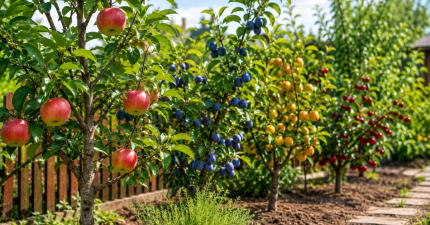
How to water young fruit trees in the fall
Trees planted this year require more careful moisture control.
Their roots have not yet mastered a large volume of soil.
Therefore, even after rain, the root ball can sometimes remain insufficiently moist.
How to properly organize watering
Water should be applied slowly so that it penetrates the root zone.
You should not pour the entire amount directly near the trunk.
For a young tree, it is important to moisten the area around the root ball.
The volume depends on the size of the seedling, the type of soil and its actual moisture content.
After planting, you can use mulch, leaving a free area around the trunk.
Mulch helps reduce water loss and soil temperature fluctuations.
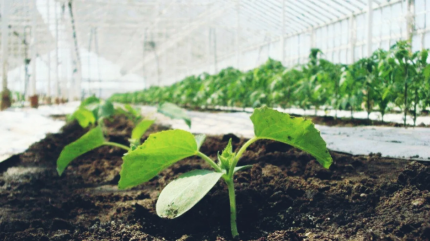
Is it necessary to water the greenhouse in the fall?
In a greenhouse, conditions are significantly different from open ground.
Rainwater usually does not fall on the beds inside the enclosed structure.
Therefore, even in rainy autumn, the soil in the greenhouse can remain dry.
If tomatoes, cucumbers, or greens continue to grow, they need adequate moisture.
Why excess water in a greenhouse is especially undesirable
In the cold season, evaporation decreases.
If the greenhouse is poorly ventilated, the humidity may increase.
Condensation sometimes accumulates on the walls and ceiling.
Prolonged leaf moisture and insufficient air exchange can contribute to the development of certain diseases.
Therefore, in the fall, it is important to control not only watering, but also greenhouse ventilation.
Is it necessary to water the greenhouse after the season ends?
If the crop has been harvested and there are no new plantings, regular irrigation is usually stopped.
Additional moisture may be required for sowing green manure crops or other planned work.
However, there is no need to flood the soil with a lot of water just to prepare for winter.
How to understand that the garden is overwatered
Excessive watering in the fall can cause serious problems.
When soil pores are filled with water for a long time, the roots lack oxygen.
This impairs their performance and can contribute to the development of certain root diseases.
Main signs of overhydration
water stands on the surface for a long time;
the soil is constantly wet and sticky;
plants wilt despite sufficient water;
leaves turn yellow for no apparent reason;
an unpleasant smell of swampy land appears;
the root system shows signs of damage.
However, yellowing leaves does not always mean overflow.
Similar symptoms can occur due to natural plant aging, nutrient deficiencies, or disease.
Therefore, before changing the irrigation regime, you need to check the actual condition of the soil.
When to finally stop watering the garden in the fall
There is no fixed date for all of Ukraine.
The first frosts, the duration of autumn, and the timing of soil freezing vary significantly in different regions.
In some years, the active growing season of certain crops can last until November.
At the same time, in other conditions, the season ends much earlier.
In September
Many vegetable crops are still actively growing.
In dry weather, they may need regular watering.
Particular attention should be paid to cabbage, greens, and late root vegetables.
In October
The need for irrigation usually decreases.
It is necessary to check soil moisture, take into account precipitation and the condition of autumn plantings.
After planting winter garlic in dry weather, moisture may be required.
In November
In most open vegetable beds, active watering has already been completed.
However, young trees and evergreens sometimes need water before the soil freezes during prolonged drought.
It is not necessary to water frozen or ice-covered ground.
For late autumn watering of trees in dry weather, a relatively warm day is usually chosen, when the air and soil temperature exceeds approximately 4–5 °C and water can penetrate to the roots normally.
This is a guideline for appropriate conditions, not a mandatory rule for every site.
How to prepare your irrigation system for winter
After the season is over, you need to pay attention to your equipment.
Water remaining in pipes, hoses, and individual system elements expands when it freezes.
This can damage fittings, valves, and other components.
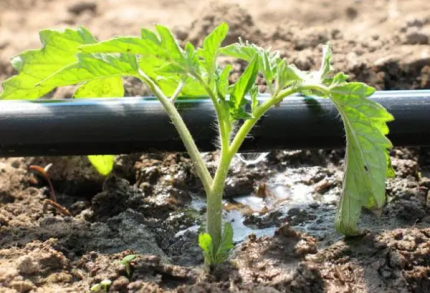
What needs to be done?
Shut off the water supply to the seasonal system.
Disconnect the garden hoses and drain any remaining water.
Remove and dry portable attachments, timers, and other items that are not intended to be stored outdoors for the winter.
For automatic systems, follow the preservation procedure provided by the manufacturer.
Do not blow out pipelines with compressed air yourself without the appropriate skills and equipment: incorrect pressure can damage the system or create a risk of injury.
The most common mistakes during autumn watering
Water the garden on a summer schedule. In the fall, evaporation often decreases, so the previous frequency may be excessive.
Focus only on the dry surface of the soil. Deeper layers may remain sufficiently moist.
Stop watering completely in September. Late crops may continue to need water during dry weather.
Watering empty beds before winter. Without a specific agrotechnical goal, this is usually unnecessary.
Ignore the condition of young trees. They can suffer from a lack of moisture even after brief rains.
Watering frozen soil. Water will not be able to properly penetrate the root system.
Leave automatic watering without resetting. This can lead to overwatering in the fall.
Do not preserve the system before frost. Residual water can damage the equipment.
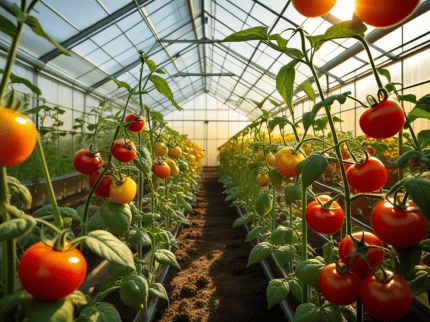
Practical example: how to organize autumn watering at the dacha
Let's say the plot has beds with late cabbage, winter garlic, a small greenhouse, and several young fruit trees.
After a week of dry weather, you need to check the condition of each zone separately.
In the cabbage bed, assess the soil moisture at a depth of approximately 10–15 centimeters.
If the soil is dry and the plants continue to form heads, watering may be necessary.
In the winter garlic bed, check whether there is enough moisture in the planting area of the cloves.
In the greenhouse, assess the condition of the soil regardless of the amount of rain outside.
For young trees, check the moisture in the root zone.
And empty beds after potatoes, on which nothing is planned to be sown, can be left without additional watering.
This approach allows you to use water where it is really needed and not create excessive humidity throughout the area.
Conclusion
Autumn watering of the garden does not need to be stopped automatically with the onset of September, but it is also wrong to continue it on a summer schedule.
Late cabbage, greens, winter garlic, young trees, and some other plants may need additional moisture during dry weather.
The most reliable way to determine the need for watering is to check the soil at the root level, take into account rainfall and the stage of crop development.
After the growing season is over, watering of open vegetable beds is usually stopped. For perennial plantings, the decision depends on soil moisture and the approach of frost.
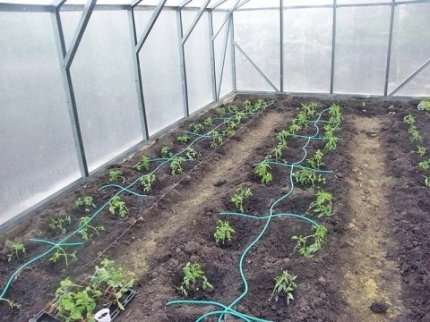
FAQ: Frequently asked questions about watering the garden in the fall
Is it necessary to water the garden in the fall?
Yes, if there are plants left in the beds that are actively growing and the soil is not moist enough. Late cabbage, greens, winter garlic, and young seedlings may need water even in cool weather. Empty beds are usually not watered.
When to stop watering the garden in the fall?
There is no universal date. Watering is stopped after the active growth of the relevant crops has ended, with sufficient natural precipitation, or after the soil has frozen. Young trees and evergreens may require a separate approach.
Do I need to water the garden in October?
In dry weather, yes, if the plants continue to grow. It is especially important to check the moisture under late cabbage, greens, and other fall crops. If the soil is sufficiently moist after rains, additional watering is not necessary.
Do I need to water winter garlic after planting?
If the soil is dry, after planting the garlic should be watered moderately to provide moisture for root formation. If the soil is already moist enough, additional irrigation is not necessary. Water stagnation should not be allowed.
Do I need to water trees before winter?
During a long, dry fall, young trees and some evergreens may need deeper watering before the ground freezes. If the ground is already sufficiently moist, additional irrigation may not be necessary.
Can I water the garden in November?
It is possible if the soil is not frozen and the specific plants really need water. However, in most open vegetable beds, active watering is already over in November. There is no need to water frozen soil.
How much water does a garden need in the fall?
There is no single norm. It depends on the crop, soil type, temperature and rainfall. For active growth of many vegetables, a guideline can be about 25 millimeters of water per week, taking into account rainfall, but in the fall the need is often lower.
How to check if the beds need to be watered?
Carefully check the soil moisture at a depth of about 10–15 centimeters. If the soil is dry in the root zone and the plants continue to grow, they may need water. If the soil is moist, watering should be postponed.
Do I need to water the greenhouse in the fall?
Yes, if vegetables or herbs continue to grow inside. Since rainwater does not fall on the closed beds, the soil can dry out even in rainy weather. It is necessary to control humidity and provide ventilation.
Can I fill empty beds with water before frost?
Usually not necessary. Empty vegetable beds do not require regular watering after the season is over. Exceptions may be new crops, plantings, or specific agricultural operations that require moisture.

