

If the air conditioner in your car has started blowing warm air, is not cooling the interior well, or is smelling damp, the reason is not always “freon.” A lack of refrigerant often reduces the efficiency of the system, but the same symptoms can be caused by a dirty condenser, a clogged cabin filter, a faulty fan, a pressure sensor, a compressor clutch, climate control electronics, a leak in the line, or moisture and dirt on the evaporator.
Points of attention
- If the air is flowing strongly but is warm, suspicion falls on the refrigeration circuit: refrigerant, compressor, pressure, condenser, fan.
- Charging is required when diagnostics show an incorrect amount of refrigerant, after system repair, replacement of condenser, compressor, tubes, evaporator, dryer, or after eliminating a leak.
- Charging is required when diagnostics show an incorrect amount of refrigerant, after system repair, replacement of condenser, compressor, tubes, evaporator, dryer or after eliminating a leak. seem cheap, but they have several risks. The driver does not know how much refrigerant is in the room.
An automotive air conditioner is a closed refrigeration circuit. It has a compressor that compresses the refrigerant, a condenser that releases heat to the outside, an expansion valve or throttle that reduces the pressure, and an evaporator that cools the air that the fan blows into the cabin. Valeo describes this cycle as a system in which the refrigerant transfers heat from the cabin to the outside through a compressor, condenser, expansion valve, and evaporator.
The main rule for the driver: do not rush to refill at random. First, you need to understand the symptoms, check simple things, find a possible leak and make sure that the correct type and exact amount of refrigerant and oil are added to the system. Hyundai clearly states in the technical instructions: low refrigerant levels reduce the efficiency of the air conditioner, but refilling also impairs the operation of the system; the correct type and amount of refrigerant and oil are critical, otherwise the compressor may be damaged and the air conditioner may not operate properly.
Why does the air conditioner in the car blow warm air?
The most common logic is simple: the system cannot properly take heat from the cabin and release it outside. But there are several reasons for this.
The most common options:
insufficient amount of refrigerant;
leakage through seals, tubes, condenser or service ports;
faulty compressor;
problem with the compressor electromagnetic clutch;
contaminated condenser in front of the engine radiator;
the cooling fan is not working;
clogged cabin filter;
faulty pressure sensor;
the expansion valve is jammed;
moisture or air in the system;
climate control unit error;
the air mixing damper supplies heat instead of cold.
It is important to look at the picture, not just one symptom. If the air is blowing strongly but is warm, suspicion falls on the refrigeration circuit: refrigerant, compressor, pressure, condenser, fan. If the air barely blows even at maximum speed, you should start with the cabin filter, fan, and dampers.
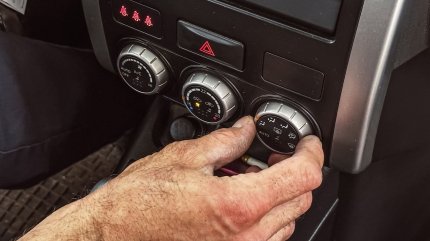
Refrigerant shortage: when is it really the cause?
Refrigerant is often called Freon, although modern cars may use different substances: R-134a, R-1234yf, or other types depending on the model, year, and market. In a working system, the refrigerant should not disappear quickly. If the air conditioner starts blowing warm a few weeks after filling, this is almost always a hint of a leak or improper maintenance.
The EPA explains that “top-up” charging forces the technician to essentially guess how much refrigerant is already in the system, which can lead to undercharging or overcharging, both of which can compromise performance. Evacuation and recharge, on the other hand, allows the refrigerant to be removed, purged through the equipment, evacuated, and the exact amount recommended by the manufacturer to be added.
Signs that there may be a lack of refrigerant:
the air conditioner cools poorly even on the highway;
the air becomes cool only at high speeds;
the compressor turns on and off frequently;
one pipe under the hood does not get colder;
after a recent refueling, the cold quickly disappeared;
oily traces are visible on the joints;
the system shows a pressure error.
Simply adding gas “until full” is a bad idea. Your car’s system is designed for a specific amount of refrigerant in grams. Exceeding the limit increases pressure and can impair cooling or damage components.
When to refill the air conditioner
Charging is required when diagnostics show an incorrect amount of refrigerant, after system repair, replacement of condenser, compressor, tubes, evaporator, dryer, or after a leak has been repaired. It is also required if the system has been depressurized.
A professional procedure usually includes:
checking the operation of the air conditioner;
reading errors;
temperature measurement on deflectors;
pressure check;
pumping out refrigerant residues;
system evacuation;
tightness check;
adding the required amount of oil;
filling with the exact mass of refrigerant;
rechecking the pressure and temperature.
The air conditioning system operates under high pressure. Hyundai warns that the R-134a or R-1234yf circuit must be serviced by trained personnel, the refrigerant must be recovered with proper equipment, and its release into the atmosphere is harmful to people and the environment and can cause serious injury.
Why you shouldn't refill your air conditioner from a can
Home “do-it-yourself” refill kits seem cheap, but they come with several risks. The driver doesn’t know how much refrigerant is left inside. He doesn’t vacuum the system, doesn’t remove moisture, doesn’t check the exact mass, doesn’t always see the real high-side pressure, and can mix incompatible substances.
The EPA states that service shops must use equipment to recover and recycle refrigerant, and the intentional release of most refrigerants during air conditioner servicing is prohibited.
A separate risk is the wrong type of refrigerant or oil. Nissan explicitly states in the X-Trail manual that the system must be filled with a specific refrigerant, HFO-1234yf, and the appropriate oil; using other substances can cause serious damage and the need to replace the entire air conditioning system.
Before any refueling, you need to find a sticker under the hood or the information in the manual. Hyundai also notes that the type of refrigerant in a particular car can be determined by a special sticker inside the hood.
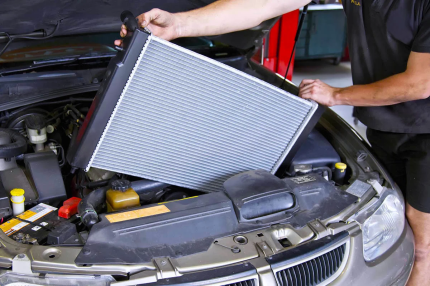
Refueling or repair: how to distinguish
If the air conditioner gradually began to cool less after several years of operation, the service may begin with an inspection and refueling after diagnostics. If the cold disappeared suddenly, after an impact, bumper repair, radiator replacement or a stone in the front of the car, you need to look for a leak.
Refueling without repair makes sense only when the system is leak-proof or the leak is so small that it was not detected during a normal inspection. If the technician “tops up freon” every time without finding the cause, the driver pays for a temporary effect.
A leak may be indicated by:
oil stains on the condenser;
traces of tinted UV dye;
hissing after stopping;
a sharp drop in efficiency;
repeated loss of cold after refueling;
damage to the front radiator unit;
pipe corrosion;
smell of chemicals near the vents or under the hood.
Refrigerant carries some of the compressor oil with it. When it leaks, the compressor can lose oil. Therefore, driving for a long time with an empty or almost empty system can result in expensive repairs.
Unpleasant smell from the air conditioner: where does it come from?
A musty, damp or “wet rag” smell is most often associated with the evaporator. When the air conditioner is running, the evaporator is cold and condensation forms on its surface. If moisture remains on dirt, dust and organic particles for a long time, an environment for an unpleasant odor is created.
DENSO recommends that you regularly use your air conditioning in accordance with your vehicle's instructions, particularly during periods when it's not too hot outside. The company explains that regular operation of the system helps to disperse condensation on interior surfaces, and before ending a trip, it's a good idea to turn off the air conditioning and leave the fan on to dry out the evaporator.
The smell may be intensified by:
old cabin filter;
leaves in the air intake;
clogged air conditioner drain;
wet carpet in the cabin;
water leakage under the torpedo;
rare use of air conditioning;
constant recirculation mode;
smoking in the cabin;
transportation of animals or wet items.
The EPA emphasizes in its article on mold: The key to mold control is moisture control; mold on damp surfaces can cause allergic reactions and irritation, and in people with asthma, attacks. This does not mean that every smell in a car is dangerous, but you should not ignore a persistent musty smell in the ventilation.

When is it enough to replace the cabin filter?
The cabin filter traps dust, pollen, leaves, soot, road grime, and some odors if it has a carbon layer. When it is clogged, it is harder for the fan to push air through the system, the flow from the deflectors weakens, the glass may fog up more often, and odors become more noticeable.
Hyundai recommends replacing the air filter according to the maintenance schedule, and in dusty or rough road conditions, inspect and replace it more often; if the air flow suddenly decreases, the system should be checked by a service center. Toyota indicates that the air conditioner filter should be inspected and replaced according to the schedule, and in dusty areas or heavy traffic, an earlier replacement may be necessary.
The filter should be changed if:
the air conditioner blows weakly;
the smell appears immediately after starting the fan;
the glass fogs up quickly;
there is a lot of dust in the cabin;
the car often drives in the city, on dirt roads or near construction sites;
the filter has not been changed for over a year;
Dust flies after turning on the fan.
If the smell remains after a new filter, the problem is probably in the evaporator, drainage, or air ducts.
Air conditioner cleaning: what exactly needs to be cleaned
“Cleaning the air conditioner” often refers to various procedures. The simplest is replacing the cabin filter. The next level is treating the air ducts with an aerosol. A more in-depth procedure is cleaning the evaporator with foam or a special compound through access to the air conditioning unit housing. Another important point is washing the condenser from the outside.
Normal prevention may include:
cabin filter replacement;
cleaning the air intake from leaves;
checking condensate drainage;
evaporator disinfection;
treatment of ventilation ducts;
cleaning the condenser from insects, dust and fluff;
checking the radiator fan;
temperature control on the deflectors.
An aerosol “smoke bomb” in the cabin may temporarily suppress the smell, but it does not always clean the evaporator itself. If the source of moisture and dirt remains on the evaporator, the smell will return.
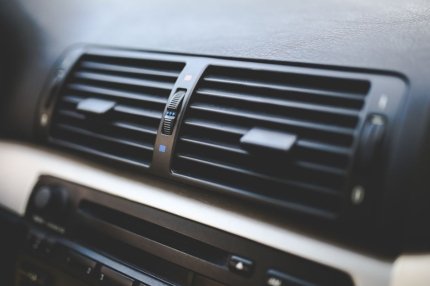
Why the air conditioner may blow weakly
Weak air flow is a separate problem. The system may have enough refrigerant and a working compressor, but almost no air is getting into the cabin. In this case, the driver feels that “the air conditioner is not cooling”, although in fact the cold is being generated, but it is not reaching the cabin in the required volume.
Causes of weak flow:
clogged cabin filter;
leaves in the air intake;
faulty interior fan;
problem with resistor or speed controller;
the damper is jammed;
clogged evaporator;
climate control error;
incorrect air supply mode.
Toyota warns in the manual that objects on the dashboard can block the vents and prevent the windshield from working properly. It may seem like a small thing, but a thick mat, decorative trim, phone holder, or items near the air intake can really impair flow.
Why does the air conditioner only cool when driving?
If the air is cool on the highway and warm in traffic, it is worth checking the condenser and cooling fan. The condenser is located in front of the engine radiator and must give off heat to the outside air. When the car is moving, it is blown by the oncoming flow. When the car is stationary, a fan is needed.
DENSO describes the condenser as the unit to which the compressor supplies refrigerant, and a fan or other cooling method helps remove the heat; the evaporator, in turn, cools the air around it.
If the fan does not turn on, the condenser is clogged with fluff or dirt, the pressure in the system increases and the cooling drops. In this case, “topping up” can even make the situation worse if the system already has the correct amount of refrigerant.
Signs of the problem:
in traffic jams, the air conditioner gets warmer;
at speed the cold returns;
the fan under the hood does not start;
the engine temperature is rising;
the condenser is clogged with insects, fluff, dust;
After washing the radiator package, the cold becomes better.
The condenser should be washed carefully. Too much water pressure can clog the thin slats. It is better to have this done at a service center or use a gentle approach without using an aggressive jet up close.
What to do if the air conditioner turns on and then immediately turns off
Short compressor cycles can indicate incorrect pressure, lack of refrigerant, overcharging, a problem with the pressure sensor, overheating of the condenser, or an electrical fault. In some cars, the control unit turns off the compressor to protect the system.
Do not force the compressor to “revive” with jumpers, bypass the sensors, or apply power directly. The pressure sensor is a protective element. If it prohibits operation, the reason may be a real danger to the compressor.
Proper diagnostics include measuring high and low side pressures, air temperature, fan status, refrigerant charge, control unit errors, and visual inspection for leaks. Without this, compressor replacement can be an unnecessary expense.

Air conditioning and window fogging
Car air conditioning is needed not only for cold. It also dehumidifies the air, so it helps to quickly remove fogging from the windows. If the windows constantly fog up in the rain or in winter, the problem may be a clogged filter, a damp interior, recirculation mode, weak air flow or a malfunction of the air conditioner.
Practical procedure:
turn on the windshield defroster;
turn on the air conditioner or dehumidification mode, if available;
turn off constant recirculation;
direct the flow to the windshield;
check the cabin filter;
remove wet rugs;
check for water under the carpet.
Constant moisture in the cabin creates conditions for odors and biological contaminants. The EPA notes that water and moisture can lead to mold growth, and indoor dust can contain pollen, mold spores, skin particles, mites, and other biological contaminants. For cars, the logic is similar: a dry, clean interior smells less and is better ventilated.
How to use air conditioning properly in hot weather
When the car has been parked in the sun, the interior can be much hotter than the air outside. If you immediately turn on maximum cooling and recirculation, the system will drive very hot air into the interior for a while. It is better to let out the overheated air first.
Working algorithm:
open doors or windows for 30–60 seconds;
start driving with the windows open for a short time;
turn on the air conditioner;
use the outside air supply first;
after cooling the cabin, switch to recirculation;
do not set the temperature too low unnecessarily;
direct the flow into the cabin, not just into the face;
a few minutes before the finish, turn off the A/C, leaving the fan on.
Toyota, in its own odor instructions, recommends setting the system to outside air mode for fresh air; the manufacturer also notes that odor from the ventilation may occur due to operating conditions.
How often to service the air conditioner
There is no single universal interval for all cars. The schedule depends on the manufacturer, model, climate, mileage, dust, age of the car and operating conditions. But practically most drivers should check the system before the warm season or at the first symptoms: slight cold, smell, noise, fogging or unstable operation.
Landmarks:
cabin filter - according to regulations, often once a year or more often in dusty conditions;
air intake cleaning - in spring and autumn;
evaporator disinfection - by smell or preventively;
air conditioner check - before the summer season;
tightness check - if the cold weakens;
Refilling - after diagnostics, repair or confirmed refrigerant shortage.
DENSO emphasizes that regular air conditioning maintenance and cabin filter inspection are important for the system's performance and cabin air quality.

What you can check yourself before the service
The driver can perform a basic check without interfering with the refrigeration circuit.
Check:
does the A/C button turn on?
whether the heating mode is turned on;
is the maximum temperature not reached?
Are all fan speeds working?
is there a strong flow from the deflectors;
Is the cabin filter clean?
Are the deflectors blocked?
are there any leaves near the air intake;
Is the fan under the hood working?
Does the temperature change on the highway and in traffic jams?
are there any oily marks on the tubes and condenser;
Is there a smell after rain or after starting?
Do not unscrew service ports yourself, bleed gas, connect random cylinders, flush the evaporator with aggressive chemicals without access to the drain, or supply power to the compressor directly.
What to say to the service technician
The more precisely you describe the symptoms, the faster they will find the cause. The phrase “the air conditioner is not working” is of little help. It is better to explain when exactly the problem manifests itself.
Prepare your answers:
when the problem first appeared;
the cold disappeared suddenly or gradually;
was it recently refueled?
whether the bumper, radiator or front end have been repaired;
is there a smell and when does it appear;
Is it cold on the track?
does it get warmer in traffic jams;
is the air flow weak;
whether the cabin filter was changed;
what type of refrigerant is in the car;
Are there any climate control errors?
Good service does not start with “just filling up.” First, the technician must check the pressure, temperature, tightness, operation of the fan, compressor, sensors, and filter condition. Filling must be performed according to the mass specified by the manufacturer.
Typical driver mistakes
The first mistake is to refill the air conditioner every summer without diagnostics. If the system is tight, it does not require frequent intervention. If the system is leaky, refilling without repair gives a temporary result.
The second mistake is to think that air fresheners will cure the odor. Air fresheners mask the problem, but they don’t remove damp dirt on the evaporator, an old filter, or a clogged drain.
The third mistake is to ignore the cabin air filter. A clogged filter reduces airflow and impairs the performance of the entire system. Hyundai specifically recommends checking and changing it more often in dusty conditions.
The fourth mistake is mixing refrigerants. Different systems have different ports, labels, oils, and requirements. The EPA notes that each approved refrigerant has unique fittings to prevent accidental mixing.
The fifth mistake is to wash the condenser with a strong jet of water. Thin lamellas are easy to damage, and a bent condenser does not dissipate heat well.
The sixth mistake is to constantly drive with recirculation. This cools the cabin faster, but without periodic access to fresh air, odors and moisture can accumulate.
The seventh mistake is turning off the air conditioner for the entire winter. Regular, short-term use helps the system operate more stably and reduces the risk of unpleasant odors, as DENSO emphasizes.
Short checklist for the driver
If the air conditioner blows warm:
check the temperature settings and A/C mode;
assess the strength of the air flow;
check the cabin filter;
see if the fan under the hood is working;
remember whether the front of the car has been repaired;
do not fill the system at random;
request pressure, leak and temperature diagnostics;
Only fill with the correct refrigerant and the exact weight.
If there is an odor:
replace the cabin filter;
clean the air intake;
check the drainage;
disinfect the evaporator;
before ending the trip, dry the evaporator with a fan;
Do not mask the smell with fragrances without eliminating the cause.
Conclusion
The air conditioner in the car blows warm for various reasons: from a lack of refrigerant to a clogged condenser, a faulty fan, a pressure sensor, a compressor or a cabin filter. Therefore, the correct action is not automatic refueling, but diagnostics. The system must work with the exact type and amount of refrigerant and compressor oil specified by the manufacturer.
An unpleasant smell is most often associated with moisture, dirt and condensation on the evaporator or an old cabin filter. It does not need to be covered with air freshener. It is better to replace the filter, clean the air intake, check the drainage and disinfect the evaporator.
The most reliable strategy is prevention: change the cabin filter regularly, periodically turn on the air conditioner in different seasons, dry the evaporator before the end of the trip, keep the condenser clean and do not interfere with the refrigeration circuit without equipment. This is cheaper than repairing the compressor, replacing the condenser or searching for a complex leak after several unsuccessful “refueling”.
FAQ
Why does the air conditioner in the car blow warm air?
The cause could be a lack of refrigerant, a leak, a faulty compressor, a dirty condenser, a fan, a pressure sensor, a clogged cabin air filter, or a problem with the climate control flaps. Hyundai notes that low refrigerant levels reduce the efficiency of the air conditioner, but refilling also impairs the system's performance.
Do I need to refill my air conditioner every year?
Not necessarily. Recharging is required after diagnostics, repair, depressurization, or confirmed refrigerant shortage. If the air conditioner quickly stops cooling after recharging, you need to look for a leak, not just add gas again.
Which is better: refrigerant top-up or complete refill?
The EPA explains that when topping up, the technician cannot know exactly how much refrigerant is already in the system, so undercharging or overcharging is possible. Evacuation and refilling allow the exact amount recommended by the manufacturer to be added.
Why does the air conditioner smell damp?
Most often due to moisture and dirt on the evaporator, an old cabin filter, a clogged drain or a long operation of the system without drying. DENSO recommends using the air conditioner regularly and turning off the A/C before the end of the trip, leaving the fan on to dry the interior surfaces.
Will replacing the cabin air filter help with the odor?
It may help if the source of the odor is in the filter. Toyota notes that if the odor from the air conditioner persists, it is worth replacing the filter with a deodorizing function. If the odor persists, the evaporator, drain, or air ducts need to be cleaned.
Can I refill my air conditioner from a can myself?
Technically, some drivers do this, but the risks are high: incorrect amounts, refrigerant mixing, lack of vacuum, moisture in the system, compressor damage, and refrigerant leakage. The EPA states that MVAC maintenance is regulated, and intentional venting of refrigerants is prohibited.
How do I know what refrigerant my car needs?
Check the sticker under the hood or your vehicle manual. Hyundai notes that the type of refrigerant in your air conditioning system can be found on a sticker inside the hood. For many modern cars in Europe, this may be R-1234yf, but you'll need to check your VIN or documentation for the specific type.
Why is the air conditioner cold on the highway, but warm in traffic jams?
Often the reason is poor cooling of the condenser: it is clogged with dirt, fluff or insects, or the fan is not working. On the highway, the oncoming air flow helps the condenser to give off heat, but on the spot there is no such flow.
Is the smell of mold from ventilation dangerous?
A persistent musty smell should not be ignored, especially if there are children, people with allergies, or asthma in the car. The EPA notes that mold can cause allergic reactions and irritation, and asthma attacks in people with asthma; the main principle of mold control is moisture control.
When do you need to go for service immediately?
If the air conditioner suddenly stopped cooling, you hear extraneous noise, the compressor often turns on and off, oily traces appear on the tubes, the system does not keep cold after refueling, there are pressure errors, or the air conditioner does not work after an accident or repair of the front of the car.

