
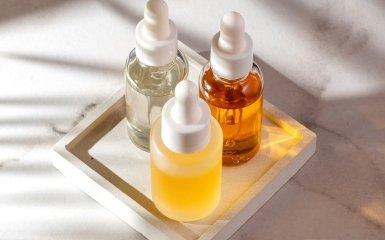
Plant oils can soften dry, mature skin, reduce tightness, and help lock in moisture. But claims that any natural oil will “remove wrinkles,” stimulate collagen, or rejuvenate skin need to be treated with much more caution.
Points of attention
- Vegetable oils can improve the condition of mature skin by providing softening and moisture retention, but do not replace active products for correcting age-related changes.
- For your face, it's best to choose an oil based on your skin type and specific needs, not based on popularity or scent.
- It is important to understand that oil helps maintain the barrier and moisturize the skin, but is not a universal remedy for all skin problems.
The primary benefits of most cosmetic oils are related to their fatty acids, triglycerides, waxes, and other lipids. They work primarily in the upper layers of the skin, softening it and maintaining the skin's protective barrier. A review of studies on vegetable oils shows that their effects vary significantly depending on the fatty acid composition: some can support the skin's barrier, while others can weaken it under certain conditions.
Therefore, it is better to choose a facial oil not based on popularity or fragrance, but on skin type, composition, and specific task.
What happens to skin with age?
As we age, the skin gradually becomes thinner, its lipid barrier composition changes, its ability to retain water decreases, and recovery from irritation may be slower. An additional contributor is ultraviolet radiation: chronic exposure to the sun accelerates photoaging, which manifests itself in wrinkles, uneven pigmentation, dryness, and changes in texture.
Dryness often makes fine lines more noticeable. When the stratum corneum is well-hydrated and its surface is smooth, the face can visually appear fresher. This is one reason why wrinkles appear to have diminished after applying the oil.
However, this effect does not mean structural rejuvenation of the dermis.
How oils work on the skin
Most vegetable oils primarily function as emollients: they fill the gaps between the cells of the stratum corneum and make the skin surface smoother.
Some oils also create a thin occlusive layer that reduces water evaporation, which is why applying an oil over a moisturizer works especially well for dry skin.
Vegetable oils may include:
linoleic, oleic and other fatty acids;
tocopherols;
phytosterols;
carotenoids;
squalene;
polyphenolic compounds.
However, the presence of an antioxidant in the plant itself does not mean that the oil has a proven clinical anti-aging effect. This requires human studies of the finished product.

What oils should you consider for mature skin?
Argan oil
Argan oil contains mainly oleic and linoleic fatty acids, as well as tocopherols. It is well suited as an emollient for dry and normal skin.
There is also clinical evidence regarding skin elasticity. In a small study of 60 postmenopausal women, daily topical application of argan oil for 60 days was associated with improvements in several measures of skin elasticity.
At the same time, one such study is not enough to consider argan oil as an independent remedy against age-related changes.
It is best considered as the final, softening step of care.
Rosehip seed oil
Rosehip oil is popular due to its high content of unsaturated fatty acids, carotenoids, and other biologically active substances.
In a small pilot study in 2025, 27 participants applied Rosa canina oil daily for five weeks. Researchers recorded changes in a number of parameters, including wrinkle and texture scores. But the study was small, short, and lacked a full control group, so its results should be considered preliminary.
Rosehip oil may be a good option for normal to dry skin if it is well tolerated.
An important nuance: the natural content of carotenoids does not make this oil an alternative to retinoids and does not replace sunscreen.
Jojoba oil
Jojoba is technically different from classic vegetable oils: a significant part of its composition is made up of liquid wax esters.
It distributes well on the skin's surface, reduces the feeling of dryness, and is used in a large number of creams and serums as an emollient.
A review of clinical and preclinical data on jojoba suggests potential benefits for maintaining stratum corneum integrity, although the quality of the evidence base for different cosmetic effects varies.
Its advantage in daily care is its relatively light texture. For combination mature skin, it is often more convenient than thicker oils and butters.
Sunflower oil
Ordinary sunflower oil looks less exotic, but from the point of view of skin barrier physiology it is interesting due to its high content of linoleic acid.
Linoleic acid is involved in maintaining the normal structure of the epidermal barrier. Reviews of studies on topical oils include sunflower oil among those for which there is evidence of a beneficial effect on the skin barrier.
For cosmetic use, it is better to choose a product specifically designed for skin, with a stable formula and proper quality control, rather than just taking cooking oil from the kitchen.
Coconut oil
Coconut oil has some pretty good data specifically on dry skin. In a randomized trial of people with mild to moderate xerosis, coconut oil and mineral oil showed comparable improvements in skin hydration over two weeks.
This makes coconut oil potentially beneficial for very dry areas of the body.
It's not for everyone on the face. The thick texture can be uncomfortable for oily or breakout-prone skin. In these cases, lighter emollients are usually more practical.
Shea butter
Shea, or karite, at room temperature often has the consistency of butter, which is why it is often called butter in cosmetics.
It forms a softening protective layer on the skin's surface and is well suited for dry cheeks, lips, hands, and other areas that quickly lose moisture.
Clinical reviews of plant-based oils and butters confirm their ability to improve skin hydration, although the effects of specific formulas depend on the concentration and other components of the product.
For an oily T-zone, pure shea may be too heavy.
Squalane
Squalane is often lumped together with cosmetic oils, although its chemical structure is a saturated hydrocarbon.
It is stable, easily distributed on the skin and used as an emollient. Squalene is a natural component of human sebum, and squalane is its more stable form suitable for cosmetics.
For those who don't like the feel of heavy oil on their face, squalane can be one of the most convenient options for a final layer of skincare.
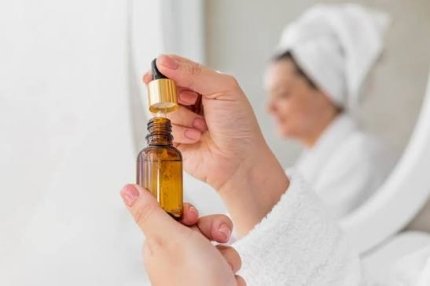
Why olive oil is not suitable for everyone
Olive oil is often perceived as a universal natural moisturizer. However, its composition is characterized by a high proportion of oleic acid.
Laboratory and clinical data suggest that excess oleic acid may disrupt the lipid organization of the stratum corneum. Reviews particularly caution against the regular use of oils high in oleic acid and low in linoleic acid on already damaged or inflamed skin.
For healthy skin, the reaction can be very different, so this doesn't mean that olive oil will necessarily cause a problem. But for atopic dermatitis, severe dryness with irritation, or a compromised barrier, there are more predictable options.
Essential oil and carrier oil are not the same thing
One of the most important home care mistakes is equating base oils with essential oils.
Argan, coconut, sunflower, or rosehip oil are composed mainly of lipids.
Essential oils of lavender, tea tree, rose, frankincense, geranium, or ylang-ylang are concentrated mixtures of volatile aromatic substances.
They are not needed by the skin for hydration and can cause irritant or allergic contact dermatitis. Fragrances and botanicals remain important causes of cosmetic contact allergies.
A particularly telling example is tea tree essential oil. A review of reports of contact allergies shows that the risk of sensitization increases after oxidation of the oil, and many of the reactions described were associated with the use of undiluted product.
For sensitive mature skin, the absence of essential oils in the formula is often an advantage.
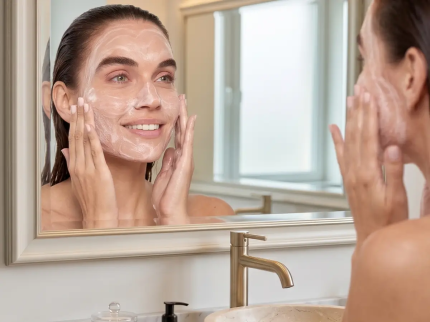
How to choose oil by skin type
Dry mature skin
You might consider argan oil, squalane, shea, jojoba, or a small amount of rosehip oil.
The main task is to reduce water loss. Therefore, it is better to apply oil on top of cream, and not replace it with all care.
Combination skin
Light textures are usually more convenient: squalane, jojoba, or a few drops of argan oil.
You don't have to apply the product to your entire face. For example, you can apply oil to dry cheeks and leave the T-zone untouched.
Oily and acne-prone skin
Oil is not a mandatory component of care.
If you want to use it, it is better to start with a minimal amount of one product and observe the reaction for several weeks. The “non-comedogenic” label on the finished cosmetic product is more practical than trying to rate all vegetable oils according to popular “comedogenicity” tables, since such scales are not a reliable predictor of a specific person’s reaction.
Sensitive skin
The simpler the composition, the better. It is worth avoiding a large number of fragrances, essential oils and mixtures of dozens of plant extracts.
"Natural" does not mean hypoallergenic.
How to apply oil to your face correctly
For most people, 1–3 drops is enough.
Convenient evening care sequence:
Gently cleanse the skin.
Apply the necessary serum or treatment.
Use a moisturizer.
Apply a few drops of oil or squalane to dry areas.
Applying it over cream helps retain the water that the skin has received from products with glycerin, hyaluronic acid, and other moisturizers.
Oil on its own, on the other hand, adds almost no water. This is why applying a large amount of oil to very dehydrated skin can sometimes feel greasy without providing enough comfort.
Can I make homemade masks with oils?
Mixing the oil with a regular, fragrance-free moisturizer is usually easier and more predictable than creating complicated homemade masks.
Yogurt, honey, lemon juice, essential oils, spices, and other kitchen ingredients are not needed for the carrier oil to perform its function.
It is especially undesirable to experiment with acidic products or concentrated essential oils on skin that is already irritated by retinoids, acids, or other active agents.
It is best to first test a new oil on a small area of skin for a few days.
Can oils remove wrinkles?
The oil can temporarily make fine lines less noticeable by softening and moisturizing the top layer of skin.
But this is not the same as affecting photoaging.
Daily sun protection has much more evidence to prevent premature aging. The American Academy of Dermatology recommends a broad-spectrum sunscreen with an SPF of 30 or higher to protect against photoaging.
Among topical treatments for existing signs of photoaging, the most compelling clinical evidence is for retinoids. Systematic reviews of randomized trials show that tretinoin can improve fine and deeper wrinkles, uneven pigmentation, and the texture of photodamaged skin.
Therefore, oil has a different place in care: it maintains comfort and the barrier, but should not replace SPF or active products with a proven effect on photoaging.
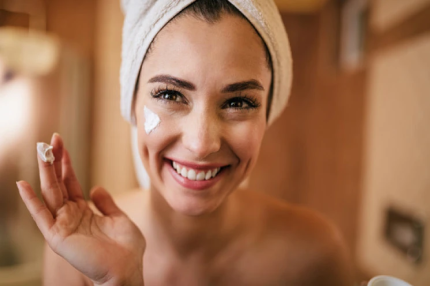
Common mistakes in using oils
Replace moisturizer with oil.
A cream usually combines water, moisturizers, emollients, and occlusive ingredients. Pure oil does not have this balance.
Applying too much.
Ten drops don't work any better than two. Too much will only make your skin oily and can interfere with the application of other products.
Mixing many oils at once.
If irritation occurs, it will be difficult to determine the cause.
Use undiluted essential oils.
This increases the risk of irritation and contact allergy.
Consider oil a natural SPF.
No cosmetic oil should be used as a substitute for a tested sunscreen.
Expect lifting or disappearance of deep wrinkles.
Moisturized skin may look smoother, but oil does not restore lost tissue volume or provide the effect of cosmetic procedures.
What should be the basic care for mature skin?
Oil is an additional, not a central element of anti-aging care.
The basic scheme can be simple.
Morning: Gentle cleanser as needed, moisturizer, and sunscreen SPF 30 or higher.
In the evening: cleansing, an active product according to the skin's needs, a moisturizer and, if it is very dry, a few drops of the appropriate oil.
The American Academy of Dermatology advises against applying a large amount of anti-aging products at once, as irritation can worsen the appearance of the skin.
For mature skin, a stable, simple routine is usually more beneficial than a constant rotation of homemade masks and dozens of "rejuvenating" oils.
Conclusion
The best oil for mature skin is one that meets its real needs and is well tolerated. Argan oil, jojoba, squalane, rosehip oil, sunflower oil, and shea can all be useful as emollients and help dry skin retain moisture.
However, no oil should be considered a universal remedy for wrinkles. For the prevention of photoaging, protection from ultraviolet rays remains the basis, and for the correction of age-related changes, there are active ingredients with a much stronger evidence base.
FAQ
Which oil is best for mature facial skin?
There is no one-size-fits-all. For dry, mature skin, argan oil, squalane, jojoba, shea, or rosehip oil are often good choices. The choice depends on dryness, sensitivity, and breakouts.
Which oil is best for wrinkles?
No pure vegetable oil has the same evidence base as retinoids for photoaging. Oils can smooth dry skin, temporarily reducing the appearance of fine lines.
Can I apply oil to my face every day?
Yes, if your skin tolerates it well. For most people, a few drops in the evening are sufficient. For oily or acne-prone skin, daily use may not be necessary.
What is better to apply first: cream or oil?
Typically, moisturizer is applied first, followed by a small amount of oil. This sequence helps to lock in moisture.
Can I replace cream with oil?
With very simple care, this is possible, but for dehydrated skin, a cream is usually more effective because it contains an aqueous phase and moisturizing ingredients. Oil works better as a supplement.
Is coconut oil suitable for mature skin?
It can be a good moisturizer for dry skin, and its moisturizing effect has been confirmed in clinical studies. For oily or acne-prone skin, its thick texture may be uncomfortable.
Can I use essential oils for wrinkles?
There is no conclusive evidence that essential oils remove wrinkles. However, they can cause irritation and allergic contact dermatitis, so they should not be applied undiluted to the face.
Can rosehip oil replace retinol?
No. Despite the presence of carotenoids and preliminary positive data on skin conditions, rosehip oil is not an equivalent to retinol, retinal, or tretinoin.
Do I need to apply SPF after oiling?
Yes. Oil is not a substitute for sunscreen. The final step in your daily routine should be a broad-spectrum sunscreen with SPF 30 or higher.

