
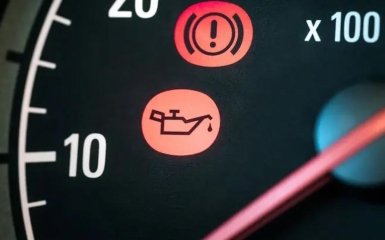
A red oil light is not a warning that should be "pushed to a convenient place" or postponed until the weekend. In most cars, it is related to the oil pressure in the lubrication system. If the pressure is insufficient, the engine can operate with almost no protection against friction, overheating, and accelerated wear.
The main rule is simple: if the oil light comes on while driving, don't plan how much further you'll drive. Stop safely, turn off the engine, and find out the cause.
Points of attention
- A red oil light indicates an oil pressure problem, which can lead to overheating and engine damage. You should stop the car immediately, turn off the engine, and determine the cause.
- It is important to check the oil level regularly and follow the manufacturer's recommendations for replacement. Ignoring lubrication problems can damage the engine.
What does the oil indicator on the panel mean?
There may be various warnings on the dashboard, which drivers often call the same thing — “oil light” or “oil indicator.” In reality, their meanings are different.
Red oil pressure light
It usually looks like a red oil can. It warns of a problem with oil pressure. This is a critical signal: the lubrication system may not be supplying the engine with enough oil at the right pressure.
If the red oil light does not go out after starting or lights up while driving, the engine should be shut off as soon as possible after a safe stop.
Yellow oil level indicator
Some cars have a separate yellow indicator or text message indicating low oil level. This should not be ignored either, but it usually does not indicate an immediate loss of pressure. The driver should check the level and top up the engine oil according to the manufacturer's recommendations.
Service reminder
An oil change or service interval message is a different story. It reminds you of scheduled maintenance, not necessarily an emergency malfunction. However, you shouldn't delay maintenance either.
How long can you drive after the oil light comes on?
The safe answer is: don't go any further. There is no universal number.
Sometimes the driver drives a few hundred meters to a safe shoulder, and the engine does not suffer any visible damage. In other situations, even a short operation under load can result in serious damage. It all depends on the cause, oil level, engine speed, temperature, engine design, and whether at least minimal pressure is maintained.
The phrase “how long can you drive without oil” is dangerous in itself. The engine is not designed to operate without proper lubrication. If the oil light is on, the driver’s task is not to drive to the service station at any cost, but to stop the engine before the problem becomes more expensive.
Why low oil pressure is dangerous for the engine
Motor oil performs several important functions:
reduces friction between parts;
removes some of the heat;
helps protect surfaces from wear;
cleans the internal channels from some of the contaminants;
ensures the operation of components that depend on oil pressure;
In turbocharged engines, it lubricates and cools the turbine.
When pressure drops, parts can come into contact almost “dry.” The first to suffer are often the liners, crankshaft, camshafts, turbocharger, and other components sensitive to lubrication quality.
The danger is that critical wear can begin before the driver hears an obvious knock or feels a loss of power.
What to do immediately after the indicator appears
If the oil indicator light comes on while driving, act calmly but without delay.
Don't rev it up. Don't accelerate or try to "skip" a few more kilometers.
Turn on the hazard warning lights. Warn other road users.
Pull over safely to the right. Choose a shoulder, pocket, gas station, or other location where stopping will not create additional danger.
Stop the engine. Do not leave the engine idling if the red oil light is on.
Assess the situation around your car. On the highway, do not stand close to the flow of traffic, use a reflective vest if available, and display an emergency stop sign according to the regulations.
Let the engine sit for a while. The oil should drain into the sump and the hot parts should cool down partially.
Check the oil level. If the car has a dipstick, do it correctly. If the control is electronic, follow the manufacturer's instructions.
If the oil light comes on along with a metallic knock, a burning smell, smoke, overheating, or a sudden drop in power, it is best to call a tow truck immediately.
How to check the oil level without errors
Checking the level seems simple, but mistakes happen often.
If the car has a dipstick
Park the car on a level surface. After stopping, wait a few minutes for the oil to drain. Remove the dipstick, wipe it with a clean cloth, insert it back as far as it will go, and remove it again.
The level should be between the minimum and maximum marks. If it is below the minimum or the dipstick is almost dry, it is unsafe to start the engine.
Do not fill the oil above the upper mark. Excess oil can also cause problems for the engine and crankcase ventilation system.
If the level is checked electronically
Modern cars may not have a dipstick. Then refer to the on-board computer menu and operating instructions. Often, certain conditions are required for correct measurement: a flat surface, a warmed or cooled engine, the engine off, and the hood closed.
If the electronic system shows a low level and the red oil pressure light does not go out, you should not continue driving on your own without diagnostics.
When topping up can help and when not
It makes sense to top up your engine oil if the level is really low and there is no obvious major leak. It is best to use oil with the viscosity and tolerances specified in your car's manual.
As a temporary measure on the road, it is sometimes better to add oil that is compatible with the basic parameters than to start the engine with a critically low level. But this does not cancel the subsequent check at the service.
Topping up will not help or may be insufficient if:
oil leaks quickly under the car;
the pressure lamp does not go out after topping up;
hear a knocking or other metallic noise;
the engine overheats;
problem with the oil pump, filter, clogged channels or sensor;
The level is normal, but the indicator is still on.
If after topping up the level has returned to normal and the lamp has gone out, it is still advisable to seek diagnostics. You need to understand why the level has dropped: due to natural consumption, a leak, engine problems or maintenance errors.
Typical reasons why the oil light is on
The cause can be simple or serious. It is impossible to determine it accurately without inspecting the car.
Low oil level
The most obvious option. The level may drop due to a leak, increased oil consumption, an error during replacement, or prolonged ignoring of checks.
Oil leak
Tracks under the car, a wet sump, filter, gaskets or areas around the engine may indicate a leak. If oil is leaking actively, you should not drive any further.
Inappropriate or degraded oil
Oil that is too thin, old, or does not meet the manufacturer's specifications may, under certain conditions, be less able to maintain the required pressure. This is especially noticeable on a hot engine and at idle.
Oil filter problems
A poor quality, incorrectly installed or clogged filter can affect circulation. The risks also increase after improper maintenance.
Oil pump malfunction
The oil pump creates pressure in the system. If it is worn or damaged, the engine may not be properly lubricated even with sufficient oil level.
Faulty sensor or wiring
Sometimes the cause is the oil pressure sensor, connector or wiring. But this can only be assumed after checking. Driving with the thought "it's definitely the sensor" is dangerous.
Engine wear
In high-mileage engines, pressure drop can be due to wear on internal parts. This often occurs when the engine is hot or at idle.
Signs that a tow truck is needed
Call a tow truck or technical assistance if there is at least one of these signs:
the red oil light does not go out after checking and topping up;
the oil level is below the minimum and there is no suitable oil;
an active leak is visible under the car;
the engine knocks, grinds or runs unusually loudly;
smoke, a burning smell or overheating has appeared;
the car lost power;
the indicator lights up again after a short movement;
you are not sure which indicator has triggered.
A tow truck in such a situation is often cheaper and safer than trying to "pull" to the service on your own.
How to prevent oil pressure problems
It is impossible to completely eliminate the risk, but it can be significantly reduced.
Check the oil level regularly, especially before a long trip.
Don't wait for the oil light to come on: the indicator often comes on when the situation is dangerous.
Use oil with the tolerances and viscosity recommended by the manufacturer.
Change the oil and filter at reasonable intervals, taking into account operating conditions.
After changing the oil, check for leaks near the filter and drain plug.
Don't ignore stains under your car.
Pay attention to extraneous sounds after starting and during warm-up.
For cars with a turbine, high-quality oil, the correct level, and timely maintenance are especially important.
If the engine starts to consume more oil than before, this is a reason for diagnostics, even if the indicator has not yet come on.
Common driver mistakes
The most dangerous mistake is to drive further because “the service is only a few kilometers away.” It is these few kilometers that can be decisive.
Another mistake is to leave the engine idling while the driver calls friends or looks for information. If the red oil pressure light is on, idling can also be harmful to the engine.
Also, do not immediately pour in additives or “thicker” oil without understanding the cause. Such actions may mask the symptom, but not solve the malfunction. In some cases, they even complicate further diagnostics.
FAQ
Can I go to a service station if the oil light comes on?
If the red oil pressure light is on, you should not drive to the service station on your own. It is safer to stop, turn off the engine, check the level, and call a tow truck if necessary.
What should I do if the oil light is flashing instead of constantly on?
Blinking can also indicate unstable oil pressure or a sensor problem. Do not ignore it. Reduce the load, stop safely and check the level.
If I add oil, can I drive further?
Maybe, but not always. If the level was low, the light went out after topping up, there are no noises or leaks, you can carefully continue driving to the nearest service. If the indicator does not go out or appears again, do not drive.
Can I add a different engine oil?
It is best to add oil with the parameters recommended by the car manufacturer. In a forced situation, temporarily adding oil with similar characteristics may be less risky than operating the engine with a critically low level. But after that, a check at the service is desirable.
Why does the oil light stay on at idle and go out when the engine is running?
This could be due to low pressure at low rpm, unsuitable oil, engine wear, problems with the pump or sensor. The exact cause should be sought through diagnostics, not by increasing the rpm.
Could it be just the oil pressure sensor that is to blame?
Maybe. But it is dangerous to consider this the main version without checking. First, you need to make sure that the oil level is normal and there are no signs of real pressure loss.
The light came on for a second after starting. Is this normal?
In many cars, the brief illumination of the indicators during startup is a self-test of the systems. But if the lamp does not go out for a long time, lights up again or appears while driving, this is a reason for immediate attention.
Do I need to go for diagnostics if the light goes out after topping up?
Yes, it is advisable. You need to find out why the oil level has dropped. This could be normal wear and tear, but it could also be a leak or a technical problem with the engine.
Conclusion
If the oil light comes on, the main thing is not to risk the engine. A red oil pressure light means that you should stop driving as soon as possible and safely. Check the level, inspect the car for leaks, add the appropriate oil only when necessary, and do not continue driving if the light does not go out.
The question is not how much more you can drive. The right question is how to stop without creating a hazard on the road and without causing the engine to require serious repairs.
The material is for informational purposes only. The exact steps depend on the car model, engine type, and manufacturer's recommendations. Please check your car's manual and contact a qualified service for diagnostics.

