
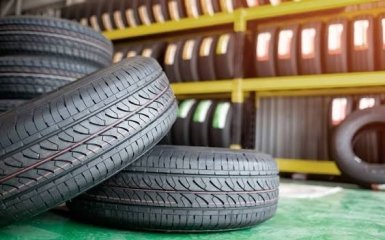
All-season tires have become a popular choice for drivers who drive mostly in the city, don't want to change their set twice a year, and live in a region with mild winters. But it's important to understand that all-season tires are a compromise between summer and winter performance, not a one-size-fits-all solution for every road.
Points of attention
- All-season tires are a compromise between summer and winter models, suitable for drivers who often drive in the city and in moderate winters.
- Before choosing tires, it is important to consider the type of car, the climatic conditions of the region, and your driving style.
- Load index, speed, 3PMSF marking and real-world operating conditions are key factors in choosing an all-season tire.
Quality all-season tires can perform well on wet pavement, in cool weather, and in light snow. However, on ice, in deep snow, or in prolonged severe frosts, a separate winter set is often a safer choice.
What are all-season tires and who are they suitable for?
All-season tires combine the features of summer and winter models. They have a rubber compound designed for a wider temperature range and a tread that is designed to shed water, work in the off-season, and partially handle snow.
This kit may be appropriate if you:
drive mainly in the city and on well-cleaned roads;
you live in a region with mild winters;
you rarely encounter ice, snowdrifts, and deep snow;
have a moderate driving style without sudden maneuvers;
want one set of tires for most of the year;
Regularly monitor the pressure, wear and condition of the tread.
If the car often drives on the highway in winter, in the mountains, on unpaved roads, or with a heavy load, it is worth seriously considering two separate sets: summer and winter.
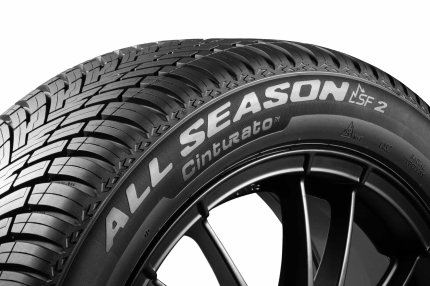
When all-season tires are a good choice, and when they aren't
All-season tires perform well in conditions where the weather changes frequently: cool in the morning, rainy during the day, and near-freezing temperatures in the evening. They are convenient for the off-season, when summer tires are already losing some of their effectiveness and winter tires may still be too soft.
When all-season tires may be suitable
Mild winter without stable severe frosts.
City roads are cleaned regularly.
Small and medium annual mileage.
A relaxed ride without a sporty style.
The car is used mainly for city trips and short highway routes.
When is it better to choose seasonal sets?
Frequent trips on snowy or icy roads.
Mountainous regions and complex terrain.
High speeds on the highway in winter.
Commercial use of cars with high mileage.
Heavy crossovers, minivans or fully loaded cars.
The main rule: tires must match not only the season, but also real driving conditions.

How we formed the TOP-5 all-season tires
This TOP all-season tire list is not an absolute ranking of “best to worst.” It is a selection of well-known models that are often considered for city, highway, and moderate winter use.
During the evaluation, you should pay attention to the following criteria:
wet grip;
resistance to aquaplaning;
presence of 3PMSF marking for winter conditions;
behavior on dry asphalt;
noise level and comfort;
availability of the required sizes;
manufacturer's reputation;
suitability for a specific type of car;
correspondence of load index and speed.
Before purchasing a specific model, always check the size and tolerances with the vehicle manual or the plate on the body.
TOP-5 all-season tires for the city and the highway
1. Michelin CrossClimate 2
The Michelin CrossClimate 2 is one of the most famous all-season models in the premium segment. It is often chosen by drivers who need confident behavior on dry and wet asphalt, as well as the ability to safely survive mild winter conditions.
Strengths:
balanced behavior in different weather conditions;
a good option for the city and the highway;
availability of winter markings on many sizes;
comfortable handling for everyday driving.
Possible limitations:
usually belongs to the more expensive segment;
does not replace specialized winter tires in difficult winter conditions;
for aggressive summer driving it may be inferior to good summer models.
Who it's for: car and crossover owners looking for a universal premium kit for temperate climates.
2. Goodyear Vector 4Seasons Gen-3
The Goodyear Vector 4Seasons Gen-3 is a popular all-season tire for drivers who drive a lot in the rain, off-season, and cool weather. The model is focused on a balance between wet asphalt, comfort, and winter suitability in moderate conditions.
Strengths:
good reputation among all-season models;
suitability for changeable weather;
wide selection of sizes;
balanced level of comfort.
Possible limitations:
efficiency depends on the specific size and vehicle;
on ice and dense snow, a winter tire would be more appropriate;
requires regular wear monitoring, like any all-season tire.
Who it's for: drivers who often drive on wet asphalt and want predictable behavior in the off-season.
3. Continental AllSeasonContact 2
The Continental AllSeasonContact 2 is a modern all-season model for passenger cars and crossovers. It is worth considering for those looking for a compromise between wet safety, fuel efficiency and cool-weather performance.
Strengths:
emphasis on balanced characteristics;
well suited for everyday urban use;
can be an interesting choice for modern cars with high comfort requirements;
available in many popular sizes.
Possible restrictions:
in harsh winters it is better to have specialized winter tires;
for high-speed summer driving, it will not always replace high-quality summer tires;
the price may be higher than the average segment.
Who it's for: drivers who want a modern all-purpose tire for the city, highway, and rainy climates.
4. Bridgestone Weather Control A005 Evo
The Bridgestone Weather Control A005 Evo is aimed at drivers who value confidence on wet roads, especially in regions where winters are often more rainy than snowy.
Strengths:
emphasis on behavior on wet asphalt;
suitable for city use and regular highway trips;
may be a good option for mild climates;
available in popular sizes for passenger cars.
Possible limitations:
in deep snow, options will be limited;
for harsh winters it is better to choose a full winter kit;
Comfort and noise depend on the specific car and road surface.
Who it's suitable for: drivers from regions where the main risks are rain, puddles, wet asphalt, and sudden temperature changes.
5. Hankook Kinergy 4S 2
The Hankook Kinergy 4S 2 is a strong representative of the mid-range price segment. This model is often seen as a practical option for daily use without going into the premium budget.
Strengths:
balanced price-performance ratio;
suitable for compact cars, sedans and some crossovers;
has a recognizable V-shaped tread pattern in many versions;
may be appropriate for city and moderate highway trips.
Possible restrictions:
premium models may have higher stability in difficult conditions;
you should not expect the same efficiency on ice and dry summer asphalt;
It is important to choose the right load index for a particular car.
Who it's for: drivers looking for quality all-season tires without an excessive budget, mainly for urban use.
How to read all-season tire labels
The marking helps you understand whether the tire is suitable for your car and operating conditions.
3PMSF
3PMSF is a symbol of a mountain with a snowflake. It means that the tire meets certain requirements for use in winter conditions. For all-season tires in winter, this is a more important marking than just the M+S inscription.
M+S
M+S stands for Mud and Snow. But this marking alone does not always guarantee full winter performance. If you plan to drive in the winter, it is better to choose all-season tires with 3PMSF.
Tire size
For example, in size 205/55 R16:
205 — tire width in millimeters;
55 — profile height as a percentage of width;
R - radial construction;
16 is the diameter of the disc in inches.
You should not change the size yourself without checking the car manufacturer's tolerances.
Load and speed index
The tire load index shows how much weight a tire can support at the correct pressure. The speed index indicates the permissible speed range. They should meet or exceed the vehicle manufacturer's recommendations.
Production date
There is a DOT code on the sidewall with the week and year of manufacture. Tires that are too old, even with low mileage, may lose some of their properties due to rubber aging. Before buying, it is worth checking the date, storage conditions, and condition of the sidewalls.
What to look for before buying
Before buying all-season tires, use a short checklist:
check the size with the car manufacturer's recommendations;
check the load and speed index;
check if there is a 3PMSF marking;
evaluate European labeling for wet grip, noise and energy efficiency;
consider the climate in your region;
think about how often you drive on the highway in the winter;
check the production date;
choose a model according to the type of car: compact, sedan, crossover, electric car;
do not mix different tire models on the same axle;
Install the kit at a reliable tire service.
Load index, wear resistance and noise levels are especially important for electric vehicles and heavy crossovers. Such vehicles can wear out tires faster due to their weight and high torque.

Typical errors during selection and operation
Even the best all-season tires will not perform properly if they are not properly selected or maintained.
Common mistakes:
buy tires only based on price, without taking into account driving conditions;
focus only on M+S without checking 3PMSF;
install two new tires instead of a full set of the same model;
ignore tire pressure;
drive on a worn tread;
use all-season tires in conditions where winter tires are required;
set the wrong size;
do not balance after installation;
Do not check the condition of the tires after hitting a pothole or curb.
It is especially dangerous to mistake all-season tires for “all-weather.” On ice, in slush, or during a sharp maneuver, the difference between a compromise tire and a specialized tire can be noticeable.
Care and safe operation of all-season tires
To ensure that all-season tires work stably, it is important to regularly monitor their condition.
Recommendations:
check tire pressure at least once a month and before long trips;
measure the pressure on cold tires;
monitor the evenness of wear;
rotate the wheels if permitted by the car manufacturer;
check balancing during vibrations;
inspect the sidewalls after heavy impacts;
do not overload the car;
Adapt your speed to the weather and road surface.
Tire pressure affects handling, fuel or energy consumption, wear and braking distance. The correct values should be taken from the car manual or a plate on the body, not from the tire sidewall: there is usually the maximum permissible value, not the recommended operating pressure.
Conclusion
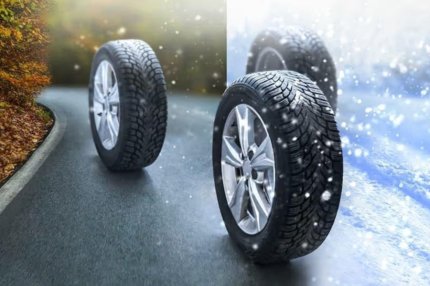
All-season tires can be a practical choice for drivers who drive mostly in the city, live in a region with mild winters, and want to avoid seasonal tire replacements. The best all-season tires aren't necessarily the most expensive models, but rather the ones that suit your vehicle, climate, driving style, and routes.
Michelin CrossClimate 2, Goodyear Vector 4Seasons Gen-3, Continental AllSeasonContact 2, Bridgestone Weather Control A005 Evo and Hankook Kinergy 4S 2 are strong options for different scenarios. But before buying, it is worth checking the size, indexes, 3PMSF marking, production date and real-world operating conditions.
If your area is prone to ice, deep snow, severe frosts, or difficult mountain roads, a separate winter kit would be a more prudent decision.
FAQ
Can I drive on all-season tires in winter?
Yes, under certain conditions. For winter, it is advisable to choose all-season tires with the 3PMSF marking. They can be suitable for mild winters, cleared roads and moderate driving. For ice, deep snow and severe frosts, it is better to consider winter tires.
Which is better: all-season or separate summer and winter tires?
Depends on climate and driving style. Two-season sets usually work better in extreme conditions: hot summers, harsh winters, icy conditions. All-season tires are suitable for moderate climates and urban use.
Is the M+S marking sufficient?
Not always. M+S indicates mud and snow, but is not as reliable a guide to winter conditions as 3PMSF. If you plan on driving in the winter, look for the mountain symbol with a snowflake.
How often should you check the pressure in all-season tires?
It is advisable to check your tire pressure at least once a month and before long trips. It is also worth checking your tire pressure after sudden changes in temperature, as it can change with the weather.
How long do all-season tires last?
The service life depends on mileage, driving style, car type, pressure, road quality, rotation, and storage conditions. You should focus not only on age, but also on residual tread depth, cracks, uneven wear, and the overall condition of the rubber.
Are all-season tires suitable for crossovers?
Yes, if the model is available in the right size and has the appropriate load index. For heavy crossovers, it is especially important not to underestimate the indices and choose tires designed for the weight of the vehicle.
Is it possible to install only two all-season tires?
It is best to install a complete set of identical tires. Different models or different levels of wear on the axles can impair stability, especially on wet roads, in snow, or during emergency maneuvers.
Is it worth buying all-season tires for mountainous regions?
For mountainous regions with frequent snow, ice and extreme weather conditions, it is better to consider separate winter tires. All-season tires may not be sufficient for these conditions, even if they have 3PMSF.
Disclaimer: The material is for informational purposes only. Before purchasing tires, check the size, load index, speed index, and recommended pressure with the car manufacturer's documentation. For difficult winter conditions or non-standard sizes, it is worth consulting with a tire service specialist.

