

The smell of wet socks, dampness or mustiness in the car most often appears after turning on the air conditioner or fan. The driver gets into the cabin, starts the air conditioning, and after a few seconds an unpleasant “wet” smell comes from the vents. In most cases, the problem is not related to perfume, dirty floor mats or the air outside, but to the ventilation and air conditioning system.
Points of attention
- Normally, you can see water under the car after the air conditioner has been running - this is normal condensation. However, if the moisture is poorly removed or the evaporator constantly remains damp, the smell will return.
- If the smell persists, even when the air conditioning is off, you should look for moisture in the floor mats, trunk, soundproofing, seats, or door cards.
- The climate filter cleans the air from dust and other pollutants that enter the cabin through the heating and air conditioning system.
The main suspects are the air conditioning evaporator, cabin filter, air intake and condensate drain. When the air conditioning is running, moisture forms on cold surfaces. If this is trapped together with dust, pollen, road grime, food odors, tobacco or animal hair, the system becomes a breeding ground for musty smells. DENSO explains that unpleasant smells in car air conditioning are usually related to moisture on the internal surfaces of the system, where bacteria and mold can grow; the company advises using the air conditioning regularly and turning off the A/C before the end of a trip, leaving the fan on to dry the system.
Sometimes you can remove the smell yourself: replace the cabin filter, clean the air intake, check the drainage, use a special cleaner for car air conditioners, and properly dry the system. But there are situations when it is better to stop the experiments: the smell of antifreeze, gasoline, burning, smoke, ozone, chemicals, or the rapid return of the stench after cleaning may indicate a technical malfunction.
Why does the car smell like wet socks?
This smell usually does not appear immediately after buying a car, but after a certain period of operation. It is especially common in the summer after active use of the air conditioner, in the fall during humid weather or after a long parking period.
When the air is cooled, the evaporator becomes cold. Moisture from the air condenses on its surface, after which it must drain through the drain pipe to the outside. Normally, you can see water under the car after the air conditioner has been running - this is normal condensation. However, if the moisture is poorly removed or the evaporator constantly remains damp, the smell returns.
The most common reasons:
dirty or wet cabin filter;
dust and organic particles on the evaporator;
clogged air conditioner drain;
leaves and debris in the air intake area;
constant driving in recirculation mode;
rare use of air conditioning in winter;
smoking in the cabin;
transportation of animals, food or wet items;
moisture under the rugs;
water leakage into the cabin.
The EPA emphasizes that the key to mold control is moisture control. Mold can grow on damp surfaces and cause allergic reactions, irritation, and asthma attacks in sensitive people. For cars, this means one simple thing: air freshener won't solve the problem if the source of the odor remains wet and dirty.
How to understand that the source of the smell is the air conditioner
First, you need to separate the smell of the air conditioner from other odors in the cabin. If the stench appears right after turning on the A/C or fan, and subsides after a few minutes, suspicion falls on the ventilation system. If the smell is constant, even when the air is turned off, you should look for moisture in the floor mats, trunk, soundproofing, seats, or door cards.
Signs of a problem with the air conditioner:
the smell appears immediately after the fan starts;
the smell is strongest from the central vents;
after a few minutes of movement, the smell weakens;
the glass often fogs up;
the air flow became weaker;
the cabin filter has not been changed for a long time;
there are no drops of water under the car after A/C operation;
the smell returns after rain or a damp night.
Signs of another problem:
a sweetish smell may indicate coolant;
the smell of fuel requires an urgent inspection of the fuel system;
a burning smell may be related to the wiring, brakes, clutch, or overheating;
the smell of exhaust in the cabin is dangerous and requires diagnosis;
The smell of rot can come from forgotten food, animals, or water under the siding.
If the smell is unusual, pungent, chemical, or accompanied by smoke, headaches, eye irritation, or malaise, it is best to air out the car and contact a service center.
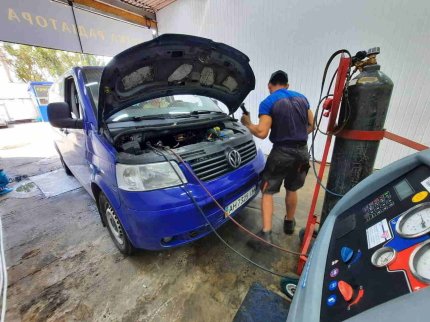
The first step is to check the cabin filter.
The cabin air filter is located in the air duct of the heating, ventilation and air conditioning system. It traps dust, pollen, soot, leaves, small particles and some odors if it has a carbon layer. When the filter is clogged or wet, air passes through more poorly, the fan works harder, and odors can accumulate in the system.
Hyundai explains that the climate filter cleans the air from dust and other pollutants that enter the cabin through the heating and air conditioning system; in severe conditions, such as on dusty or rough roads, it should be checked and replaced more often. If the air flow has suddenly decreased, the manufacturer advises to check the system.
The filter should be replaced if:
it has not been changed for over a year;
the car often drives in the city, dust, traffic jams or near construction sites;
a weak stream comes from the deflectors;
the glass does not fog up well;
there is a lot of dust in the cabin;
the filter is dark, damp, deformed or has an odor;
There is a musty smell after turning on the fan.
DENSO recommends changing the cabin air filter every 15,000–30,000 km or at least once a year, and more often in urban traffic, industrial areas, dusty conditions and regions with high pollen counts. Symptoms of a dirty filter include poor airflow from the air vents, an unpleasant smell, fogging of the windows and reduced cooling or heating efficiency.
How to properly replace the cabin filter
In many cars, the cabin filter is located behind the glove compartment, under the frill near the windshield, or at the bottom of the center console. It is best to check the exact location in the instructions for a specific model. Do not forcefully break the plastic latches: access may vary in different cars.
Procedure:
Stop the engine and turn off the ignition.
Locate the cabin filter housing.
Open the lid without excessive force.
Remember the direction of the air flow arrow.
Carefully pull out the old filter.
Remove leaves and dust from the housing.
Install the new filter in the correct direction.
Close the lid tightly.
Turn on the fan and check the flow.
A common mistake is to install the filter upside down or leave a gap. DENSO pays special attention to the direction of air flow, the cleanliness of the housing and the correct sealing after installation. If the filter is crooked, some of the air passes by it and dust settles on the evaporator more quickly.
If the smell remains after the filter
A new filter helps when the source of the odor is in the filter itself or in the trash near the case. If the odor is on the evaporator, in the drain, or in the air ducts, a deeper cleaning is needed.
Before using the cleaner, there are three more simple things you should do:
clean the air intake area under the windshield from leaves and dirt;
check if the mats and soundproofing are wet;
Make sure that the water drains under the car after the air conditioner is running.
A clogged drain is a common cause of the odor returning. Condensate should be drained outside. If the drain is clogged, moisture accumulates in the air conditioner housing, can get into the cabin and create a persistent musty odor.
How to clean your air conditioner with foam yourself
For self-cleaning, special car air conditioner cleaners are used. Usually, it is a foam or aerosol with a long tube. The agent is fed to the evaporator through the drain, through the cabin filter hole, or through the air ducts - depending on the car design and the instructions for the specific product.
Secure algorithm:
Read the instructions for the cleaner.
Check if the product is specifically designed for automotive air conditioning systems.
Remove or replace the cabin air filter if recommended by the product manufacturer.
Find the recommended foam delivery route.
Do not pour the product randomly into the deflectors.
Avoid getting liquid on electronics, displays, sensors, and control units.
Let the foam work for the time indicated on the can.
Ensure that the fluid drains through the drainage.
Ventilate the interior.
Dry the system with a fan.
The EPA warns that disinfectants and antimicrobials for heating, ventilation, and air conditioning systems should only be used when specifically directed on the label; using products in HVAC systems without such guidance may pose risks to people and may not be proven effective.
This is an important precaution for cars. Do not spray household chemicals, chlorine products, alcohol mixtures, perfumes, vinegar or aggressive solutions into the air ducts. They can damage plastic, metal, evaporator coating, seals, sensors or leave an even worse smell.

Can I use a disinfectant through the air intake?
Some car air conditioner products are applied through the outside air intake. This is usually done by turning the fan on at a certain speed, turning off the recirculation, opening the windows, and spraying the product into the area where the system draws in outside air. However, this method is not suitable for all products or for all cars.
The EPA advises that when using cleaning and disinfecting products, follow label instructions, use recommended personal protective equipment, do not mix products, and provide ventilation during and after cleaning.
In practice this means:
work outdoors or in a well-ventilated area;
do not sit in the cabin during active spraying, unless the instructions allow it;
use gloves and eye protection if indicated on the product;
do not mix different cleaners;
after the procedure, ventilate the salon;
Do not allow children and animals into the cabin until ventilation is complete.
If after treatment there is a strong chemical smell, watery eyes, or difficulty breathing, you should stop the procedure, ventilate the car, and no longer use this product without consulting a specialist.
Why you shouldn’t clean your system with bleach or “home remedies”
Home remedies like “pour bleach,” “spray vinegar,” “spray alcohol into the vents,” or “put air freshener in the air intake” can do more harm than good. A car’s air conditioning system has an evaporator, damper actuators, sensors, seals, plastic ducts, electronics, and drainage. It is not designed for accidental aggressive liquids.
DENSO specifically warns against using chemicals containing chloride or high pH to clean the evaporator, as they can damage the special coating and cause corrosion of the evaporator surface.
Home remedies also don’t address the root cause—moisture and dirt. The smell may temporarily disappear due to a strong scent or chemical effect, but return in a few days. Worse-case scenarios include a damaged evaporator, clogged drain, stains on the plastic, or respiratory irritation.
How to dry the air conditioner after cleaning
After any treatment, the system should be thoroughly dried. If moisture is left inside, the smell can return quickly. This is why prevention is as important as cleaning.
After cleaning, do the following:
Open the doors or windows.
Turn on the fan.
Turn off the A/C mode.
Install the outside air supply.
Direct the flow to different areas: face, legs, glass.
Let the system run for a few minutes.
Check if water is dripping into the interior.
Make sure the cleaner smell has dissipated.
DENSO recommends turning off the air conditioning before you end your journey, but leaving the fan running until the engine has stopped: this helps reduce condensation and prevents moisture from remaining on interior surfaces for long. This is a habit worth developing regularly, especially in summer and humid weather.
What to do if the smell returns
If the smell goes away for a week and then reappears, the cause may be deeper. The most likely options are a clogged drain, a heavily contaminated evaporator, water in the cabin, an old, poor-quality filter, constant recirculation, or an external source of odor that the system is drawing in.
Check:
is there water under the car after the air conditioner has been running;
Is the carpet dry under the rugs?
are there no leaves under the frill;
whether the cabin filter is installed correctly;
Is the filter housing dirty?
Does the trunk smell?
are there any leaks through the windshield, sunroof or door seals;
does the recirculation not work constantly?
Is there any smell of antifreeze or fuel?
If the odor is persistent and the evaporator is difficult to access, professional cleaning is required. DENSO notes that if there is a significant buildup of mold, technicians can clean the evaporator, including ultrasonic or ozone methods, but the problem must be prevented through proper system use and maintenance.
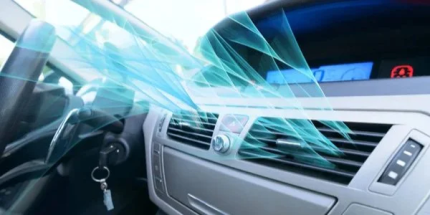
Ozonation of the cabin: when is it appropriate?
Ozonation is often offered as a quick way to remove odors. It can help with odors in the cabin, upholstery, ventilation ducts, and after smoking. However, ozonation is not a substitute for mechanical cleaning of dirt, filter replacement, and drainage checks. If a wet layer of dust remains on the evaporator, the odor may return.
Ozone is an active gas, so the procedure should be carried out carefully: without people and animals in the cabin, with subsequent ventilation, according to the equipment instructions. If there are children in the car, people with asthma, allergies or sensitivity to odors, it is better not to abuse such procedures and choose a service that explains the method, processing time and ventilation rules.
For a persistent odor, the optimal sequence is as follows: filter, air intake, drainage, evaporator, drying, and only then additional ozonation or other odor neutralization.
When the problem is not the smell, but the air conditioner malfunction
The smell may be accompanied by poor cooling. But charging refrigerant will not eliminate the smell of wet socks if the source is the evaporator or filter. Conversely, cleaning the evaporator will not restore cooling if the system has a leak, improper pressure, or a faulty compressor.
Hyundai warns that low refrigerant levels reduce air conditioner efficiency, but too much can also cause poor performance. The manufacturer emphasizes the importance of using the correct type and amount of refrigerant and compressor oil, and recommends having the system serviced by trained professionals.
The EPA explains that during a simple “top-up,” the technician cannot know exactly how much refrigerant is left in the system, so undercharging or overcharging is possible. Evacuation and refilling allows you to add the exact amount recommended by the manufacturer, and if there is a leak, repairs to leaking components provide a longer-lasting effect.
You need to go for service if:
the air conditioner blows warm;
the cold disappeared abruptly;
after refueling, the cold disappears quickly;
the compressor turns on and off frequently;
hear extraneous noises;
there are oily marks on the tubes or condenser;
the smell is similar to antifreeze, fuel or burnt wiring;
water is dripping into the cabin;
after cleaning, the smell returns in a few days.
How to prevent the smell from returning
Prevention is cheaper than repeated cleaning. It consists of a few habits that are easy to follow every day.
What helps:
3–5 minutes before the end of the trip, turn off the A/C and leave the fan on;
turn on the air conditioner regularly throughout the year;
do not keep recirculation on all the time;
change the cabin filter according to the regulations or more often in the dust;
remove leaves from under the windshield;
dry wet rugs;
do not leave wet clothes, towels, shoes, or food in the salon;
periodically ventilate the interior;
check drainage;
clean the system until a strong odor appears.
Toyota notes in the instructions for models with an air conditioning system that odors from inside and outside the car can accumulate in the air conditioning system and then exit through the vents; for access to fresh air, the manufacturer recommends using the outside air mode.
Constant recirculation is convenient in traffic jams, near trucks, or in dust, but for everyday use, it is better to alternate it with outside air supply. Otherwise, humidity, odors, and “heavy” air remain in the cabin longer.
Should I buy a carbon or antibacterial filter?
If the car is often driven in the city, in traffic jams, near industrial zones, or if there are children, animals, or people with allergies in the cabin, a quality filter can be noticeably more useful than the cheapest paper equivalent. The carbon layer helps with some of the gases and odors, and multi-layer filters can better retain dust and pollen.
DENSO describes several types of cabin filters: particle filters, activated carbon filters and multi-layer solutions with antibacterial or anti-allergenic properties; the company emphasizes that a quality filter affects both air cleanliness and the operation of the HVAC system.
But even an expensive filter won't help if it's installed incorrectly, the housing is dirty, the drain is clogged, and the evaporator is already covered with damp film. The filter is an important part of prevention, but it's not the only way to combat odor.
Self-cleaning or service station: how to decide
Self-cleaning is appropriate if the smell is weak or moderate, the air conditioner is cooling normally, there is no water in the cabin, the filter has not been changed for a long time, and the owner is willing to carefully follow the instructions for the product.
It is better to contact a service station if:
the smell is very strong;
the smell returns after several cleanings;
the air conditioner does not cool well;
there is water under the rug;
the drainage is clogged;
you need to get directly to the evaporator;
there is a suspicion of a refrigerant leak;
the car is new and under warranty;
the system has a complex multi-zone climate;
it is an electric car or a hybrid with a heat pump.
Nissan warns in manuals for modern models that the air conditioning system must use a specific refrigerant and oil; using other substances can cause serious damage to the system and require replacement of its components. This is especially important for hybrid and electric vehicles, where the compressor and oil may have separate requirements.
Typical driver mistakes
The first mistake is to fight the smell with air freshener. It masks the problem, but it doesn't remove moisture, dirt, mold, or a clogged filter.
The second mistake is to just change the filter and wait for a miracle. If the smell is already on the evaporator, the source of the smell needs to be cleaned.
The third mistake is pouring the product into the deflectors without instructions. This can cause damage to the electronics, display, climate control unit, or sensors.
The fourth mistake is using household chemicals. Aggressive products can damage the evaporator and create harmful fumes.
The fifth mistake is not drying the system after the trip. Moisture remains on cold surfaces and creates conditions for the smell to return.
The sixth mistake is to drive with constant recirculation. The interior is less ventilated, and odors accumulate faster.
The seventh mistake is to ignore drainage. If the condensate does not go outside, the smell will return even after treatment.
The eighth mistake is to refill the air conditioner instead of cleaning it. Refilling is necessary if there are problems with the refrigerant, but it does not clean the evaporator and filter.
Short checklist: how to remove the smell of wet socks in the car
Check exactly when the smell appears.
Inspect the interior mats and floor.
Remove leaves and debris from around the air intake.
Replace the cabin filter.
Check the flow strength from the deflectors.
Turn on the air conditioner and see if water is draining from under the car.
If the smell remains, use a special car air conditioner cleaner.
Follow the instructions for the product.
Do not use bleach, vinegar, household sprays, or harsh chemicals.
After cleaning, dry the system thoroughly with a fan.
In the future, turn off the A/C a few minutes before the finish line.
If the smell returns quickly, check the evaporator, drainage, and interior tightness at a service station.
Conclusion
The smell of wet socks in a car most often occurs due to moisture, dust and microorganisms in the ventilation and air conditioning system. You need to start with something simple: a cabin filter, air intake, condensate drainage, dry floor mats and proper use of the air conditioner. Often, replacing the filter and drying the system noticeably reduces the smell.
If the smell remains, you can use a special cleaner for car air conditioners, but only according to the instructions and without aggressive household chemicals. It is important to treat the source of the smell, and not just mask it with a fragrance.
When the smell returns quickly, the air conditioner does not cool well, there is water in the cabin, or there is a smell of antifreeze, fuel, or burning, diagnostics are required. In such cases, the problem may not be in a dirty filter, but in the drainage, evaporator, refrigerant leak, cooling system, electrical system, or body tightness.
FAQ
Why does the air conditioner in the car smell like wet socks?
Most often due to moisture on the evaporator, a dirty cabin filter, dust, organic particles and microorganisms in the ventilation system. DENSO explains that odors usually originate on moist internal surfaces of the air conditioner, where bacteria and mold can grow.
Can the smell go away after replacing the cabin filter?
Yes, if the source of the odor was an old, wet, or clogged filter. If the odor persists, the evaporator, drain, or air ducts are likely dirty. DENSO lists unpleasant odors, poor airflow, and fogging of the windows as symptoms of a dirty filter.
How often should you change the cabin filter?
The guideline is according to the manufacturer's regulations. DENSO recommends changing the cabin filter every 15,000–30,000 km or at least once a year, and more often in urban traffic, dusty conditions, industrial areas and during high pollen levels.
Can I clean the air conditioner in my car myself?
Yes, as long as the problem is not related to a leak, a faulty compressor, a smell of fuel, antifreeze, or burning. If you are cleaning your air conditioner yourself, use only a product designed for automotive air conditioners and follow the instructions. The EPA warns that antimicrobial products for HVAC systems should only be used when specifically directed to do so on the label.
Can I pour bleach or vinegar into air ducts?
Don't. Household chemicals can damage the evaporator, plastic, seals and electronics, and create irritating fumes. DENSO warns against using chemicals with chloride or high pH on the evaporator, as they can damage the coating and cause corrosion.
Why does the smell return after cleaning?
The cause may be a clogged drain, a heavily soiled evaporator, wet floor mats, an incorrect filter, constant recirculation or water leaking into the cabin. If the condensation is not drained, moisture accumulates again and the smell quickly returns.
What should I do to prevent the smell from reappearing?
A few minutes before the end of the trip, turn off the A/C and leave the fan on to dry the evaporator. Change the cabin filter regularly, remove leaves from the air intake, do not keep the recirculation on all the time, and use the air conditioner periodically throughout the year.
Will ozonization help with the smell of air conditioner?
Ozonation can reduce cabin and ventilation odors, but it is not a substitute for replacing the filter, cleaning the evaporator, and checking the drain. If the source of the odor remains wet and dirty, the stench may return.
Why does the air conditioner smell and cool poorly?
There could be two different problems at once: the odor is due to the evaporator or filter, and the poor cooling is due to a lack of refrigerant, a leak, incorrect pressure, a clogged condenser, or a faulty compressor. Hyundai notes that both low and excessive refrigerant levels impair air conditioner performance.
When do you need to go to a service station?
You should contact a service center if the smell returns quickly, there is water in the cabin, the air conditioner blows warm, there is an extraneous noise, there is a smell of antifreeze, gasoline or burning, and if intervention in the refrigeration circuit is required. The EPA explains that repairing leaks and properly refilling the system have a longer effect than simply adding refrigerant.

