
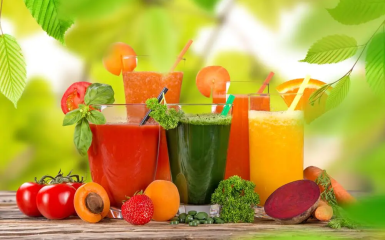
After 50, your diet really needs more attention. Your body may need fewer calories, but your need for protein, fiber, vitamins, and minerals doesn't go away. For women after 50, for example, the recommended amount of calcium increases to 1,200 mg per day, and problems with vitamin B12 absorption also become more common with age.
Points of attention
- After age 50, it's important to pay attention to your diet, including your juice choices. A balanced diet with whole fruits and vegetables remains the best option.
- Juices that can be useful after 50 years of age: beetroot for blood pressure control, tomato as a vegetable drink, pomegranate as a source of polyphenols, plum to improve bowel function, cranberry for recurrent urinary tract infections.
- Juices should be limited, even without added sugar, due to the high content of free sugars. The recommended amount of fruit and vegetable juices per day is up to 150 ml.
Juice can be a way to add variety to your diet, but it shouldn't be your daily "health elixir." Whole fruits and vegetables generally have the advantage of being higher in fiber, more filling, and less likely to be consumed in excess. The National Institute on Aging also recommends that older adults get a significant portion of their fruit intake from whole fruits.
Therefore, it is better to formulate the question this way: not “what juice should you drink every day after 50,” but what juice can be a useful addition to the diet in a specific situation .
How much juice can you drink per day?
Even 100% fruit juice with no added sugar contains natural sugars in a form that is easily absorbed. The World Health Organization classifies fruit juice sugars as free sugars and recommends limiting their total intake.
The UK NHS uses a simple practical guideline: up to 150ml of fruit, vegetable juice and smoothies combined per day . Even larger amounts of juice do not count as multiple full portions of fruit and vegetables.
The American Heart Association also points out that juice is less filling and contains less fiber than whole fruits and vegetables.
This is especially important after age 50, when the challenges of controlling body weight, glucose levels, blood pressure, and cholesterol may arise simultaneously.
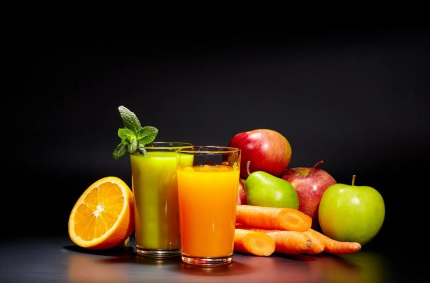
1. Beetroot juice — for blood vessels and blood pressure control
Beetroot juice has one of the best evidence bases among vegetable juices. Its main feature is its high content of natural inorganic nitrates.
In the body, nitrates are converted into compounds that form nitric oxide, which is involved in vasodilation and blood flow regulation.
A 2024 meta-analysis of 11 randomized trials involving 349 people with hypertension found a reduction in office systolic blood pressure of approximately 5.3 mmHg after consuming nitrate-rich beetroot juice. However, the effects on diastolic and daytime blood pressure were inconclusive, and the authors rated the overall quality of evidence as low.
Therefore, beetroot juice can be considered as part of a diet beneficial to the cardiovascular system, but not as a replacement for hypertension medications.
People who are prone to low blood pressure or are already taking antihypertensive medications should be especially careful with concentrated portions.
2. Unsalted tomato juice — when you want a vegetable option
Tomato juice has a significant advantage over many fruit juices: it usually contains less natural sugar. Tomatoes are also a source of lycopene, a carotenoid pigment that is being actively studied in the context of cardiovascular health.
In one large Japanese study, 481 adults were given unsalted tomato juice for a year. In subgroups of participants with untreated high blood pressure or lipid abnormalities, blood pressure and LDL cholesterol were reduced at the end of the study. However, the study did not have a classic placebo-controlled design, so the causal effect of the juice itself should be assessed with caution.
For the daily diet, the most important word here is unsalted .
Commercially produced tomato juices can contain significant amounts of sodium. If you have hypertension, heart failure, or need to limit salt, it is worth checking the label and choosing a product with no added salt or minimal salt content.
3. Pomegranate juice is a source of polyphenols
Pomegranate is rich in polyphenolic compounds, so its juice has long been studied in the context of vascular health.
A 2023 meta-analysis of 14 clinical trials with 573 participants found modest reductions in blood pressure with pomegranate juice consumption. The most significant effects were seen in shorter studies and at doses up to 300 ml per day.
A more recent meta-analysis from 2024 also found reductions in systolic and diastolic blood pressure, but there was high heterogeneity between studies, so the authors called for higher-quality clinical trials.
For everyday consumption, there is no need to drink 300 ml every day. A small portion of 100% pomegranate juice without added sugar can be part of the diet, and on other days it is better to choose pomegranates themselves - the seeds also provide fiber.
4. Tart cherry juice is an interesting option, but not a "memory aid"
Sour, or tart, Montmorency cherries contain anthocyanins and other polyphenols.
A small randomized trial of 37 people aged 65–80 showed improvements in some cognitive tests after 12 weeks of tart cherry juice consumption. However, the small number of participants means that the results cannot be automatically interpreted as evidence of dementia prevention.
That is, tart cherry juice may be an interesting source of polyphenols, but the claim that it "restores memory" or protects against Alzheimer's disease would be an exaggeration.
It’s also worth reading the ingredients carefully. Cherry nectars and drinks often contain added sugar, while studies are usually conducted with standardized products.
5. Plum juice - especially for those prone to constipation
After age 50, problems with bowel regularity become more common for some people due to less physical activity, insufficient fluid and fiber intake, changes in diet, or the use of certain medications.
Plum juice has practical applications in this particular situation.
In a randomized, placebo-controlled trial in people with chronic constipation, prune juice reduced the frequency of hard, lumpy stools and improved subjective symptoms of constipation. Researchers attribute the effect to sorbitol, pectin, and prune polyphenols.
However, for overall gut health, eating prunes themselves is even more beneficial. It preserves dietary fiber, which is largely lost during the production of clear juice.
This has another interesting benefit for older adults. In a 12-month randomized trial in postmenopausal women, 50 grams of prunes per day helped preserve bone mineral density in the hip compared to a control group. This was for whole prunes, not juice.
6. Cranberry juice — potentially helpful for recurrent urinary tract infections
Cranberries have one specific property for which there is a fairly large evidence base.
Its proanthocyanidins may prevent certain bacteria, particularly Escherichia coli, from attaching to the lining of the urinary tract.
An updated Cochrane systematic review included dozens of studies and over 6,000 participants. Cranberry products reduced the risk of symptomatic confirmed urinary tract infections in some groups, including women with recurrent UTIs.
A 2024 meta-analysis of cranberry juice alone also found a reduction in UTI rates compared to no treatment.
But there are two important details.
First, cranberry juice is used for prevention , not as a substitute for treatment of an existing bacterial infection.
Second, ready-made cranberry juices can be very high in added sugar. It's worth looking for 100% juice or a sugar-free option and controlling your portion size.
7. Fortified orange juice — if you need calcium and vitamin D
Regular orange juice is a source of vitamin C and folate. But after age 50, fortified juices, to which the manufacturer has added calcium and vitamin D, may be of greater interest.
This is due to changing nutrient needs. For women aged 51–70, the recommended calcium intake is 1,200 mg per day, for men of this age it is 1,000 mg, and after 70 years it is 1,200 mg regardless of gender.
The recommended amount of vitamin D for adults aged 19–70 is 600 IU per day, and after 71 years of age, it is 800 IU.
The NIH confirms that some fruit juices are specifically fortified with calcium, but you should check the label for the actual amount.
Fortified juice can be a source of these nutrients, especially if a person does not consume dairy products. However, it is not automatically superior to fortified plant-based drinks, yogurt, cheese, fish, and other sources.
What about carrot, apple, and pineapple juice?
These juices are not harmful in themselves, but their benefits are often exaggerated.
Carrot juice is rich in beta-carotene, from which the body can synthesize vitamin A. This is an important nutrient for normal vision, but the juice does not cure age-related eye diseases.
Pineapple juice contains vitamin C and plant compounds, but the claim that a glass of juice provides clinically significant anti-inflammatory effects in joints through bromelain is much weaker than popular publications often suggest.
Apple juice has even fewer benefits than a whole apple. It is low in fiber, goes down quickly, and is less filling. Unless you have trouble chewing or digesting a whole fruit, an apple is usually a better choice.
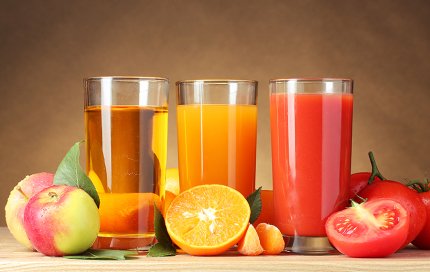
Why whole fruit is often healthier than juice
Let's imagine two options.
In the first, a person eats an orange. The fruit must be peeled, divided into segments, and chewed. Along with the juice, the person receives pulp and fiber.
In the second, he drinks a glass of juice made from several oranges. It takes less than a minute and leaves him with almost no feeling of satiety.
That is why the WHO advises limiting fruit juices, even if they do not have added sugar. According to the international classification, sugars in juices are classified as free.
The American Diabetes Association also points out that servings of 100% juice should be significantly smaller than servings of whole fruit, and advises that whole fruit be preferred more often due to its fiber content.
Can I drink juice with diabetes after 50 years?
Diabetes doesn't mean an automatic ban on all fruit juices, but portion control becomes especially important.
A 2025 meta-analysis of prospective studies found no significant increase in the risk of type 2 diabetes with 100% fruit juice consumption. However, juice drinks that were not 100% juice were associated with a higher risk. These results do not mean that juice improves diabetes prevention: a positive protective effect was also not found.
For someone with pre-existing diabetes, you need to consider the carbohydrates in a specific serving. The ADA notes that just about 3–4 ounces of fruit juice can contain about 15 grams of carbohydrates, depending on the type.
Therefore, a half-liter bottle of "healthy natural juice" is not at all the same as a small glass during a meal.
Which juices are better not to make a daily habit?
The least successful option is drinks labeled "nectar," "juice drink," "fruit drink," or "fruit drink" if they have a lot of added sugar.
When choosing a product, you should check:
whether it says “100% juice”;
is there added sugar or syrup;
how many carbohydrates and sugars does 100 ml contain;
how much sodium is in vegetable juice;
what is the actual serving size.
A separate category is homemade “detox juices,” which use several fruits, honey, and syrup per glass. The name “detox” does not change their nutritional value.
Grapefruit juice after 50: an important warning
Grapefruit is a nutritious citrus fruit, but its juice is one of the most important examples of food-drug interactions.
The FDA warns that grapefruit can change the blood levels of some medications. For some medications, it blocks the intestinal enzyme CYP3A4, which can cause more of the active ingredient to enter the body than expected. For other medications, other mechanisms of interaction are possible.
Some potentially sensitive drugs include:
to lower cholesterol;
from high blood pressure;
for the treatment of heart rhythm disorders;
after organ transplantation;
certain corticosteroids;
some antihistamines.
Not all drugs in these groups interact with grapefruit. The specific active ingredient is important, so you should check the information in the instructions for the drug.
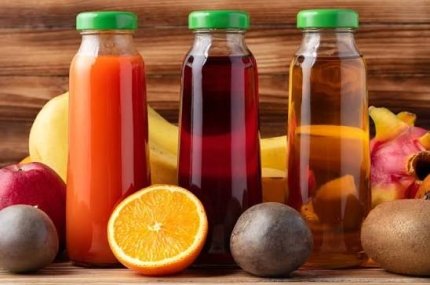
Is it necessary to drink several different juices every day after 50 years of age?
No.
A healthy diet after age 50 doesn't require a separate set of juices for every day of the week. Moreover, regularly drinking several glasses of fruit juice can unknowingly add a significant amount of sugar and calories.
The NIDDK emphasizes that as people age, they often need less energy but about the same amount of nutrients, so the nutrient density of food becomes especially important. The foundation should remain vegetables, whole fruits, legumes, whole grains, protein sources, nuts, seeds, and foods with calcium and vitamin D.
It is better to use juice sparingly: unsalted tomato juice as a vegetable drink, beet juice if it fits well into the diet, plum juice if you are prone to constipation, cranberry juice in certain situations to prevent recurrent UTIs.
Conclusion
After age 50, there is no need to drink a special set of “rejuvenating” juices every day. The benefits depend on the specific product, the quantity, and the person’s needs.
The most interesting data exists for beetroot juice in the context of blood pressure, cranberries for the prevention of recurrent urinary tract infections, plum juice for constipation, and pomegranate and tomato juices in the context of certain cardiovascular indicators.
However, a whole fruit or vegetable is still the best daily staple in most cases due to its fiber and higher satiety. If you choose juice, the best option is a 100% product with no added sugar, in a small portion, and taking into account medications and health conditions.
FAQ
Which juice is the most useful after 50 years?
There is no universally “healthiest” juice. Beetroot juice has interesting data on systolic blood pressure, plum juice on constipation, cranberry juice on preventing recurrent UTIs, and tomato juice provides lycopene and is relatively low in sugar.
How much juice can you drink after 50?
As a general household guideline, the NHS recommends limiting the total amount of fruit and vegetable juices and smoothies to around 150ml per day.
Can you drink freshly squeezed juice every day?
It is okay in small amounts, unless there are medical restrictions. But freshly squeezed juice is not automatically superior to whole fruit, and its natural sugars are still considered free sugars.
Which juice is best for the heart?
Beetroot, pomegranate, and unsalted tomato juices have been studied the most in the context of cardiovascular outcomes. This does not mean that they can treat heart disease or replace medications.
Which juice is better for high blood pressure?
The strongest evidence among juices is for nitrate-rich beetroot juice. A meta-analysis showed a modest reduction in systolic blood pressure in people with hypertension, but the quality of the evidence was low.
Can I drink juices if I have diabetes?
100% juice can be included in small amounts in the diet, while keeping a close eye on carbohydrates. Whole fruit is usually preferable due to its fiber and greater satiety.
What juice helps with constipation?
Prune juice has clinical evidence to reduce hard stools and symptoms of chronic constipation, while whole prunes provide more fiber.
Is cranberry juice good for people over 50?
For people with recurrent urinary tract infections, cranberry products may reduce the risk of repeat episodes. They do not treat an existing bacterial infection.
Why is a lot of fruit juice not recommended?
Juices are low in fiber, less filling, and the WHO classifies their sugars as free. Therefore, large portions can significantly increase your sugar and calorie intake.
What juice should not be combined with medication?
The most famous example is grapefruit. It can interact with a number of drugs and change their concentration in the blood. The specific interaction depends on the active ingredient.
undefined

