
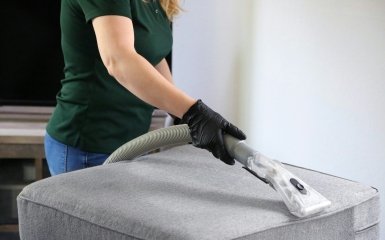
A vacuum cleaner is great for dust, crumbs, hair, dry household debris, and regular floor cleaning. But it's not a one-size-fits-all tool for every mess. Sucking in water, hot ash, broken glass, construction dust, mercury, or chemicals can damage the motor, clog filters, tear the hose, create a fire hazard, or spread hazardous particles around the room.
Most instructions for household vacuum cleaners have similar warnings. Dyson warns that a regular vacuum cleaner should not be used on wet surfaces, to pick up water or other liquids, as there is a risk of electric shock; the manufacturer also advises against cleaning hard, sharp objects, pins, paper clips and similar debris. Shark, in its own instructions, specifically prohibits vacuuming glass, nails, coins, construction dust, fireplace ash, smoldering objects, flammable materials and toxic solutions.
The main rule is simple: before turning on the vacuum cleaner, assess the type of debris. Dry dust and crumbs are a yes. Moisture, heat, chemicals, sharp debris, ultrafine powder, or hazardous substances are a no. Other cleaning methods are required for these situations.
Why a vacuum cleaner can break down from “ordinary” debris
A household vacuum cleaner is designed for dry, light debris. Inside, there is a motor, impeller, hose, container or bag, filters, brushes, and electronics. If something gets into the system that it is not designed for, problems quickly arise.
Liquid can reach electrical components. Glass and metal can cut the hose or damage the container. Construction dust passes through a weak filter and is returned to the air. Ash clogs the pores of the filter and can contain embers. Sticky foods settle in the tube, start to smell and create conditions for mold.
Therefore, the question of “what not to vacuum” is not only about the durability of the equipment. It is also about fire safety, air quality, hygiene, and floor protection.
Water, milk and other liquids
A conventional dry vacuum cleaner cannot pick up water, tea, milk, juice, soup, pet urine, wet dirt or moisture from mopping the floor. Even a small amount of liquid can wet the filter, get into the motor, cause odor, corrosion, short circuit or bacteria growth inside the container.
Dyson explicitly warns against using the vacuum cleaner on wet surfaces or picking up water or other liquids due to the risk of electric shock. Shark also states that the vacuum cleaner should not be immersed in water or other liquids.
How to act correctly:
Blot the liquid with paper towels, a rag, or napkins.
If it is a sticky drink or milk, rinse the area with clean water.
Wipe the surface dry.
Allow the floor or carpet to dry.
Vacuum only after complete drying, if necessary.
The exception is a wet/dry vacuum cleaner, which is specifically designed for wet cleaning. But even that one must have the correct filters and liquid mode installed.
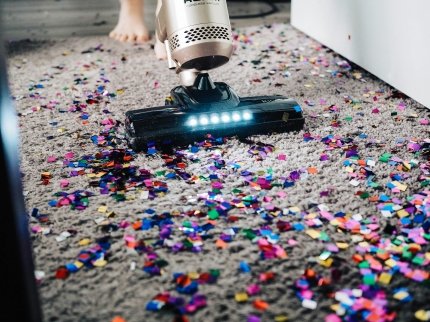
Hot ashes, coals, cigarette butts and matches
Ash from a fireplace, stove, barbecue, or candle may seem safe if it looks gray and cold. But there may be embers inside. If they get into a bag, container, or filter, they can smolder or ignite.
RIDGID warns in the instructions for its wet/dry vacuum not to pick up anything that is burning or smoking, including cigarettes, matches, and hot ashes. The manufacturer also explains that cold fireplace ashes and construction dust cannot be picked up with a standard filter because small particles can pass through the filter and return to the air.
The U.S. Fire Protection Service advises letting the ashes cool, placing them in a metal container with a tight-fitting lid, keeping the container at least 10 feet away from the house and other structures, and wetting the ashes with water.
For fireplaces, stoves, and barbecues, it is best to use a metal scoop, a bucket with a lid, and a special ash vacuum cleaner if you need to clean up the ash. A regular household vacuum cleaner is not suitable for this.
Broken glass, nails, screws and coins
Sharp and hard objects are mechanically dangerous to the vacuum cleaner. Glass can cut the hose, damage the bag, scratch the container, get stuck in the brush or injure a person while cleaning the dust container. Nails, screws, pins, needles, paper clips and coins can hit the impeller, block the brush or puncture internal components.
Shark specifically prohibits vacuuming hard and sharp objects, including glass, nails, screws, and coins, as they can damage the device. Bissell also advises against vacuuming glass, nails, screws, coins, and other hard, sharp objects in its safety guidelines.
How to remove glass safely:
wear thick gloves;
collect large fragments with your hands or cardboard;
pick up small particles with a damp cloth, adhesive tape or a piece of soft bread;
wrap the debris in thick paper before throwing it away;
After that, check the floor with a flashlight.
Vacuuming should only be considered for the smallest dry residue at a safe distance from larger debris and only if your model's instructions do not prohibit such cleaning. For most household models, this is a risky option.
Construction dust, gypsum, cement and plaster
After renovations, you want to quickly vacuum the entire apartment. But a regular household vacuum cleaner does not tolerate gypsum, cement, concrete, plaster and tile dust well. The particles are very small, easily clog the filter, pass through weak filtration and can return to the room through the exhaust.
RIDGID warns that drywall dust, cold fireplace ash, and other fine dust cannot be removed with a standard filter because they can pass through it and be re-circulated into the air; a fine dust filter is required for this. Shark also prohibits the collection of drywall dust and does not allow the vacuum cleaner to be used as an attachment for power tools to collect dust.
A separate hazard is dust from materials containing crystalline silica. OSHA requires construction workers to use methods that reduce exposure to respirable crystalline silica, and housekeeping regulations prohibit dry sweeping where it may increase exposure, where wet mopping, HEPA vacuuming, or other dust reduction methods are available.
For repairs, you need a construction vacuum cleaner with appropriate filtration, a fine dust bag or a HEPA filter if you are dealing with dangerous fine particles. It is better to leave a household vacuum cleaner for the final cleaning after the main construction dust has been safely removed.
Flour, soda, cocoa, baking powder and other fine powders
Fine kitchen powders seem innocent, but in large quantities they act like construction dust: they clog the filter, settle in the hose, get into cracks and reduce suction power. Flour, starch, baking soda, powdered sugar, cocoa, dry spices and baby powder can form a dense coating inside the vacuum cleaner.
Dyson notes that fine dust like plaster dust or flour can only be picked up in very small quantities. This is an important clarification: a teaspoon of flour on the floor is not a disaster, but a spilled bag is better cleaned up differently.
Correct order:
Carefully scoop up the bulk with a scoop.
Do not spread the powder around the room with a dry brush.
Wipe the surface with a damp cloth.
Let the floor dry.
Vacuum up any residue if necessary.
Be especially careful with powders near baseboards, cracks, kitchen appliances, and carpets. If the powder gets deep into the material, it will be harder to remove completely.

Mercury from a thermometer or other objects
Mercury should never be vacuumed. This is not a matter of safety, but of health. Vacuuming heats and breaks mercury into smaller particles, carries it through the air, and increases the exposure of people in the room.
The EPA warns explicitly: never use a vacuum cleaner to clean up mercury, as it will throw mercury into the air and increase exposure; nor should you use a broom, as it will break the mercury into smaller droplets and spread it around.
If a mercury thermometer breaks:
remove people and animals from the room;
open the windows to the outside;
close the doors to other rooms;
do not let children clean;
do not walk around the spill area;
do not use a vacuum cleaner or broom;
Follow official instructions for small mercury spills.
If the amount of mercury is greater than in the thermometer, or it has gotten on the carpet, upholstered furniture, or other absorbent surface, separate consultation with specialized services is required.
Flammable liquids, solvents and chemicals
Gasoline, kerosene, thinner, acetone, solvent-based paints, nail polish removers, harsh household chemicals, chlorine bleach, ammonia, and drain cleaners should not be vacuumed. The fumes from these substances can be toxic, explosive, or flammable. The vacuum cleaner has a motor, heating, electrical contacts, and airflow inside, which increases the risk.
Bissell's safety guidelines prohibit vacuuming flammable materials, working in the presence of explosive liquids or vapors, and picking up toxic substances like chlorine bleach, ammonia, or drain cleaner. Shark also prohibits vacuuming flammable materials, toxic solutions, and working in a confined space where there are paint fumes, solvent fumes, flammable dust, or toxic materials.
Such spills should be cleaned up according to the instructions for the specific substance: ventilate, remove sources of ignition, use absorbent material, gloves, a disposal bag, and do not mix chemicals with each other.
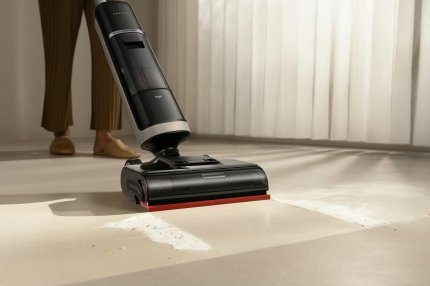
Sticky foods, jelly, jam, porridge and wet food
The vacuum cleaner is not designed for sticky debris. Jam, honey, syrup, yogurt, milk porridge, sauces, eggs, jelly, wet pet food and soggy food will settle on the walls of the hose, in the brush, container and filter. This can cause the vacuum cleaner to smell, lose power and become a source of bacteria or mold.
The worst combination is sticky plus small. For example, spilled milk with crumbs, porridge with sugar, wet food with granules or jam on the carpet. If this is sucked in, the contamination will be smeared inside the system.
A safer option:
Remove the thick mass with a spoon, spatula, or paper towel.
Soak the remains.
Treat the stain with a product for the appropriate surface.
Let the area dry.
After complete drying, remove any dry residue.
For carpet, it is best not to rub the stain deep into the pile. It should be blotted from the edges to the center.
Moist soil, potting soil, and wet sand
Small amounts of dry soil can be vacuumed up after it has completely dried out. However, wet potting soil, wet sand, clay, or soil from watering are not good choices for a vacuum cleaner.
The wet mass sticks to the brush, clogs the tube, passes into the filter and creates a heavy dirty residue. In canister vacuum cleaners, this mixture quickly sticks to the walls, and in bagged models it can create lumps, odors and mold.
How to better remove the soil:
collect large pieces with gloved hands or a scoop;
wet soil and let it dry;
brush away dry residue;
vacuum up fine dry dust at the end, if the model allows it.
If the flowerpot is broken, first remove the fragments of the pot, then the soil, and only then the remaining dust.
Wires, charging cables, laces and long threads
Cords, charging cables, headphones, threads, ribbons, ropes, laces, fishing line and packing tape can get caught on the brush, roller or turbo brush. At best, the vacuum cleaner will simply stop. At worst, the brush motor will overheat, the belt will break or the rotation mechanism will be damaged.
This is one of the most common problems for robot vacuums. They can pull on the charging cable, pull a lamp, knock over a pet's bowl, or get stuck on an extension cord.
Before cleaning:
lift the charging cables;
put away small toys;
hide laces and threads;
check the space under the table;
secure the wires near the computer;
Do not start the robot vacuum cleaner in a room with scattered cables.
Shark's safety guidelines state that openings must be clear of obstructions and that the filter and dust container must be installed before starting the unit. A blocked brush or hose places excessive strain on the unit.
Very small toys, construction set parts and decorations
A vacuum cleaner can easily suck in things that you'd hate to lose: an earring, a ring, a button, a bead, a LEGO part, a memory card, a SIM card, a screw from glasses, a keyboard button, or a small battery. Some of these items can damage the equipment, while others can simply get lost in a bag or container.
Before cleaning a child's room, a desk, or the area near the sofa, it's best to quickly scan the floor. If you suspect that a small object has already gotten into the vacuum cleaner, turn it off, unplug it, and only then check the container, bag, or brush.
For small valuable items, you can use a life hack: pull a thin cloth or nylon sock over the end of the pipe and secure it with a rubber band. But you need to do this very carefully, at low power, and so that the cloth doesn't get pulled in.

Animal hair, fur and stuffing
Hair and fur can be vacuumed if the model is suitable for this. The problem arises when there is too much of it or it is long. The hair winds up on the roller, blocking the turbo brush and reducing the suction power. The brush should be cleaned regularly after cleaning carpets, animal beds and the bathroom.
Cat litter varies by type. Small amounts of dry pellets are usually not a problem for a powerful vacuum cleaner, but wet, lumpy, or clay litter should not be vacuumed. It can clump, clog the hose, and leave an odor.
It is better to first collect large granules with a scoop, and then use a vacuum cleaner to remove only the dry residual dust. If the filler is regularly scattered near the tray, it is worth placing a trap mat and sweeping the area by hand more often.
When can you use a wet/dry vacuum cleaner?
A construction or household wet/dry vacuum cleaner is designed for more complex tasks, but this does not mean that it can collect everything. For liquids, you need a wet cleaning mode and filter. For fine dust, a filter of the appropriate class. For ash, an ash filter or a special ash vacuum cleaner. For hazardous particles, a HEPA or professional system, if the situation requires it.
RIDGID warns that dry debris should not be picked up without a filter, except when wet cleaning as directed; dry debris that gets caught in the impeller can damage the motor or be returned to the air.
Before working with the wet/dry vacuum cleaner, check:
whether the model is intended for liquid;
what filter is installed;
do you need a bag?
can fine dust be collected;
are there any flammable or toxic substances;
Is it necessary to rinse and dry the container after work?
Even a professional vacuum cleaner should not replace common sense. If the substance is toxic, explosive, hot or unknown, safe cleaning instructions are required first.
What to do if you accidentally vacuumed something forbidden
If the vacuum cleaner has sucked in water, glass, ash, fine powder or chemicals, do not continue cleaning. The longer it runs, the more dirt passes through the system.
Algorithm:
Turn off the vacuum cleaner.
Unplug it from the wall outlet or charging base.
Do not touch sharp fragments with bare hands.
Check the brush, hose, container or bag.
Remove and inspect the filter.
If there was liquid inside, do not turn on the device until it is completely dry and checked.
If you have inhaled chemicals, mercury, or hot ash, do not disassemble the equipment in a safe area at home, contact the appropriate services or service.
If the vacuum cleaner smells of burning, sparks, overheats, or loses power, stop using it.
Do not wash the electrical unit with water. Only wash those parts for which this is permitted by the instructions.
Common mistakes when vacuuming
The first mistake is to vacuum everything at once without reading the instructions. Different models have different limitations, especially robot vacuums, cordless models, scrubber dryers, and construction vacuums.
The second mistake is to pick up “just a little bit” of water with a regular vacuum cleaner. Even a small amount of liquid can wet the filter or get into the motor.
The third mistake is to clean up the ashes immediately after a fireplace or barbecue. They may look cold, but the embers inside are dangerous.
The fourth mistake is to vacuum construction dust after renovation with a household model. This quickly clogs the filters and worsens the air quality.
The fifth mistake is to vacuum or broom mercury. The EPA specifically prohibits both options due to the risk of spreading mercury.
The sixth mistake is not cleaning the brush after hair, fur, and threads. The wound fibers create a load on the roller and can damage the turbo brush.
Safe short memo
A vacuum cleaner is suitable for dry dust, crumbs, hair, small household debris, and regular floor cleaning. However, it is better not to use it for:
water and other liquids;
wet food and sticky products;
hot ashes, embers, cigarette butts and matches;
broken glass, nails, screws, coins;
large amounts of flour, soda, cocoa, powder;
gypsum, cement, plaster, dust after drilling;
mercury;
chlorine, ammonia, solvents and toxic substances;
gasoline, kerosene, acetone and flammable materials;
long cables, threads, laces and wires;
wet soil, clay, lumpy filler.
If in doubt, it is better to first collect the garbage by hand, with a dustpan, damp cloth, or special tool, and use the vacuum cleaner only for dry final cleaning.
Conclusion
A vacuum cleaner makes cleaning much easier, but improper use can cost you money or pose a health hazard. A typical household model is not designed for water, hot ash, glass, mercury, aggressive chemicals, construction dust, and large amounts of fine powder.
Before cleaning, it is worth asking three questions: is it dry or wet, safe or dangerous, small household waste or material that requires a special filter? If the answer is in doubt, it is better not to turn on the vacuum cleaner.
The safest strategy is to use your vacuum cleaner for its intended purpose, clean the filters regularly, don't overload the brush, and keep simple alternatives on hand: a dustpan, a brush, paper towels, gloves, a metal ash bucket, and a dedicated vacuum cleaner for repairs or ash.
FAQ
What absolutely cannot be vacuumed?
You cannot vacuum up water, mercury, hot ashes, cigarette butts, matches, flammable liquids, aggressive chemicals, broken glass, nails, screws, coins, and construction dust with a regular household vacuum cleaner. Vacuum cleaner manufacturers explicitly prohibit many of these materials in their instructions.
Can you vacuum water with a regular vacuum cleaner?
No. A conventional dry vacuum cleaner is not designed for water or other liquids. Doing so can damage electrical components and pose a risk of electric shock. Dyson specifically warns against using the vacuum cleaner to pick up water or other liquids.
Can you vacuum broken glass?
Better not. Glass can damage the hose, bag, container, brush or cause injury when cleaning the dust container. Large fragments should be collected with gloves, and small ones with adhesive tape, a damp cloth or cardboard.
Can I vacuum the ashes from the fireplace?
Hot or even potentially warm ash should not be vacuumed. It should be cooled, placed in a metal container with a lid, kept away from the house, and moistened with water.
Why can't you vacuum construction dust?
Construction dust is very fine. It clogs the filter, can pass through it back into the air and damage the motor. For gypsum, cement, plaster and dust from drilling, you need a construction vacuum cleaner with the appropriate filter.
Can you vacuum up flour or baking soda?
In very small quantities — sometimes yes, if the instructions allow it. But it is better to first collect a spilled bag of flour, soda, cocoa or powdered sugar with a scoop and a damp cloth. Fine powders quickly clog filters.
Can you vacuum mercury from a thermometer?
No. The EPA warns that vacuuming releases mercury into the air and increases human exposure. You should also not sweep up mercury with a broom, as this breaks it into smaller droplets and spreads it around the room.
Can you vacuum cat litter?
Small amounts of dry pellets can sometimes be removed with a powerful vacuum cleaner, but wet, lumpy, or clay-based filler should not be vacuumed. It can clump together, clog the hose, and leave an odor.
How is a washing vacuum cleaner different from a regular one?
A wet/dry vacuum cleaner is designed for certain types of wet cleaning, but it must also be used according to the instructions. Different filters and modes may be required for liquids, fine dust, ash, or construction debris.
What should I do if the vacuum cleaner accidentally sucks in water or glass?
Immediately turn off the device, unplug it, check the container, filter, brush and hose. Do not turn on the vacuum cleaner if there was liquid inside, a burning smell, sparks or a heavy blockage. If necessary, contact the service.

