
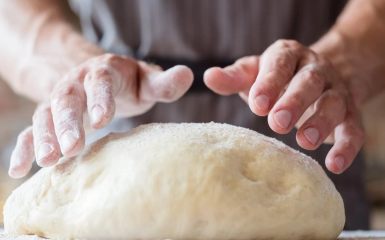
Is your yeast dough still dense even after an hour in a warm place? The buns are not increasing in volume, and the future bread is more like a heavy lump? This does not necessarily mean that the products are spoiled and you will have to start all over again.
Points of attention
- Cold, inactive yeast, hot liquid, and incorrect ingredient proportions can prevent the dough from rising.
- First, you should move the dough to a moderately warm place, give it more time, and check for signs of fermentation.
- Gas may be formed but not retained due to weak dough structure or excessive proofing.
If your yeast dough isn't rising, the first thing to do is check the temperature, allow more time for fermentation, and make sure the yeast is still active. In many cases, the problem can be fixed without adding any new ingredients.
However, it is important to distinguish between situations where the dough is simply fermenting slowly, where the yeast has lost its activity, and where gas is produced but the dough is unable to hold it in. Each problem requires a different solution.
We'll figure out why yeast dough for bread, pizza, pies, and buns doesn't rise, how to check dry and fresh yeast, whether you can add a new batch after kneading, and how to use failed dough if it can't be restored.
What to do if yeast dough doesn't rise: the first five steps
Before adding new yeast, flour, or water, it is worth checking the conditions in which the dough is located.
If it has not increased in 40–60 minutes, this does not yet prove that fermentation has stopped.
The rate of rise depends on the temperature, recipe ingredients, and amount of yeast.
How to try to save the dough
Check the temperature. If the dough is cold, move the covered container to a warmer place. For many homemade recipes, a temperature of around 24–27 °C is suitable.
Give it more time. Wait another 30–60 minutes if the storage conditions remain safe for the recipe ingredients.
Assess the changes. See if bubbles have appeared, if the surface has become more elastic, and if the volume has increased at least partially.
Check for residual yeast. If you suspect it is inactive, do a separate test with a small amount of warm water.
Don't change everything at once. Adding yeast, water, and extra flour without determining the reason can only worsen the consistency.
If the dough gradually increases in size after being moved to a warmer place, it most likely just needs time.
If there are no noticeable changes, you should check for other possible causes.
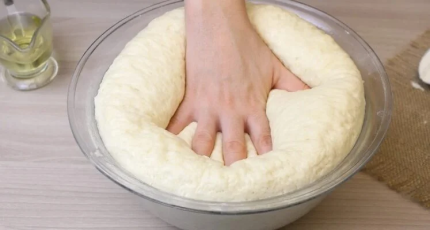
Why yeast dough rises: what happens inside
To understand why the dough doesn't rise, you need to understand the yeast fermentation process.
Baker's yeast is a living microorganism that uses available sugars during fermentation to produce carbon dioxide and alcohol.
It is the carbon dioxide that creates the bubbles that make the dough rise.
However, gas formation is only half the process.
For a good rise, the dough must also contain these bubbles.
In wheat dough, gluten is largely responsible for this. It is formed during the hydration of flour proteins and subsequent kneading.
The elastic protein structure stretches under gas pressure, causing the dough to expand without collapsing.
So, an unsuccessful lift can have two fundamentally different reasons:
yeast does not produce enough gas;
Gas is formed, but the dough structure is not able to hold it.
This explains why supplemental yeast doesn't help in every situation.
10 reasons why yeast dough doesn't rise
The most common problems are related to temperature, yeast activity, and ingredient ratios.
| Reason | How to recognize | What to do |
| Cold room | The dough rises very slowly. | Move to moderate heat |
| Inactive yeast | No visible signs of fermentation | Check the yeast separately |
| Too hot liquid | No activity after mixing | Evaluate the possibility of replacing yeast |
| Too much salt | Fermentation is noticeably slowed down | Check the proportions |
| Too much sugar | The dough grows especially slowly. | Extend the standing time |
| Excess flour | The dough is hard and dry. | Adjust humidity |
| Underdeveloped gluten | The dough is weak, spreading. | Improve structure by kneading |
| Fermentation | First it rose, then it settled. | Assess the possibility of re-formation |
| Lack of protection against drying out | A crust has formed on the surface. | Cover the dough while it rises. |
| Inappropriate recipe or ingredients | The dough does not have the expected texture | Check the type of flour and baking powder |
Not all problems require re-mixing. Often, eliminating one factor is enough.
Reason #1: The dough is in a place that is too cold
Low temperature slows down yeast fermentation.
This doesn't mean the yeast is necessarily dead. It may remain active, but produce gas more slowly.
For example, at a kitchen temperature of 18–19 °C, dough often rises noticeably longer than at 25 °C.
This is especially noticeable in winter or when the flour and water were cold.
What is the best temperature for dough to rise?
For many types of wheat yeast dough, a convenient guideline is a dough temperature of approximately 24–27 °C.
Some muffin recipes require different conditions.
At a lower temperature, fermentation will occur more slowly, but this is not necessarily a bad thing: longer fermentation can contribute to the formation of a more complex flavor of the bread.
Excessive heat, on the contrary, accelerates the process and can make it difficult to control.
How to safely reheat dough
Place the covered bowl in a place without strong temperature fluctuations.
You can use a turned-off oven if there is no residual strong heat inside, or a special proofing mode provided by the manufacturer.
Do not place the dough directly on a hot radiator or near a hot burner.
Excessive local heating can damage the yeast and change the structure of the dough.
Reason #2. The yeast is old or has lost its activity
Even if the expiration date on the package has not yet expired, yeast can lose activity due to improper storage.
Fresh pressed yeast is particularly sensitive to storage conditions.
Dry yeast usually lasts longer, but an open package also needs proper conditions.
Their activity is affected by moisture, high temperature, and long-term storage.
How to test dry yeast before cooking
For a simple test, you can use a small amount of water, yeast, and sugar.
Required:
warm water - 50 ml;
dry yeast - approximately 3 g;
sugar - ½ tsp.
Dissolve the sugar in water at a temperature of approximately 35–38 °C.
Add yeast, mix and leave for 10–15 minutes.
If noticeable foam, bubbles, and a characteristic yeast aroma appear, this indicates yeast activity.
If the mixture does not change, the yeast may be inactive or working very slowly.
However, such a test is not an accurate laboratory measurement of their strength.
For instant yeast, pre-activation is usually not necessary, but a separate test may be useful if there are doubts about the quality of the product.
Reason #3. Too much hot water or milk was added to the dough
Fluid temperature is one of the most common causes of failed lift.
Warm water helps yeast become active, but excessive heat can damage their cells.
The risk increases at liquid temperatures above approximately 50 °C, and even higher temperatures can quickly destroy the viability of the yeast.
The result depends on the duration of contact, the type of yeast, and the method of its application.
Therefore, you should not rely on one universal temperature at which all yeasts die instantly.
What water to use for mixing
For many homemade recipes, water around 30–38 °C will work, unless the yeast manufacturer's instructions state otherwise.
For certain instant yeasts that are added directly to flour, manufacturers may recommend a different liquid temperature.
It is important to consider that the final temperature of the dough also depends on the temperature of the flour, the room, and the heating during kneading.
It is most reliable to use a kitchen thermometer rather than testing the water with your finger.
Reason #4. Too much salt in the recipe
Salt is needed for flavor, structure, and controlled fermentation of yeast dough.
However, excessive amounts of salt can significantly slow down yeast activity.
This is due to osmotic processes: salt affects the availability of water to yeast cells.
Many types of regular wheat bread use approximately 1.8–2% salt by weight of flour.
For example, for 500 g of flour, this is about 9–10 g of salt.

Is it true that salt instantly kills yeast?
No. Brief contact of dry yeast with salt during normal kneading does not kill it.
With the correct dosage, salt is a normal ingredient in yeast dough.
Problems more often arise due to excessive concentration or a significant violation of the formulation.
If you accidentally added twice as much salt to the dough, simply increasing the amount of yeast is not the best solution.
It is necessary to assess whether the entire recipe can be adjusted while maintaining the correct ratio of ingredients.
Reason #5. Excess sugar and fat in the pastry dough
Dough for sweet buns, Easter cakes, brioches, and rolls often rises more slowly than regular bread dough.
This is due to the large amount of sugar, butter, eggs and other ingredients.
High sugar concentrations reduce the availability of water to yeast, which can slow down fermentation.
Fat also affects the structure and properties of dough.
Therefore, for buttery pastries, different proportions of yeast and longer proofing times are often used.
What to do if the bun dough does not rise
First, check if the amount of yeast matches the recipe.
Then assess the temperature and give the dough more time.
If it increases gradually, even slowly, there is no need to add a new batch of yeast immediately.
For muffins, it is especially important to focus on the actual volume, not just the number of minutes specified in the recipe.
Reason #6. There is too much flour in the dough
One common mistake is to add flour until the dough stops sticking to your hands.
As a result, it can become too dense and dry.
It is more difficult for gas bubbles to stretch such a mass, and the finished product may turn out to be heavy.
It is especially easy to make a mistake when measuring flour with cups: its mass depends significantly on compaction.
How to understand that there is too much flour
The dough may have the following characteristics:
very stiff and difficult to mix;
does not stretch well;
breaks quickly;
has dry uneven areas;
almost does not change in volume, although the yeast is active.
In this case, a small amount of water can be gradually mixed into the dough, if the recipe and the condition of the dough allow it.
You don't need to add a lot of liquid at once.
Add it in small portions, giving the dough time to absorb the moisture.
At the same time, stickiness is not a universal indicator of the correct consistency: ciabatta dough and bun dough have different properties.
Reason #7. Underdeveloped gluten
In wheat dough, gas is retained due to the elastic protein structure.
If it is not shaped enough, the dough may not hold its shape well, even when the yeast is working.
During kneading, the flour proteins gradually form a bound structure that stretches.
However, the degree of mixing required depends on the recipe.
For example, butter dough often requires more thorough kneading, while no-knead bread recipes use longer resting and folding.
How to check the elasticity of dough
For well-kneaded wheat dough, the so-called thin film test can be applied.
Separate a small piece and gently stretch it with your fingers.
If it forms a thin elastic film that does not tear instantly, this may indicate sufficiently developed gluten.
However, the test is not suitable for all types of dough.
Rye, gluten-free, and some other types have a completely different structure, so they should not be evaluated according to the rules of classic wheat bread.
Reason #8. The dough has already fermented and settled.
Sometimes the problem is the opposite: the yeast worked too actively, but the dough was left to rise for too long.
At first it increases, and then it begins to lose shape.
With excessive fermentation, the dough structure gradually weakens, and gas bubbles can collapse.
As a result, the mass settles.
How to distinguish fermented dough
Characteristic signs:
at first the volume increased noticeably, then decreased;
the surface became wrinkled;
the dough is too soft and does not hold its shape well;
the smell of fermentation became very intense;
after pressing, the mass almost does not recover.
For some types of regular wheat dough, careful reshaping and a shorter proofing period helps.
However, heavily fermented dough cannot always be returned to its original state.
This is especially true for dough whose structure has already weakened significantly.
Reason #9. The surface of the dough dried out during proofing
If you leave the dough uncovered, a dry layer may form on its surface.
It becomes less elastic and prevents uniform expansion.
This is especially noticeable when forming rolls or small loaves of bread.
The surface may crack and the products may expand unevenly.
How to properly cover the dough
Use a clean lid, cling film or other covering suitable for contact with food.
It is important that the dough has enough space to increase in volume.
If a cloth is used, it should not contribute to the drying of the surface.
For long-term standing in the refrigerator, it is especially important to protect the dough from moisture loss.
Reason #10. The wrong type of dough or baking powder is used
Not every dough should rise during proofing.
Yeast dough rises through fermentation.
Sponge cake dough gains volume mainly due to the air that gets into the egg mixture during beating.
Baking powder is often used in cupcakes and muffins, and baking soda is used in some recipes.
Therefore, the reason for the failed lift depends on the technology.
If your cupcake batter hasn't risen in the oven, you need to check the baking powder, mixing method, and baking temperature, not the yeast activity.
How to add new yeast to dough that hasn't risen
If it is determined that the yeast was accidentally not added during mixing, the situation can sometimes be corrected.
However, first you need to make sure that this is what caused the problem.
Adding new yeast to dough that is just fermenting slowly due to low temperature can make the result unpredictable.
Step-by-step method
Take the amount of yeast called for in the original recipe if you really forgot to add it.
Mix with a small amount of water at the appropriate temperature until a homogeneous mixture is formed.
Spread the already kneaded dough on a clean work surface.
Distribute the yeast mixture evenly.
Fold the dough several times.
Knead gently to distribute the yeast.
Transfer to a clean container and leave to ferment according to the recipe.
A small amount of additional water may change the consistency slightly.
If the dough already contains yeast but you suspect it is inactive, re-introduction is less predictable. In this case, you should not automatically add a full new dose.
This method is a workaround, not a guarantee of success. It works best for plain wheat doughs where the lack of yeast is noticed shortly after mixing.
Why doesn't the dough rise after the first pass?
Many types of yeast-based baking require two rising stages.
The first occurs after kneading, when the dough ferments in the common container.
The second is after forming bread, buns, or pies.
During rolling and shaping, some of the accumulated gas is released. Therefore, the dough temporarily decreases in volume.
This is a normal phenomenon.
If the yeast is active and the dough structure is preserved, it will increase again during the second proofing.
How long does it take for the second ascent?
The duration depends on the recipe and temperature.
For many simple wheat products, the second rising takes about 30–60 minutes, but buttery or cold doughs may need more time.
It is better to evaluate the condition of the dough, not the clock.
Ready-to-bake products usually look fluffier and have a soft, springy surface.
If the dough is dense and quickly returns to its shape when lightly pressed, it may need additional time.
How to check if the dough has risen enough
One of the most common mistakes is waiting for any dough to double in size.
In reality, the desired degree of rise depends on the specific recipe.
For some types of wheat bread, doubling the volume is a convenient guideline.
For others, an increase of about 50–75% or another value provided by the technology is sufficient.
Volume increase test
It is convenient to use a transparent container with approximately vertical walls.
After kneading, mark the initial level of the dough.
During fermentation, it will be easy to see how much it has increased.
This is more accurate than trying to estimate the volume in a wide, rounded bowl.
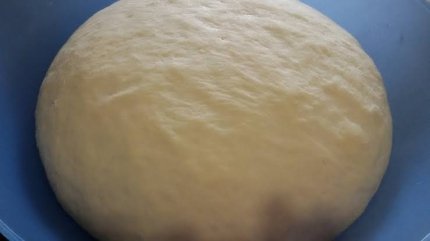
Finger pressing test
For the final proofing of formed wheat products, you can use light pressure with your finger.
If the indentation disappears instantly, the dough may not have risen enough.
If it recovers slowly and partially, it often indicates readiness.
If the depth remains almost unchanged and the structure looks weak, excessive settling is possible.
However, this test is not universal for all recipes.
Why doesn't pizza dough rise?
Pizza dough often contains relatively little yeast and may be designed for a long fermentation.
This is especially true for recipes that require standing in the refrigerator.
At low temperatures, yeast activity slows down, so the dough does not necessarily double as quickly.
This doesn't mean the recipe is a failure.
If the dough was prepared for cold fermentation, you must follow the prescribed technology.
You shouldn't add additional yeast just because the volume hasn't changed much in the first hour in the refrigerator.
What to do with pizza dough after refrigeration
Depending on the recipe, the dough may need some time to gradually warm up before shaping.
It should become plastic enough to be stretched without excessive resistance.
If the dough keeps pulling back, sometimes a short rest before further shaping helps.
But the duration of such rest depends on the temperature, dough composition, and recipe.
Why doesn't the Easter dough rise?
Easter cake is a type of pastry, so its dough has a more complex composition than regular bread.
Large amounts of sugar, fat, eggs, and other additives can significantly slow down yeast fermentation.
In addition, for high Easter cakes, it is important that the dough has a sufficiently strong structure.
If the yeast is active but the dough is rising slowly, sometimes a longer period of standing at a stable temperature is sufficient.
However, it should be noted that dough with eggs and dairy products cannot be left unattended for many hours in a warm room.
For long-term technologies, you need to use proven recipes with appropriate temperature conditions.
You should also not fill the forms to the brim.
Free space is needed for further rising during proofing and baking.
What to do if the dough has risen but settled in the oven
This is a different problem than a complete lack of lift.
If the dough has risen well before baking, but then settles, possible causes include excessive proofing, insufficient structural strength, or errors in the baking mode.
For example, a too long second proofing period can cause the dough to lose its ability to hold its shape.
In the oven, such a structure can no longer withstand further expansion of gases.
How to reduce the risk of subsidence
It is important to control the final settling and not expect an unlimited increase in volume.
You also need to preheat the oven if the recipe calls for it.
For bread and muffins, temperature, shape, dough composition, and proper mixing are important.
Do not open the oven unnecessarily during the initial stage of baking particularly sensitive products.
What to make with dough that never rose
If the dough has not risen even after checking the temperature and yeast, it doesn't always mean it should be thrown away.
However, the possibility of use depends on the composition, the time spent without refrigeration and the general condition of the product.
If the dough is made from safe ingredients, has been stored properly, and shows no signs of spoilage, you can change the baking format.
Thin cakes
The dough can be rolled out into a thin layer and baked well in a pan or in the oven.
It won't be as airy as traditional yeast bread, but it may be suitable for thin cakes.
Crispy crackers
The dough can be rolled out thinly, cut into small pieces, and sprinkled with spices.
After that, bake until fully cooked and dry in texture.
Unsweetened dough without a lot of butter is better suited for this use.
Base for thin pizza
If the dough structure allows it to be stretched, you can use a small amount for a thin pizza.
Don't expect a distinct, fluffy edge, but a properly baked thin base can be quite suitable.
When is it better to throw away dough?
Do not use the dough if it shows signs of mold, a putrid odor, or other obvious signs of spoilage.
You should also not try to save dough with eggs, milk, or other perishable ingredients that has been at the wrong temperature for a long time.
Heating does not always eliminate all risks associated with improper storage.
How to make yeast dough that rises well: basic proportions
For beginners, it's easiest to use a simple recipe with a small number of ingredients.
It is he who helps to understand how yeast, water, and flour work.
Ingredients
wheat flour - 500 g;
water - 300 ml;
dry instant yeast - 7 g;
salt - 9 g;
sugar - 10 g, optional;
vegetable oil - 15 g, optional.
This is a basic recipe for a simple yeast dough. It is not a substitute for special recipes for muffins, pizza, or sourdough bread.
Step-by-step cooking
Weigh the flour, yeast, and salt.
Mix the dry ingredients.
Add water at the temperature recommended for the specific yeast.
Knead the dough until smooth.
If necessary, let it rest briefly and continue kneading.
Transfer to a lightly greased container.
Cover and leave to ferment at a moderate temperature.
Wait for the volume to increase according to the recipe - for such a dough, they often aim for approximately 60–100%.
Shape the product and let it go through its final curing.
Bake in a preheated oven using a setting appropriate for the size and shape of the product.
It is important not to add extra flour just because the dough is a little sticky during the initial kneading.
After resting and gluten development, its consistency may change noticeably.
How to properly store yeast so that it does not lose its activity
Storage conditions depend on the type of product.
Unopened dry yeast should be stored according to the manufacturer's instructions, in a dry place away from excessive heat.
After opening the airtight package, it is usually recommended to close the contents tightly and store them in the refrigerator or freezer, depending on the type of yeast.
Fresh pressed yeast has a shorter shelf life and usually requires refrigeration.
You shouldn't determine their suitability based solely on their smell or appearance.
If the yeast has been stored for a long time after opening, it is advisable to conduct an activity test before important baking.
The most common mistakes when making yeast dough
Even a good recipe may not work if the basic conditions are violated.
Measuring flour randomly. Due to different densities, you may end up with more flour than you need in the glass.
Using hot liquid. It can damage the yeast before fermentation begins.
Excessive salt addition. This can significantly slow down fermentation.
Waiting for the rise to set according to a strict timer. The time from the recipe is a guideline, not a guarantee.
Standing near a very hot heat source. This can overheat some of the dough.
Too much flour during mixing. The dough becomes dry and heavy.
Insufficiently developed structure. Gas is formed, but is poorly retained.
Too long a rise. The dough may ferment and lose volume.
Using inactive yeast. Without proper fermentation, not enough gas is produced.
Trying to taste raw dough. Raw flour can contain dangerous microorganisms, so dough should be fully cooked before consumption.
Conclusion
If your yeast dough doesn't rise, it's not necessarily because of poor-quality yeast. Often, the process is simply slowed down by cold, too much sugar, or a consistency that's too thick.
First, check the temperature of the dough, give it extra time, and assess for signs of fermentation before deciding whether to adjust the recipe.
For consistent results, use a kitchen scale, follow the correct proportions, and judge the readiness of the dough by its increase in volume and structure, not just by the clock.
FAQ: Frequently Asked Questions About Dough That Doesn't Rise
What to do if yeast dough has not risen in an hour?
Check the temperature of the dough and the room. If it is cold, move it to a moderately warm place and let it rise for another 30–60 minutes. For buttery doughs or recipes with a small amount of yeast, a longer rise may be normal.
Can you save the dough if the yeast didn't work?
Sometimes yes. If you forgot to add the yeast, you can add it after the initial mixing. If it was already in the dough but has lost its activity, the result of adding it again is less predictable. You need to rule out low temperature and other causes first.
How long can yeast dough rise?
For many simple homemade recipes, the first rise takes about 1–2 hours, but this time can vary considerably. Butter doughs, cold fermentations, and recipes with a small amount of yeast often require significantly longer.
At what temperature does yeast dough rise best?
For many types of wheat dough, a good guideline is around 24–27 °C. The optimum temperature depends on the recipe. Excessive heating does not guarantee better results and may deteriorate the quality of the dough.
How do you know that dry yeast is inactive?
You can mix a small amount of yeast with warm water and a pinch of sugar. If no noticeable foam or other signs of activity appear within 10–15 minutes, the yeast may be inactive. However, the result depends on the type of yeast and the conditions under which you test.
Why doesn't the dough rise after adding sugar?
A small amount of sugar is not a problem, but too much can slow down the yeast fermentation process. This is especially true for butter doughs. Such recipes often require specially selected proportions and longer proofing times.
Can salt kill yeast?
During normal mixing, brief contact of salt and dry yeast does not kill them instantly. However, excessive salt concentration can significantly slow down fermentation. For bread dough, it is important to follow the recipe proportions.
Why did the dough rise and then settle?
The likely cause is over-rising or a weak structure. If the dough has been over-fermented, it may lose its ability to hold gas. Re-shaping helps in some recipes, but severely weakened dough cannot always be restored.
Why doesn't yeast dough rise in the refrigerator?
The low temperature intentionally slows down the fermentation process. This is normal for cold fermentation recipes. You should not expect the same rapid increase in volume as at room temperature. You need to follow the technology of the specific recipe.
What can you bake with dough that hasn't risen?
If the dough has been stored properly and shows no signs of spoilage, it can sometimes be used for thin crusts, crackers, or pizza bases. However, these products must be baked completely. If the dough contains perishable ingredients and has been at the wrong temperature for a long time, it should not be used.

