

One peach a day can be part of a healthy diet. It is a juicy, low-calorie fruit that contains water, fiber, potassium, vitamin C, carotenoids, and various polyphenols. However, you should not expect that a daily peach will normalize blood pressure, “cleanse the body,” cure inflammation, or significantly improve vision. The benefits of peaches are best viewed in the context of your entire diet. If the fruit replaces sweet pastries, candy, or a high-calorie dessert, adds fiber to your menu, and helps increase your total fruit intake, it is indeed a good habit. For most healthy people, one or two peaches a day during the season is a completely normal amount, provided that you eat a varied diet and are well-tolerated.
What is in a peach?
Nutritional value depends on the variety, ripeness and size of the fruit. On average, 100 g of fresh yellow peach contains approximately:
40 kcal;
9–10 g of carbohydrates;
about 8 g of natural sugars;
about 1.5 g of fiber;
less than 1 g of protein;
about 190 mg of potassium;
small amounts of vitamin C, vitamin E, copper, and other micronutrients.
Almost 90% of the mass of a peach is water.
An average fruit, depending on size, usually provides approximately 50–70 kcal.
This makes the peach a convenient fruit for a snack, dessert, or addition to breakfast.
1. A daily peach helps you get more fruit
The main benefit is much simpler than the promises of a “superfood.”
The World Health Organization recommends that people over 10 years of age aim for at least 400 g of vegetables and fruits per day.
A peach can be one of those servings.
Instead of looking for one fruit with the maximum amount of antioxidants, it is more useful to alternate throughout the day:
peaches;
apples;
berries;
plums;
apricots;
citrus fruits;
various vegetables.
Different plant foods have different sets of fiber, vitamins, minerals, and polyphenols.
Therefore, a daily peach is a good habit if it complements a varied diet and does not replace all other fruits.
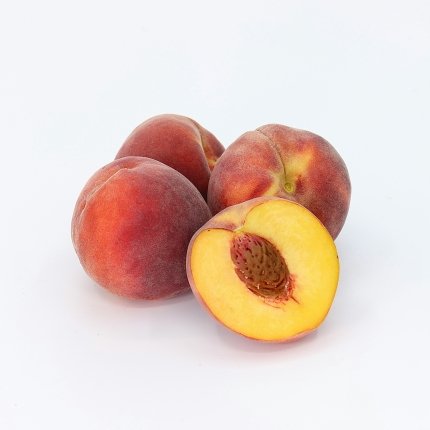
2. Peaches can support normal digestion
Peaches contain both soluble and insoluble dietary fiber.
Fiber helps:
to form a normal volume of feces;
maintain regular bowel function;
feel fuller for longer;
provide a substrate for part of the intestinal microbiota.
However, peaches are not an extremely concentrated source of fiber.
There are about 1.5 g of it in 100 g, while current recommendations for people over 10 years old provide approximately 25 g of natural fiber per day.
Therefore, one peach will not solve the problem of insufficient dietary fiber intake.
It is also worth eating regularly:
legumes;
whole grain cereals;
vegetables;
berries;
nuts;
seed.
3. Peaches can be a good substitute for sweets
A ripe peach has a pronounced sweet taste, but is characterized by low calorie content and high water content.
This is one of its most practical advantages.
Instead of cookies, candy, or a sweet dessert, you can eat a peach alone or combine it with:
natural yogurt;
sour milk cheese;
a small amount of nuts;
oatmeal.
Such a snack can be more filling and nutritious.
The natural sugars in a whole peach shouldn't automatically be equated with added sugar in a sweet drink. In the fruit, they come along with water, fiber, and other nutrients.
Another situation is peach syrup, sweet nectar, jam, or canned peaches in a large amount of syrup. There, the concentration of free or added sugars can be much higher.
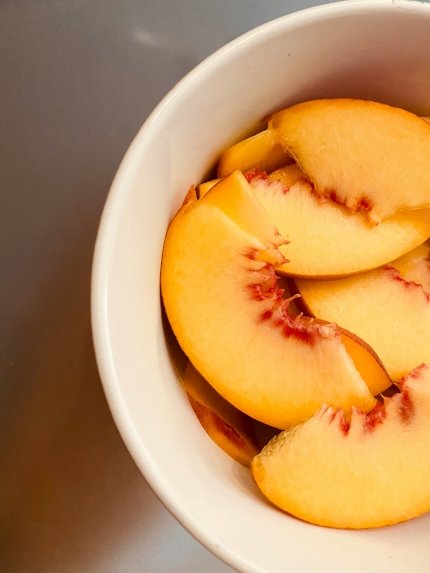
4. Peaches are good for weight control
Peaches do not "burn fat" or speed up metabolism enough to cause weight loss on their own.
But it has low energy density.
This means that a relatively large volume of the product contains few calories due to the large amount of water.
Fruit can help control weight if it replaces higher-calorie foods.
For example:
a peach instead of cake is a real replacement that can reduce the calorie content of the diet;
a peach after a full dinner, dessert, and a sweet drink are just extra calories.
That is why when losing weight, the product's place in the overall diet is important.
Can I eat peaches in the evening when losing weight?
Yes.
There is no rule that after a certain hour the natural sugars in a peach automatically turn into fat.
The overall energy balance for the day and over a longer period is important.
If you're craving something sweet in the evening, a single peach will often be a much more practical choice than cookies or ice cream.
Another thing is if a large amount of fruit before bed causes bloating or discomfort. Then the time and portion should be changed.
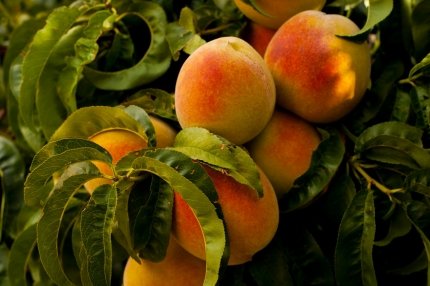
5. Peaches provide the body with vitamin C
Peaches contain vitamin C, although their concentration is lower than many berries, kiwi, sweet peppers, or citrus fruits.
Therefore, calling peaches "one of the best sources of vitamin C" is incorrect.
However, he makes a certain contribution.
Vitamin C is needed for:
collagen synthesis;
normal tissue healing;
immune system function;
antioxidant protection;
better absorption of non-heme iron from plant foods.
If a person regularly eats various vegetables and fruits, peaches become another source of this vitamin.
Do peaches improve skin?
The claim “eat a peach every day and your skin will look younger” does not have sufficient evidence.
At the same time, a logical connection exists.
Vitamin C is needed for collagen formation, and peaches contain various carotenoids and polyphenols.
However, the condition of the skin depends on many factors:
genetics;
age;
ultraviolet;
smoking;
sleep;
general nutrition;
health status.
Much more important for preventing photoaging is protection from excessive ultraviolet radiation, not a specific fruit.

6. Peaches contain carotenoids
Yellow and orange varieties contain various carotenoids, including beta-carotene, as well as small amounts of lutein and zeaxanthin.
These compounds are involved in various biological processes.
Beta-carotene can be converted in the body into vitamin A, which is necessary for normal vision, skin condition, and immune system function.
Lutein and zeaxanthin are being studied in the context of retinal health.
However, the concentration of these substances in peaches is not high enough to consider them a special product "for restoring vision."
If a person works at a computer for hours, a peach will not protect their eyes from overstrain. It is much more practical to take regular breaks and have their vision checked by an ophthalmologist.
7. Peaches contain polyphenols
Phenolic acids, flavonoids, and other plant compounds have been found in peaches.
Their number varies depending on:
variety;
pulp color;
ripeness;
growing conditions;
storage.
In laboratory studies, peach polyphenols demonstrate antioxidant and other types of biological activity.
However, a significant portion of the high-profile claims about the “anti-inflammatory,” “anti-cancer,” or “anti-diabetic” properties of peaches come from laboratory experiments.
The result in cells or on an enzyme does not equal a proven therapeutic effect in humans.
Recent reviews of research on fruits of the Prunus genus, to which peaches belong, indicate a promising phytonutrient composition, but at the same time emphasize the need for more high-quality clinical studies.
Therefore, peaches should be eaten as a fruit, not as a natural medicine.
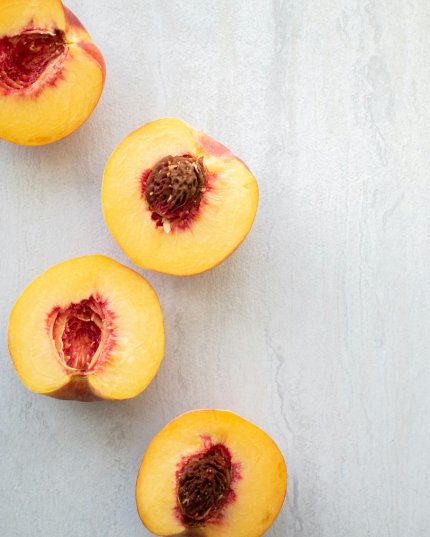
8. Potassium in peaches is good, but not in large amounts.
Potassium is necessary for:
normal functioning of the nervous system;
muscle contraction;
fluid regulation;
maintaining normal blood pressure.
100 g of peach contains about 190 mg of potassium, according to classic food database data.
This is a useful contribution, but far from a record.
Much more potassium can be obtained from some legumes, potatoes, greens, and other foods.
Therefore, the statement “peaches lower blood pressure thanks to potassium” is too simplistic.
A diet rich in fruits and vegetables is indeed associated with better cardiovascular health, but the effect cannot be attributed to peaches alone.
Can you eat peaches with high blood pressure?
In most cases, yes.
Fresh peaches contain almost no sodium and can fit well into a diet with plenty of vegetables and fruits.
But it cannot be used instead of hypertension medications.
Arterial hypertension requires blood pressure control, assessment of overall cardiovascular risk, and, if necessary, drug therapy.

9. Peaches can be eaten with diabetes
Diabetes does not mean an automatic ban on peaches.
Fresh, frozen, or canned fruits without added syrup can be included in the diet of people with diabetes.
At the same time, fruit contains carbohydrates, so portion size matters.
A small whole fruit can contain about 15 grams of carbohydrates, which is the amount often used as a serving size when counting carbohydrates.
For a particular peach, the value depends on its size.
Convenient snack option:
peach + natural yogurt;
peach + a few nuts;
peach + cottage cheese.
Protein and fat increase satiety, and a mixed meal may produce a different glycemic response than a large serving of fruit alone.
If a person uses insulin or has an individual nutrition plan, portions should be coordinated with a doctor.
Should you eat peaches with their skin?
If the skin is normally tolerated, yes.
It is in the outer layers of the fruit that the highest concentration of polyphenols may be found, and the skin adds fiber.
There is no need to remove it just because of fear of "toxins".
Before eating, the peach should be washed well under running water.
Washing fruit with soap, dishwashing liquid, or other household detergents is not recommended.
If the skin causes irritation in the mouth, has an unpleasant texture, or the fruit is used for a specific dish, it can be removed.
How many peaches can you eat per day?
There is no official standard specifically for peaches.
For most healthy adults , one to two medium peaches per day when in season can easily fit into a balanced diet.
However, this does not mean that two is the maximum allowable number.
Needs depend on:
total calorie content of the diet;
quantities of other fruits;
physical activity;
portability;
condition of the digestive system;
glucose control.
If you already have several servings of fruit per day, there is no need to eat five extra peaches just because of their benefits.
Variety is more practical than large portions of a single product.
What happens if you eat too many peaches?
In a healthy person, a few peaches at a time will most often not cause anything serious.
But large amounts can cause:
bloating;
gas formation;
discomfort;
loose stools.
One reason is sorbitol, a natural sugar alcohol found in stone fruits.
Sorbitol is not fully absorbed in the small intestine. Some of it may reach the large intestine, where it is fermented by bacteria and contributes to gas formation.
In some people, this effect is almost imperceptible, in others it is quite pronounced.

Peaches and irritable bowel syndrome
Peaches are a sorbitol-containing food and may be problematic for some people with irritable bowel syndrome.
This is a group of fermentable short-chain carbohydrates called FODMAPs.
In sensitive people, they can cause:
bloating;
pain;
gas formation;
diarrhea;
changes in bowel movements.
This does not mean that peaches are "bad for the gut."
Most people without IBS tolerate them normally.
Even with irritable bowel syndrome, individual tolerance varies greatly. It is not necessary to permanently eliminate peaches or an entire group of fruits.
Who else may not like peaches?
People with oral allergy syndrome
In people allergic to birch pollen or certain grasses, raw peaches may cause a cross-allergic reaction.
Typical symptoms occur within a few minutes:
itching of the lips;
tingling in the mouth;
itchy throat;
mild swelling of the lips or tongue.
This condition is called pollen-food syndrome, or oral allergy syndrome.
Some people tolerate heat-treated fruits, as some of the proteins in them are destroyed when heated.
But if the reaction goes beyond the oral cavity, hives, severe swelling, difficulty breathing, or dizziness occur, urgent medical attention is needed.
Can you eat the core of a peach stone?
Not worth it.
Under the hard shell of the stone is a seed, which may contain amygdalin, a cyanogenic glycoside.
During its breakdown, cyanide can be formed in the body.
The amount of substance in individual seeds varies, so experimenting with their use "for health" is dangerous.
In particular, peach pits or other seeds should not be used as a supposed natural remedy for cancer prevention or treatment. There is no evidence of such a therapeutic effect, and the risk of toxicity is real.
The pulp of an ordinary ripe peach is a safe product for most people.
Fresh, frozen or canned peaches: which is better?
Fresh
The simplest seasonal option. Contains water, fiber, and the natural structure of the fruit.
Frozen
Also a good choice, especially out of season. If the product is frozen without added sugar, there is no fundamental reason to consider it "unhealthy."
Canned
Could be a normal alternative.
It is better to choose peaches:
in its own juice;
without added sugar;
with a minimum amount of syrup.
Peaches in thick, sweet syrup are significantly different from fresh fruit in terms of the amount of free sugars and calories.
Dried
After the water is removed, the calories and sugars are concentrated.
Therefore, a serving of dried peaches should be significantly smaller than a serving of fresh peaches.
Peach or nectarine: which is healthier?
The nectarine is a close relative of the peach and is actually a variety of the same cultivated plant with genetically determined smooth skin.
They are very similar in terms of calories, carbohydrates, fiber, and overall nutritional value.
A specific variety may have slightly more:
carotenoids;
polyphenols;
sugars;
acids.
But for everyday nutrition, the difference is not so significant that one should choose one product solely "based on benefits."
It's better to eat the fruit you like or alternate them.
5 myths about peaches
Myth 1. Peaches burn fat
No. They are low-calorie and can replace higher-calorie foods, but without an energy deficit, fat stores will not decrease.
Myth 2. A peach every day lowers cholesterol
There is insufficient clinical evidence to support this claim. Fiber and plant foods in general can be part of a cardioprotective diet, but fruit alone is not a cure-all.
Myth 3. Sweet fruits are forbidden for people with diabetes
No. The type of product, amount of carbohydrates, serving size, and individual glucose response are important.
Myth 4. Peaches should be eaten without the skin.
For most people, this is not necessary. A well-washed fruit can be eaten with the skin.
Myth 5. The more peaches, the more benefits
No. The body needs a variety of foods. Five peaches do not provide five times the benefits of one.
How to add peaches to your diet
It is easiest to eat ripe fruit separately.
But peaches also work well in more complex dishes:
oatmeal with peach and natural yogurt;
sour milk cheese with peach;
salad with peach, herbs and soft cheese;
grilled peach;
natural yogurt with peach and nuts;
smoothies without added sugar.
It's easier to drink a smoothie quickly and in large quantities than to eat the same fruit whole, so a whole peach is usually a simpler option for your daily menu.
Conclusion
If you eat peaches every day during the season, nothing “magical” will happen to your body — and that’s what’s important to understand. Peaches are a healthy fruit with low calories, lots of water, fiber, potassium, vitamin C, carotenoids, and polyphenols.
One or two servings of fruit a day can be a good part of a balanced diet, especially when used in place of high-calorie sweets. A general variety of fruits, vegetables, legumes, whole grains, and other nutritious foods is much more important for health than eating one specific fruit every day.
People with irritable bowel syndrome, food allergies, or diabetes should consider individual tolerance and portion size.
Important: the material is for informational and educational purposes only and does not constitute medical advice, diagnosis, or individual dietary or treatment recommendations. Self-medication and independent change of prescribed therapy can be harmful to health. If you have diabetes, irritable bowel syndrome, allergies, chronic diseases, or other special dietary needs, be sure to consult your doctor before making significant changes to your diet.
FAQ
Can you eat peaches every day?
For most healthy people, yes. One or two peaches a day when in season can be part of a balanced diet, as long as the fruit is well-tolerated.
How many calories are in a peach?
100 g of fresh peach contains approximately 40 kcal. The calorie content of one fruit depends on its size and is usually approximately 50–70 kcal.
How much sugar is in a peach?
There are about 8 g of natural sugars per 100 g. The amount in the whole fruit depends on its weight and variety.
Can I eat peaches while losing weight?
Yes. Peaches are high in water and relatively low in calories. They can be a good substitute for higher-calorie desserts, but they don't burn fat on their own.
Can I eat peaches with diabetes?
In most cases, yes. Peaches contain carbohydrates, so portion size and overall meal plan are important. When on insulin therapy, carbohydrate intake should be individualized.
Is it healthy to eat peaches with their skin?
Yes, if it is tolerated well. The skin adds fiber and contains some plant polyphenols. Before eating, it is enough to rinse the fruit well under running water.
Why does my stomach bloat after eating peaches?
Peaches contain sorbitol, a FODMAP carbohydrate that can cause gas, bloating, and changes in bowel habits in sensitive people, especially those with irritable bowel syndrome.
Can I eat peaches in the evening?
Yes. There is no evidence that peaches become harmful or automatically stored as fat after a certain hour. Focus on your overall diet and your own tolerance.
Which is healthier - peach or nectarine?
They are very similar in nutritional value. The specific values depend on the variety and ripeness, so there is no need to choose one of them solely because of "greater benefits."
Can you eat the core of a peach pit?
It is better not to. The seeds inside the pit may contain amygdalin, which can form toxic cyanide in the body. The pits should not be used as a dietary supplement or "medicinal" remedy.

