
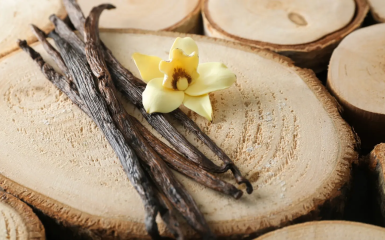
Vanilla flavor can transform an ordinary sponge cake, cookies, or homemade buns into a baked good that will fill your kitchen with a delicious aroma. However, sometimes a strange situation arises: raw dough has a distinct vanilla flavor, but after baking it becomes barely noticeable. Even an extra portion of vanillin does not always help.
Points of attention
- Vanillin is added during mixing, after being mixed with sugar or flour; liquid extract is added with the liquid ingredients.
- Pure vanillin is much more concentrated than vanilla sugar, so the dosage should be determined according to the instructions, and not replaced with products in a 1:1 ratio.
- Adding vanillin at the end of mixing does not guarantee the preservation of the aroma and may prevent its even distribution.
The reason may be incorrect dosage, uneven distribution of the flavoring, or the characteristics of the product itself. Vanillin, natural vanilla, vanilla sugar, and extract have different concentrations of flavoring substances, so they should not be used equally.
It is best to add vanillin while kneading the dough, after mixing it with sugar or a small amount of other ingredients. Liquid vanilla extract is usually added with the liquid part of the recipe. However, the exact moment depends on the type of dough and the preparation technology.
We'll figure out how much vanillin is needed for sponge cakes, cookies, muffins, and pancakes, why the aroma changes during baking, and how to get a distinct vanilla flavor without excessive bitterness.
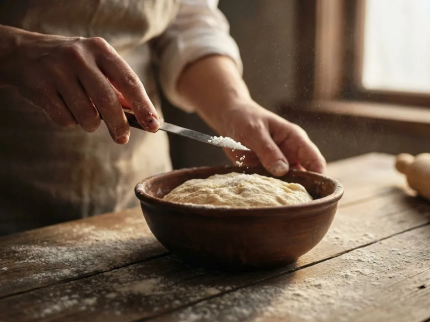
When is the best time to add vanilla to the dough?
In most homemade recipes, vanillin is added at the stage of mixing the ingredients, before the dough is finished kneading.
This allows the aromatic substance to be evenly distributed throughout the mass.
However, the method of addition depends on the form of the flavoring.
It is convenient to pre-mix crystalline or powdered vanillin with sugar, flour, or a small portion of dry ingredients.
Vanilla sugar is usually added at the same time as regular sugar.
Liquid vanilla extract is most often added along with eggs, milk, or other liquid ingredients.
Vanilla paste can be mixed with liquid ingredients or with an oil base.
The seeds of a natural vanilla pod are added directly to the dough or pre-soaked in milk or cream.
For regular sponge cake, the vanilla component can be added to the eggs and sugar. For shortbread cookies, it can be added to the butter and sugar. For yeast-based muffins, it can be added during the preparation of the main dough.
It is important that the flavoring is well distributed before baking begins.
Do I need to add vanilla last?
It is a common belief that vanillin should be added just before putting the dough in the oven. This supposedly helps preserve more of the flavor.
In fact, this technique does not have a universal advantage.
During baking, the entire dough mass gradually heats up, regardless of when the flavoring was added.
If you add the vanilla at the last minute, there is a risk of it being unevenly distributed. This is especially true for thick shortcrust or yeast dough.
Therefore, it is best to introduce the flavoring at a stage when it can be thoroughly mixed with the other ingredients without over-mixing.
What is the difference between vanillin, vanilla sugar and natural vanilla?
There are several vanilla-flavored products on store shelves. They serve similar purposes, but differ significantly in composition and concentration.
Vanillin is a concentrated aromatic substance.
Vanillin is a specific organic compound that is one of the main components of the characteristic aroma of natural vanilla.
In the food industry, it can be obtained in various ways, including through chemical synthesis or biotechnological production.
The chemically identical vanillin molecule has the same basic properties regardless of origin.
However, natural vanilla contains many other aromatic components that are not found in pure vanillin, which is why its aroma can be more complex.
Pure food-grade vanillin is used in very small amounts. Excessive dosage can give baked goods a sharp, obtrusive, or bitter taste.
Vanilla sugar is a convenient option for home baking
Vanilla sugar is sugar with the addition of vanilla, vanillin, or other vanilla flavoring.
Its concentration is much lower than that of pure vanillin.
That is why a packet of vanilla sugar cannot be automatically replaced with the same mass of concentrated powder.
An important nuance: the composition of vanilla sugar depends on the manufacturer. One product may contain natural vanilla, another - vanillin or ethyl vanillin.
Therefore, before use, it is worth checking the composition and recommended quantity on the packaging.
Vanilla extract — a more complex flavor
Natural vanilla extract is made from prepared vanilla pods.
In addition to vanillin, it contains other aromatic compounds that form a richer flavor profile.
Many extracts are made using an alcohol base, although there are also alcohol-free products on the market.
Vanilla extract is particularly well suited for creams, cheese desserts, ice cream and pastries, where vanilla is the main flavor accent.
What is the difference between vanilla paste and vanilla extract?
Vanilla paste is a thick aromatic product that may contain vanilla extract, pod seeds, sugar, or other ingredients.
It is often used in confectionery creams and desserts, where it is desirable to obtain the characteristic dark specks of natural vanilla.
The concentration of different pastes is different, so there is no universal proportion for replacing the extract.
| Product | Aroma intensity | The most convenient application |
| Pure vanillin | Very high | Cookies, cupcakes, shortcrust pastry |
| Vanilla sugar | Moderate | Biscuits, pancakes, cheesecakes, buns |
| Natural extract | Depends on concentration | Creams, cupcakes, biscuits, desserts |
| Vanilla paste | Usually expressive | Creams, fillings, cheese desserts |
| Vanilla pod | Complex natural aroma | Custards, dairy desserts, pastries |
How much vanillin to add to the dough: the correct proportions
The amount of flavoring should be determined by its concentration, not just the weight of the sachet.
For example, one manufacturer may package vanilla sugar in 8 g packages, another in 10 or 16 g packages. The composition of the mixtures may also differ.
For some types of vanilla sugar, manufacturers recommend one 8g packet per 500g of flour or approximately 500ml of milk base.
However, this is not a universal proportion for all products.
Approximate dosage for home baking
| Type of flavoring | Reference for use |
| Vanilla sugar | According to instructions; for individual products - 8 g per 500 g of flour |
| Pure vanillin | Very small amount according to concentration and instructions |
| Vanilla extract | Approximately 1 tsp per small cupcake or sponge cake, unless the recipe calls for otherwise |
| Vanilla paste | According to the manufacturer's recommendations and recipe |
| Natural pod | Part or whole pod depending on serving size and desired intensity |
The values given are culinary guidelines. The exact amount depends on the composition of the product, the recipe, and your taste preferences.
You need to be especially careful when measuring pure vanillin. Even a tenth of a gram can significantly change the flavor. Household scales with an accuracy of one gram are not suitable for such measurements.
If the packaging does not have clear recommendations for food use, it is better to use a product with a specific dosage.
Why you shouldn't add more vanillin than the recipe calls for
Increasing the amount of vanillin does not guarantee a more pleasant aroma.
With excessive concentration, the smell can become too pungent, and the taste sometimes becomes bitter.
In addition, the strong vanilla flavor can overpower the taste of butter, eggs, fruit, and other ingredients.
For home baking, it is usually best to start with the recommended amount and adjust the recipe only after evaluating the finished result.
Why does vanilla flavor fade after baking?
During heating, many physical and chemical processes occur in the dough: water evaporates, the structure of proteins changes, starch absorbs moisture, and new aromatic compounds form on the surface.
The vanilla flavor can also vary.
However, the statement that vanillin completely evaporates in the oven is incorrect.
A study of the behavior of flavor compounds in cookies, published in 2024, showed that vanillin, under certain baking conditions, preserved significantly better than some other flavorings.
So, a decrease in the vanilla smell after baking does not mean that all the vanillin has disappeared from the dough.
Why does raw dough smell stronger?
Several factors influence the perception of aroma.
First, during heating, some of the volatile compounds from the dough are released into the air. This is why the smell of baking spreads quickly throughout the kitchen.
Secondly, new smells are created during baking: toasted crust, caramel, butter, and other components.
They can change the overall perception of vanilla.
Third, the concentration of aromatics and how easily they are released from the finished product depend on the moisture content and structure of the baked goods.
Therefore, the vanilla aroma in raw dough, hot sponge cake, and cooled cookies may be felt differently.
Does vanillin break down at 180 °C?
Do not assume that the oven temperature is the same as the temperature inside the dough.
During baking, the moist center of a cupcake or biscuit usually heats up much less than the oven air.
Outer layers that lose moisture can reach higher temperatures.
Vanillin is a relatively stable aromatic compound, but its behavior depends on the composition of the dough, temperature, duration of heating, and storage conditions.
Therefore, it is incorrect to state that at a specific temperature all vanilla aroma necessarily disappears.
When to add vanillin to different types of dough
There is no universal timing for all recipes. The order of addition depends on how the dough structure is formed.
In sponge cake
For a classic sponge cake, eggs are often beaten with sugar until fluffy.
Vanilla sugar can be added along with regular sugar, and a small amount of pure vanillin can be mixed with it beforehand.
If liquid extract is used, it can be carefully added to the egg mixture according to the recipe.
Do not mix the sponge cake for a long time after adding the flour, as this can deteriorate the structure of the dough.
For a sponge cake, it is more important to evenly distribute the flavoring than to add it at the end.
In shortbread cookie dough
Many shortbread recipes first mix butter and sugar.
It is at this stage that it is convenient to add vanilla sugar or liquid extract.
Powdered vanillin can be pre-mixed with a small amount of sugar.
When flour is added, the dough is usually kneaded only until the ingredients are combined.
This order helps to obtain a uniform aroma without additional long mixing.
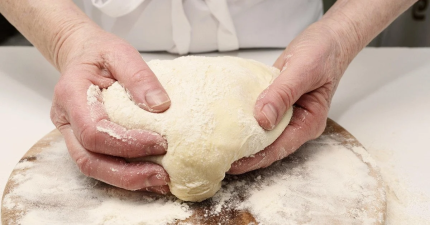
In yeast dough for buns
For buttery buns, vanillin is usually added during the preparation of the main dough.
Vanilla sugar can be mixed with regular sugar, and extract can be mixed with liquid ingredients.
If the recipe calls for a dough, it is not necessary to add the flavoring directly to the dough. It is more convenient to do this during the final mixing.
You should not add concentrated vanillin directly to a small amount of dough: this makes it more difficult to ensure its uniform distribution.
In cake and muffin batter
For cupcakes, vanilla extract is often added to eggs, butter, or a milk base.
Vanilla sugar can be mixed with other dry ingredients or with regular sugar.
The main thing is not to overmix the dough after combining the flour with the liquid base.
This is especially important for muffins: kneading too long can make the finished product denser.
In pancake and fritter dough
For pancakes, it is convenient to use vanilla sugar or a small amount of liquid extract.
The flavoring is introduced while mixing the eggs, milk, and other ingredients.
Keep in mind that pancakes are cooked in a pan where the surface of the dough comes into contact with high temperatures.
Therefore, too much vanillin can create a harsh taste. It is better to use a moderate dosage, especially if the pancakes will be served with sweet fillings.
Can I add vanillin to hot milk or butter?
Many recipes require you to preheat the milk, melt the butter, or prepare the custard base.
The question arises: will the vanilla flavor disappear if you add it to hot ingredients?
The answer depends on the specific vanilla product used and how long the heating will take.
For the melted butter
If the recipe calls for liquid vanilla extract, it is convenient to add it after the melted butter has cooled slightly.
This also helps avoid overheat- ing other ingredients, such as eggs.
However, there is no reason to believe that brief contact with warm butter necessarily destroys all of the vanilla flavor.
For milk and cream
Natural vanilla is often specially infused in warm milk or cream.
For example, a cut vanilla pod can be placed in milk and gradually heated to allow the aromatic substances to transfer into the liquid.
This is how the base for many custards and desserts is prepared.
If ready-made vanilla extract is used, it is often added after the main heating, especially when the dessert no longer needs to be baked.
This allows you to better preserve the complex aroma of the extract.
For the custard
If the cream is prepared on the stove, vanilla extract is often added after removing from the heat.
A natural pod, on the other hand, can be used at the initial stage of heating milk.
The procedure depends on the recipe, but it is important to avoid heating the finished cream for an unnecessarily long time.
How to preserve vanilla flavor in baked goods
If you want to get a particularly distinct flavor, you should work not only with the dough, but also with the finished dessert.
One of the most effective culinary techniques is to use vanilla in different parts of the product.
For example, a small amount of flavoring can be added to the dough, and a natural extract can be added to the cream or frosting.
Because the cream often does not undergo prolonged baking, its vanilla flavor can remain more pronounced.
Three ways to boost flavor without too much vanillin
1. Use vanilla cream. For sponge cakes or cupcakes, you can make a cream with a small amount of natural extract.
2. Add flavor to the frosting. Vanilla frosting on a cooled cupcake creates an extra layer of flavor.
3. Use vanilla syrup. For some biscuits, a syrup in which vanilla extract is added after the liquid has cooled is suitable.
These methods allow you to emphasize the aroma without significantly increasing the concentration of vanillin in the dough itself.
It is important to follow the dosage of each product and take into account the overall flavor intensity of the dessert.
Why vanillin can give baking a bitter taste
If a finished cupcake or cookie has an unpleasant aftertaste, you shouldn't always blame the oven temperature.
Sometimes the cause is an excessive amount of concentrated vanillin.
In small doses, it creates a familiar sweet aroma. In excess, the taste can become harsh and unpleasant.
It is especially easy to make a mistake if the recipe calls for vanilla sugar and uses pure vanillin in the same amount instead.
These are products with different concentrations.
How to fix excessive vanilla flavor
If the error is noticed before baking, it is sometimes possible to increase the total amount of dough by adding other ingredients in the correct proportions.
For example, if you have twice the amount of flavoring you need, you can make another batch of batter without vanilla and combine them.
However, this method only works when the dough structure allows for additional mixing.
If the dessert is already ready, it is impossible to remove the excess vanillin.
Cream or fruit filling may slightly change the perception of taste, but will not eliminate the cause itself.
What combinations best emphasize the vanilla aroma?
Vanilla pairs well with many ingredients, but its aroma is especially noticeable in desserts with a relatively mild flavor base.
Such products include:
butter and cream;
milk and cottage cheese;
white chocolate;
almonds and cashews;
apples, pears and peaches;
strawberries and raspberries;
cinnamon and cardamom;
lemon and orange zest.
In chocolate baked goods, vanilla can complement the cocoa flavor, although it is not necessarily the main flavor.
In citrus desserts, it softens the overall perception of sourness and creates a more rounded flavor profile.
However, a large amount of cinnamon, nutmeg, or other spices can overpower the vanilla.
Therefore, for baking with a distinct vanilla aroma, it is better to choose one or two additional flavor combinations.
How to properly store vanillin and vanilla sugar
Improper storage can gradually degrade the quality of flavors.
Vanillin and other aromatic products should be kept in a tightly closed container, protected from moisture, direct sunlight, and high temperatures.
It is especially important to avoid storing near a stove or oven.
Why does vanilla sugar lose its flavor?
If the package remains open for a long time, aromatic compounds can gradually escape into the surrounding air.
In addition, sugar can absorb moisture, which causes lumps to form.
Therefore, after opening a large package of vanilla sugar, it is better to pour it into an airtight container.
For pure vanillin, it is especially important to adhere to the storage conditions specified by the manufacturer.
Should vanilla extract be stored in the refrigerator?
Many alcohol-based vanilla extracts can be stored at room temperature in a dark place, if specified by the manufacturer.
However, non-alcoholic products and flavors with other ingredients may have different requirements.
Therefore, you need to focus on the label of a specific product.
Natural vanilla pods also require proper storage: they are protected from drying out, excessive moisture, and foreign odors.
Common mistakes when using vanillin in baking
Even a simple flavoring can ruin the result if you don't take into account its features.
Mistake 1. Replace vanilla sugar with pure vanillin in a 1:1 ratio.
Due to the different concentrations, this can lead to an overly strong aroma and unpleasant aftertaste.
Mistake 2. Add powder to only one part of the thick dough.
If the vanillin is poorly distributed, individual pieces of the finished pastry may have different flavor intensities.
Mistake 3. Increase the dosage due to a faint smell during baking.
The aroma from the oven is not an accurate indicator of the concentration of vanillin in the finished dessert. Some of the substances remain inside the product, even if the smell in the air has diminished.
Mistake 4. Heating ready-made creams for a long time after adding the extract.
For creams that do not require further cooking, it is often more convenient to add the vanilla component after the main heat treatment.
Mistake 5. Using expired or improperly stored flavorings.
They may lose intensity and change their taste.
Mistake 6. Ignoring other ingredients.
Strong flavors of cocoa, coffee, spices, or citrus zest can overpower vanilla, even if there is enough flavoring.
Conclusion
To ensure that the vanilla aroma is well felt in the finished baked goods, it is important to choose the right flavoring, follow the dosage, and distribute it evenly when kneading the dough.
Powdered vanillin is convenient to mix with dry ingredients, vanilla sugar is added together with regular sugar, and extract is added to the liquid part of the recipe.
Vanillin does not disappear instantly during baking, so there is no need to add it at the last minute or increase the amount significantly. For a richer result, you can combine vanilla in the dough with a fragrant cream, glaze or filling.
FAQ: Frequently Asked Questions About Vanillin in Dough
When is the right time to add vanilla to the dough - at the beginning or at the end?
Most often, vanillin is added during the main mixing of ingredients. It is convenient to pre-mix the powder with sugar or flour, and the liquid extract with liquid ingredients. Adding it at the end does not guarantee better preservation of the aroma.
How much vanillin is needed for 500 g of flour?
The amount depends on the concentration of the product. For some types of vanilla sugar, manufacturers recommend an 8g packet per 500g of flour. Pure vanillin is much more concentrated, so use much less according to the instructions.
Does the vanilla smell disappear during baking?
The aroma may change as some of the volatiles escape into the air and other flavor compounds are formed during heating. However, vanillin does not disappear completely under normal baking conditions. Its preservation depends on temperature, time and dough composition.
Can I add vanillin to hot milk?
Yes, vanilla ingredients can be used in recipes with heated milk. For example, natural vanilla pods are often infused in a warm milk base. Liquid extract for creams is often added after the main heating to better preserve its complex aroma.
What can I replace vanillin with in baking?
Instead of pure vanillin, you can use vanilla sugar, natural extract, vanilla paste, or vanilla bean seeds. However, these products have different concentrations, so they cannot be replaced by the same mass.
Why do baked goods taste bitter after adding vanillin?
One reason may be an excessive amount of concentrated vanillin. This is especially common when pure powder is used instead of vanilla sugar without recalculating the dosage. Bitterness may also be associated with other ingredients or excessive browning of the product.
Can I add vanillin to already mixed dough?
Yes, if the dough is not yet baked. However, you need to ensure that the flavoring is evenly distributed. This is easier to do for liquid dough than for thick shortcrust or yeast dough. You should not overmix the dough just to add vanillin.
Can I use vanilla sugar instead of regular sugar?
Yes, but you need to consider its aromatic concentration. Vanilla sugar is mostly made from regular sugar, but if you use too much of it, the aroma can become too intense. Usually, just a small amount of sugar is enough to replace it.
Why doesn't vanilla sugar give a strong aroma?
This could be due to low concentration of flavoring, improper storage, or recipe specifics. In baked goods with a lot of cocoa, spices, or citrus zest, the vanilla flavor may be weaker.
How to make the vanilla flavor in a sponge cake stronger?
Use a quality flavoring in the recommended amount and add it evenly during the preparation of the dough. If you need a particularly pronounced flavor, you can supplement the finished sponge cake with vanilla cream, icing or impregnation with natural extract.

