
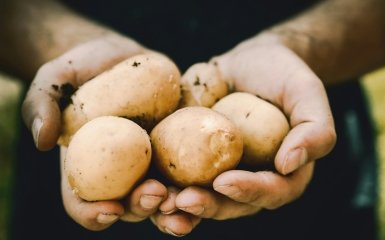
Potatoes are dug up not by a single calendar date, but by the condition of the plant, the weather, the variety, and what the harvest is for: for quick consumption, sale, seeds, or winter storage. If the tubers are dug up too early, the skin will be thin, the potatoes will be easily injured, and they will not store well. If you delay harvesting, you may lose part of the harvest due to rain, rot, pests, late blight, or the first frosts.
In most regions of Ukraine, mass digging of potatoes occurs at the end of August - September. But the exact dates depend on the planting date, the ripeness group of the variety, temperature, precipitation and the condition of the tops. For long-term storage, it is important to wait until the tubers ripen, the skin becomes denser, and after digging the potatoes undergo a short treatment period - drying and keeping in a dark, ventilated place.
When to dig potatoes: the main signs of ripeness
The most reliable guide is not the date on the calendar, but the condition of the bush and the skin of the tubers. Potatoes for storage must be fully formed. In a ripe plant, the tops turn yellow, dry out, and lie down, and the growth of new tubers almost stops.
The RHS advises that for a main crop that you plan to store, wait for the leaves to turn yellow, remove the tops, wait about 10 days, then dig up the tubers and let them dry for a few hours before planting.
To check for doneness, dig up 1–2 test tubers. If the tubers are the size typical for the variety and the skin does not peel off when lightly rubbed with your finger, the crop is ready to harvest. Iowa State University Extension explains: Harvest storage potatoes after the tops die back; if the skin is thin and easily rubbed, the crop is not fully ripe and it is best to wait a few days.
Early, medium and late varieties: why the timing is different
Early potatoes are intended primarily for quick consumption. They can be dug up when the tubers have reached the desired size, even if the skin is still thin. Such potatoes are tasty when young, but do not store well.
Mid-season and late-season varieties are better suited for winter storage. They stay in the soil longer, develop a denser skin and can keep for several months if stored properly. The RHS notes that early varieties are best used soon after harvest, while the main crop can be stored for several months.
In practice, it looks like this: early potatoes are dug selectively for food, medium potatoes - after the tops turn yellow, late potatoes - closer to autumn, but before stable cold weather and prolonged rains.
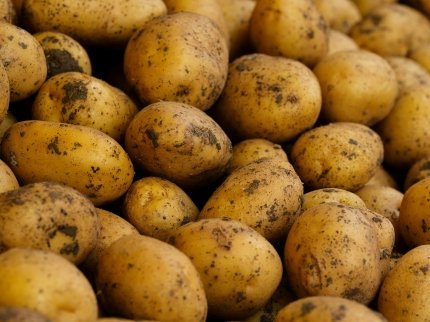
What weather is best for digging potatoes?
The best weather for harvesting is a dry, moderately warm day without rain. The soil should be dry enough not to stick to the tubers in a thick layer. If you dig after a rainstorm, the potatoes will take longer to dry, and excess moisture will increase the risk of rot.
Avoid harvesting in extreme heat. Overheated tubers, especially if left in direct sunlight for long periods, will deteriorate more quickly. It is also not advisable to dig before or immediately after a night frost. UC Davis notes that frost damage to potatoes begins at around -0.8°C and can manifest as watery texture, glassiness, and tissue destruction after thawing.
The ideal scenario for a summer cottage is to dig in the morning or early afternoon, dry the tubers in the shade or diffused light, sort them out and move them under a canopy or to a dark, ventilated place.
Do I need to mow the tops before digging?
If the tops have already turned yellow and fallen, they can be removed 7–10 days before digging. This helps the skin of the tubers to harden, and the area is easier to work. This method is especially useful if the potatoes are going to be stored for the winter.
If the tops are affected by late blight, it is dangerous to delay. It is better to remove the affected green mass, not to put it in the compost near the garden and not to wait for the infection to spread to the tubers. The RHS notes that with late blight, the crop can often be harvested and used if you act quickly, but such potatoes are not suitable for long-term storage.
Do not leave cut diseased tops in the garden. They can become a source of problems for the next season.
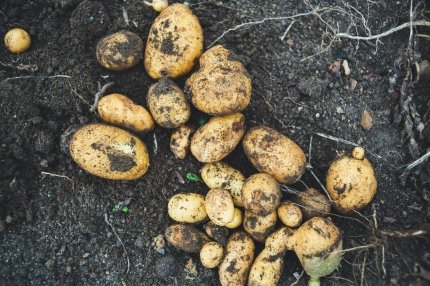
How to properly dig potatoes
The main task when harvesting is not to cut or bruise the tubers. Even a small scratch can become an entrance for infection, especially if the potatoes will be stored in the cellar for several months.
Dig away from the stem, not close to it. The RHS advises inserting the pitchfork about 30cm from the base of the plant to avoid piercing the tubers. A pitchfork is convenient on light soils, a spade on heavy soils, but the movement should be careful: it is better to lift the soil and pick the potatoes by hand.
If potatoes were planted by hand in uneven rows, mechanized digging with a walk-behind tractor can increase the number of cut tubers. Before starting the equipment, it is worth checking several rows and understanding the actual planting width.
What to do with potatoes immediately after digging them up
There is no need to wash potatoes after harvest. Moisture on the skin and water remaining around the eyes can accelerate spoilage. EUFIC advises against washing potatoes before storage, as excess moisture accelerates spoilage; if the tubers are dirty, it is best to gently remove excess soil with a dry cloth or brush.
The first stage after excavation:
lightly shake dry soil;
spread the potatoes in a thin layer;
dry for several hours in the shade or under a canopy;
do not leave in direct sunlight for a long time;
do not put wet tubers immediately into bags;
Set aside the chopped, beaten, and rotten potatoes separately.
It is better to use damaged tubers first. For winter storage, only healthy, dry, whole potatoes without wet spots, severe cuts, rot, and green areas are left.
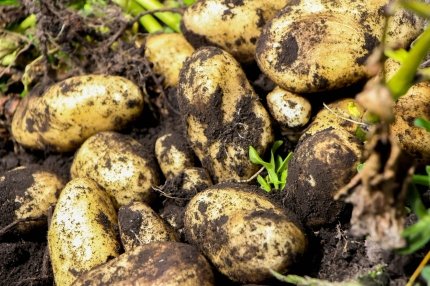
Treatment period: why do potatoes need “quarantine”?
After digging potatoes, a period of ripening, or curing, is required. In everyday life, it is often called quarantine. During this time, small scratches dry out, the skin hardens, and hidden problems become more noticeable.
Iowa State University Extension recommends that potatoes be stored for about two weeks at 50–60°F (10–16°C) and 85–90% relative humidity; this period helps heal minor cuts and tightens the skin.
At home, this could be a dark shed, cool pantry, garage, basement, or other place out of the sun, with moderate temperatures and ventilation. Do not store potatoes in plastic bags without air access. If the tubers “freeze,” the risk of rot will increase dramatically.
After the treatment period, the potatoes should be sorted again. Some tubers that looked normal when dug may show spots, wet rot, soft areas or signs of disease. Such specimens are not put into the general stock.
What should be the storage temperature of potatoes?
For long-term storage, potatoes need a cool, dark, moist, but well-ventilated place. Iowa State University Extension recommends storing potatoes after the curing period at a temperature of about 40°F (about 4°C) and a relative humidity of 90–95%. If the temperature is above 50°F (about 10°C), the tubers may begin to sprout in 2–3 months; if the temperature is below 40°F, the potatoes may take on a sweet flavor.
For a home cellar, a practical guideline is about +4…+7°C without freezing, sudden changes, and condensation. If the cellar is warmer, the potatoes will sprout faster. If it is colder and there is a risk of sub-zero temperatures, the tubers may freeze, become watery, and become unsuitable for normal storage.
Storing potatoes in an apartment is more difficult. A warm pantry, kitchen, or glassed-in balcony without temperature control do not provide stable conditions. If there is no other option, take a small supply, keep it in a dark, well-ventilated box, and change it regularly.
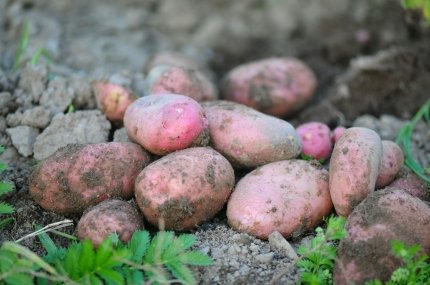
Light, humidity and ventilation: three conditions for good storage
Potatoes should be stored in the dark. In the light, the tubers turn green, and the content of natural toxins - glycoalkaloids - can increase in the green and sprouted parts. The WHO explains that higher concentrations of solanine and chaconine are found in the sprouts, bitter skin and green parts of potatoes; to reduce the risk, potatoes should be stored in a dark, cool and dry place and do not eat the green or sprouted parts.
Humidity should be sufficient to prevent the tubers from wilting. But this does not mean that the cellar should be damp. Excessive humidity, condensation, poor ventilation and a wet floor contribute to rot.
Storage containers should be permeable to air: wooden boxes, mesh bags, lattice containers, crates with ventilation gaps. Closed plastic bags are a bad option for long-term storage.
Can potatoes be stored next to apples, onions and other vegetables?
Potatoes should not be stored near apples or other fruits that actively release ethylene. Iowa State University Extension notes that ripening fruits release ethylene, which stimulates tuber germination.
EUFIC also advises against storing potatoes near onions, garlic and fruits or vegetables that emit ethylene, including apples, bananas, tomatoes, plums, avocados, watermelons and kiwis, as this can affect the taste and speed up sprouting.
It is better to place potatoes in a separate section in the cellar. Carrots, beets, and cabbage require different humidity and storage conditions, onions like drier air, and apples can speed up potato germination.
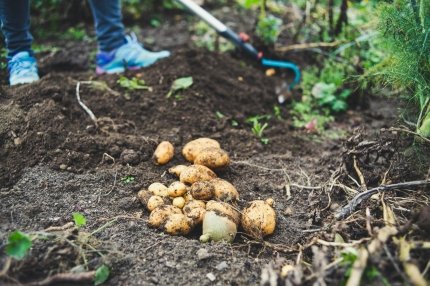
What tubers cannot be planted for the winter
Potatoes that have: should not be stored for long periods of time.
cuts from a shovel or walk-behind tractor;
severe impacts and dents;
wet spots;
signs of rot;
moldy;
unpleasant smell;
green areas;
large sprouts;
traces of pests;
soft or watery texture;
freezing.
UC Davis notes that post-harvest diseases are a significant source of potato losses, especially when combined with rough handling and poor temperature control. Therefore, it is best not to mix mechanically damaged tubers with healthy ones.
Sorting should be done at least twice: immediately after digging and after the treatment period. The third check is already in the cellar 2–3 weeks after planting.
What to do with green or sprouted potatoes
Greening is a signal that the tuber has been exposed to light. The green color itself is associated with chlorophyll, but it is often accompanied by increased levels of glycoalkaloids. The BfR explains that potatoes contain α-solanine and α-chaconine, which are most concentrated in the skin, sprouts and eyes; green parts indicate an increased content of glycoalkaloids.
Small green areas or small sprouts can sometimes be cut away generously, as long as the rest of the tuber is firm, fresh and not bitter. However, old, severely shriveled, soft, bitter, very green or heavily sprouted potatoes should not be eaten. The BfR advises against eating old, dried, green or heavily sprouted tubers, removing green parts and eyes generously, and not eating potato dishes if they taste bitter.
Be especially careful with potatoes for children. If there is any doubt about the quality of the tuber, it is safer to throw it away.
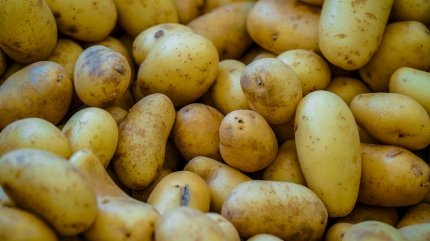
How to store seed potatoes
Seed potatoes should be selected separately while digging. For planting, it is better to leave healthy, medium-sized tubers from productive, strong bushes without signs of disease. Do not take seeds from bushes with rotten, deformed or suspicious tubers.
Seed potatoes are also dried, kept in a dark, ventilated place, and stored separately from food potatoes. They should be checked regularly in the winter: remove rotten tubers, monitor sprouts, and prevent freezing.
If the seed potatoes turn green in the light, they are not used for food, but for seed material, a short greening before planting is sometimes allowed to reduce rodent damage. However, this method must be done carefully and seed potatoes should not be mixed with food potatoes.
How often to dig potatoes in winter
Even properly stored potatoes need to be monitored. It is advisable to do the first check 2–3 weeks after transferring them to the cellar. After that, it is enough to inspect the stocks once a month, and more often in warm or wet winters.
When inspecting, remove any tubers that are soft, wet, moldy, have an unpleasant odor, or are sprouting rapidly. One rotten potato can spoil the neighboring ones, especially if it is stored in a tight bag without ventilation.
If potatoes sprout en masse, the storage is probably too warm or there is an ethylene source nearby. If the tubers are wilting and shriveling, it may be too dry or warm. If wet rot appears, check ventilation, humidity, and temperature.
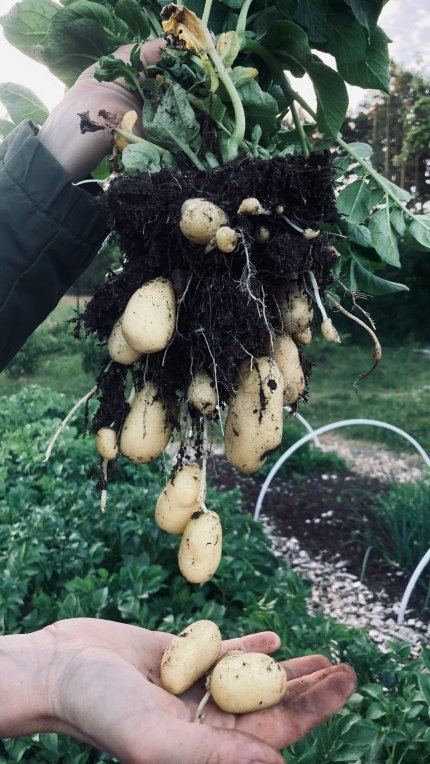
Common mistakes during digging and storage
The first mistake is to dig potatoes too early. The thin skin is easily damaged, and such tubers do not store well.
The second mistake is to harvest after rain and immediately put it in bags. Wet potatoes spoil faster.
The third mistake is washing potatoes before storing them in the cellar. For long-term storage, this increases the risk of rot.
The fourth mistake is leaving the tubers in the sun. Light provokes greening, and overheating worsens the quality.
The fifth mistake is to plant everything together: healthy, damaged, soft, and suspicious potatoes. Damaged tubers should be used first.
The sixth mistake is to store potatoes next to apples. Ethylene can accelerate germination.
The seventh mistake is not controlling the temperature. In a warm cellar, potatoes will sprout, but in a too cold one, they may become sweet or freeze.
Conclusion
Potatoes for winter storage should be dug when the plant has completed its growing season, the tops have turned yellow or died, and the skin of the tubers has become dense and cannot be rubbed off with a finger. In most regions of Ukraine, this is the end of August - September, but the final decision depends on the variety, weather, and the condition of the specific site.
After digging, the potatoes are not washed, but dried, sorted and kept for about 10–14 days in a dark, ventilated place. Only healthy, dry, undamaged tubers are stored for the winter. The best storage conditions are darkness, coolness, high relative humidity without dampness and good ventilation.
If you follow these rules, potatoes will sprout less, won't turn green, will lose moisture more slowly, and will be better preserved until spring.
FAQ
When to dig potatoes in Ukraine?
In most regions of Ukraine, potatoes are dug up en masse in late August and September. You need to focus on the variety, planting date, weather, and condition of the tops. For storage, it is better to wait until the tops turn yellow or die, and the skin of the tubers becomes dense.
How do you know if the potatoes are ripe?
Dig up 1–2 test bushes. If the tubers are of normal size and the skin does not rub off with your finger, the harvest is ready. If the skin is thin and peels off easily, it is better to leave the potatoes in the soil for a few more days.
Can I dig potatoes after rain?
It is possible, but not advisable. Wet soil sticks to the tubers, making it more difficult to dry the potatoes, and increasing the risk of rotting during storage. It is better to choose a dry day and let the soil dry out a bit.
Do you need to wash potatoes before storing?
No. Potatoes are not washed before storage, as excess moisture accelerates spoilage. It is better to carefully shake off any remaining dry soil or remove it with a dry brush.
How long should potatoes be dried after digging?
In dry weather, a few hours of initial drying in the shade or under a canopy is sufficient. Then, it is advisable to keep the potatoes for 10–14 days in a dark, ventilated place so that minor damage heals and the skin strengthens.
At what temperature should potatoes be stored?
After the treatment period, the optimal storage temperature is around +4°C, with a high relative humidity of 90–95%. In a home cellar, a practical guideline is around +4…+7°C without freezing and condensation.
Why do potatoes sprout in the cellar?
This is usually due to too high a temperature, light or storage next to fruit that releases ethylene. If the temperature is above about +10°C, the tubers may start to sprout after just a few months.
Can you eat green potatoes?
It is better not to eat the green parts. The WHO notes that solanine and chaconine can accumulate in the green and sprouted parts of potatoes, so potatoes should be stored in a dark, cool and dry place and the green or sprouted parts should not be consumed.
Why is it not recommended to store potatoes with apples?
Ripening fruits release ethylene, which can stimulate potato sprouting. Therefore, it is best to keep apples, bananas, tomatoes, and other ethylene-emitting foods separate.
What potatoes can't be planted for the winter?
Do not store cut, bruised, wet, soft, rotten, moldy, frozen, heavily sprouted, or green tubers for long-term storage. They should be used first or discarded if they show signs of spoilage.

