
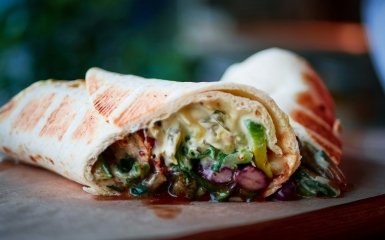
Shawarma in Kyiv is one of the most convenient fast food formats: it is bought near the metro, offices, universities, in food courts and small establishments near the house. But good taste and a long queue do not always mean that the point operates safely. The best approach is to evaluate not only the filling and price, but also how the establishment treats products, whether the work area is clean, how the staff contacts money and food, whether sauces and vegetables are not left open near heat. This does not give an absolute guarantee, but it significantly helps to reduce risks.
Why shawarma safety is important
Shawarma itself is not a "dangerous" food. It is the pita bread, meat, vegetables, sauce and toppings. The risks arise when the products are stored incorrectly, not heated enough, kept open or prepared without basic hygiene.
Several things are especially important for street food:
storage temperature of meat, sauces and vegetables;
separation of raw and finished products;
cleanliness of knives, boards, tongs and surfaces;
staff hand hygiene;
ingredient rotation speed;
the opportunity to see the cooking process.
The WHO's basic principles of safe food emphasize cleanliness, separation of raw and cooked food, thorough heat treatment, and safe storage temperatures. For the buyer, this can be translated simply: see what exactly happens to the product before it gets into the pita bread.
Where to find shawarma in Kyiv: not addresses, but types of places
The question "where to eat shawarma in Kyiv" is often reduced to a list of addresses. But addresses quickly become outdated: owners, staff, suppliers, customer flow and quality control change. It is more reliable to assess the type of establishment and the specific situation on site.
Stationary points near the metro
Shawarma near the metro is convenient because of the large flow of people. The plus is that the products can be updated quickly. The minus is that the high pace of work sometimes leads to haste, inattention to cleanliness or contact of money and food.
A good sign is when there is a separate person for calculation or the staff changes gloves after working with money.
Small establishments with open kitchens
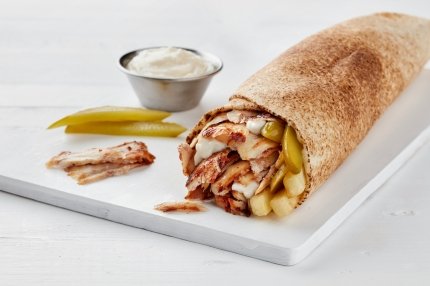
A format where you can see the grill, refrigerators, containers, and the process of assembling shawarma is easy to evaluate. If employees don't hide the kitchen, answer questions about the inventory, and behave neatly, this is a positive signal.
But an open kitchen doesn't automatically guarantee safety. It's important to look at the details: are surfaces clean, is cooked meat not left uncovered for a long time, is sauces not standing near hot equipment?
Food courts and fast food cafes
Food courts often have a clear menu, receipt, cashless payment, and a standardized process. At the same time, quality depends on the specific team, workload, and internal control.
As with any other place, it's not the brand or sign that counts, but the actual cleanliness and behavior of the staff that counts.
First point estimate in 30 seconds
Before ordering, do a quick check. It doesn't require any special knowledge.
Cleanliness of the display case and work area
Please note:
cleanliness of glass, counter and surfaces;
no food leftovers on the assembly table;
neat containers with vegetables;
closed or concealed ingredients;
absence of a sharp unpleasant odor;
clean tongs, knives, boards and napkins.
If the work area looks neglected and the products are laid out in a chaotic manner, it is better to look for another place.
Staff behavior
Staff must not only cook quickly, but also handle food safely. Warning signs:
they take money and pita bread with the same hands;
There are gloves, but they are used to touch the phone, cash register, face, and products;
raw or semi-finished meat comes into contact with finished ingredients;
the employee ignores the request to clarify the composition;
There is a noticeable haste, which disrupts order.
Gloves alone do not guarantee hygiene. What is more important is whether they are changed at the right time and whether tweezers or tools are used.
Customer flow and product rotation
A queue can be a good sign: if there are a lot of people, the ingredients probably haven't been sitting around for hours. But this is not an absolute criterion. Popularity can be explained by low price, convenient location, or shopping habits.
It is better to combine this signal with others: cleanliness, temperature, appearance of products, and reviews.
How to tell if ingredients are fresh
The signs of fresh shawarma are visible even before the first bite.
Meat
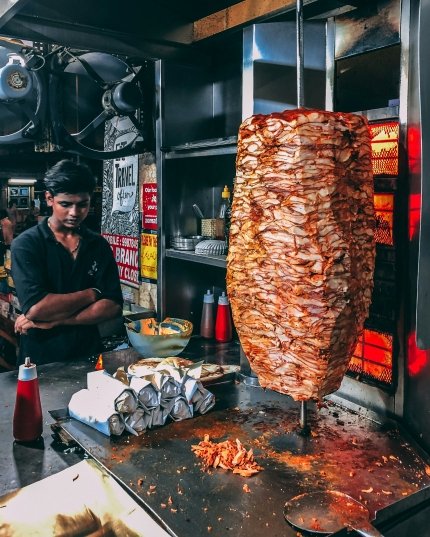
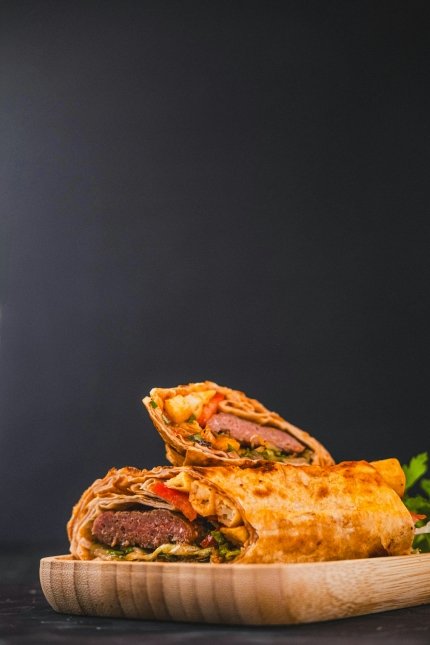
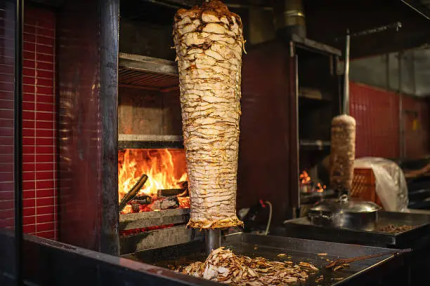
The meat on the spit should look evenly cooked on the outside. It is advisable to use the cut pieces immediately or keep them in conditions that maintain a safe temperature. If the meat is left lying in a pile on an open surface for a long time, this is a reason to be wary.
Avoid the period if the meat:
has an unnatural smell;
looks raw inside after cutting;
lies uncovered next to raw foods;
has a crust that is too dry, dark, and has been overcooked several times;
heats unevenly or in a hurry.
Vegetables and herbs
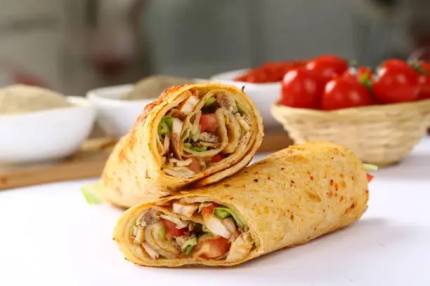
Vegetables should look fresh: no slimy texture, browning, dried edges, or excess liquid in the container. This is especially true for cabbage, cucumbers, tomatoes, and greens.
If vegetables are left uncovered near a grill or in the sun, their quality may deteriorate faster.
Pita
The pita bread should be elastic, without mold, strange odors, or excessive dryness. If it crumbles before it is heated, the shawarma may fall apart and the taste will be worse. This is not always a safety issue, but a sign of inattention to the product.
Sauces
Sauces are one of the most underrated items. Mayonnaise, garlic, cheese or yogurt sauces need careful storage. They should not be left open in the heat or have a suspicious smell, changed texture or a dried crust.
If in doubt, you can ask for less sauce or choose the option without it.
Sauces, vegetables and temperature: what is most often underestimated
Shoppers often look only at the meat, but food safety depends on all the ingredients. Even well-done meat can't compensate for sauce that's been sitting out in the open or vegetables that's been sitting out for a long time.
Pay attention to where the ingredients are stored. A refrigerated display case, closed containers, and clean spoons or tongs for each item are good signs. A worse option is when all the toppings are next to the grill, without covers, and one tool is used for everything.
It's also important to warm the finished shawarma well, but not burn it. Warming makes the pita more palatable and helps to absorb the flavor, but it doesn't "fix" ingredients of questionable quality.
The reputation of the establishment: how to read reviews without self-deception
Reviews about shawarma in Kyiv can be useful, but they should be read critically. One emotional comment is not always indicative. Repeated signals are more important.
Pay attention to:
several similar complaints on different dates;
mentions of cleanliness or dirt;
photos of real food, not just promotional shots;
comments on quality stability;
the institution's response to complaints;
freshness of reviews, not just the overall rating.
If many reviews mention bad smells, freshness issues, or feeling unwell after eating, it's something to take seriously. But the final decision should still be based on what you see on site.
Check, menu, transparency and communication
A reliable fast food establishment usually doesn't shy away from simple questions. You have the right to clarify:
what meat is used;
is there hot sauce;
can a certain ingredient be removed;
whether the sauce contains dairy products, eggs, mustard or other potential allergens;
Can I get a check?
Having a clear menu, official payment, and receipt doesn't guarantee perfect quality, but it adds transparency. If the staff is rude to basic questions or can't explain the ingredients, it's not the best signal, especially for people with dietary restrictions.
When is it better to refuse a purchase?
Sometimes the smartest decision is not to take any risks. You should refuse to buy if you see several of these signs:
unpleasant or sour smell near the display window;
dirty surfaces, sticky containers, food residue on the desktop;
the meat looks undercooked;
cut meat lies uncovered for a long time;
sauces stand open near heat;
vegetables are wilted, slimy or have a lot of liquid;
the employee takes payment and immediately touches the products;
there is no clear menu or the staff does not answer simple questions;
Complaints about freshness and cleanliness are regularly repeated in reviews.
One flaw doesn't always mean danger. But if several red flags coincide, it's better to choose another place.
How to order shawarma more wisely
Even in a normal establishment, you can make your order more successful and predictable.
Practical tips:
order shawarma where it is prepared in front of you;
choose a point with a noticeable rotation of products;
ask for less sauce if you are not sure about its storage;
Check the ingredients if you have allergies or dietary restrictions;
eat shawarma immediately after cooking;
do not leave it in a bag, car or warm room for a long time;
don't buy the "last batch" at the end of the day if the ingredients look tired;
Pay attention to your own sensations: a strange smell or taste is a reason to stop eating.
For children, pregnant women, the elderly, and people with chronic digestive system diseases, it is worth being especially careful. In such cases, it is better to choose establishments with the most transparent process and understandable composition.
A short checklist before buying
Before you buy shawarma, ask yourself a few questions:
Is the work area clean?
Does the staff look neat?
Don't money and food come into contact through the same hands or gloves?
Does the meat look well-cooked?
Does cut meat lie open for a long time?
Do the vegetables and herbs look fresh?
Are sauces stored away from heat?
Is there a clear menu and the ability to specify the ingredients?
Are there any recurring negative reviews about cleanliness?
Do you want to eat here after the visual assessment?
If most of the answers are positive, the risks are lower. If there are many doubts, it is better to walk a few more minutes to another point.
FAQ
Is shawarma safe near the metro in Kyiv?
It can be safe if the location maintains hygiene, has a fast product rotation, a clean work area, and handles ingredients properly. Just being near a metro station is no guarantee of quality or risk.
Should you trust a long queue?
A queue may indicate popularity and rapid product renewal, but it does not guarantee food safety. Additionally, evaluate cleanliness, the appearance of ingredients, and the behavior of the staff.
How to understand that the meat in shawarma is normal?
It should look well-cooked, with no fishy odors, raw areas, or signs of being left out for a long time. If the meat is lying around in a pile and not being used right away, it's a reason to be wary.
Can sauces be a problem?
Yes, under certain conditions. Sauces, especially those based on mayonnaise, dairy, or eggs, require careful storage. If they have been left uncovered in a warm place or have a strange smell or texture, it is best to avoid them.
Can shawarma be given to children?
It depends on the child's age, the composition of the shawarma, the spiciness, the amount of sauce, and the quality of the establishment. For children, it is worth choosing the simplest possible composition, without spicy sauces, and only in places where the clean cooking process is visible. If in doubt, it is better to choose another food.
What to do if shawarma has a strange smell or taste?
Do not continue eating. It is better to refuse the product, even if it has just been purchased. If you experience severe symptoms of malaise after eating, you should consult a doctor.
Do good reviews guarantee quality?
No. Reviews are just an additional guide. It's important to look at the freshness of comments, repeated mentions of cleanliness and photos, and to evaluate the property on the spot.
Is it better to buy shawarma in a cafe rather than a kiosk?
Not always. A cafe may have better facilities, but it all depends on the specific establishment. A clean kiosk with a transparent process may inspire more trust than a cafe with a messy work area.
Conclusion
Safe shawarma in Kyiv is not just a matter of address or popularity. The most important thing is how the establishment works with products: is the workplace clean, is meat, vegetables, and sauces handled properly, is the staff hygienic, and is it possible to understand the ingredients and get a normal answer to a question.
Don't look for the "perfect" spot based on one criterion. Evaluate a combination of features: cleanliness, freshness, temperature, reviews, transparency, and your own impression. If something looks questionable, the best strategy is to take no chances and choose another place.
Disclaimer: The material is for informational purposes only and does not constitute medical advice or an official sanitary assessment of establishments. If you experience severe pain, vomiting, diarrhea, fever, signs of dehydration, or other worrisome symptoms after eating, consult a doctor.

