
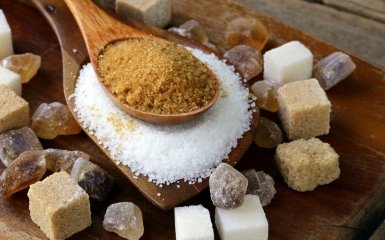
Whether white, brown cane, coconut, demerara, or muscovado, these types of sugar vary in price, color, flavor, and production method. However, a more expensive or less processed product is not necessarily healthier.
Points of attention
- White, brown, and coconut sugar have similar caloric values; there is no convincing evidence that one type is significantly better than the others.
- It is more important for health to limit your overall intake of free sugars than to focus on their color or origin.
- Cane sugar can be either white or brown; the color and caramel flavor of brown sugar are due to molasses.
White, cane, and coconut sugars are all similar in caloric content and are sources of simple carbohydrates. The main differences between them are taste, molasses content, crystal size, moisture content, and cooking behavior. There is no convincing evidence that coconut or brown sugar is significantly healthier than white sugar in normal dietary amounts.
For a delicate sponge cake, regular white sugar is most often suitable, for soft cookies - brown, for a distinct caramel flavor - muscovado, and for a crispy topping - demerara.
At the same time, replacing white sugar with coconut sugar does not make the dessert diet-friendly and does not mean that it can be eaten without restrictions.
Let's consider the composition of popular types of sugar, their nutritional value, effect on glucose levels, and features of their use in baking.
Which sugar is healthier: short answer
From a healthy eating perspective , the amount of sugar consumed is crucial, not its color or origin .
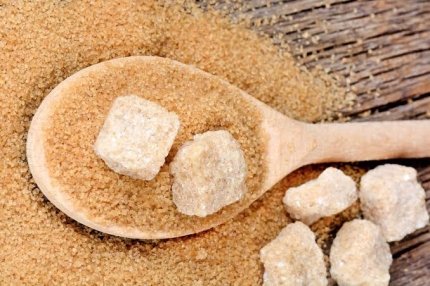
White sugar is almost entirely made up of sucrose. Brown sugar contains molasses, and coconut sugar is made from the sap of the coconut palm blossoms.
Small amounts of minerals and other components may remain in less refined products.
However, according to the British Heart Foundation, their nutritional benefits in normal portions are negligible.
The World Health Organization recommends limiting your intake of free sugars, regardless of where they come from.
So, coconut sugar can be chosen according to taste, but you should not consider it as a full-fledged healthy replacement for regular sugar.
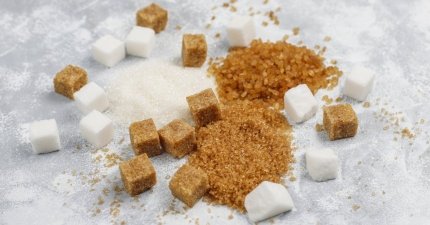
Comparison of white, cane and coconut sugar
| Type of sugar | Main features | Taste | What is it suitable for? |
| White | Highly purified sucrose | Neutral sweet | Biscuits, creams, syrups |
| Brown | Sucrose with molasses | Caramel | Cookies, brownies, gingerbread |
| Light reed | May contain a small amount of molasses | Soft caramel | Cupcakes, drinks, desserts |
| Coconut | Made from coconut sap | Caramel, sometimes with nutty notes | Oatmeal cookies, banana bread |
| Demerara | Large crystals with molasses | Light caramel | Baking sprinkles |
| Muscovado | High molasses content | Rich, spicy | Gingerbread, chocolate desserts |
| Powdered sugar | Very finely ground sugar | Neutral | Glaze, creams, decoration |
All of the listed foods mainly provide the body with energy thanks to sugars.
Therefore, comparing them only by the names "natural", "unrefined" or "organic" is wrong.
How is white sugar different from cane sugar?
A common myth is that white sugar is necessarily made from beets, and brown sugar is made from cane.
In fact, both sugar beets and sugar cane can be raw materials for the production of white refined sugar.
During the purification process, sucrose is obtained from them.
If the final product has a high degree of purification, its basic nutritional properties are practically independent of its origin.
Is there a difference between beet and cane white sugar?
In terms of basic chemical composition, the difference is minimal.
Both products are primarily composed of sucrose, a disaccharide formed from glucose and fructose.
In common culinary use, they are often interchangeable.
Differences may relate to crystal characteristics, technological impurities, and production features.
However, the claim that white cane sugar is automatically healthier than beet sugar does not have sufficient scientific basis.
Why does brown sugar taste different?
The color of brown sugar is primarily due to molasses, a byproduct of sugar production.
It contains sugars, water, and small amounts of other substances that affect the taste and aroma.
Brown sugar can be obtained in various ways.
In some cases, some of the natural molasses remains after processing the cane juice.
In others, it is added to pre-refined white sugar.
Therefore, brown color alone does not prove that the product is less processed.
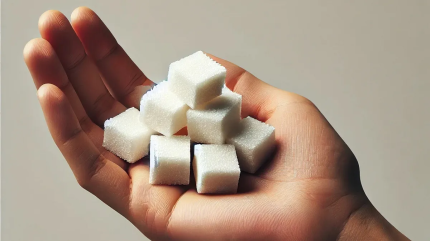
What is the difference between light brown sugar and dark brown sugar?
The main difference is the amount of molasses.
According to King Arthur Baking School, typical American varieties of light brown sugar contain about 3.5% of the sugar, while dark sugar contains about 6.5%.
These indicators are not a universal standard for all manufacturers.
Light sugar has a more delicate caramel flavor.
Dark — richer aroma, darker color, and a more noticeable effect on the taste of baked goods.
For most simple recipes, these two varieties can be substituted for each other, although the color of the finished dish will change slightly.
What is coconut sugar and how is it made?
Coconut sugar is not made from coconut pulp or coconut milk.
It is made from the sweet sap of coconut palm blossoms.
The juice is heated to remove a significant portion of the water, and the resulting mass is converted into granules or crystals.
The finished product usually has a brown color and a caramel aroma.
Despite its name, it most often does not have a distinct coconut flavor.
Does coconut sugar contain vitamins and minerals?
It may contain small amounts of potassium, iron, and other mineral components.
However, their content depends on the raw materials and production technology.
Nutritionists at the British Heart Foundation emphasize that to obtain significant amounts of such substances, you would have to consume too much sugar.
Therefore, using coconut sugar as a source of vitamins or minerals is impractical.
A balanced diet provides these nutrients from other foods without the need to increase your intake of added sugars.
How many calories are in different types of sugar?
Most common types of sugar have similar energy value.
Carbohydrates provide approximately 4 kcal per gram.
Accordingly, 10 g of sugar provides approximately 40 kcal.
The exact energy value of a particular product may vary slightly due to moisture, molasses content, and other ingredients.
| Number | Approximate energy value |
| 1 level teaspoon, approximately 4 g | 16 kcal |
| 2 teaspoons, approximately 8 g | 32 kcal |
| 1 tablespoon, approximately 12 g | 48 kcal |
| 25 g | 100 kcal |
| 50 g | 200 kcal |
| 100 g | 400 kcal |
These are approximate calculations for sugars, not exact laboratory figures for each variety.
Replacing 20 g of white sugar with 20 g of coconut sugar does not provide a significant reduction in the calorie content of the dish.
If the goal is to reduce the amount of energy from added sugars, it is more important to reduce their total amount.
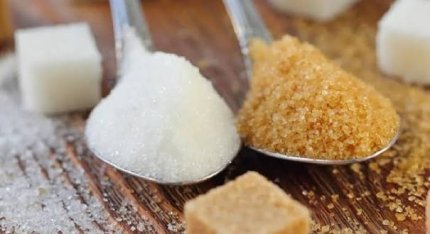
Is it true that coconut sugar has a low glycemic index?
Coconut sugar is often advertised as having a lower glycemic index than regular sugar.
The glycemic index, or GI, characterizes the change in blood glucose levels after consuming a certain amount of available carbohydrates under standardized conditions.
Some studies have indeed reported lower rates for certain types of palm sugar.
However, the data does not provide sufficient evidence to claim that any coconut sugar has a consistently low GI.
The British Heart Foundation notes that there is insufficient quality evidence to recommend coconut sugar over regular sugar.
Why you can't focus only on the glycemic index
The body's actual reaction depends on the amount of carbohydrates consumed, the composition of the entire meal, and individual characteristics.
For example, the same portion of sugar in a sweet drink and in a dessert with fats and proteins may be absorbed at different rates.
Additionally, a low glycemic index does not mean low calorie content.
Therefore, advertising claims about "safe sugar" should be evaluated critically.
What sugar can you eat with diabetes?
White, brown, cane, and coconut sugar all contain carbohydrates that need to be considered when monitoring your diet.
None of these products are automatically safe substitutes for regular sugar for people with diabetes.
The American Diabetes Association recommends focusing on overall carbohydrate intake, eating a balanced diet, and limiting added sugars.
Therefore, replacing white sugar with brown sugar without changing the amount will not necessarily improve glucose control.
Be especially careful with products labeled "natural," "organic," or "unrefined."
These designations do not mean that sugar does not affect blood glucose levels.
The material is for informational purposes only. Self-medication can be harmful to health. If you have any diseases, including diabetes, you should first consult a doctor before changing your diet.
How much sugar can you consume daily?
The World Health Organization recommends that adults and children limit free sugars to less than 10% of their daily energy intake.
For a person consuming approximately 2,000 kcal per day, this corresponds to less than 50 g of free sugars.
An additional reduction of up to 5% of energy value — approximately 25 g for such a diet — may have additional benefits.
What is included in the concept of free sugars?
According to the WHO, these are sugars that are added to food or beverages during production or preparation, as well as sugars naturally present in honey, syrups, and fruit juices.
So, the total amount doesn't just include the sugar in the tea.
This also includes the corresponding sugars from sweetened beverages, desserts, store-bought sauces, syrups, and other products.
Sugars inside whole fruits do not equate to free sugars in these guidelines.
Why it's not just the taste of sugar that's important in baking
Sugar performs several technological functions.
It affects dough structure, moisture retention, crust formation, and the appearance of the finished dessert.
For example, when beating butter with sugar, the crystals help form small air cavities.
This is important for certain cupcakes and biscuits.
Sugar also helps retain moisture, affects the structure of the protein components of the dough, and participates in the processes of color and flavor formation during heating.
That's why replacing one variety with another can change the result even with the same sweetness.
Why brown sugar makes cookies softer
Molasses contains components that help retain moisture.
Therefore, cookies made with brown sugar often turn out softer and more chewy.
King Arthur Baking confirms this difference in culinary tests.
White sugar, when used in the right recipe, often contributes to a crispier texture.
However, the result also depends on the amount of butter, flour, eggs, temperature, and baking time.
Which sugar is better to choose for different desserts?
| Dish | Practical choice | Expected result |
| Light sponge cake | White fine crystalline | Neutral taste and light color |
| Shortbread | White or prescription powder | From crispy to tender texture |
| Chocolate cookies | Brown or a mixture of white | Caramel notes, softer middle |
| Brownie | White or brown according to the recipe | Differences in sweetness and moisture |
| Gingerbread cookies | Dark brown or muscovado | Rich molasses flavor |
| Banana bread | White, brown or coconut | Different intensity of caramel flavor |
| Muffins with sprinkles | Demerara for the surface | Crispy crystals |
| Butter cream | Powdered sugar | Homogeneous consistency |
| Meringue | Fine white sugar | Easier dissolution in protein mass |
| Jam | Sugar according to a proven recipe | Proper gelling and storage |
These are guidelines for choosing flavor and texture, not a rule of mandatory substitution of ingredients in every recipe.
Can I replace white sugar with coconut sugar in baking?
In many simple recipes, such a substitution is possible.
However, the statement that coconut sugar can always be used instead of white sugar in a 1:1 ratio without changing the result is too categorical.
Its aroma, crystal size, and properties may vary.
For example, replacing white sugar with coconut sugar in banana bread can give the dessert a darker color and a more pronounced caramel flavor.
But for a white sponge cake or delicate meringue, such a replacement may not be successful.
How to experiment with substitution correctly
Start with recipes where color and caramel flavor are not an issue.
For your first attempt, you can replace only part of the regular sugar.
Evaluate not only the sweetness, but also the texture of the dough after baking.
If the recipe specifies the amount of ingredients in grams, use a kitchen scale.
The same volume of different types of sugar does not always have the same mass.
What are demerara and muscovado used for?
Both varieties are usually made from sugarcane, but their culinary properties differ significantly.
Demerara - for a crispy crust
Demerara has large golden crystals.
They dissolve more slowly and can create a nice crunchy texture.
Therefore, it is convenient to use for sprinkling muffins, fruit pies, and buns before baking.
However, large crystals are not always well suited for a delicate, homogeneous dough.
Muscovado — for a rich aroma
Muscovado has a distinct molasses flavor, moist texture, and dark color.
It pairs well with chocolate, ginger, cinnamon, and other spices.
This sugar can be used in gingerbread, puddings, and rich chocolate desserts.
However, in light vanilla products, its flavor may overpower the other ingredients.
How is powdered sugar different from regular sugar?
Powdered sugar is finely ground sugar.
A small amount of starch is added to some industrial products to prevent lumps from forming.
Due to its fine structure, the powder mixes quickly with other ingredients.
That is why it is used for butter creams, icing, and dessert decorations.
But powdered sugar can't always replace regular sugar in dough.
When whipped with butter, it has a different effect on the formation of air cavities.
As a result, the texture of the baked goods may change.
Why you shouldn't reduce sugar in jam yourself
In home canning, sugar serves more than just the role of a sweetener.
It can affect gelation, water activity, and product stability during storage.
The American National Center for Home Food Preservation emphasizes that the correct balance of fruit, sugar, pectin, and acid is important in traditional jam recipes.
If you replace sugar with coconut sugar without checking or drastically reduce its amount, the finished product may have a different structure and storage requirements.
There are special recipes and types of pectin for jams with reduced sugar content.
Therefore, the canning recipe should not be changed at random.
Is it worth overpaying for coconut and brown sugar?
The price depends on the brand, origin of raw materials, production technology and packaging.
However, more expensive packaging does not guarantee greater health benefits.
For everyday use in drinks and most simple recipes, white sugar is often sufficient.
Brown or muscovado makes sense to buy when you need a specific flavor and texture.
Coconut can be chosen for its taste, but not because of the promise of significantly lower calories.
How to read packaging correctly
Pay attention to the product name, composition, and nutritional value.
For example, the label “brown” does not by itself indicate whether the sugar contains natural molasses or whether it was added after refining.
Similarly, the designation “organic” describes certain production conditions, but does not mean less sucrose.
It is useful to compare the sugar content per 100 g of product, and not to rely solely on advertising formulations.
The most common myths about different types of sugar
Brown sugar is healthier than white sugar. The presence of molasses does not make it a fundamentally healthier product.
Coconut sugar does not raise glucose. It contains digestible carbohydrates and needs to be considered in the diet accordingly.
Cane sugar is always brown. White refined sugar is also made from cane.
Unrefined sugar can be eaten without restrictions. The degree of processing does not override the recommendations for free sugars.
All types of sugar behave the same in baking. Molasses, crystal size, and moisture can all change the texture of a dessert.
It is enough to replace white sugar with coconut sugar to lose weight. With the same portions, the energy value remains close.
Powdered sugar completely replaces regular sugar. In some recipes, it affects the structure of the dough differently.
Conclusion
White, cane, and coconut sugar differ primarily in their production method, taste, and culinary properties.
From a health perspective, none of them has a convincingly proven universal advantage that would allow you to ignore the amount of sugar consumed.
For baking, the choice depends on the desired result: white sugar provides a neutral flavor, brown adds moisture and caramel notes, demerara creates a crunchy topping, and muscovado provides a rich aroma.
The best sugar is the one that suits the specific recipe. And for a healthy diet, it's more important to control the total amount of added sugars than to substitute one expensive variety for another.
FAQ: Frequently Asked Questions About White, Cane, and Coconut Sugar
1. Which sugar is healthier — white or brown?
Brown sugar has no proven health benefits. It may contain small amounts of minerals from molasses, but in regular servings, there are not enough to consider it a significant source of nutrients.
2. Is it true that coconut sugar has fewer calories?
Coconut sugar has about the same energy value as other regular sugars. Replacing the same amount of white sugar with coconut sugar does not provide a significant reduction in the calorie content of a dish.
3. Can I eat coconut sugar if I have diabetes?
Coconut sugar contains carbohydrates that may affect blood glucose levels. It should not be considered a safe, unlimited substitute for regular sugar. Individualized diabetes nutrition should be coordinated with a doctor.
4. How is cane sugar different from regular white sugar?
Cane sugar is made from sugar cane, while regular white sugar can come from either cane or sugar beet. After a high degree of purification, the main substance in both cases is sucrose.
5. What sugar is best to use for biscuits?
White granulated sugar is suitable for most light biscuits. It has a neutral taste and works well in recipes where the stability of the whipped mass is important. At the same time, you should follow a specific recipe.
6. Why are cookies with brown sugar softer?
Molasses helps retain moisture and affects the texture of the dough, so when used in the right recipe, brown sugar can make cookies softer and chewier than regular white sugar.
7. Can I replace white sugar with coconut sugar in a 1:1 ratio?
In many simple recipes, this substitution is possible, but the result may change. Coconut sugar gives a different taste, color and sometimes texture. For delicate sponge cakes, meringues and complex desserts, it is better to stick to a proven recipe.
8. What is the difference between Demerara and Muscovado?
Demerara usually has large golden crystals and is good for a crunchy topping. Muscovado is darker, wetter, and contains more molasses, giving baked goods a rich caramel flavor.
9. Can I replace sugar with honey to make the dessert healthier?
Honey also contains free sugars and provides energy. It differs in moisture, taste and composition, but does not eliminate the need to limit sugar intake. In baking, such a replacement also changes the characteristics of the dough.
10. How much sugar can you consume per day?
The WHO recommends limiting free sugars to less than 10% of daily energy intake. For a diet of approximately 2000 kcal, this is less than 50 g per day. A further reduction to 25 g may have health benefits.

