
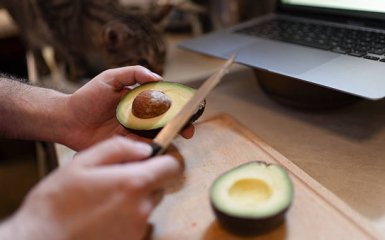
Even an expensive kitchen knife can lose its sharpness after just a few weeks of use. It starts to crush tomatoes instead of neatly cutting the skin, it slips on onions and it takes more and more effort to cut meat. Often the reason is not the quality of the steel, but everyday habits that gradually damage the cutting edge. A kitchen knife quickly becomes dull due to contact with hard cutting boards, incorrect cutting techniques, using the blade for purposes other than its intended purpose, washing in the dishwasher and storing without protection. Sharpness is also affected by the properties of the steel, the geometry of the blade and the method of sharpening.
Manufacturers WÜSTHOF, Victorinox, ZWILLING and Shun recommend paying attention not only to sharpening, but also to the material of the board, the nature of the load and proper care after each use.
It is important to distinguish between normal dullness, deformation of the thin cutting edge and the appearance of chips. Each case requires a different method of restoration.
Let's look at the ten most common reasons why kitchen knives lose their sharpness, how to choose the right cutting board, what distinguishes a whetstone from a whetstone, and how to extend the life of even an inexpensive knife.
Why does a kitchen knife lose its sharpness: what happens to the blade?
The cutting edge of a knife is an extremely thin section of metal where the two surfaces of the blade meet.
Its geometry allows you to separate product fibers with relatively little effort.
During each cutting movement, the edge comes into contact not only with the product, but often with the cutting board as well.
Gradually it changes its shape.
This can happen in several ways.
Metal wear
During regular use, microscopic metal particles are gradually removed from the cutting edge.
As a result, its top becomes less thin.
This process is natural even for high-quality steel.
Edge deformation
Under load, a very thin part of the blade can deflect or bend.
This is especially true for some knives made of relatively ductile steel.
Sometimes sharpness can be partially restored by correction.
Formation of chips
If a fragile or very thin edge is subjected to excessive stress, small particles may break off.
This happens, in particular, when contacting bones, hard objects, or when the blade is twisted sideways.
Blunting, edge bending, and chipping are all types of damage. A regular musat cannot remove any of them.
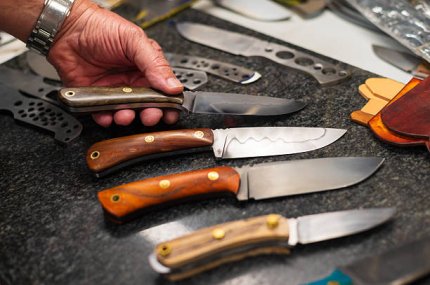
How to understand why a knife cuts poorly
Before sharpening, it is worth assessing how the knife's performance has changed.
| Sign | Possible cause | What to do |
| The knife crushes the tomato | Worn or deformed edge | Check the condition of the blade, adjust or sharpen if necessary. |
| Cuts paper poorly | Uneven sharpness or damage | Inspect the edge and check the sharpening |
| The knife only cuts in individual sections | Local dullness or chips | Check the damaged part |
| The blade seems to cling to the product | Possible burrs or edge defects | Carry out appropriate sharpening or sharpening |
| Noticeable chips appeared | Contact with solid materials, lateral load | Restore blade geometry |
| The knife cuts well after sharpening, but dulls quickly. | Incorrect angle, steel nature or usage conditions | Check equipment and tools |
| The blade has red spots. | Corrosion | Assess the condition of the metal and clean it properly |
Such signs help determine the direction of inspection, but do not always allow you to accurately determine the cause without examining the edge.
1. A glass or stone cutting board quickly dulls the blade
One of the most common reasons for rapid knife wear is using a cutting surface that is too hard.
Glass boards are attractive in appearance and easy to clean.
However, they are not suitable for regular knife work.
The glass is almost not deformed under the pressure of the cutting edge.
As a result, the thin part of the blade is subjected to significant contact load.
WÜSTHOF recommends avoiding cutting on glass, metal and other very hard surfaces.
Which boards are particularly undesirable?
For everyday cutting with kitchen knives, it is better not to use:
Glass boards.
Marble and granite slabs.
Ceramic plates.
Metal trays.
Stone countertops.
Other hard surfaces not intended for knife work.
For example, if you regularly slice a lemon directly on a ceramic plate, the edge will contact a very hard surface at the end of each stroke.
Such a load can accelerate its wear.
Which cutting board is best for a knife?
For daily use, wood or food-grade plastic is most often recommended.
Both materials are able to yield somewhat under the pressure of the blade, reducing the load on the cutting edge.
However, not all wooden planks are the same.
The type of wood, the direction of the fibers, the quality of the finish, and the hardness of the surface are all important.
For example, the manufacturer WÜSTHOF specifically warns against excessively hard materials, including bamboo.
Therefore, the statement that any bamboo board is automatically better than a plastic one is not true.
2. A knife is used to scrape food off the board.
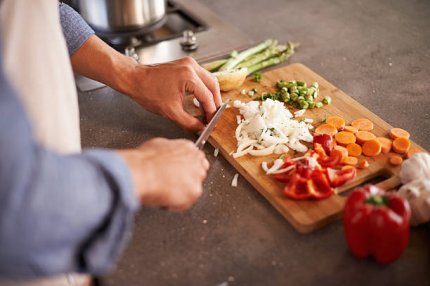
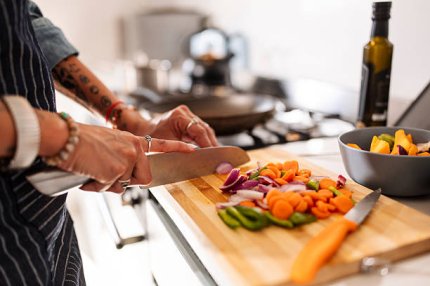
After chopping onions, herbs, or vegetables, many people use a knife instead of a spatula.
The blade is used to pick up pieces from the cutting board and move them to a bowl or pan.
This is convenient, but such a habit can accelerate dullness.
Especially if the cutting edge is pressed against the board and moves sideways.
Why lateral friction harms a knife
During normal cutting, the blade predominantly moves in the direction for which its geometry is designed.
When food is scraped with a sharp edge, a transverse load occurs.
This can cause deformation of the thin metal part.
Victorinox recommends turning the knife over and using its butt—the blunt top part of the blade.
Another option is a special kitchen scraper for transferring chopped foods.
It is important not to run your hand along the cutting edge, trying to remove food debris.
3. A kitchen knife is used to cut bones and frozen foods.
Not every knife is designed to work with hard products.
For example, a thin utility knife or Japanese santoku is usually designed for cutting vegetables, boneless meat, and other common ingredients.
If you try to chop a bone with it or cut a completely frozen piece of meat, the load on the edge increases significantly.
The Japanese knife manufacturer Shun explicitly prohibits the use of its models for cutting bones, joints, and frozen foods.
Why hard foods can cause chipping
Too much load can exceed the strength of a thin cutting edge.
Especially if the knife has a hard blade with a small sharpening angle.
In this case, local metal chipping is possible.
Sometimes the lesions are so small that they are difficult to see without magnification.
However, they can significantly affect the quality of the cut.
Which knife to use for hard foods
Chopping bones requires an appropriate kitchen tool designed specifically for this type of work.
Don't assume that a large chef's knife is automatically suitable for chopping.
The size of the blade does not determine its ability to withstand blows.
If you need to cut frozen meat, it is safer to first defrost the product properly.
This will help preserve both the knife and control over the cutting process.
4. The blade twists while cutting
Another common cause of damage is lateral load on the knife.
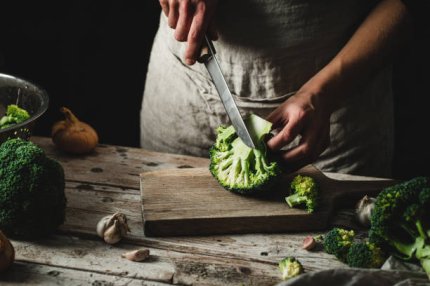
For example, a person tries to cut a very hard pumpkin.
The blade gets stuck inside the product, after which it starts to turn from side to side.
A similar situation occurs when trying to pick up a frozen product or separate dense pieces of food.
How dangerous is twisting?
The thin cutting edge is designed primarily for cutting, not for significant lateral load.
If you unscrew the blade, the following are possible:
Bending of the cutting edge.
Formation of chips.
Blade deformation.
Tip damage.
Loss of control over the tool.
Shun specifically warns against using knives as leverage.
Therefore, there is no need to open lids with the tip of a knife, pick up metal objects, or try to break off parts of solid products.
For this, appropriate tools should be used.

5. Knives are washed regularly in the dishwasher
Some kitchen knives are marked as machine washable.
However, this does not mean that the dishwasher is the best way to care for a sharp blade.
ZWILLING recommends washing knives by hand, explaining that high temperatures, detergents and mechanical contact can shorten their service life.
Contact with neighboring objects is especially important.
During washing, the knife may touch forks, spoons or other metal utensils.
As a result, the cutting edge is subjected to impacts and friction.
Do all knives get damaged in the dishwasher?
No.
For example, Victorinox notes that some knives with synthetic handles are machine washable.
However, even for such models, the manufacturer recommends manual cleaning if you want to maintain the condition of the blade for a longer period of time.
Knives with wooden handles are usually not suitable for dishwashers.
Prolonged contact with water, detergents and high temperatures can damage the wood.
If the manufacturer explicitly allows machine washing, this does not necessarily mean that maximum sharpness will be maintained after multiple cycles.
6. The knife is left in water or washed incorrectly
Sometimes after cooking, the knife is placed in the sink with other utensils.
There, it can remain in the water for a long time, come into contact with metal objects and food debris.
This is undesirable for several reasons.
First, other objects can damage the blade.
Secondly, moisture and product residues contribute to corrosion on certain types of steel.
Thirdly, a knife hidden under water and dishes creates a risk of accidental cuts.
How to properly wash a kitchen knife
For most common kitchen knives, the following sequence is suitable:
After use, put the knife in a safe place.
Rinse the blade with warm water.
If necessary, use a mild dishwashing detergent.
Clean the side surfaces with a soft sponge.
Do not run your fingers along the sharp edge.
Thoroughly rinse off any remaining product.
Wipe the knife dry immediately.
Put it away in a proper storage place.
WÜSTHOF recommends cleaning and drying knives by hand after use.
There is no need to use metal sponges or abrasive powders.
If the knife has been used on raw meat or poultry, it is important to clean it thoroughly before contact with cooked foods.
7. The knife is stored together with the spoons and forks
A regular kitchen drawer is not the best place for an unprotected blade.
When a knife is placed among other cutlery, it can regularly come into contact with metal objects.
Especially if the drawer is opened and closed frequently.
Such collisions can damage the cutting edge.
How to properly organize knife storage
Several options are suitable for the kitchen.
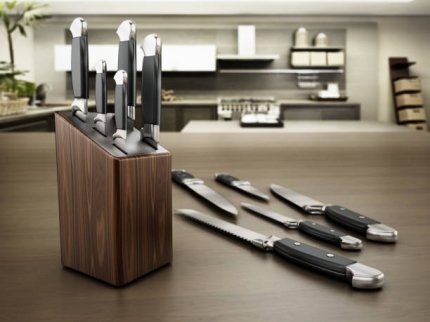
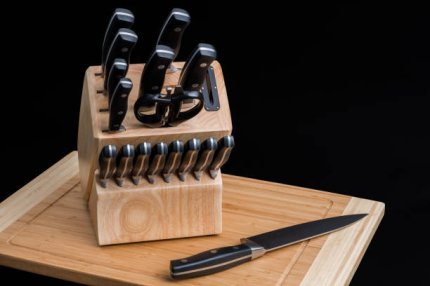
Stand with separate compartments. Allows you to place knives so that the blades do not touch each other.
Drawer organizer. Secures each knife individually and reduces accidental contact.
Protective case. Suitable for individual knives, especially when stored in a drawer.
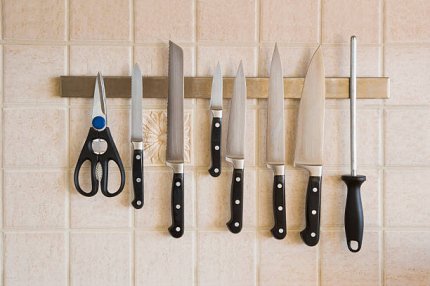
Magnetic strip. Saves space, but requires proper installation and careful use.
Victorinox and ZWILLING recommend systems that protect blades from accidental impacts.
Can a magnetic strip dull a knife?
The magnet itself does not dull the blade.
The problem may occur due to improper removal or installation of the knife.
If the cutting edge slides over the metal surface of the bar, scratches and micro-damages are possible.
Therefore, the knife must be carefully placed on the holder and removed without friction with the sharp edge.
Also, the bar must be installed in a place inaccessible to children.
8. The knife is sharpened at the wrong angle
The sharpening angle affects the balance between sharpness and strength of the cutting edge.
A smaller angle, all other things being equal, allows for a thinner edge to be formed.
It can enter the product more efficiently, but sometimes becomes more sensitive to mechanical damage.
A larger angle can provide a stronger edge, although cutting characteristics also depend on blade thickness and other parameters.
What is the correct angle for sharpening a kitchen knife?
There is no single angle for all knives.
For example, WÜSTHOF recommends an angle of approximately 14° per side for some of its models.
Shun uses other factory settings, including around 16° per side for many models.
These values cannot be automatically transferred to all knives of the respective brand.
Some specialized tools have a completely different geometry.
Why the wrong angle damages the blade
If a knife is sharpened at an angle that does not match its design and conditions of use, the cutting edge may lose its working properties more quickly.
For example, a knife with a too-thin edge that is regularly used to cut hard foods may be prone to damage.
At the same time, excessively increasing the angle can impair the ease of cutting.
Therefore, when sharpening, you need to take into account the manufacturer's recommendations, the hardness of the steel, and the purpose of the knife.
9. They confuse knife sharpening with sharpening.
Many users believe that a metal whetstone and a whetstone do the same job.
In fact, there is an important difference between them.
The board helps restore the position of the deformed cutting edge.
Sharpening forms a new edge through controlled metal removal.
Victorinox explains that regular sharpening can maintain the knife's working condition, while a full sharpening is needed less frequently.
However, there is an important caveat: not all musats work the same way.
What are the mustaches?
The smooth steel musat is intended primarily for ruling.
Ceramic musats can have an abrasive effect and partially remove metal.
Diamond tools also commonly work as abrasives.
Therefore, the statement that any musat does not remove metal at all is incorrect.
It is necessary to take into account the specific type of tool.
Why musat does not help a very dull knife
If the cutting edge is significantly worn, simply restoring its position is not enough.
It is necessary to form a new geometry.
To do this, use a suitable whetstone, a special sharpening device, or professional sharpening.
It's not worth running a knife through the musat dozens of times with great pressure if there is no result.
This can further damage the edge.
10. The knife is sharpened too often or too aggressively
Regular maintenance of sharpness is necessary, but this does not mean that the knife needs to be sharpened intensively every day.
During abrasive sharpening, some of the metal is removed.
With the right approach, this is a normal process.
However, excessive material removal gradually changes the blade geometry and reduces its life.
What are the dangers of coarse mechanical sharpeners?
Some inexpensive drill sharpeners use aggressive abrasive elements.
They can quickly change the shape of the edge, but do not always provide precise control of the angle and amount of metal removed.
Such devices should be used with particular caution for expensive Japanese knives with fine geometry.
The manufacturer Shun recommends using appropriate tools and sharpening methods that take into account the design of its knives.
This does not mean that all mechanical sharpeners are equally harmful.
The main thing is the compatibility of the tool with a specific knife and the correct technique of use.
How to choose a cutting board to keep your knife sharp longer
The board material affects the contact load during each cutting movement.
Wooden and plastic cutting boards are most often used for everyday cooking.
Both options have advantages and limitations.
| Board material | Impact on the knife | Features |
| Wood of moderate hardness | Usually delicate to the point of being | Requires proper cleaning and drying |
| Food grade plastic | Generally suitable for everyday cutting | Deep furrows may form over time |
| Thermoplastic polyurethane | Can be elastic and delicate to the blade | Specifications depend on the product |
| Bamboo | Often harder than other materials | Not always optimal for thin edges |
| Glass | Too hard for regular cutting | May accelerate dulling |
| Stone | Creates significant load on the edge | Better not to use for cutting |
| Metal | Usually unwanted contact | May cause blade damage |
Do I need to have separate boards for meat and vegetables?
From a food safety perspective, this is advisable.
The United States Department of Agriculture (USDA) recommends using separate cutting boards for raw meat, poultry, and seafood and for vegetables and prepared foods, whenever possible.
This reduces the risk of cross-contamination.
However, wooden and plastic boards require proper cleaning.
If deep grooves have formed on the surface that are difficult to clean, the board needs to be replaced.
So, the right board should not only be gentle enough for the blade, but also convenient for hygienic care.
Does the sharpness of a knife depend on the hardness of the steel?
Yes, but hardness is only one of the characteristics.
It is often indicated on the Rockwell scale: HRC.
For example, kitchen knives may have a hardness in the range of approximately 54–62 HRC, although there are models with other values.
Higher hardness under certain conditions helps the edge resist deformation and wear.
However, this does not mean that the hardest knife is always the best.
Why a very hard blade can also be damaged quickly
A balance of several characteristics is important for the durability of the cutting edge:
Hardness.
Metal viscosity.
Wear resistance.
Blade geometries.
Sharpening angle.
Types of products.
The nature of the load.
A very hard and thin edge may hold its sharpness well during delicate cutting, but be more sensitive to lateral loads or impacts.
Therefore, comparing knives only by HRC number is wrong.
For everyday kitchen use, it is often more important that the tool meets the usual tasks and can be maintained properly.
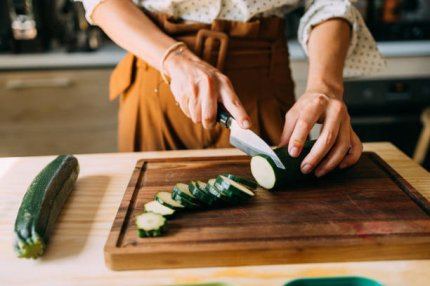
Why Japanese and European knives require different care
The traditions of Japanese and European kitchen knife making often involve different approaches to geometry and steel characteristics.
Many Japanese models have harder steel and a thinner cutting edge.
European chef's knives are often designed for a wider range of everyday kitchen tasks.
However, this is a generalization, not a universal rule.
There are various designs among Japanese knives, and European manufacturers also produce thin, highly hardened blades.
Why you shouldn't chop bones with a Japanese knife
Shun expressly warns against using their respective models for bones and frozen foods.
The reason is the risk of damaging the thin edge.
You also don't need to use a Santoku knife as a screwdriver or lever.
A specially designed tool is required for chopping.
Can you sharpen a Japanese knife with a regular musat?
This depends on the design of the knife and the manufacturer's recommendations.
Some hard and thin blades require especially careful sharpening.
A coarse steel musat or excessive pressure may be a bad choice.
For certain models, smooth whetstones or whetstones of appropriate grit are recommended.
Therefore, you should not apply one sharpening method to all the knives in your kitchen collection.
How to properly sharpen a kitchen knife at home
Before you begin, you need to determine the type of blade.
For a regular kitchen knife with a smooth cutting edge, a whetstone or compatible mechanical device may be suitable.
Serrated knives require a different approach.
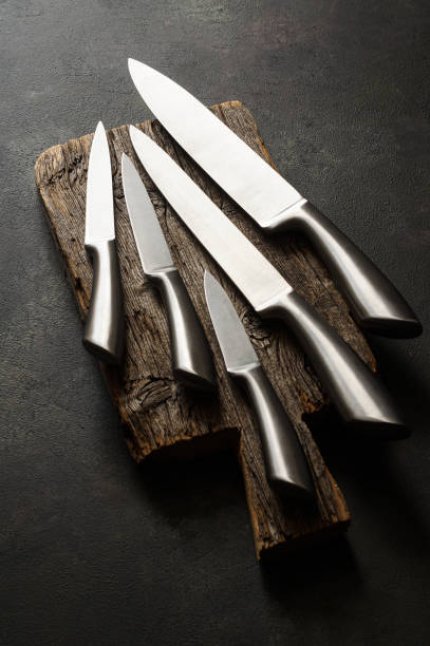
Sharpening on a water stone
Water whetstones allow you to control the processing of the cutting edge.
However, to obtain a stable result, certain skills are required.
Check the instructions for the stone before use.
Some stones need to be soaked, others just need to be moistened with water, and some are not intended for this method of work at all.
For sharpening you need:
Determine the recommended knife angle.
Place the stone on a stable, non-slip surface.
Perform smooth, controlled movements.
Maintain the appropriate angle on both sides of the blade if the design calls for double-sided sharpening.
If necessary, use a sequence of abrasives of different grits.
Finish the cut and clean the knife properly.
You should not try to sharpen an expensive knife without experience on a damaged or uneven stone.
What grit is needed?
Grit refers to the characteristics of the abrasive.
Coarser stones are used for more intensive geometry restoration.
Smaller ones for a cleaner finish.
However, there is no single universal set of stones.
The choice depends on the condition of the edge, the type of steel and the expected result.
If a knife has significant chips, sometimes a more substantial restoration is needed than a simple home sharpening.

How often should you sharpen a kitchen knife?
There is no single rule that any knife needs to be sharpened once a month.
The frequency depends on how often you cook, what foods you cut, and what kind of board you use.
The steel and initial geometry of the blade are also important.
For example, a knife that is used to cut a large amount of vegetables every day may require more frequent maintenance than a tool that is used twice a week.
When is enough of a rule?
If the knife generally remains sharp but cuts a little worse, sometimes proper work with the appropriate musat is enough.
However, this depends on the type of edge damage.
When a full sharpening is needed
If the knife has stopped cutting food properly and the board does not restore its working properties, sharpening may be necessary.
It is also needed after certain mechanical damage.
You shouldn't wait until the knife becomes so dull that you have to exert excessive effort to cut.
How to safely check the sharpness of a knife
You can assess the sharpness during normal work with products.
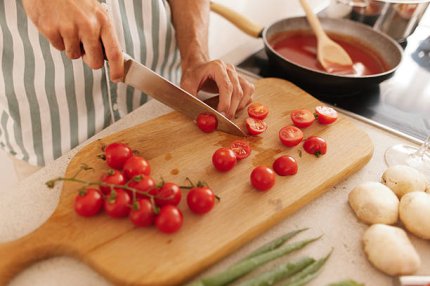
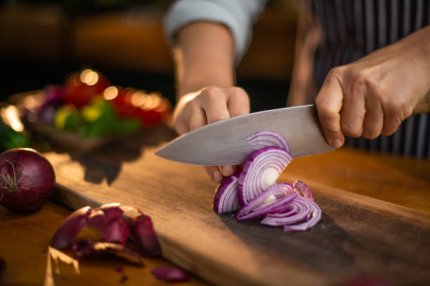
One of the easiest ways is to test how a knife cuts through the skin of a ripe tomato.
A sharp knife, with proper technique, should enter the skin without the need to press hard and crush the flesh.
You can also evaluate the quality of cutting onions or other products with thin skin.
However, the result depends not only on sharpness, but also on the geometry of the blade and the nature of the cutting motion.
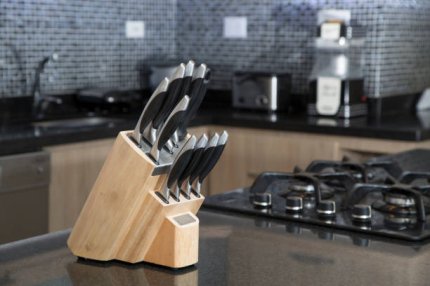
What not to do
Do not test the sharpness by running your finger along the cutting edge.
You also don't need to try to shave your arm hair with a kitchen knife.
Such methods create an unnecessary risk of injury.
Even a well-sharpened knife must be used carefully.
Why a dull knife can be more dangerous than a sharp one
When a knife loses its sharpness, it usually takes more effort to cut food.
This impairs movement control.
For example, a dull knife may slide across the skin of a tomato instead of cutting straight through it.
If a person increases the pressure, the blade may suddenly slip off.
WÜSTHOF points out that working with a dull knife often requires more force and increases the risk of losing control.
At the same time, a sharp knife also remains a dangerous tool.
Therefore, proper cutting technique involves a stable board, comfortable hand position, and sufficient control over the blade.
You don't need to work with a knife on a surface that slides across the table.
How to properly care for a knife after cutting acidic foods
Lemons, tomatoes, pickles, and some other foods contain acids.
Prolonged contact with them can negatively affect certain types of steel.
This is especially important for carbon steel knives, which require more careful care.
Shun notes that certain high-carbon steels have an increased susceptibility to corrosion and require additional protection.
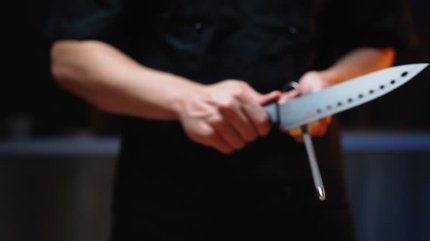
Does stainless steel rust?
Stainless steel has increased corrosion resistance, but is not completely invulnerable.
Under adverse conditions, stains or traces of corrosion may also appear on it.
Therefore, you should not leave a knife in lemon juice, a salty marinade, or a wet sink for a long time.
After use, it is best to wash the blade, rinse it thoroughly, and wipe it dry.
At the same time, it is necessary to distinguish between corrosion and dullness.
Corrosion is not the same as normal wear of the cutting edge, although under certain circumstances it can damage its surface.
Can a knife with chips be restored?
The possibility of recovery depends on the extent of the damage and the design of the blade.
Minor defects are sometimes eliminated by appropriate sharpening.
However, deep chips may require the removal of a significant amount of metal.
As a result, the initial geometry of the knife changes.
This is especially true for thin Japanese blades.
Do not attempt to straighten a damaged edge by striking or bending the metal.
If the knife has a crack, significant deformation, or other serious damage, further use may be dangerous.
In such cases, a professional assessment of the possibility of repair is required.
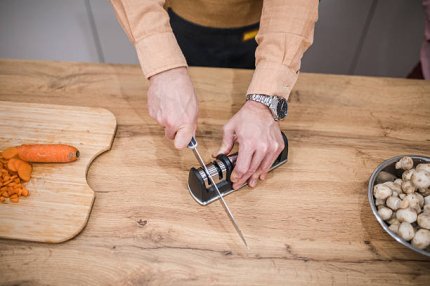
How to keep your kitchen knife sharp: daily rules
For most kitchen knives, a few simple habits are enough.
They do not require expensive equipment, but help reduce unnecessary stress on the cutting edge.
Before cooking:
Use a suitable wooden or plastic board.
Make sure it is stable on the work surface.
Choose a knife according to the product.
Do not use a damaged blade.
During cutting:
Avoid excessive lateral loading.
Do not chop the bones with a regular chef's knife.
Do not cut on glass, stone or metal surfaces.
Transfer the products with the butt of a knife or a special scraper.
Do not use the tip of the blade as a lever.
After use:
Wash the knife in the manner recommended by the manufacturer.
Do not leave it in the sink with other dishes.
Dry the blade and handle thoroughly.
Store the knife with a protected cutting edge.
Adjust and sharpen according to the condition of the blade.
The best result is achieved by a combination of proper use and timely maintenance.
Even a professional knife will not be able to stay sharp for long if it is regularly used on unsuitable surfaces.
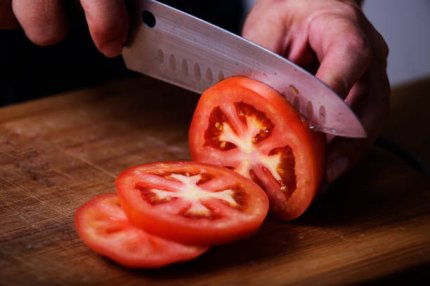
Common myths about the sharpness of kitchen knives
The harder the steel, the better the knife.
Not always.
Hardness affects the wear resistance and ability of the edge to resist deformation, but the toughness of the metal, geometry, and conditions of use are also extremely important.
Stainless steel knife requires no maintenance
Falsehood.
Stainless steel also needs proper cleaning, drying, and sharpening.
Any musat sharpens a knife
Not quite.
Smooth steel musats are mainly used for ruling, while ceramic and diamond musats can have an abrasive effect.
An expensive knife should not become dull.
Any cutting edge gradually wears out.
The price of a knife alone does not guarantee unlimited retention of sharpness.
If a knife can cut, it's too early to sharpen it.
Not necessarily.
A dull blade can still cut through food, but it may require significantly more effort.
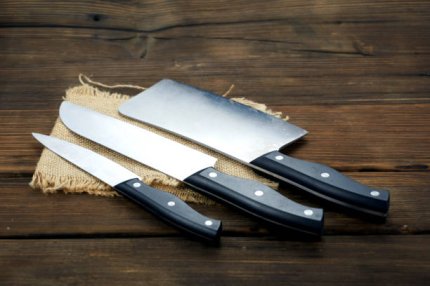
Conclusion
A kitchen knife quickly dulls not only due to the characteristics of the steel, but also due to everyday mistakes during cutting, washing, and storage.
The most damaging factors to the cutting edge are hard surfaces, side loading, working with unsuitable products, and accidental impacts against other objects.
To keep your knife sharp for longer, simply use a suitable cutting board, wash it by hand, dry it after use, and store it separately from cutlery.
At the same time, it is necessary to correctly distinguish between straightening and sharpening: the former helps maintain the condition of the edge, and the latter restores its geometry by removing metal.
The best way to extend the life of a knife is not to sharpen it as often as possible, but to reduce the load that causes it to lose its sharpness prematurely.
FAQ: Frequently asked questions about the sharpness of kitchen knives
1. Why does a kitchen knife dull quickly even after sharpening?
The reason may be a cutting board that is too hard, an incorrect sharpening angle, lateral load or the properties of the steel. It is also possible that defects in the edge remain after sharpening. You need to check the geometry of the blade and the conditions of its use.
2. Which cutting board dulls knives the least?
Most kitchen knives will work well with wood and plastic cutting boards of moderate hardness. They are generally more gentle on the cutting edge than glass, stone, or metal. The specific properties depend on the material and construction of the board.
3. Can kitchen knives be washed in the dishwasher?
Some manufacturers allow machine washing of certain models. However, WÜSTHOF, ZWILLING and Victorinox generally recommend hand cleaning to better preserve the blade and handle. Machine washing is especially undesirable for knives with wooden handles.
4. How often should you sharpen a kitchen knife?
There is no universal periodicity. It depends on the frequency of use, steel, blade geometry, type of board and products. If the knife cuts poorly and the board does not help, sharpening is necessary.
5. How is a whetstone different from a whetstone?
A smooth steel burr is mostly used to straighten a deformed edge. A whetstone removes metal and forms a new cutting edge. Ceramic and diamond burrs can also have an abrasive effect.
6. Why can't you cut on a glass board?
Glass is a very hard material and hardly yields under the pressure of a knife. This puts a significant contact load on the cutting edge, which can accelerate its wear and damage.
7. Can a Japanese knife be sharpened with a regular sharpener?
This depends on the specific knife and the design of the sharpener. Some mechanical devices may have the wrong angle or be too aggressive in their abrasive action. For Japanese knives, it is important to follow the manufacturer's recommendations.
8. Why did the knife start crushing the tomatoes instead of cutting them?
The cutting edge is probably no longer sharp enough or has local defects. A ripe tomato demonstrates this problem well due to its thin skin and soft center. It may require a resharpening or a full sharpening.
9. Can kitchen knives be stored on a magnetic strip?
Yes, if the holder is securely installed and the blades are placed safely. It is important not to run the cutting edge over the metal surface during installation or removal. The bar should be out of reach of children.
10. Can a knife become dull from cutting bread?
Any regular use will gradually wear down the cutting edge. For bread with a hard crust, it is usually more convenient to use a special serrated knife. A regular smooth chef's knife is not necessarily the best for this task.

