
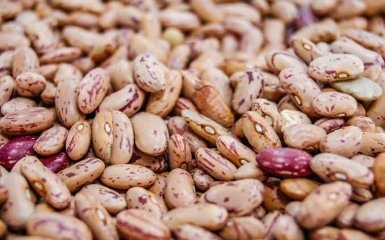
Beans have been cooking for two hours, the water is gradually boiling away, but the grains remain hard? This situation is familiar to many, especially when preparing borscht, soups or homemade salads. However, long cooking does not always help to achieve the desired consistency.
Points of attention
- It is important to evaluate several beans from different parts of the pot. Even in the same package, there may be beans that cook at different rates.
- If beans are cooked with tomatoes, tomato paste, vinegar, or lemon juice, their softening process can be significantly slowed.
- For a cautious start, you can use about 1/8 teaspoon of baking soda per liter of water, assessing further changes in consistency.
Most often, beans fail to cook due to improper storage, insufficient soaking, hard water, or acidic ingredients added at the beginning of cooking. Sometimes the cause is the variety or changes in the structure of the beans that cannot be completely eliminated.
To ensure that beans are tender, hold their shape, and cook evenly inside, it's important to understand what exactly is causing them to soften. Let's look at how to identify the cause of the problem, salvage already soaked or undercooked beans, and properly cook different types of beans.
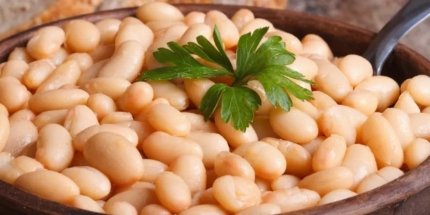
Why beans don't become soft even after two hours of cooking
Two main processes occur during the cooking of dried beans: the beans absorb water, and their internal structure gradually changes under the influence of temperature.
Starch swells, proteins change their structure, and the pectin substances that hold the cells together gradually lose their strength. This is what turns hard dry beans into a soft product.
However, sometimes these processes occur too slowly.
In food science, there is even a special term - hard-to-cook phenomenon, or the effect of difficult-to-cook legumes. It describes the condition when grains become resistant to softening after storage, even with sufficient heating.
Studies show that this effect is due to changes in cell walls, particularly the interaction of pectin with minerals. As a result, the grain cells are less likely to separate from each other during cooking.
How to understand why beans are hard
Pay attention to its condition after prolonged cooking:
Hard on the outside and inside. Possible causes are old beans, insufficient water absorption, or high hardness.
Soft shell but hard inside. The grains may not have swelled enough before cooking or may not have had time to fully cook.
The shell bursts while the middle remains firm. This may indicate uneven softening, especially if the beans were cooked without soaking.
The beans have swollen, but the consistency has hardly changed. It is worth checking the composition of the water, the presence of acidic products, and the freshness of the beans.
It is important to evaluate several beans from different parts of the pot. Even in the same package, there may be beans that cook at different rates.
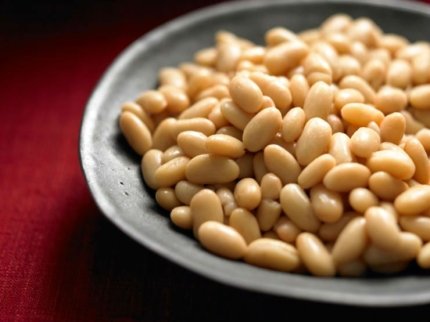
What to do if the beans are already cooked but still hard
If the beans are still firm after an hour and a half to two hours of cooking, there's no need to throw them away right away. In many cases, the situation can still be corrected.
1. Check the amount of water and the intensity of boiling
The beans should remain completely submerged in water throughout the cooking process.
If some of the liquid has boiled away, add more hot water so that it covers the grains by about 3–5 centimeters.
After the initial intense boil, maintain a steady, moderate boil. Too low a heat can increase cooking time, and too high a heat can cause the shells to crack.
2. Check for acidic ingredients in the dish
If beans are cooked with tomatoes, tomato paste, vinegar, or lemon juice, their softening process can be significantly slowed.
The acidic environment affects the pectin substances of the cell walls, which makes the grains remain dense for longer.
Once the beans are in the sour sauce, you can try to continue cooking with a sufficient amount of liquid. However, the result will depend on the condition of the beans and the acidity of the dish.
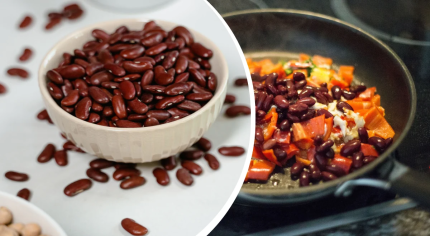
3. Try baking soda
A small amount of baking soda increases the alkalinity of the water and can accelerate the softening of pectin substances.
For a cautious start, you can use about 1/8 teaspoon of baking soda per liter of water, assessing further changes in consistency.
Consider a few nuances:
soda can change the taste of the finished dish;
excessive amounts contribute to grain disintegration;
its effectiveness depends on the variety of beans and the composition of the water;
Soda does not replace full heat treatment.
This method is more appropriate for beans that are cooked separately in water, rather than for already seasoned borscht or tomato sauce.
4. Give the beans extra time
If the grains gradually become softer, continue cooking and check for doneness every 15–20 minutes.
However, if the consistency remains virtually unchanged over a long period of time, the problem may be due to persistent structural changes in the beans. Such beans sometimes fail to reach the desired softness even after several hours of cooking.
Undercooked beans should not be served or used to make puree without being fully cooked.
How to properly soak beans so they cook faster
Soaking helps dry grains absorb moisture evenly before heating begins.
This reduces the duration of further cooking and reduces the risk of getting a soft shell with a hard middle.
Step-by-step instructions
Sort through the dry beans, removing damaged grains and foreign impurities.
Rinse it under running water.
Transfer to a large enough container.
Pour cold water in a ratio of approximately 1 part beans to 3–4 parts water by volume.
Leave in the refrigerator for 8–12 hours.
Drain the water, rinse the grains again.
Transfer them to a pot of fresh water and start cooking.
For red beans, it is advisable to aim for soaking for at least 12 hours, also taking into account the manufacturer's instructions.
During soaking, the grains increase noticeably, so the container should be large enough.
Do not leave beans in water for several days at room temperature. Prolonged exposure to a warm environment creates conditions for unwanted microbial growth.
Can you cook beans without soaking?
Yes, some varieties can be cooked without pre-soaking, but this will require more time and control over the amount of water.
In this case, the grains may soften unevenly and the cooking time becomes less predictable.
For red beans, it is better to follow the complete soaking and subsequent boiling procedure, as this is also a food safety issue.
How long do you need to cook white, red and other types of beans?
Cooking time depends on the size of the beans, their age, variety, soaking time, and heating method.
Approximate cooking time for pre-soaked beans in a regular saucepan:
| Type of bean | Cooking time |
| Small white | 45–90 minutes |
| Great white | 60–120 minutes |
| Red | 90–120 minutes |
| Black | 60–90 minutes |
| Variegated, including pinto | 60–120 minutes |
The values given are approximate. Old or improperly stored beans may require significantly more time. Count from the beginning of boiling, and final readiness is determined by consistency.
How to check readiness
Take a few grains and gently crush them with a fork or spoon.
Properly cooked beans should:
easy to warm up without much effort;
have a uniform consistency inside;
not contain a hard or dry center;
maintain shape if required by the recipe.
For soups and salads, you usually want whole, soft beans. For pâtés and creamy purees, you can cook the beans longer so they are easier to mash.
How water, salt and baking soda affect the cooking of beans
Sometimes the same beans cook differently even after the same cooking time. The reason may be the chemical composition of the water.
Hard water slows down softening
Hard water contains more dissolved calcium and magnesium salts.
These minerals can strengthen the bonds between the pectin substances of the cell walls. As a result, the grains become more tender more slowly.
The problem becomes especially noticeable when cooking old beans, the structure of which has already changed.
If your tap water is very hard, you can use drinking water with low mineralization for soaking and cooking.
Is it true that salt makes beans hard?
A common kitchen tip is to salt beans only at the end of cooking. However, there is no universal scientific support for this rule.
Sodium in table salt can affect the structure of pectin substances and contribute to more uniform softening of grains.
Soaking in moderately salted water in some cases even improves the final consistency of the beans.
So, if the beans won't cook, don't automatically blame the salt. It's much more important to check their freshness, water composition, and the presence of acids.
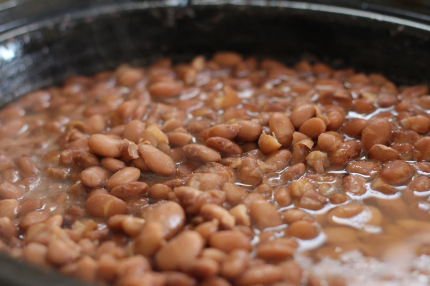
Should I add baking soda when soaking?
Baking soda can help especially hard grains absorb moisture more quickly and soften during further cooking.
However, there is no need to use it all the time. For fresh, high-quality beans, regular soaking and proper heating are usually sufficient.
Excess soda worsens the taste, changes the structure of the grains and can contribute to the loss of certain nutrients sensitive to an alkaline environment.
Why old beans take much longer to cook
The shelf life of dried legumes affects their culinary properties, even if the product appears completely normal on the outside.
During long-term storage, especially at high temperatures and humidity, the interactions between minerals and cell wall substances inside the grains gradually change.
As a result, the beans may not cook well, no matter how long they have been soaked.
It is important to distinguish between two phenomena:
Poor water absorption. Grains hardly increase in size during soaking.
Resistance to softening. Beans swell well, but remain dense after cooking.
The second phenomenon is particularly characteristic of the effect of heavy boiling.
How to choose beans in the store
Before buying, pay attention to a few signs:
packaging date and expiration date information;
grain integrity;
no traces of moisture and mold;
uniformity of size within one variety;
absence of insects or foreign impurities.
If beans are sold by weight, it is more difficult to determine their age. Therefore, it is advisable to buy a small batch first and test how it cooks.
Store dried beans in a tightly sealed container in a cool, dry, and dark place.
However, prolonged storage does not automatically mean that the product is unsafe. First of all, its taste, structure, and culinary properties may deteriorate.
How to cook beans for borscht, soup and salad
One of the most common mistakes is adding dry or undercooked beans directly to a dish with acidic ingredients.
This happens especially often when cooking borscht.
Beans for borscht
The most predictable way is to cook it separately.
First soak the grains, then boil them in fresh water until fully cooked. Only then add them to the borscht.
This approach allows you to control the consistency and not depend on the acidity of the tomato sauce.
If you put beans that are not soft enough in borscht along with tomato paste, it can remain dense even when all the other ingredients are ready.
Beans for salads
For salads, it is important that the grains are soft but do not fall apart when mixed.
Therefore, after the beans are fully cooked, it is worth removing them from the heat in a timely manner, draining off excess liquid, and letting them cool.
Vinegar, lemon juice, and other dressing ingredients are added to the already prepared beans.
Beans for purees and pates
A softer consistency is desired here. Varieties that soften easily after cooking are well suited.
If the beans are fully cooked but still a bit firm, you can continue cooking them until you reach the desired texture.
For a smooth puree, it is helpful to leave some liquid after cooking and gradually add it while grinding.
What are the dangers of undercooked beans?
Undercooked beans are not just a matter of taste.
Raw beans, especially kidney beans, contain natural lectin proteins. One of them, phytohemagglutinin, can cause nausea, vomiting, abdominal pain, and diarrhea if not cooked properly.
In January 2026, the European Food Safety Authority published a risk assessment of lectins in food. Experts emphasized that proper soaking and boiling of legumes effectively reduces the risks.
To reduce lectin activity, it is recommended to soak dry beans for 6–12 hours, replace the water, and boil in fresh water at 100 °C for at least 30 minutes. After this, cooking is continued until the beans are completely softened.
EFSA
Important: Dried red beans should not be cooked exclusively in a slow cooker on a low-temperature slow cooking setting without prior proper boiling. Such settings may not provide sufficient destruction of dangerous lectins.
Industrially produced canned beans have already undergone the necessary heat treatment, so they are usually ready to consume.
The material is for informational purposes only. If symptoms of poisoning appear after consuming beans, you should consult a doctor. Self-medication can be harmful to your health.
Common mistakes when cooking beans
Even high-quality beans can be cooked unsuccessfully if the process is not organized properly.
Most often, problems arise due to the following actions:
Mixing different varieties. Large white beans and small black beans may take different cooking times. While some beans remain firm, others are falling apart.
Using too little water. Some of the grains are above the surface of the liquid and are heated unevenly.
Adding tomatoes early. The acidic environment makes it difficult to get the desired texture.
Under-boiling. Prolonged heating at too low a temperature does not always ensure proper cooking.
Excessive use of soda. Instead of tender beans, you can get a boiled mass with an unpleasant aftertaste.
Using old stock without checking. After prolonged storage, beans sometimes lose their ability to soften normally.
Cooked beans require special attention. If you are cooking a large batch for several days, they should be cooled quickly, placed in suitable containers, and refrigerated within two hours of cooking.
It is advisable to store ready-made beans in the refrigerator at a temperature not higher than 4 °C for no longer than 3–4 days. For longer storage, freezing is suitable.
Conclusion
If the beans cook for a long time and remain hard, the first thing you need to do is check their freshness, water quality, soaking time, and the composition of the dish.
The most reliable way to get soft beans is to use properly stored beans, pre-soak them, and cook them in plenty of fresh water. It is best to add acidic ingredients after they are fully cooked.
If the grains do not soften for a long time, despite observing these conditions, the likely cause is changes in their structure during storage.
FAQ: Frequently Asked Questions About Cooking Beans
Why are beans hard after two hours of cooking?
This could be due to old beans, hard water, insufficient soaking, or acidic ingredients. If the beans are gradually becoming softer, cooking can be continued. If the consistency remains almost unchanged, there may be a hard-boiling effect due to changes in the bean structure.
How to quickly soften hard beans?
Make sure the beans are completely covered with water and the liquid is boiling vigorously. For very hard beans, you can cautiously try a small amount of baking soda. However, neither method is guaranteed to soften old beans quickly.
How many hours should you soak beans before cooking?
For most varieties, a guideline is 8–12 hours in cold water. It is better to soak in the refrigerator. After that, the water should be drained and the beans rinsed. Red beans should be soaked for at least 12 hours.
Can I add salt at the beginning of cooking beans?
Yes. A moderate amount of salt does not necessarily make beans tough. Sodium can even help the beans soften more evenly. However, the amount of salt should be adjusted according to the recipe and individual dietary needs.
Does baking soda help cook beans faster?
Yes, baking soda can speed up softening by changing the acidity of the water. However, too much of it will spoil the taste and texture. For regular fresh beans, baking soda is usually not needed.
Why don't beans cook in borscht?
Tomato paste, tomatoes, and other acidic ingredients can slow down the softening of the beans. Therefore, for borscht, it is better to pre-boil the beans separately until fully cooked, and then add them to the main dish.
Why do beans burst when cooked but remain solid inside?
This can be a result of uneven water absorption. The outer layers of the grain swell and soften faster than the middle. This happens when cooking without soaking, with excessively intense boiling, or due to the characteristics of the grains themselves.
Can you eat beans that are a little hard inside?
Undercooked beans should not be eaten. This is especially true of red beans, which contain natural lectins. The beans must be sufficiently cooked and completely softened.
Can I use old beans that won't cook?
If the beans have been stored properly and show no signs of spoilage, a long shelf life alone does not necessarily make them unusable. However, old beans may remain hard even after prolonged cooking. If they are not fully cooked, they should not be used for food.

