
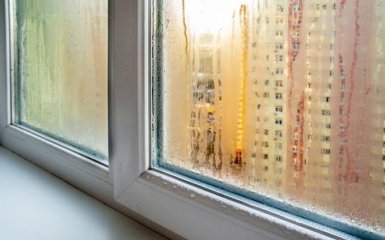
Water droplets on the glass, wet windowsills, and darkened corners of window frames are a common problem with the onset of cold weather. Condensation appears especially often in autumn and winter, when the difference between the temperature outside and inside the apartment becomes significant.
Points of attention
- Condensation forms when moist air comes into contact with cold glass; fogging does not always indicate a window malfunction.
- Constant moisture can damage finishes and create conditions for mold to grow.
- For prevention, it is worth ventilating the room, controlling humidity, and ensuring the circulation of warm air near the window.
Sometimes windows fog up only in the morning and dry quickly after airing. In other cases, water constantly runs down the glass, accumulates near the seals and gradually leads to the appearance of mold.
The main cause of condensation is the contact of moist air with a surface whose temperature has dropped below the dew point. This is a natural physical process that does not necessarily indicate a window malfunction.
However, regular water accumulation should not be ignored. Prolonged moisture can damage finishes, wooden elements, slopes and create conditions for mold growth.
We analyze why plastic windows fog up, what humidity should be in an apartment, how dangerous constant condensation is, how to distinguish a ventilation problem from a faulty double-glazed window, and what to do to keep windows dry even in winter.
Why does condensation form on windows?
The air constantly contains a certain amount of water vapor.
Its concentration varies depending on temperature, weather, and human activity indoors.
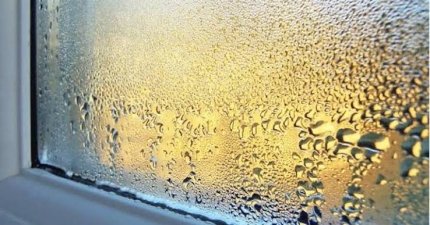
When warm, moist air comes into contact with cold glass, it cools. At a certain temperature, the water vapor begins to turn into a liquid.
Small drops appear on the surface, which gradually merge.
This phenomenon is called condensation.
A similar process can be observed in the summer, when a cold glass of drink becomes covered with water from the outside.
What is dew point?
Dew point is the temperature to which air must be cooled, with a constant water vapor content, for it to reach saturation.
If the surface is colder than this temperature, condensation may form on it.
For example, at an air temperature of 20 °C and a relative humidity of 60%, the dew point is approximately 12 °C.
Therefore, if the inner surface of the window glass cools to 12 °C or lower, water droplets may appear on it.
If the humidity is reduced to 40% at the same temperature, the dew point will drop to approximately 6 °C.
This means that the glass must cool significantly before water starts to condense on it.
That's why reducing excess humidity often helps eliminate fogging even without replacing windows.
Why plastic windows fog up more often than old wooden ones
After installing new plastic windows, apartment owners sometimes notice that the windows have started to fog up more.
At first glance, this seems like a sign of poor installation.
However, the cause is not always related to the windows themselves.
Modern designs are usually much more airtight than old wooden frames.
This helps reduce heat loss and cold air infiltration.
At the same time, uncontrolled air exchange through gaps is reduced.
If there is not enough supply ventilation in the house, water vapor generated during everyday activities can accumulate indoors.
Where does excess moisture come from?
The amount of water vapor in an apartment increases during:
cooking;
taking a shower;
drying washed clothes;
washing dishes;
use of humidifiers;
presence of people and pets;
drying of building materials after repair.
Even normal human breathing adds moisture to the air.
If ventilation does not take it outside, the relative humidity increases.
And cold glass becomes one of the first surfaces on which condensation appears.
Condensation inside, outside or between the panes: what's the difference?
Before solving the problem, you need to determine exactly where the water is accumulating.
This is fundamentally important because different types of fogging have different causes.
| Where does moisture appear? | The most likely reason | What to do |
| On the glass from the side of the room | Humidity and cold surface | Check ventilation, humidity and temperature |
| On the outer surface of the glass | Morning dew, weather conditions | Usually nothing, the moisture dries up on its own |
| Inside the sealed glass unit | Leakage | Check the condition of the double-glazed window |
| Along the edges of the glass | Colder marginal zone | Assess the structure, temperature, and humidity |
| On slopes or near the frame | Cold bridges, moisture, possible installation defects | Check the thermal insulation and tightness of the joints |
If condensation appears on the side of the room
This is the most common situation.
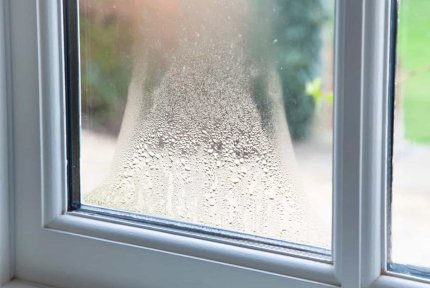
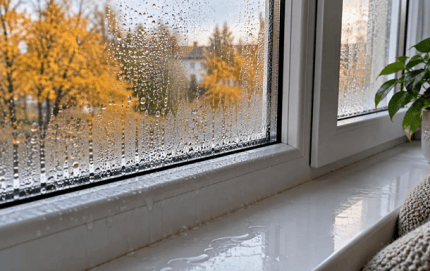
Moisture settles on the inside surface of the glass when it becomes cold enough.
The cause may be high humidity, insufficient air exchange, or low window surface temperature.
Sometimes all three factors act simultaneously.
Such fogging does not prove that the double-glazed window is defective.
If the window is wet outside
External condensation often forms on cool, damp mornings.
The surface of the outer glass can cool to a temperature below the dew point of the surrounding air.
This is especially true for some energy-efficient windows.
Since heat from the room is less easily transferred to the outside, the outer pane can remain cold enough for dew to form.
Such condensation usually does not indicate a malfunction.
It often disappears after the temperature outside rises.
If condensation forms between the panes
Another situation is moisture inside a sealed double- or triple-glazed window.
If the fogging is between the panes and cannot be wiped off, this may indicate a leak.
In this case, simply ventilating the room will not solve the problem.
Often, replacement of the double-glazed window is required, although the frame does not necessarily have to be completely replaced.
What is the danger of constant condensation on windows?
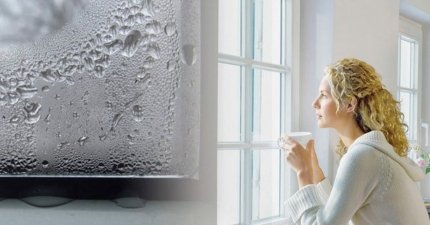
A few drops of water on the glass after a cold night don't necessarily pose a serious problem.
But if moisture accumulates daily, drips onto the windowsill, and does not have time to dry, the consequences can be much more serious.
The appearance of mold
Prolonged moisture creates favorable conditions for the development of mold fungi.
They can appear on sealants, slopes, paint, wallpaper, and other places where moisture accumulates.
Porous materials that remain wet for a long time are especially vulnerable.
Damage to the finish
Water can gradually penetrate the joints, damaging paint, putty, and decorative coatings.
Common signs are peeling paint, peeling wallpaper, and dark spots near the window.
If the problem is not fixed, sometimes it is necessary to repair not only the surface, but also the damaged layers underneath.
Damage to wooden elements
Wood that is regularly moistened and does not have time to dry out can deform or gradually decay under the influence of microorganisms.
This applies to wooden window sills, frames, decorative overlays and adjacent structures.
Deterioration of indoor conditions
Excessive humidity can affect not only windows, but also other cold surfaces.
For example, condensation sometimes occurs behind large cabinets, near the outside corners of rooms, and in areas with poor air circulation.
Therefore, wet windows can be the first noticeable sign of a general problem with the microclimate.
Is mold near windows dangerous to health?
Damp rooms with mold can be associated with respiratory symptoms and exacerbation of allergic diseases.
In sensitive people, exposure to mold can cause eye irritation, nasal congestion, coughing, or wheezing.
People with bronchial asthma, chronic lung diseases, and immune system disorders need special attention.
At the same time, not every stain near a window is mold, and the presence of fungal growth does not mean that all residents will necessarily have symptoms.
It is wrong to assess the danger based solely on the color of the mold.
Black, green or gray color does not allow you to independently determine its toxicity.
The main rule is to eliminate the source of moisture and prevent mold from developing over time.
The material is for informational purposes only. Self-medication can be harmful to your health. If you experience symptoms that may be related to mold or dampness in your home, you should consult a doctor before starting treatment.
What humidity should be in the apartment?
For most residential spaces, a practical guideline is a relative humidity of approximately 30–50%.
It is recommended that it remains below 60% if possible.
However, this is not a universal guarantee of no condensation.
In cold weather, even with a humidity of 40–50%, water can appear on insufficiently warm glass.
Therefore, the optimal indicator depends on the outside temperature, the quality of windows, insulation, and ventilation.
How to measure humidity
For home monitoring, a digital hygrometer is sufficient.
This is a small device that shows the relative humidity of the air.
Place it away from radiators, direct sunlight, and cold windows.
It is better to check the indicators at different times of the day.
For example, you can compare the humidity in the bedroom before going to bed, in the morning, and after airing.
If the indicator constantly exceeds 60%, it is worth looking for the cause of moisture accumulation.
Is it necessary to reduce humidity to 30% in winter?
Not always.
In severe frosts, a lower relative humidity is sometimes really needed to prevent condensation on cold windows.
However, excessive air dryness is also undesirable.
There is no need to try to achieve the lowest possible score.
The goal is to maintain a comfortable microclimate and prevent water from accumulating on surfaces.
How to get rid of condensation on plastic windows: 8 effective ways
For most everyday situations, it's worth starting with simple measures.
They help reduce air humidity and maintain a higher temperature on the inner surface of the glass.
1. Ventilate the room regularly
Ventilation allows you to replace some of the humid indoor air with outside air.
During the cold season, outside air often contains less water vapor in absolute terms.
When it enters a room and heats up, its relative humidity decreases.
This helps remove excess moisture.
However, the effectiveness of ventilation depends on weather conditions and actual air exchange.
How to ventilate properly in winter
It is often more practical to have short-term intensive ventilation than to have a narrow gap constantly open.
This allows the air to be refreshed more quickly without prolonged cooling of the interior surfaces.
The exact duration depends on temperature, wind, room size, and window design.
There is no need to leave windows open for a long time in severe frost if this leads to significant cooling of the slopes and walls.
It is also necessary to consider the quality of outdoor air.
2. Use a kitchen hood
During cooking, a significant amount of water vapor can enter the air.
This is especially noticeable when cooking soups, pasta, or boiling water for a long time.
Use a kitchen hood and cover pots with lids when appropriate.
However, there is an important nuance: not every hood removes moisture to the outside.
Recirculation models, which pass air through filters and return it to the kitchen, usually do not provide the same amount of water vapor removal as properly installed exhaust hoods.
3. Ensure bathroom ventilation
A hot shower quickly increases the humidity of the air.
If the bathroom door is constantly open, steam can spread to other rooms.
Therefore, it is advisable to use a working exhaust fan when showering.
Once finished, leave the ventilation running long enough to remove excess moisture.
If the hood is not working, you need to check its condition and ensure adequate air exchange in another safe way.
4. Dry your washed clothes properly
Drying wet laundry inside the apartment adds moisture to the air.
This becomes especially noticeable if the dryer is in a small, enclosed room.
If possible, it is better to use a suitable drying area or a dryer.
If laundry needs to be dried indoors, it is important to ensure ventilation or air dehumidification.
Do not install the dryer directly near cold walls and windows, where condensation is already accumulating.
5. Do not block the flow of warm air to the glass
A wide window sill, thick curtains, or furniture can make it difficult for warm air to circulate near the window.
If there is a radiator under the window, some of the heat should reach the inner surface of the glass.
When this flow is blocked, the window can remain colder.
As a result, the risk of condensation increases.
Therefore, it is worth checking whether the radiator is covered by dense furniture, decorative screens, or heavy curtains.
6. Maintain a stable temperature
Insufficient heating can reduce the temperature not only of the air but also of interior surfaces.
Because of this, condensation sometimes appears even at moderate humidity.
For example, if the bedroom cools down a lot during the night, droplets may form on the glass in the morning.
In such cases, it is important to check the room temperature and the condition of the heating system.
However, uncontrolled temperature increase is not always the most effective solution.
If humidity is excessive, reducing it is of primary importance.
7. Use a dehumidifier when needed
A dehumidifier can be useful if the humidity in the apartment is constantly high.
For example, after renovations, with insufficient ventilation, or when drying laundry indoors.
The device removes some of the water vapor from the air and collects it in a tank or drains it.
For control, you can set a target humidity of approximately 45–50%, if this is appropriate for the room conditions.
But a dehumidifier does not eliminate hidden leaks or insulation defects.
Therefore, it should not be considered a universal replacement for repair and ventilation.
8. Check the window structure
If condensation regularly forms even with normal humidity and sufficient heating, the thermal insulation properties of the window should be assessed.
It is possible that the inner surface of the glass is too cold due to the characteristics of the double-glazed window or design features.
In some cases, the problem is caused by cold bridges around the frame.
Then simple ventilation can only partially reduce fogging.
Why does condensation appear mainly at the bottom of the window?
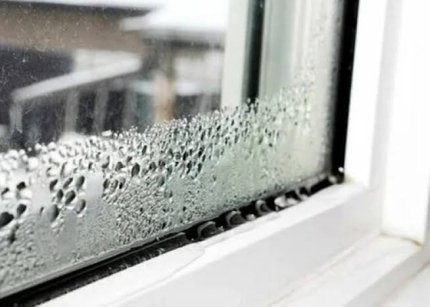
The bottom of the glass is often colder than the center.
This may be due to the design of the glass unit, the characteristics of the spacer frame, and air movement.
A spacer frame is an element that separates the panes inside a sealed double-glazed window.
Some designs conduct heat better, which causes the edge zone of the glass to cool more.
What is a cold bridge?
A cold bridge is a section of a building structure through which heat is transmitted more intensely than through neighboring elements.
For example, it could be a certain metal component or an insufficiently insulated area where the window meets the wall.
In such places, the inner surface cools.
With sufficient humidity, this is where water droplets first appear.
If condensation forms in a narrow strip around the perimeter of the glass, this does not necessarily indicate a leak.
However, regular wetting of the frame and slopes requires attention.
Why do bedroom windows fog up in the morning?
At night, the bedroom doors and windows are often closed.
At the same time, people continue to release moisture when breathing.
If air exchange is insufficient, the relative humidity gradually increases.
In addition, at night, the outside temperature often drops and the inside surface of the windows cools.
As a result, water droplets may appear on the glass in the morning.
How to reduce morning condensation
First of all, measure the humidity before going to bed and after waking up.
If the indicator is significantly higher in the morning, you need to check the bedroom ventilation.
It is important to ensure the flow of fresh air without undesirably cooling the room.
It is also worth checking whether the radiator is not covered by curtains and whether the window area is sufficiently warm.
You should not automatically consider morning fogging as a sign of a faulty double-glazed window.
Why does condensation occur after renovation or in a new building?
After construction and renovation work is completed, the humidity in the apartment may temporarily increase.
Sources of water vapor are fresh plaster mixtures, screeds, putties and other materials.
As they dry, they gradually release moisture into the air.
If new windows are airtight and ventilation is not working efficiently enough, condensation can appear even in rooms with modern glazing.
What to do after repair
It is important to organize controlled drying of materials.
This may require ventilation, heating and dehumidification.
Do not cover insufficiently dried structures with vapor-proof finishing layers without taking into account technological requirements.
If moisture continues to accumulate for a long time, you need to check for other sources of moisture.
What to do if condensation appears on only one window
If most windows remain dry, but one is constantly wet, this may indicate a local cause.
For example, the humidity may be higher in a particular room.
Or the inner surface of a certain glass unit cools more.
There may also be differences in installation, condition of seals, and warm air intake.
How to check the problem
Compare the conditions in the rooms.
Measure temperature and relative humidity.
Pay attention to whether there are drafts near the frame, whether the heating is working, and whether the radiator is blocked.
Check exactly where the water appears: on the glass, between the panes, near the frame or on the slope.
If the humidity in the rooms is similar, but one window is noticeably colder, the reason may be in its design or installation.
How to check ventilation in an apartment
Insufficient air exchange is one of the common causes of moisture accumulation.
This is especially true for airtight apartments, in which the inflow of outside air has decreased after replacing the windows.
Exhaust ventilation only works properly when there is sufficient air supply.
Therefore, both components need to be checked.
What to look out for
First, make sure that the ventilation grilles are not blocked by furniture or other objects.
Check the operation of exhaust fans, if installed.
Pay attention to the buildup of odors after cooking and excessive moisture after showering.
Do not use an open flame to check the ventilation duct.
You should also not independently change the design of common ventilation shafts in an apartment building.
If the ventilation is not working properly, a technical inspection of the system is required.
Does micro-ventilation mode help with condensation?
Microventilation can provide a limited influx of outside air.
However, its effectiveness depends on the design of the fittings, weather conditions, and the availability of exhaust ventilation.
A small gap does not always provide sufficient air exchange.
Especially if moisture is actively forming in the room.
In addition, during severe frosts, prolonged micro-ventilation sometimes causes local cooling of window slopes.
Therefore, this mode should not be considered a universal solution.
In some apartments, properly organized supply valves or mechanical ventilation may be more effective.
How to remove condensation from windows if water has already accumulated
If the glass is wet, the first thing you need to do is remove the water.
This will help reduce prolonged wetting of the frame, seals, and window sill.
Step-by-step instructions
Take a clean, dry cloth or a suitable glass scraper.
Carefully remove drops from the inner surface.
Wipe away any water that has accumulated along the bottom edge of the frame.
Check the seals and accessible joints.
Dry the windowsill.
If possible, measure the humidity in the room.
Ensure adequate ventilation.
Do not leave wet rags on the windowsill.
If water regularly accumulates in one place, you need to find the cause, and not limit yourself to daily wiping.
What to do if mold has already appeared near the window
Mold on seals or slopes indicates the presence of conditions favorable for its development.
The first thing you need to do is eliminate the source of excess moisture.
If you simply remove the dark spots but leave the surface constantly wet, the problem may return.
How to clean a small affected area
On hard surfaces, small areas of mold can sometimes be cleaned with water and a suitable detergent.
After that, you need to dry the surface thoroughly.
While working, it is important to avoid inhaling spores and contact with contaminated materials.
For relevant work, gloves, eye protection and a respirator of the appropriate class are used.
People with bronchial asthma, chronic lung diseases, or weakened immune systems should not attempt mold removal on their own.
When more advanced troubleshooting is needed
If mold has penetrated drywall, wallpaper, or other porous materials, surface cleaning may not be enough.
If the area of damage is large, fungal plaque reappears, or hidden moisture is suspected, it is necessary to assess the condition of the structures.
Sometimes it is necessary to replace damaged finishing materials.
You shouldn't just paint over mold or cover it with new wallpaper.
Do salt, soda and home remedies help with condensation?
Household recommendations often advise placing a bowl of salt, baking soda, or other moisture absorbers near the window.
However, the effectiveness of such methods is usually limited.
For example, table salt can actively absorb water vapor at sufficiently high humidity.
But a small bowl of salt cannot provide humidity control for an entire room.
Baking soda is also not a complete replacement for a dehumidifier.
Special dehumidifiers can be useful for small enclosed spaces, but their performance depends on the composition and quantity of the material.
If windows are constantly wet, you need to work with ventilation, humidity, and surface temperature, not just absorb individual drops of water.
Why you shouldn't constantly wipe windows with anti-fog products
Anti-fog agents change the behavior of water on the surface of the glass.
Some of them help distribute moisture in a thin film instead of forming individual droplets.
This can make the glass appear more transparent.
However, this effect does not mean that the water vapor has disappeared from the room.
If humidity remains high, condensation may continue in other cold areas.
In particular, on slopes, in corners and behind furniture.
Therefore, anti-fog products should not be considered as a way to eliminate the root cause of the problem.
Why condensation can appear during heating shutdowns
If the temperature in the apartment drops, the interior surfaces also cool down.
This is especially noticeable on glass and other areas with increased heat transfer.
At the same time, people continue to cook, breathe, and use water.
With insufficient air exchange, humidity can remain high.
As a result, surfaces reach dew point and condensation appears.
How to reduce the problem
First of all, limit excess water vapor production.
Use lids when cooking and ensure the bathroom is well ventilated.
Do not dry large amounts of wet laundry in cold, unventilated rooms.
If additional heating devices are used, safety requirements must be observed.
Do not use gas stoves, ovens, or fuel-burning devices not suitable for residential use to heat the room.
Such methods can create a risk of poisoning by combustion products and further increase humidity.
When condensation indicates a problem with the window
Not every fogging means a need for repair.
However, there are signs that you need to check the window structure.
These include:
constant fogging between the panes of sealed double-glazed windows;
rainwater penetration through the window assembly;
strong drafts near the closed frame;
regular wetting of slopes at normal humidity;
damage or deformation of seals;
noticeable defects in assembly joints;
systematic freezing of individual sections of the window.
If moisture forms only on the inner surface of the glass, it is worth checking the microclimate first.
If water penetrates the structure or accumulates between the panes, technical intervention may be required.
How to prevent condensation in winter: a practical checklist
For prevention, you don't need to perform complex procedures every day.
It is much more important to maintain stable indoor conditions.
| What to check | Practical guideline |
| Humidity in the apartment | Typically aim for 30–50%, preferably below 60% |
| Ventilation | Regular air exchange, working hoods |
| Temperature | Sufficient and relatively stable heating |
| Drying laundry | Avoid excessive humidity in rooms |
| Curtains and furniture | Do not block the circulation of warm air. |
| Seals | Check condition and cleanliness |
| Window slopes | Watch for wet spots |
| Double-glazed window | Check for condensation between the panes |
What to do every day
If there are drops on the glass in the morning, remove them and dry the windowsill.
Check the humidity.
Ensure adequate ventilation after cooking and showering.
What to do periodically
Inspect the seals, slopes, and where the frame meets the wall.
Check for moisture behind furniture near exterior walls.
If condensation becomes stronger despite normal humidity, it is worth assessing the thermal insulation properties of the window.
The most common mistakes when dealing with condensation
Assume that any fogging means the window is faulty. Often the cause is a combination of humidity and surface temperature.
Ignore water on the windowsill. Prolonged moisture can damage the finish.
Constantly using a humidifier without a hygrometer can lead to excessive humidity.
Cover the radiator with thick curtains. This can cause the glass to heat up less.
Dry laundry in a closed bedroom. Moisture accumulates in the air and condenses on cold surfaces.
Consider micro-ventilation sufficient under all conditions. Air exchange may be insufficient.
Rely on a bowl of salt or baking soda. These remedies are not a substitute for ventilation and humidity control.
Painting over mold without removing moisture can quickly cause the problem to return.
Ignore condensation between the panes. It may indicate damage to the sealed glass unit.
Conclusion
Condensation on windows is the result of the interaction of surface temperature and air humidity.
A little morning fogging doesn't necessarily mean a malfunction, but persistent water on the glass, windowsill, and slopes needs attention.
In most cases, proper ventilation, humidity control, sufficient heating, and free circulation of warm air near the window help.
If moisture forms between the panes of a sealed double-glazed window or there are signs of leakage near the frame, the problem must be evaluated separately.
The main thing is not to simply wipe away the drops, but to eliminate the cause of their appearance. This is what prevents damage to the finish and the development of mold.
FAQ: Frequently asked questions about condensation on windows
Why do plastic windows fog up on the inside?
Most often due to contact of warm, moist air with a cold glass surface. The cause may be high humidity in the apartment, insufficient ventilation, low surface temperature, or a combination of these factors.
How to quickly remove condensation from plastic windows?
Remove the drops with a clean cloth, dry the windowsill and check the humidity. If it is high, provide ventilation. Also check whether the radiator is not blocked and whether the glass is warming up sufficiently.
What humidity should be in an apartment so that the windows don't fog up?
Typically, 30–50% relative humidity is the guideline. However, in severe frosts, condensation can form even in this range if the inner surface of the glass is too cold.
Why does condensation only appear in the morning?
At night, windows cool down and people release water vapor when they breathe. If the bedroom is not ventilated enough, the humidity can increase. As a result, water droplets appear on the glass in the morning.
Does condensation between the panes mean that the double-glazed window is damaged?
For modern sealed double-glazed windows, fogging between the panes is usually a sign of a leak. In such a situation, airing the room will not help. It may be necessary to replace the double-glazed window without completely replacing the frame.
Why do new plastic windows fog up more than old ones?
Newer designs are often more airtight, reducing uncontrolled inflow of outside air. If ventilation is insufficient, water vapor builds up in the apartment and can condense on cold glass.
Does salt help remove condensation on windows?
Regular table salt can absorb moisture under certain conditions, but a small bowl won't effectively control the humidity of an entire room. Ventilation, heating, and eliminating sources of excess moisture are more important to combat persistent condensation.
Why is the window only wet at the bottom?
The bottom and edges of the glass are sometimes colder due to the design of the glass and air circulation. This is where the surface can reach the dew point first. If water regularly accumulates, check the humidity, heating and condition of the window.
Can condensation on windows cause mold?
Yes. If water continuously wets sealants, siding, wood surfaces, or wallpaper, conditions can be created for mold to grow. It is important to dry the surfaces and eliminate the cause of the moisture buildup.
Do I need to replace plastic windows if they constantly fog up?
Not necessarily. First, you need to find out where exactly the condensation is forming and check the humidity, ventilation and temperature. Replacement of the double-glazed window may be necessary if its tightness is violated or other confirmed technical defects.

