
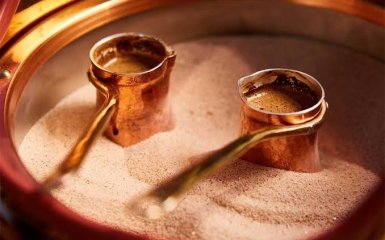
Coffee in a Turkish coffee maker can have a rich chocolate flavor, a pleasant sweetness, and a thick, aromatic foam. But sometimes, instead of a balanced drink, you end up with something too bitter, astringent, or even burnt. And the problem can recur even with expensive beans.
Points of attention
- Excessive bitterness may be due to dark roasting, coffee concentration, prolonged heating, or water composition.
- For a milder taste, try fresh, medium-roasted Arabica and a very fine grind for Turkish coffee.
- The starting ratio for cezve is 7 g of coffee per 70 ml of water. The drink should be heated moderately and removed from the heat when the foam begins to rise.
Most often, coffee in a Turkish coffee maker is bitter due to poorly selected roasting, incorrect proportions, excessive heating, or grinding characteristics. However, it is important to understand that bitterness does not always indicate an error: it is a natural component of the coffee taste, and its intensity depends on many factors.
To make delicious coffee in a cezve, you need to learn how to manage extraction - the process of transferring flavor and aroma from ground beans to water. Let's look at how to determine the cause of unpleasant bitterness, choose the right coffee, and prepare a balanced drink at home.
Why does coffee taste bitter: what happens during brewing?
Coffee beans contain hundreds of chemical compounds that shape the aroma and taste of the finished drink. Some of them have sweet, sour or fruity nuances, while others are responsible for bitterness and astringency.
Among the substances that contribute to the bitter taste are caffeine, chlorogenic acid conversion products, and compounds formed during roasting.
Studies of the chemical composition of coffee show that under the influence of high temperature, chlorogenic acids are partially converted into lactones and other substances that can increase bitterness.
Such changes are especially noticeable during dark roasting.
However, the amount of caffeine does not determine the bitterness of a drink by itself. Coffee with a higher caffeine content will not necessarily taste more unpleasant.
The ratios of different flavor compounds, the degree of roasting, and the extraction conditions are important.
How does natural bitterness differ from bad taste?
A properly brewed coffee may have a slight bitterness of dark chocolate, cocoa, or toasted nuts. It complements the other flavors and should not completely overwhelm them.
Unpleasant bitterness usually has other signs:
sharp burnt or ashy taste;
long dry aftertaste;
feeling of excessive astringency;
lack of noticeable sweetness;
a heavy taste that does not change even after cooling.
At the same time, the perception of bitterness is individual. What seems pleasantly intense to one person may resemble burnt coffee to another.
Therefore, the main goal is to get a balanced taste according to your own preferences.
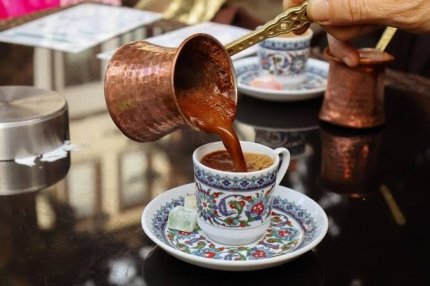
How to understand why coffee in a Turkish coffee maker turns out to be tasteless
Before changing a recipe, it's a good idea to determine the nature of the problem. Different flavor deficiencies have different causes.
| What kind of coffee is it? | Possible cause | What to try |
| Sharply bitter, with a burnt aftertaste | Dark roasting, intense or prolonged heating | Change grains, reduce heating |
| Too strong and tart | Too much coffee concentration | Reduce dosage |
| Sour and watery | Poor ingredient ratio, insufficient extraction | Adjust proportions and heating |
| Flat, without a distinct aroma | Stale grains or water features | Use fresher coffee, change the water |
| With an unpleasant foreign odor | Dirty coffee pot, old coffee oils | Clean the dishes thoroughly |
| With excessive sediment | Grinding features, insufficient settling | Let the thick settle before drinking. |
These are approximate reasons, not an infallible diagnosis. For example, a sharp bitterness can occur both due to the peculiarities of roasting and due to a combination of several unsuccessful parameters.
It's best to change only one parameter at a time. This makes it easier to understand what exactly affects the taste.
How to properly brew coffee in a Turkish coffee pot so that it doesn't turn bitter
A simple recipe with controlled proportions is enough to start. It will help you evaluate the taste of the grains and gradually find the optimal cooking method.
Traditional Turkish coffee often uses a ratio of approximately 1 g of ground coffee per 10 ml of water.
That is, for a small cup of 70 ml, you need about 7 g of coffee.
Ingredients per serving
very finely ground coffee - 7 g;
drinking water at room temperature or cooler - 70 ml;
sugar - as desired;
cardamom or other spices - optional.
It is convenient to use kitchen scales for accurate dosing. The volume of a teaspoon does not always correspond to the same weight of coffee, because it all depends on the grinding and density of the powder.
Step-by-step instructions
Step 1. Prepare the cezve. It should be clean, without any residue from the previous coffee and foreign odors.
Step 2. Pour in the water. For the classic recipe, use room temperature or colder water. Do not fill the Turk to the brim: you need room for the foam to rise.
Step 3. Add coffee. Add ground beans and sugar, if using.
Step 4. Stir. Before heating, gently stir the coffee to evenly moisten the powder.
Step 5. Start heating. Place the cezve over low to moderate heat. The flame should not reach the walls.
Step 6. Watch the foam. When the surface begins to rise and the drink approaches a vigorous boil, remove the Turk from the heat.
Step 7. Pour the coffee into a cup. Do this smoothly to retain some of the foam.
Step 8. Let the drink settle. Wait about a minute for a significant portion of the coffee grounds to settle to the bottom.
For most small cezves, the heating process takes about 2–5 minutes. However, this is not a strict guideline: the time depends on the material of the cezve, the amount of water, and the power of the stove.
The main rule is to focus on the behavior of the coffee, not the stopwatch. A long, vigorous boil is usually not necessary to obtain a rich flavor.
Why you shouldn't boil coffee in a Turkish coffee pot for a long time
Unlike many other preparation methods, when brewing in a cezve, the ground coffee is constantly in contact with water.
Even after removing the Turk from the heat, extraction continues for some time, as coffee particles remain in the hot drink.
When a mixture is heated for a long time, the amount and ratio of substances that pass into the water changes.
This can increase bitterness, astringency, and intensity of the aftertaste.
Does coffee really "burn" when boiling?
The common expression "the coffee burned" does not always accurately describe what happened.
The boiling point of water at normal atmospheric pressure is approximately 100 °C. This is significantly lower than the temperatures at which coffee beans are roasted.
Therefore, the mere fact of boiling does not mean that the ground coffee has literally charred.
An unpleasant burnt taste can be a characteristic of darkly roasted beans or the result of poor heating and extraction.
True local burning is possible if coffee particles remain on the bottom or walls of overheated dishes, especially if there is not enough water.
Therefore, it is important to distinguish between the bitterness inherent in the beans and the shortcomings of the cooking method itself.
How many times can you lift a barbell?
Traditional recipes sometimes use two short heatings, during which the foam rises to the edges of the cezve.
This method has the right to exist if the drink is not subjected to prolonged boiling.
However, heating repeatedly does not guarantee better taste.
For beginners, one controlled foam lift is enough. It is easier and allows for better reproducibility of the result.
What coffee roast to choose for a Turkish coffee maker
The degree of roast determines a significant part of the flavor profile before the coffee even enters the cezve.
During roasting, aromatic compounds are formed, the structure of the grain changes, and chemical transformations of acids, sugars, and proteins occur.
The darker the roast, the more noticeable the bitter, smoky, and toasted tones can become.
Light roasting
Such grains may have pronounced acidity, fruity or floral notes.
When brewed in a Turkish coffee pot, they sometimes give an interesting but unusual taste for lovers of classic strong coffee.
If your coffee seems too acidic, it's not necessarily a matter of improper brewing—it could be a characteristic of the bean itself.
Medium roast
For many people, this is a convenient starting point.
Medium roast coffee often has a balanced combination of sweetness, acidity, and bitterness.
The taste may be chocolate, caramel, nuts, or fruit, depending on the origin and processing of the beans.
If you don't like sharp bitterness, try this option.
Dark roast
Such beans often have an intense flavor with notes of dark chocolate, toasted nuts, smoke, or spices.
This doesn't mean that dark roasting is bad. It just creates a different flavor profile.
However, if you don't like burnt tones, changing your brewing technique won't always help. It's better to try a lighter roast.
Arabica or Robusta: Which Coffee Is Less Bitter?
Arabica and robusta are the two main types of coffee that are widely used to make beverages.
They differ in chemical composition, aromatic profile, and taste characteristics.
Arabica often has a more complex aromatic palette, which can be dominated by fruity, floral, nutty and chocolatey notes.
Robusta is usually characterized by a denser flavor, more pronounced bitterness, and higher caffeine content.
However, this is not an absolute rule. The quality of the raw materials, the roasting and the cooking method can significantly change the final result.
To start, you can try 100% medium-roasted Arabica.
If you like very rich coffee but want to avoid excessive bitterness, it is worth comparing several blends of Arabica and Robusta.
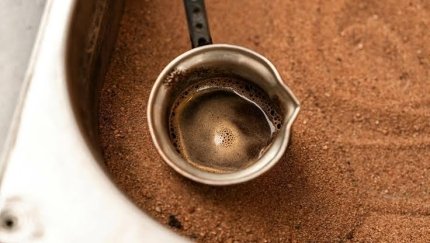
What grind is needed for coffee in a Turkish coffee maker?
For cezve, an extremely fine grind is traditionally used, which resembles flour or powder in consistency.
It is finer than the typical grind for espresso, geyser coffee makers, or filter coffee.
This is due to the peculiarity of the preparation: the coffee is not filtered, and small particles remain in the drink and gradually settle to the bottom of the cup.
How grinding affects bitterness
The smaller the particles, the larger the area of their contact with water.
As a result, soluble substances can pass into the drink more quickly.
Scientific studies of coffee extraction show that reducing particle size can increase the concentration of certain substances, particularly those that affect bitterness and astringency.
At the same time, this does not mean that you need to use coarse grind for Turkish coffee.
On the contrary, extremely fine grinding is a characteristic feature of traditional technology.
If the coffee is bitter, don't rush to grind it coarser. First, check the roast level, dosage, and heating mode.
Why is it better to grind grains before cooking?
After grinding, coffee particles have a much larger area of contact with air.
Because of this, aromatic compounds evaporate faster, and fats gradually oxidize.
Coffee that is stored ground for a long time can lose its aroma and take on a stale taste.
For best results, use freshly ground beans. If you buy ready-ground coffee, choose small packages marked with a grind for a Turkish coffee maker.
Why does water change the taste of coffee?
Water makes up the bulk of the finished drink, so its composition affects the result.
Dissolved minerals, particularly calcium and magnesium, as well as the alkalinity of the water, are important.
Studies of the chemistry of coffee extraction confirm that the mineral composition of water alters the interaction between soluble coffee compounds and the liquid.
What happens if the water is too hard?
Hard water contains an increased amount of calcium and magnesium salts.
Depending on the composition, it can change the perception of acidity, sweetness, and bitterness of coffee.
High alkalinity can drown out pleasant acidity, which can sometimes make the taste seem flat.
However, hardness and alkalinity are not the same characteristics. Therefore, not all hard water necessarily makes coffee bitter.
If scale quickly forms on the kettle after boiling, you should try making the same coffee with different drinking water.
What water to use
For home-made cezve, clean drinking water with moderate mineralization, without a distinct foreign odor or taste, is usually suitable.
You can use high-quality filtered water.
Overly mineralized water can alter extraction, and fully demineralized water may not necessarily provide the desired taste.
The simplest experiment is to make the same coffee using two types of water and compare the results.
How much coffee is needed per cup so that it is not too bitter?
The amount of ground coffee primarily affects the concentration of the drink, which is often called strength.
However, strength and bitterness are different concepts.
You can make concentrated coffee with a pleasant, balanced taste. Conversely, even a weak drink can sometimes have a sharp bitterness.
For traditional cooking in a cezve, it is convenient to start with a ratio of 1:10.
| Number of servings | Water | Ground coffee |
| 1 small cup | 70 ml | 7 g |
| 2 small cups | 140 ml | 14 g |
| 3 small cups | 210 ml | 21 g |
| 4 small cups | 280 ml | 28 g |
These proportions are a starting point, not the only correct recipe.
If the drink seems overly concentrated, you can try a ratio of 1:11 or 1:12.
For example, for 80 ml of water, use approximately 7 g of coffee.
It is important not to confuse reducing the concentration with truly eliminating bitterness: if the grains have a sharp burnt taste, a lower dosage will only make it weaker.
Why coffee tastes bitter even with the correct recipe
Sometimes the proportions are accurate, the grind is right, and the cezve is removed on time, but the taste is still unpleasant.
In such a situation, it is worth paying attention to factors that are often overlooked.
Stale coffee
During long-term storage, grains gradually lose their aromatic substances.
If the package is left open for several months, especially in high temperatures or humidity, the taste may deteriorate significantly.
This doesn't always mean that the coffee is spoiled or unsafe, but its aromatic profile becomes less pronounced.
Store grains in an airtight, opaque container, in a cool, dry place, away from the stove.
Incorrectly selected teapot
The shape of the Turk affects the heating process and foam formation.
A classic cezve has a relatively wide bottom and a narrower top. This helps control the rise of the foam.
If the pan is too large for one small portion, the liquid may spread in a thin layer across the bottom, and the heating becomes less easy to control.
Therefore, it is better to use a coffee pot whose volume corresponds to the amount of coffee you usually make.
Old coffee grounds
Coffee oils can accumulate on the interior surfaces of cookware.
Under the influence of air and temperature, they gradually oxidize and can give subsequent portions a rancid taste.
After each use, clean the coffee maker according to the recommendations for the material it is made of.
Check especially carefully the areas near the bottom and narrow part of the pan.
Does the material of the Turk affect the taste of coffee?
The most common jugs are made of copper, stainless steel, aluminum, or ceramic.
Each material has different thermal conductivity and heat capacity characteristics.
Copper transfers heat quickly, making it possible to respond quite quickly to changes in heating.
Stainless steel is usually easier to maintain, but the nature of heat distribution depends on the design of the bottom.
Ceramic heats and cools differently than metal, so the drink may continue to heat for some time after being removed from the stove.
The material of the cezve itself does not guarantee better tasting coffee. What is much more important is how evenly the vessel heats up and whether it is convenient to control the process.
A high-quality internal food coating is also important for copper crockery. If it is damaged, the cookware should be evaluated for suitability for further use.
How to save coffee if it has already turned bitter
It is impossible to completely fix a failed extraction, but sometimes you can make the taste more pleasant.
The choice of method depends on how strong the bitterness is.
Add some hot water
If the drink is simply too concentrated, a small amount of water will reduce its intensity.
However, this does not remove the bitter substances, but only reduces their concentration.
Use milk
Milk alters the perception of bitterness due to its own sweetness, fat content, and the interaction of proteins with flavorings.
If you like milk drinks, add a little warmed milk to your finished coffee.
Try a pinch of salt
A small amount of salt can affect the perception of bitter taste.
However, this is not a universal method and certainly not a reason to add salt to every serving.
If you decide to experiment, use just a few crystals so as not to make the drink salty.
Don't mask the distinct burnt flavor
If your coffee has a strong smell of burnt or rancid fats, sugar, milk, or spices will not eliminate the cause.
In this case, it is better to prepare a new portion by changing the appropriate parameter.
Do spices help remove the bitterness of coffee?
Cardamom, cinnamon, vanilla, and other spices can complement the taste of coffee and change its perception.
However, they do not automatically reduce the amount of bitter substances in the drink.
For example, cardamom adds fresh spicy notes that pair well with medium-roast coffee.
Cinnamon can create a sweeter flavor sensation even without adding a lot of sugar.
For a small cezve, a pinch of ground cinnamon or a small amount of ground cardamom is usually enough.
An excess of spices can cover the natural aroma of the grains, so it is better to start with minimal portions.
Common mistakes when brewing coffee in a Turkish coffee maker
Some habits seem right, but in practice they can make it difficult to achieve stable results.
Brew on high heat. High heat makes it difficult to control the froth and increases the risk of the coffee overflowing.
Repeat boiling many times. Additional heating alters the extraction and does not guarantee better flavor.
Pouring coffee without measuring. A few extra grams can significantly change the concentration of a small portion.
Use French press grinds. Large particles do not match traditional brewing technology in a cezve and change the nature of the extraction.
Leaving the finished coffee in a hot Turkish coffee pot for a long time. The ground beans continue to be in contact with the water, and the residual heat affects the process.
Consider thick foam as the only indicator of quality. Foam is important for traditional serving, but does not guarantee a balanced taste.
Use coffee with a rancid smell. High-quality brewing will not restore the aroma lost to the beans due to improper storage.
How to find the perfect coffee recipe in a cezve: a simple experiment
For a stable result, it is worth comparing several ways of making the same coffee once.
Start with 7g of ground coffee and 70ml of water.
Prepare the first portion over moderate heat, removing the jug when the foam first rises noticeably.
Evaluate the bitterness, acidity, sweetness, and aftertaste.
Next time, change one setting:
If the drink is too concentrated, use a little more water.
If the taste is burnt, try a lighter roast.
If the coffee seems flat, check the freshness of the beans and the water.
If you feel a sharp astringency, try heating for a shorter period.
If you like the taste, record the proportions and cooking time.
It is convenient to record the results in notes. Just indicate the coffee type, dosage, amount of water, heating and your own taste assessment.
This approach will help you get the expected result without complicated coffee equipment.
Conclusion
If your coffee in a Turkish coffee maker is bitter, don't immediately blame the brewing method. Most often, the problem is related to an unsuccessful combination of beans, proportions, heating, and water quality.
For a balanced taste, start with a medium roast, very finely ground coffee and a ratio of approximately 7g coffee to 70ml water. Heat the cezve gently and bring to a long, vigorous boil.
Remember that natural bitterness is part of the coffee's flavor. The goal of proper brewing is not to remove it completely, but to achieve a balance between bitterness, acidity, sweetness, and aroma.
FAQ: Frequently Asked Questions About Bitter Coffee in a Turk
Why does coffee in a Turkish coffee maker turn out so bitter?
The cause may be a dark roast, excessive concentration, prolonged heating, or water characteristics. The freshness of the beans and the condition of the cezve also affect the taste. To determine the cause, change the brewing parameters one at a time.
How to brew coffee in a Turkish coffee pot so that it doesn't taste bitter?
Use fresh coffee of the right grind, water without any foreign taste, and moderate heat. To start, try a ratio of 7 g of coffee to 70 ml of water. Remove the jug when the foam begins to rise, avoiding prolonged, violent boiling.
Is it possible to boil coffee in a Turkish coffee maker several times?
Some traditional recipes call for two short foaming cycles. However, prolonged reboiling can degrade the flavor. For beginners, it is easier to use one controlled heating cycle.
Which coffee is the least bitter for a Turk?
A good place to start is with a medium roast 100% Arabica. It often has a milder flavor profile than blends with a high proportion of Robusta. However, bitterness depends on the specific bean, roast and preparation.
How many spoons of coffee are needed for one cup in a Turkish coffee maker?
For a 70 ml cup, a guideline is approximately 7 g of very finely ground coffee. The amount in teaspoons depends on the grind and density of the powder, so it is more accurate to use a kitchen scale.
Why does coffee taste bitter even if it is not boiled?
Bitterness can be a natural property of beans, especially dark roasts. It is also influenced by concentration, grind, water composition, and the length of time the ground coffee is in contact with the hot liquid. The absence of boiling does not in itself guarantee a mild taste.
Can I add salt to coffee to remove bitterness?
A very small amount of salt can reduce the perception of bitterness. However, it does not correct a poor extraction or eliminate burnt compounds. It is best to use this technique only as an experiment, and to solve the underlying problem by changing the beans or brewing method.
Why does coffee in a Turkish coffee maker taste sour?
Sourness can be a natural characteristic of the variety or light roast. Sharp unpleasant acidity is sometimes associated with insufficient extraction. Try checking the proportions, heat and water quality, and also compare beans from a different roast.
Do I need to stir the coffee while brewing in a Turkish coffee maker?
In the traditional method, the coffee is mixed with water before it begins to heat up. After that, it is usually left undisturbed to allow the foam to form more evenly. Constant stirring is not a prerequisite for good extraction.
How to remove burnt taste from finished coffee?
If the coffee is simply too strong, you can add a little hot water or milk. However, you won't be able to completely eliminate the distinct burnt taste. For the next batch, it's better to use a lighter roast, reduce the heat, or shorten the brewing time.

