
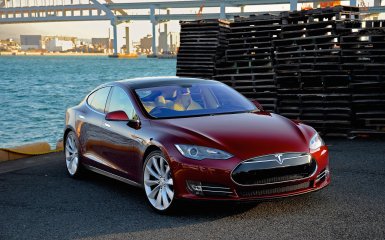
Tesla has been called a company that “is about to lose” for years. It has been criticized for its build quality, service, high-sounding promises, price swings, and management behavior. At the same time, Tesla electric cars remain a noticeable force in the electric car market, and competitors often measure themselves against it. The reason is not the magic of the brand. Tesla has weaknesses, but it also has something that is difficult to quickly copy: scale, experience in producing electric cars, software, charging ecosystem, and recognition.
Why Tesla is constantly being “hidden”
Tesla has become a company with very high expectations. It is expected not just to make good electric cars, but to revolutionize autonomous driving, batteries, manufacturing, and even energy. When expectations are so high, any mistake feels like the beginning of the end.
There are several other reasons why talk of the “death of Tesla” regularly returns:
the brand strongly polarizes the audience;
the company's solutions are often atypical for the classic automotive industry;
management statements create unnecessary information noise;
competitors have indeed become stronger;
prices for new and used Teslas can vary significantly;
Driver assistance systems cause a lot of debate about safety and liability.
In the media, this turns into a simple formula: if Tesla loses share in a particular market or receives a wave of criticism, it is “hidden” again. But the car market is more complicated: a company can lose its monopoly halo and at the same time remain a strong player.
What's really problematic about Tesla?
The criticism of Tesla did not arise out of thin air. The company has real weaknesses that are important for both fans of the brand and potential buyers to consider.
Build quality and materials
Over the years, owners have complained about uneven body clearances, cabin noise, paint quality, seals, or minor trim defects. Not every car has these problems, but the reputation was not formed by chance.
Service and repair
Tesla service varies by country, the availability of official infrastructure, access to parts, and skilled technicians. In some regions, repairs may take longer or be more expensive than the owner expects.
This is especially important for Ukraine, as many cars are imported used, often from the US, sometimes after an accident. In such cases, the main question is not just “is it a Tesla or not,” but what exactly happened to the specific car.
Price fluctuations
Tesla has repeatedly changed the prices of new cars. This can be beneficial for buyers at the time of purchase, but painful for those who have already bought a more expensive car: the residual value may sag.
Reputational risks
The company is strongly associated with public actions and statements from management. For some buyers, this is a plus, for others, a reason not to consider the brand at all.
Why this doesn't mean the end of the company anytime soon
Tesla's problems are noticeable, but they don't automatically mean failure. The automotive business is based not only on reputation, but also on production, logistics, technology base, demand and the ability to scale the product.
Tesla was one of the first to make the electric car a mass-market desirable product rather than a niche experiment. The company has built expertise in battery platforms, electronics, software, thermal management, charging, and simplifying its model lineup.
This is not a guarantee of dominance forever. But it is a strong foundation that does not disappear just because another competitor with a good design and an attractive price has entered the market.
Ecosystem: Tesla's main advantage
Tesla's strength is not only in the car. Its advantage is in the combination of "car + software + charging + application + updates."
The owner gets not just an electric car, but a digital product on wheels. For many, this is more important than soft plastic in the cabin or a traditional dashboard.
What works in Tesla's favor:
convenient mobile application;
regular software updates;
clear navigation to charging stations;
route integration with charging;
minimalistic interface;
a strong community of owners;
a large array of practical operating experience.
Why charging infrastructure matters more than it seems
For an electric car, charging is part of the ownership experience. Even the best range is meaningless if the driver doesn’t understand where and how to charge quickly.
Tesla has long had an advantage in many markets thanks to its own fast-charging network and the quality integration of charging points into navigation. This reduces stress on long trips: the car plans stops on its own, shows available stations and helps calculate the route.
The situation varies from country to country. In some countries, the Tesla Supercharger network is a key advantage, in others, third-party operators play a more important role. But the very idea of a seamless charging ecosystem has become a standard that other manufacturers are now striving for.
Competitors have become stronger — and that's normal
In the past, Tesla was often compared to electric cars that seemed to compromise: short range, poor charging, strange design, or high price. Now the situation is different.
BYD, Hyundai/Kia, Volkswagen Group, Mercedes-Benz, BMW, GM, Ford, and numerous Chinese brands are actively developing electric models. Competitors have strong batteries, interesting interiors, better noise insulation, a variety of body styles, and aggressive prices.
This is not the “end of Tesla,” but the normalization of the market. Electric cars are no longer a one-player game. The buyer now chooses not between a Tesla and a gasoline car, but between dozens of electric cars from different brands.
For Tesla, this is a more difficult environment. But for the consumer, it is better: more choice, healthier competition, faster technological development.
Batteries, power reserve and real-world use
When talking about Tesla electric cars, the issue of the battery is often raised. And it's important not to reduce everything to a single figure of range.
Real autonomy depends on:
air temperature;
speed of movement;
tire condition;
weight of the vehicle and cargo;
driving style;
use of climate control;
battery status;
route type - city, highway, mountains.
A Tesla battery, like any electric vehicle battery, can lose some of its capacity over time. The rate of degradation depends on operating conditions, mileage, frequency of fast charging, temperature conditions, and the history of the vehicle.
That is why it is important to check not only the mileage and external condition of a used Tesla, but also the available data about the battery, charging history, errors, repairs, and real range under typical conditions.
Autopilot and FSD: advantage or source of risks
Autopilot and FSD systems have become part of Tesla's image. They can really make the trip more comfortable: help keep the lane, distance, and perform certain maneuvers depending on the version, market, and settings.
But it's important not to overdo it. For most drivers, this doesn't mean a fully autonomous car in the everyday sense. The driver must be in control of the road, be ready to intervene, and not shift responsibility to the program.
Feature names can create inflated expectations, which is why safety regulators, industry organizations, and automotive experts regularly emphasize that driver assistance systems do not replace attentive driving.
For the buyer, this means a simple thing: Tesla Autopilot can be a plus, but it shouldn't be the only reason to buy.
Tesla in Ukraine: why demand is holding up
In Ukraine, Tesla has become popular not only because of its technology, but also because of the specifics of imports. A significant part of the cars enter the market used, often from the USA. This opens up a lower threshold of entry, but adds risks.
Buyers are attracted by:
relatively affordable used Model 3 and Model Y;
savings on daily trips if you have home charging;
good dynamics;
modern interface;
developed community of owners;
extensive experience in repairing individual models at independent service stations.
At the same time, a Ukrainian buyer should be especially careful. A car after an insurance auction may look good, but have a complicated history: damage to the battery compartment, power structure, electronics, or safety systems.
What to look for when buying a Tesla
You should buy a Tesla not because of the myth of the “best electric car,” but because it fits your routes, budget, and service capabilities.
Before buying, check:
The history of the car. Especially if the car is from the USA or Canada. Important accidents, insurance write-off status, photos from the auction, nature of the damage.
Battery status. It is advisable to assess the actual range, errors, charging behavior, and available diagnostic data.
Body geometry. After severe impacts, repairs may be invisible from the outside, but critical for safety.
Charging port and adapters: Different markets have different charging standards, so it's important to understand compatibility with local infrastructure.
The condition of the interior and electronics. The screen, cameras, sensors, climate control, heating, power windows, door handles — everything should work stably.
Service nearby. Even if the car is reliable, consumables, chassis, tires, body elements, and electronics require specialists.
Insurance and maintainability. Some repairs can be expensive or time-consuming due to parts.
Your charging mode. Home charging or available charging infrastructure is often more important than the rated range.
Conclusion: Tesla is not immortal, but not dead either
Tesla no longer seems as unattainable as it did a few years ago. Competitors have become stronger, the electric car market has matured, and customers have become more demanding. The company has real problems with service, quality, reputation, and competition.
But it's too early to write off Tesla. It's held together by scale, experience, software, charging ecosystem, recognition, and a large owner base. It's no longer the only answer to the question "which electric car to buy," but it still remains one of the main market benchmarks.
For the buyer, the best position is to be open-minded. Tesla can be a very good choice if the specific car is in good condition, fits your routes, has a clear history, and realistic service prospects.
FAQ
Should you buy a Tesla now?
It may be worth it if the model fits your routes, budget, access to charging and service. You should especially carefully check used cars after import.
Does a Tesla battery degrade quickly?
Degradation depends on mileage, temperature, charging mode, operating history, and condition of the specific vehicle. You should not judge a battery solely by its year of manufacture or stated mileage.
Is Tesla Autopilot safe?
Autopilot is a driver assistance system, not a replacement for the driver. It can increase comfort, but requires constant attention and a willingness to intervene.
Why is Tesla getting cheaper on the secondary market?
The price is affected by the decline in the cost of new cars, competition, battery condition, accident history, mileage, equipment, and the general situation in the electric vehicle market.
Are Chinese electric cars better than Tesla?
Some Chinese models may be stronger in price, equipment, or comfort. But Tesla often wins in ecosystem, software, recognition, and operating experience. You need to compare specific models.
What is the most important thing to check in a used Tesla?
Accident history, battery condition, body geometry, charging port, electronics, system errors, repair quality, and service availability in your region.
Are there any problems with Tesla service in Ukraine?
Service options depend on the city, model, type of repair, and availability of parts. Independent specialists are available, but it is better to plan complex work in advance.
Is Tesla really losing out to its competitors?
Tesla has lost its status as the undisputed leader in many segments, but that doesn't mean it's defeated. The market has become competitive, and Tesla is now competing with stronger manufacturers.
Disclaimer: The material is for informational purposes only and does not constitute financial, investment, or individual advice on purchasing a vehicle. Before purchasing a specific Tesla, it is advisable to conduct a technical inspection and check the history of the vehicle.

