
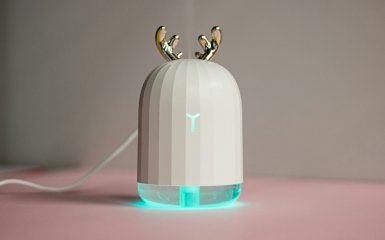
In winter, the air in the apartment often becomes drier, especially after turning on the central heating. This can cause dry nasal mucous membranes, chapped lips, a feeling of tightness in the skin and irritation in the throat. At the same time, the dryness is not always noticeable: the temperature in the room is comfortable, but the relative humidity can drop below 30%.
A humidifier helps compensate for the lack of moisture in the room. However, not every apartment needs one and it shouldn't be running continuously just because it's cold outside.
The optimal range for relative humidity in the home is 30–50%. If the level is consistently below 30% in winter, a humidifier can improve comfort. However, excessive humidity creates the risk of condensation, mold growth, and increased dust mite populations.
According to the U.S. Environmental Protection Agency (EPA) and Mayo Clinic, proper care of your humidifier is important in addition to humidity levels. A dirty humidifier can spread microorganisms and mineral particles into the air.
Let's consider five reasons to use a humidifier during the cold season, its real benefits and limitations, as well as the rules for choosing and safe operation.
Why does the air in the apartment become dry in winter?
The main reason is the combination of low temperatures outside and heating of the air indoors.
Cold air typically contains less water vapor than warm air under comparable saturation conditions. When it enters a home and is heated, its relative humidity decreases unless additional moisture is added.
For example, the air from the street can heat up to a comfortable +21 °C, but remain very dry in terms of relative humidity.
Heating radiators do not themselves "burn" water from the air. Heating changes the ratio between the actual amount of water vapor and the maximum possible at that temperature.
What is relative humidity?
Relative humidity shows how saturated the air is with water vapor at the current temperature.
It is measured in percentages.
The 30% indicator does not mean that the air is one-third water, but that it contains approximately 30% of the amount of vapor required for saturation at the corresponding temperature.
That is why humidity can change after heating or cooling the air even without adding water.
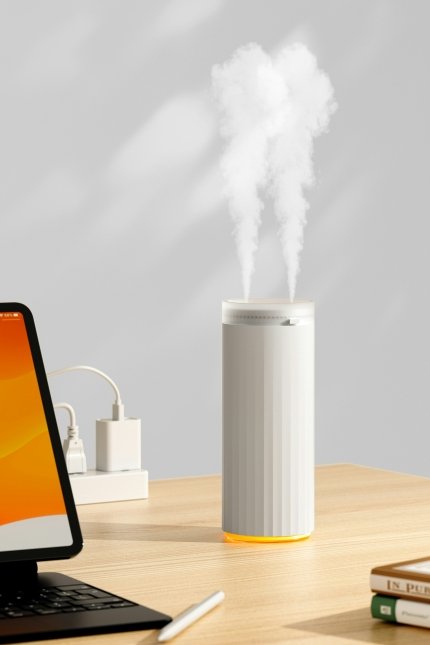
What air humidity is considered normal in winter?
The EPA and Mayo Clinic recommend maintaining relative humidity in living spaces around 30–50%.
This range helps avoid excessive dryness and reduce the risks associated with high humidity.
| Relative humidity | What could this mean? |
| Below 30% | The air is dry, possible discomfort of the skin and mucous membranes |
| 30–40% | Often comfortable winter range |
| 40–50% | Permissible level in the absence of condensation and ventilation problems |
| Over 50% | There is a growing need to control condensate and biological contamination |
| Over 60% | Increased risk of moisture accumulation and mold growth |
These are guidelines, not a guarantee of equal comfort for everyone.
In cold weather, even 45–50% humidity may be too high for a room with cold windows or insufficiently insulated walls.
If condensation constantly accumulates on the glass, the humidification intensity should be reduced regardless of the indicator on the device.
1. A humidifier can reduce dryness of the nose and throat
One of the most noticeable problems of dry air is discomfort in the mucous membranes of the upper respiratory tract.
A person may experience a dry nose, throat irritation, or discomfort when breathing.
The Mayo Clinic notes that dry air can irritate the nasal mucosa, contribute to chapped lips, and be a factor in nosebleeds.
Under such conditions, moderate hydration sometimes helps reduce discomfort.
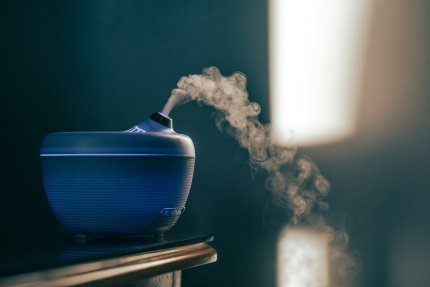
Does a humidifier help with a cold?
If the air in the room is too dry, humidifying it can relieve some of the discomfort of a cold.
However, a humidifier does not eliminate a viral infection, does not replace treatment, and does not guarantee relief from nasal congestion.
The causes of difficulty breathing through the nose are various: infections, allergies, anatomical features, and other conditions.
Therefore, you should not explain any nasal congestion by insufficient humidity.
Does a humidifier protect against flu and colds?
There are scientific studies on the relationship between humidity, the stability of respiratory viruses, and the spread of aerosol particles.
However, results depend on temperature, type of virus, ventilation, and many other factors.
It cannot be claimed that installing a humidifier is guaranteed to prevent the flu or other respiratory infections.
Ventilation, hygiene, and other appropriate preventive measures remain important to reduce the risk of infection.
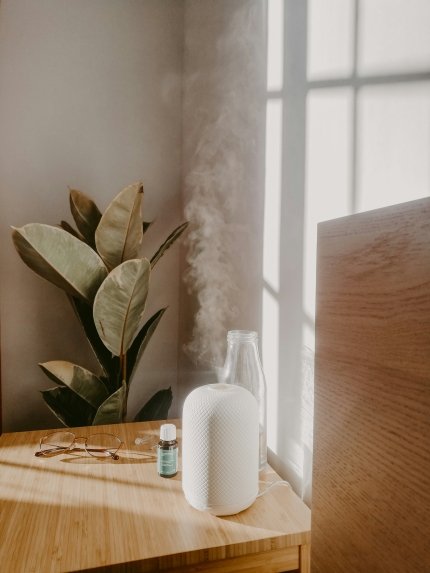
2. Helps reduce the discomfort of dry skin and lips
During the cold season, the skin often loses moisture faster, especially if a person spends a lot of time indoors with low relative humidity.
This can increase feelings of tightness, peeling, and irritation.
Dry air is also one of the factors causing chapped lips.
A humidifier does not replace skin care, but it can create more comfortable conditions indoors.
Can a moisturizer replace a cream?
No.
The condition of the skin depends on its protective barrier, frequency of washing, cosmetics, water temperature, and individual characteristics.
Even with normal humidity, skin may need moisturizers.
If the dryness is caused by atopic dermatitis or another condition, changing the humidity will not eliminate the underlying cause.

When the result may be noticeable
The initial state of the air is of greatest importance.
If the humidity in the room is consistently 20–25%, a moderate increase in humidity can reduce discomfort.
But if the hygrometer is already reading 40–45%, additional humidification is unlikely to have the same benefit.
Therefore, before purchasing a device, it is worth measuring the actual humidity.
3. Can make sleep more comfortable
Some people wake up in the winter with a dry mouth or throat.
This is especially noticeable when the heating is working intensively and the air in the bedroom is too dry.
If the discomfort is related to low humidity, normalizing it can make a night's rest more pleasant.
However, there is no reason to consider a humidifier a universal means of improving sleep.
Does a humidifier help with snoring?
Snoring can occur for various reasons, including upper airway characteristics, body position, or breathing disorders during sleep.
Dry air sometimes increases irritation of the nose and throat, but is not necessarily the cause of snoring.
Therefore, a humidifier cannot be considered a treatment for snoring or obstructive sleep apnea.
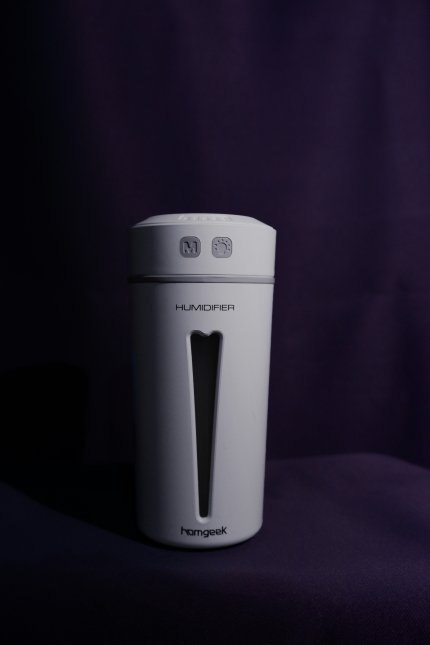
Can I leave the device on overnight?
Yes, if its design allows for long-term operation, it is properly installed and cleaned regularly.
It is advisable to use a model with a hygrostat - a function that maintains a set humidity.
This reduces the risk of excessive moisture during sleep.
Do not direct the mist stream directly onto a pillow, blanket or mattress.
4. Helps protect wooden furniture and reduce static electricity
Low humidity affects not only your well-being, but also some materials.
Wood absorbs and releases moisture depending on environmental conditions.
With prolonged dryness, individual wooden products may change size, deform, or form cracks.
Solid wooden furniture, parquet flooring, and musical instruments can be particularly sensitive.
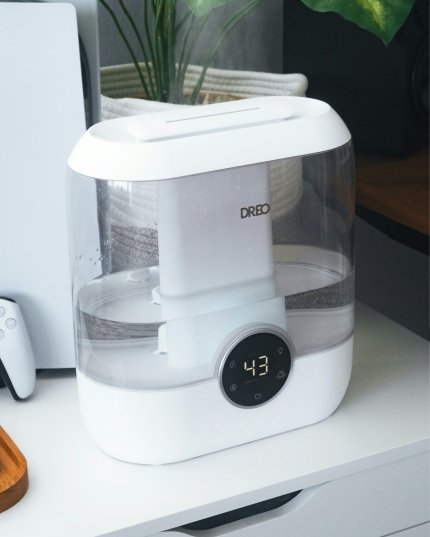
Does a humidifier protect parquet?
Maintaining a more stable humidity can help reduce seasonal fluctuations in wood dimensions.
However, specific requirements depend on the type of wood, the floor construction, and the manufacturer's recommendations.
Excessive humidity is also undesirable: it can cause swelling and deformation.
Therefore, you should not increase the humidity above recommended limits to protect furniture.
Why is static electricity more common in winter?
In dry air, electrostatic charges can accumulate and persist for longer.
This is noticeable upon contact with synthetic clothing, carpets, or some furniture materials.
A moderate increase in humidity sometimes reduces the appearance of static electricity.
However, it does not eliminate all the causes of its occurrence.
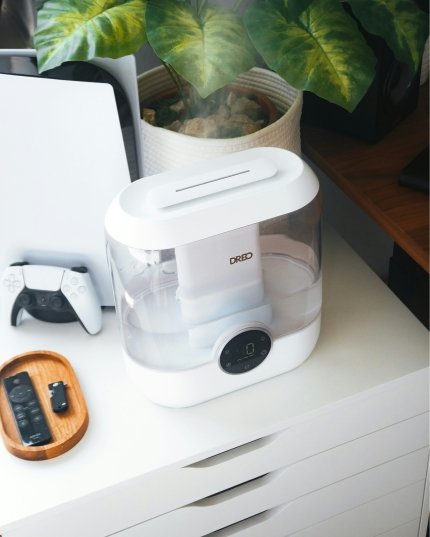
5. Creates more favorable conditions for some indoor plants
Many ornamental houseplants come from environments where the humidity is higher than in a typical apartment in winter.
For example, some ferns, calatheas, and other tropical species may react to very dry air by drying out the edges of their leaves.
In such cases, moderate humidification of the room can be beneficial.
Do all plants need high humidity?
No.
Cacti, many succulents, and other plants adapted to dry conditions do not require constant intensive humidification of the air.
Additionally, brown leaf tips are not always caused by dryness.
Similar symptoms may appear due to improper watering, excess salts in the substrate, or root damage.
Therefore, before using a humidifier, you need to take into account the characteristics of a specific type.
Where to place the device near plants
Do not direct the mist directly onto leaves, soil, or wooden furniture.
Constant wetness can create favorable conditions for mold growth.
It is better to ensure moderate humidity throughout the room and monitor it with a hygrometer.
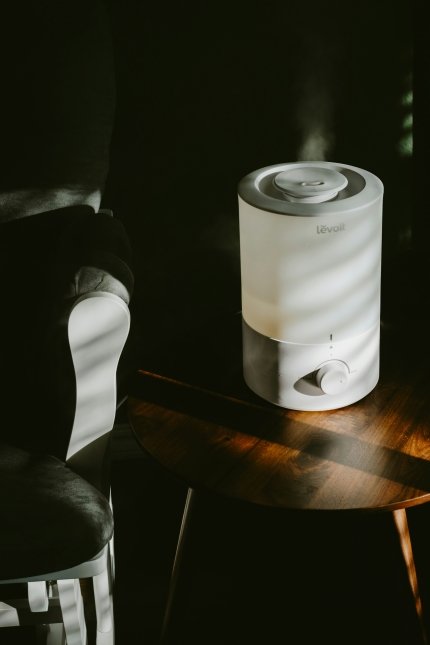
How to understand that you need a humidifier at home
The best way is to measure relative humidity with a hygrometer.
External signs may indicate a problem, but do not allow you to accurately determine its cause.
For example, dry lips, static electricity, and throat discomfort may be related to insufficient humidity, but are not a reliable confirmation.
How to measure humidity correctly
Place the hygrometer in the room where you spend the most time.
Do not place it directly near a radiator, window, humidifier, or strong heat source.
It is better to evaluate the indicators over several days, especially in the evening and at night.
If the humidity is consistently below 30%, this is a good reason to consider additional humidification.
If the indicator is within 30–50%, there may be no need for a separate device.
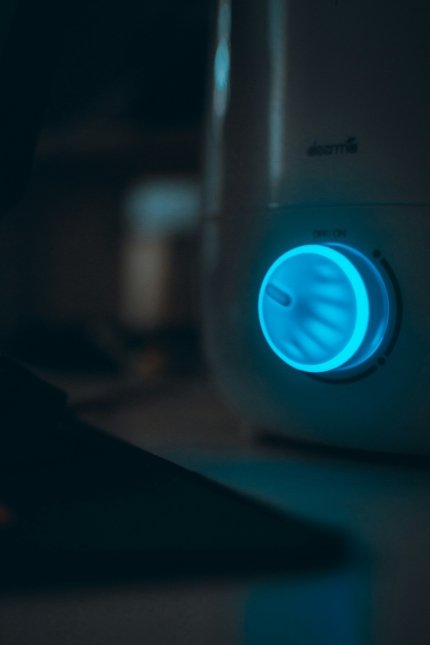
Which humidifier to choose: ultrasonic, traditional or steam
There are different humidification technologies that differ in the way moisture is generated, maintenance, and risks.
| Humidifier type | Working principle | Features |
| Ultrasonic | Forms small water droplets using membrane vibrations | Often quiet, but can spread minerals from the water |
| Traditional evaporative | Passes air through a humidified filter or evaporative element | Requires filter maintenance, usually less mineral dust |
| Steam | Heats water to steam | Has a risk of burns and usually consumes more electricity |
| Central | Connects to ventilation or heating system | Designed to service larger spaces or a house |
Ultrasonic humidifier
Such devices are often compact and operate relatively quietly.
However, the EPA notes that ultrasonic models can spread minerals and microorganisms contained in the tank water into the air.
Therefore, water quality and regular cleaning are especially important for them.
Traditional evaporative humidifier
In such devices, moisture evaporates from a filter or other moistened material.
The EPA notes that evaporative models typically do not disperse significant amounts of mineral particles the way ultrasonic models do.
However, microorganisms can also grow in wet filters and tanks.
Therefore, filters must be cleaned or replaced according to the instructions.
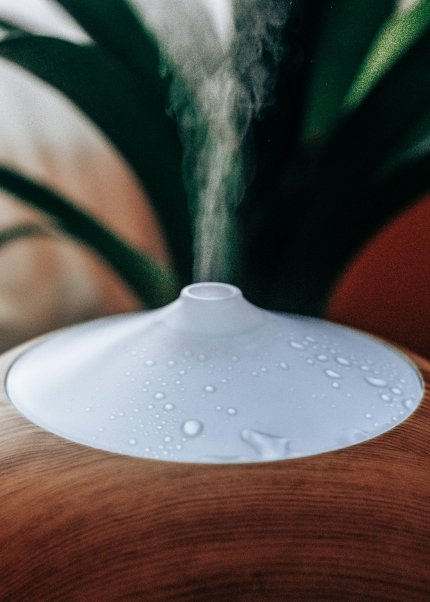
Steam humidifier
In steam models, the water is heated.
Such devices can be effective, but pose a risk of burns from hot water and steam.
The Mayo Clinic does not recommend steam humidifiers for homes with children due to the risk of burns if they tip over.
For a children's room, it is safer to consider suitable cold humidification models.
How to choose a humidifier based on room size
One of the key characteristics is humidification performance.
It is usually indicated in milliliters or grams of water per hour.
For example, a device with a capacity of 250 ml/h at maximum continuous operation can theoretically consume up to 250 ml of water every hour.
But that doesn't mean it will necessarily maintain the desired humidity in any room.
The result depends on the area, ceiling height, ventilation, temperature and initial humidity.
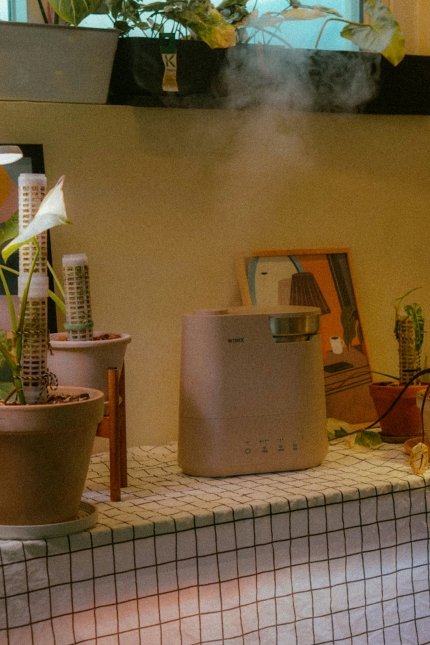
What characteristics to pay attention to
Not only the service area specified by the manufacturer is important, but also:
Humidification performance.
Presence of a hygrostat.
Possibility to clean the tank.
Noise level.
Tank volume.
Availability of replaceable filters.
Automatic shut-off in the absence of water.
Water quality requirements.
Noise is especially important for the bedroom.
For a children's room - structural stability, the absence of accessible hot elements and the possibility of safe placement.
What kind of water to pour into a humidifier
The type of water affects the formation of mineral deposits and the possible spread of particles in the air.
This is especially true for ultrasonic models.
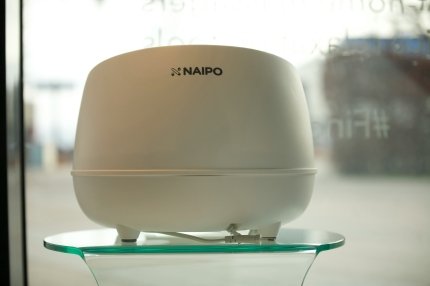
Why does white dust appear?
If you fill it with hard tap water, the ultrasonic humidifier can spread dissolved minerals along with the fine droplets.
After the water evaporates, they remain in the form of small particles.
That is why a white coating sometimes appears on furniture.
The EPA recommends using water with low mineral content, particularly distilled water.
Is the water suitable after the filter?
It depends on the type of filter.
A conventional mechanical or carbon filter does not necessarily remove dissolved calcium and magnesium salts.
Reverse osmosis systems can significantly reduce mineralization, but the result depends on the equipment and its condition.
It is also important to understand that distilled water does not eliminate the need to wash the tank.
Even with low mineralization, microorganisms can grow in a contaminated device.
How to properly clean a humidifier so that it does not harm your health
Regular cleaning is a mandatory part of operation.
According to EPA recommendations, the water in portable humidifiers should be changed daily and a thorough cleaning should be performed approximately every three days.
The CDC also recommends emptying the reservoir daily and drying it before the next use.
Daily care
Turn off the device and unplug it from the power outlet.
Drain any remaining water, following the design of the appliance.
Wipe down accessible interior surfaces and, if instructed to do so, allow the tank to dry.
After that, fill it with fresh water.
You don't just need to add water to the residue that has been sitting in the tank for several days.
Cleaning every three days
Mineral deposits and slippery film must be removed from surfaces that come into contact with water.
Use a product approved by the device manufacturer.
After cleaning, thoroughly rinse all relevant parts to prevent chemical residues from becoming airborne during operation.
Do not mix chlorine-containing products with acids, vinegar or other cleaners.
If the humidifier has a replaceable filter, it must be maintained according to the instructions.

Where to place a humidifier in the bedroom
Device placement affects not only efficiency, but also safety.
The humidifier should be placed on a stable surface, following the manufacturer's requirements for distance from walls and other objects.
It is especially undesirable to direct the wet stream at electronics, sockets, wooden furniture, curtains or bedding.
Can I put a humidifier next to my bed?
It is possible if the design allows it and the surrounding surfaces do not become wet.
There is no need to direct the mist directly onto your face.
If wet spots or condensation appear near the appliance, you should reduce the performance or change the installation location.
In a room with a small child, the device and its cable should be out of the child's reach.

How dangerous is excessive humidity?
More moisture does not mean more benefits.
The EPA recommends not raising indoor relative humidity above 50%.
Excessive moisture can promote mold growth and create favorable conditions for dust mites.
Condensation accumulation on cold windows, exterior walls, and in the corners of rooms is especially undesirable.
What to do if the windows fog up
First, you need to check the humidity level and ventilation status.
If the humidifier is running, it is worth reducing its intensity or temporarily turning it off.
However, condensation can occur even without a humidifier - due to insufficient thermal insulation, cold surfaces, or problems with air exchange.
Therefore, there is no need to explain any fogging of windows by exclusively high humidity.
Can I use a humidifier if I have allergies or asthma?
The approach must be individual.
Too dry air sometimes increases the discomfort of mucous membranes, but increased humidity can create favorable conditions for allergens.
The Mayo Clinic recommends that people with asthma and allergies discuss the use of a humidifier with their doctor.
It is especially important to prevent contamination of the tank.
Can a humidifier make symptoms worse?
Yes.
If the device spreads microorganisms or operates in a room with excessive humidity, respiratory symptoms may worsen.
If coughing, difficulty breathing or other unusual symptoms occur during use, the device should be stopped and the cause should be investigated.
A humidifier is not a substitute for treatment for asthma, allergic rhinitis, or other conditions.
Is a humidifier needed in a baby's room?
It is important to maintain proper air quality in a child's room, but this does not mean that a humidifier should be used constantly.
As with other living spaces, you first need to measure the relative humidity.
If the indicator is within the recommended range, additional hydration may not be necessary.
Which device is safer for a child?
Due to the risk of burns, it is undesirable to use steam models with hot water in a place accessible to a child.
For a child's room, it is usually more appropriate to consider cold humidification devices.
However, even such models require careful care.
You should not place the humidifier so that the mist falls on the baby's crib or bed.
It is also necessary to prevent access to the tank, cable and electrical components.

Can I add essential oils to a humidifier?
A regular humidifier is designed to provide moisture, not to diffuse aromatic substances.
The Mayo Clinic warns against adding essential oils and other substances to containers not designed for this purpose.
Oils can damage device materials, contaminate the system, and irritate the respiratory tract.
If the model has a separate compartment for aromatic substances, it can only be used according to the instructions.
At the same time, the presence of such a compartment does not guarantee the safety of any essential oil for children, people with allergies, or pets.
Seven mistakes when using a humidifier in winter
1. Turn on the device without measuring humidity
If the room already has enough humidity, additional humidification may not be necessary.
2. Maintain humidity above 50%
This increases the risk of condensation and moisture accumulation in the room.
3. Don't change the water every day
Stagnant water creates conditions for the development of microorganisms.
4. Use hard water in the ultrasonic model
This may result in the formation of white mineral dust.
5. Place the humidifier near a wall or electronics
A stream of small droplets can moisten surfaces that should not get wet.
6. Adding essential oils without the manufacturer’s permission
This may damage the device and cause respiratory irritation.
7. Consider a humidifier as an air purifier
A humidifier increases humidity, but does not necessarily remove dust, allergens, and other pollutants.
Other technologies are used to purify the air, including appropriate filtration systems.
Can I do without a humidifier?
Yes, if the humidity in the apartment is already within comfortable limits.
With slight dryness, sometimes it is enough to adjust the heating temperature, check the ventilation, and monitor changes throughout the day with a hygrometer.
For example, excessive heating of a room can further reduce relative humidity.
However, opening windows does not always increase humidity in winter.
On the contrary, the arrival of cold outside air with a small absolute amount of water vapor can further dry out the room after it has been heated.
At the same time, ventilation remains important to remove pollutants and ensure proper air exchange.
A humidifier should not replace ventilation.
Conclusion
A humidifier can be useful in winter if heating and weather conditions cause the relative humidity to consistently drop below a comfortable level.
It can reduce the discomfort of dry mucous membranes and skin, improve bedroom conditions, and help preserve some wood products and houseplants.
However, the benefits depend on proper use.
The most important thing is to maintain humidity around 30–50%, prevent condensation, change the water daily, and clean the device regularly.
FAQ: Frequently Asked Questions About Humidifiers in Winter
Do I need to use a humidifier in winter?
Not always. If the relative humidity in the room is consistently below 30%, additional humidification may be beneficial. If the readings are already within the recommended range, a separate device may not be necessary.
What is the optimal humidity in an apartment in winter?
The EPA and Mayo Clinic recommend aiming for 30–50%. In cold rooms or around poorly insulated windows, even the upper end of this range can cause condensation, so actual conditions should be considered.
Does a humidifier help with a stuffy nose?
It may reduce discomfort if the irritation is related to dry air. However, it does not treat infections, allergies, or other causes of nasal congestion.
Can I leave the humidifier on all night?
Yes, if the instructions allow it, the device is clean and installed safely. It is advisable to use a hygrostat to avoid excessive humidity. Do not direct the mist at bedding or electrical appliances.
Which humidifier is best for the bedroom?
Low noise, sufficient performance, a hygrostat and ease of cleaning are important. Ultrasonic models are often quiet, but require special attention to water quality.
What kind of water is best to pour into a humidifier?
For ultrasonic models, the EPA recommends using low-mineral water, such as distilled water. This helps reduce the formation of white dust and scale. However, you should follow the manufacturer's instructions.
How often should I clean my humidifier?
It is recommended that the water in your portable device be changed daily. The EPA recommends a thorough cleaning approximately every three days, following the manufacturer's recommendations for your specific device.
Can a humidifier cause mold?
Yes, if it excessively increases humidity or regularly moistens walls, furniture, and other surfaces. To reduce the risk, you need to control humidity and prevent constant condensation.
Is a humidifier safe for a small child?
Suitable cold humidification models can be used in a child's room if the instructions are followed. Steam devices with hot water pose a risk of burns. It is also important to ensure that the cable and reservoir are out of reach of the child.
Does a humidifier help with allergies and asthma?
It does not cure allergies or asthma. Excessive humidity and a dirty reservoir can even worsen symptoms. If you have these conditions, you should consult your doctor before using a humidifier.
The material is for informational purposes only and is not a substitute for medical advice. The humidifier is not a treatment for respiratory infections, asthma, allergies or other diseases. Self-medication can be harmful to your health. If you have persistent symptoms, breathing problems or other complaints, you should first consult a doctor.

