
A new T-shirt, dress, or jeans may look perfectly clean, smell nice, and even be packed in an airtight bag. However, that doesn’t mean the item is completely ready to come into contact with your skin. Before it hits the store, clothing goes through manufacturing, dyeing, finishing, packaging, transportation, and storage.
It is recommended to wash new clothes before wearing them for the first time to reduce the amount of dye, processing agents and dirt that may have accumulated on the fabric. This is especially important for underwear, children's clothes, bed linen and clothing that fits directly on the body.
Some fabrics are treated with compounds that help retain shape, prevent wrinkling, or fix color. Under certain conditions, their residue can cause skin irritation or allergic contact reactions.
At the same time, you shouldn't consider every new thing dangerous. Modern textile production involves the control of chemicals, and the risks depend on the specific fabric, processing, and individual sensitivity of the person.
We understand what substances can remain on new clothes, why itching sometimes occurs after the first wear, and how to properly wash your purchase so as not to ruin the fabric.
Why even new clothes may not be completely clean
Buyers often judge the cleanliness of items by their appearance and smell.
If the T-shirt has no stains and the packaging is not damaged, it seems that additional washing is unnecessary.
However, the condition of new clothes depends on many processes that occur long before purchase.
What happens to the fabric during production
The path of the finished product may include several stages:
Preparation of textile fibers.
Painting or applying prints.
Processing the material to give it the desired properties.
Cutting and sewing.
Ironing or steaming.
Packaging, transportation and storage.
Placement in a warehouse or in a sales hall.
At various stages, technological substances are used that provide the required appearance and characteristics of the fabric.
Most auxiliary compounds are removed during the manufacturing process, but some may remain in the finished product.
The German Federal Institute for Risk Assessment (BfR) explains that some substances are specifically stored in textiles to ensure certain properties, such as resistance to creasing or fire.
This does not automatically mean danger. What matters is the type of substance, its concentration, its ability to pass from tissue to skin, and the duration of contact.

What chemicals can remain on new clothes?
Different groups of compounds are used in the production of clothing. Not all of them are dangerous, and their presence does not always mean a violation of safety requirements.
However, some components require special attention.
| Substances or components | What are they used for? | Possible problems |
| Formaldehyde resins | Reducing wrinkling, stabilizing shape | Irritation or contact allergy in sensitive people |
| Textile dyes | Giving color to fabric | Dye transfer, allergic dermatitis |
| Processing aids | Improving fabric properties | Possible residual skin contact |
| Impregnation and protective coatings | Water-repellent or other functional properties | Risks depend on the specific composition |
| Antimicrobial additives | Reduction of the development of microorganisms and odors | Possible irritation in some people |
The exact chemical composition of the finished product cannot be determined solely from the fiber composition label.
The inscription "100% cotton" tells us what the fabric is made of, but does not reveal all the technological processes involved in its processing.
Formaldehyde in new clothes: why is it used and is it dangerous?
Formaldehyde is a chemical compound used in various industrial processes.
In the textile industry, certain formaldehyde resins can be used to give fabrics wrinkle resistance and shape retention.
For example, shirts labeled non-iron , wrinkle-free , or easy care may undergo special finishing treatments.
However, such labels do not prove that a specific item necessarily contains formaldehyde.
How formaldehyde can affect the skin
According to the New Zealand government agency Product Safety New Zealand, one of the most common adverse effects of exposure to formaldehyde in textiles is skin irritation.
Allergic reactions are possible in people who have appropriate sensitization.
At the same time, the BfR notes that allergic reactions specifically related to formaldehyde in textile products are relatively rare.
It is also important to distinguish between the hazardous properties of a substance and the actual risk from a specific product.
The fact that formaldehyde is classified as a carcinogen under certain exposure conditions does not mean that wearing a new shirt will cause cancer.
The risks depend on the route of entry, concentration, and duration of exposure.
Does washing help remove formaldehyde?
Washing can reduce some of the residual substances, particularly compounds that are not sufficiently firmly bound to the fibers.
This is why Product Safety New Zealand recommends washing and airing new clothes before use.
However, a single wash does not guarantee the complete removal of all substances used during production.
This is especially true for durable functional coatings.

Why new jeans and dark clothes can stain your skin
Another reason to wash a new purchase is excess dyes.
When dyeing fabric, some of the pigment or dye may remain insufficiently fixed.
Because of this, new jeans sometimes stain light-colored linens, furniture, or leather.
Color transfer is especially noticeable under the influence of moisture, friction, and sweat.
For example, dark pants can leave a bluish tint on your legs after prolonged wear in hot weather.
Dye transfer by itself does not prove that the product is toxic.
However, for people with contact allergies, certain textile dyes can be a problem.
Which dyes are most commonly associated with contact allergies?
The medical resource DermNet notes that allergic contact dermatitis can be caused by certain disperse dyes used for synthetic fibers.
In particular, reactions to Disperse Blue 106 and Disperse Blue 124 are described.
Such allergens can come into contact with the skin when the dye is transferred from the fabric through sweat and friction.
However, this does not mean that all synthetic or dark things are dangerous.
For most people, no reactions occur.
If the label says "wash separately", this indicates a risk of color transfer. This recommendation should be followed, especially before the first wear.
Why do new clothes have a specific chemical smell?
The smell of new items can occur due to the characteristics of fibers, dyes, technological finishing, packaging, and storage.
Sometimes it is weak and disappears quickly after airing.
In other cases, the smell remains pungent even after unpacking.
However, it is impossible to identify a specific chemical by smell .
Similarly, the absence of odor does not prove that there are no residues of technological compounds on the fabric.
The BfR recommends paying attention to the unusually pungent odor of textile products, but emphasizes that it alone does not make it possible to determine the chemical composition of the material.
Is it enough to simply air out a new item?
Ventilation can help reduce the amount of volatile substances that gradually migrate from the fabric into the air.
However, it does not replace washing.
Some substances are able to transfer from fabric to skin precisely under the influence of moisture, in particular sweat.
Therefore, for items that are allowed to be washed, it is better to combine regular washing and complete drying.
If clothing has a persistent strong odor even after proper cleaning, you should not continue wearing it until the cause is determined.

Can new clothes carry bacteria and other contaminants?
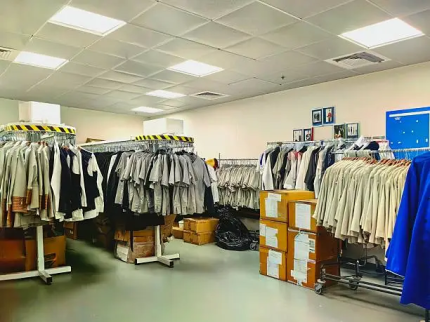
Clothes in a store do not necessarily remain in the same conditions in which they were packed at the factory.
Items may come into contact with shipping packaging, retail equipment, and employees' hands.
In addition, shoppers often try on T-shirts, dresses, pants, and outerwear.
During such contact, skin particles, cosmetics, sweat, and microorganisms can potentially remain on the fabric.
Cleveland Clinic dermatologist Shilpi Ketarpal recommended washing new items in March 2026, particularly because of the potential for dyes, irritants, and contaminants to transfer after trying them on.
At the same time, it is important not to exaggerate the risks.
Trying on clothes by another person does not mean that the item necessarily contains dangerous microorganisms or will cause an infection.
Regular washing before first use is a sensible hygiene measure, not a reason to consider all stores a source of infection.
What new items are especially important to wash before wearing?
The need for the first wash depends on how closely and for how long the material is in contact with the skin.

Underwear and socks
Panties, tank tops, bras, and socks fit directly against the body.
They often come into contact with areas where the skin sweats or experiences friction.
Therefore, it is advisable to wash such items before first use.
The washing mode should be selected according to the label to avoid damaging elastic fibers and delicate inserts.
Children's clothing
It is also recommended to wash clothes for babies and young children before wearing them for the first time.
This is especially true for bodysuits, romper suits, pajamas, hats, and fabrics that come into contact with the skin for a long time.
For children with sensitive skin, it is advisable to use fragrance-free detergents.
There is no need to automatically wash all children's clothes at the highest possible temperature.
It is important to follow the manufacturer's instructions and take into account the composition of the material.

Bed linen and towels
New pillowcases, sheets, duvet covers, and towels come into contact with large areas of the body.
The first wash helps remove some of the residual substances and dirt.
In addition, towels sometimes absorb water better after washing if certain technological residues are removed from the surface of the fibers.
However, this depends on the material and processing of the product.
Sportswear and swimwear
During physical activity, sweating and friction of tissue against the skin increase.
This can increase contact with components that migrate from textiles when exposed to moisture.
Therefore, it is also advisable to pre-wash new sportswear, leggings, and swimsuits if the label allows it.
How to properly wash new clothes after purchase
The first wash should reduce any possible residual substances but not damage the product itself.
To do this, it is enough to follow a few rules.

Step 1. Check the label
First of all, determine the composition of the fabric and the permitted care methods.
Pay attention to the maximum temperature, machine wash, bleach and tumble dry options.
Not all things can be washed in water.
For example, some wool coats, suits, silks, or clothes with intricate designs require special care.
Step 2. Separate clothes by color
It is best to wash new dark and bright items separately from white and light items for the first time.
This is especially true for denim, rich red, blue and black products.
If there is any doubt about the color fastness, you can test the dye transfer on a small inconspicuous area according to the manufacturer's recommendations.
Do not mix items that are specifically labeled for separate washing.
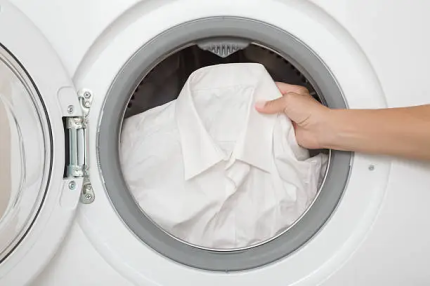
Step 3. Choose the right detergent
For a normal first wash, a high-quality detergent designed for the appropriate type of fabric is sufficient.
Dermatologists from the American Academy of Dermatology recommend that people with contact dermatitis pay attention to possible irritants, including fragrances.
If you have sensitive skin, you can choose a detergent without fragrances and dyes.
However, more detergent does not mean better cleaning. Excess can remain in the fibers if you do not rinse enough.
Step 4. Follow the recommended temperature
There is no universal temperature that is suitable for all new things.
A cotton T-shirt, a wool sweater, and a synthetic sweatshirt require different care.
Increasing the temperature without considering the label may cause shrinkage, deformation or color damage.
Therefore, choose the most appropriate mode, but one allowed by the manufacturer.

Step 5. Dry your clothes properly
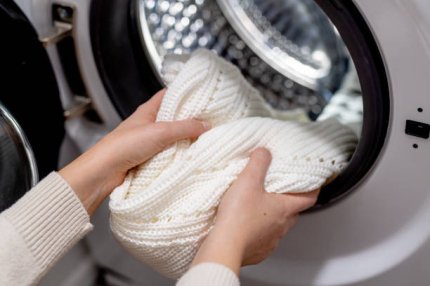
After the cycle is complete, remove the items from the washing machine and dry according to the instructions.
Do not leave wet clothes in a closed drum for a long time.
For delicate materials, horizontal drying may be recommended.
Clothing should be completely dry before wearing for the first time.
At what temperature should you wash new clothes?
The temperature depends on the material and design of the product.
| Clothing type | First wash reference |
| Cotton T-shirts | Typically 30–40 °C, if the label allows |
| Jeans | Often 30 °C, inside out and separate from light items |
| Synthetic sportswear | Usually 30 °C or special delicate cycle |
| Wool | Wool mode according to the label |
| Silk | Delicate wash or professional care according to instructions |
| Children's cotton clothes | Manufacturer's recommended temperature |
| Bedclothes | According to the material and care symbols |
These values are indicative and not mandatory for all products.
If the label states a lower maximum temperature, you must adhere to that temperature.
Is one wash enough for new clothes?
For most regular items, one proper wash before first wear is a reasonable initial measure.
However, it cannot be guaranteed that it will completely remove all residual substances.
The effectiveness depends on the composition of the material, the method of painting and the features of the finish.
For people with a confirmed allergy to textile dyes, the recommendations may be stricter.
In particular, DermNet notes that patients with such allergies may be advised to wash new items several times to reduce the amount of unfixed dyes.
However, even repeated washing does not guarantee the safety of the fabric for a person with a specific allergy.
In this case, it is more important to avoid materials and components to which a reaction has been established.
What to do with clothes that can't be washed
Not all purchases can be put in the washing machine right away.
For example, some coats, jackets, leather goods, and clothing with decorative elements are marked as not to be washed in water.
In such cases, the manufacturer's instructions must be followed first.
For items that are only allowed to be professionally cleaned, you can consider appropriate care.
Product Safety New Zealand also recommends thoroughly airing new clothes marked dry-clean only before use.
It is best to air in a place with sufficient air movement, without exposing delicate fabrics to inappropriate sunlight or temperature exposure.
However, it does not provide the same result as washing in terms of water-soluble residues.

Why does my skin itch after wearing new clothes?
Itching, redness, or rashes after wearing a new item can have various causes.
These include mechanical friction, sweating, irritation by fabric components, and allergic contact dermatitis.
You can't determine the cause just by the appearance of the rash.
How does textile contact dermatitis manifest itself?
According to DermNet, reactions to textiles can manifest as redness, itching, peeling, and irritation.
Symptoms often occur in areas of close contact with tissue: at the waist, in the armpits, under the knees, or on the inner thighs.
Friction and sweating can increase discomfort.
In this case, the reaction sometimes does not occur immediately, but after a few hours or days.
What to do if irritation occurs
If you experience redness or itching after wearing a new item, stop wearing it until the cause is determined.
It is important not to try to identify an allergen yourself by color or material.
For example, irritation from a new sweater may be related not only to the dye, but also to friction from coarse fibers or detergent residue.
For persistent or recurring reactions, a doctor should be consulted.
To diagnose allergic contact dermatitis, a dermatologist may recommend patch tests.
How to choose clothes for sensitive skin
People with confirmed contact allergies or a tendency to irritation should evaluate clothing materials and finishes more carefully.
Several principles may be useful.
First, choose fabrics that you already tolerate well.
Secondly, pay attention to the tightness of the fit and the possibility of friction.
Third, avoid products that regularly trigger symptoms.
For people with allergies to certain textile dyes, DermNet experts recommend giving preference to light-colored fabrics made from natural fibers.
However, it is important to remember that the natural origin of the fiber does not guarantee the absence of chemical treatment.
Similarly, a synthetic composition in itself does not mean that a thing is dangerous for the skin.
What does the OEKO-TEX STANDARD 100 certificate mean?
When choosing textiles, you can pay attention to independent product testing systems.
One of the most famous is OEKO-TEX STANDARD 100.
This is an international certification system that involves laboratory testing of textile products for the content of a number of harmful substances.
Requirements vary depending on the intended use of the product and the intensity of skin contact.
In particular, the strictest category of requirements has been established for products for infants and children under three years of age.
Does the certificate guarantee absolute security?
The presence of a certificate means that the product has passed the tests provided by the system in accordance with the established criteria.
However, this does not guarantee that the product will not cause an individual allergic reaction in a particular person.
Similarly, certification does not eliminate the need to follow care rules.
Before purchasing, it is important to check whether the labeling applies to the finished product, and not just to an individual component.
You should also not equate the label organic with the absence of all residual technological substances.
The organic origin of the fiber and the chemical safety of the finished textile product are different characteristics.

Can you wear new clothes without washing them?
In most cases, wearing a new item once without washing it first will not necessarily lead to irritation or other problems.
The risk depends on the material, processing, and individual sensitivity.
However, dermatologists recommend considering the first wash as a simple preventive measure.
This is especially true for things that directly touch the body.
When it comes to outerwear worn over other layers, the situation may be different.
For example, a coat that is labeled as non-washable doesn't require the same approach as a new pair of underwear.
The main thing is to take into account the rules of care and the nature of contact with the skin.
Common mistakes when washing new clothes for the first time
Trying to clean a new item as much as possible sometimes leads to damage to the fabric.
The most common mistakes:
Wash everything at high temperatures. This can cause shrinkage, deformation, and discoloration.
Add too much detergent. Detergent residue itself can irritate sensitive skin.
Mix new dark items with light ones. Unfixed dye can transfer to other fabrics.
Use vinegar, baking soda, or salt as a universal “chemical neutralization.” There is no reason to consider such mixtures a reliable way to remove all technological substances.
Ignore the label. Some fabrics lose their shape after even one improper cycle.
Do not assume that a strong scent from a fabric conditioner means it is clean. Fragrances are not proof that they have removed residues from textiles.
For people with sensitive skin, it is also advisable to avoid excessive amounts of scented products.
When it's better not to wear a new item even after washing
There are situations where re-cleaning will not necessarily solve the problem.
For example, if the clothes have a strong, persistent odor that does not disappear after washing and airing.
Another case is pronounced transfer of dye to the skin even after several cycles of care.
Also of concern is repeated irritation after wearing a specific product.
In such situations, it is advisable to stop using it and contact the seller with a question about the quality of the product.
If skin symptoms occur, it is important to separately evaluate their cause.
You shouldn't continue to wear a problematic item just because it's expensive or has a well-known brand.
Conclusion
New clothing may contain residual dyes, processing agents, and contaminants that occur during production, transportation, and fitting.
This does not mean that all new items are dangerous. However, pre-washing helps reduce potential exposure to some of these substances.
It is especially important to wash underwear, children's clothes, bed linens, and items that fit tightly against the body before use.
The simplest rule is to first check the label, wash the new item properly, and only start wearing it after it is completely dry. For items that cannot be washed in water, you should use the care methods provided by the manufacturer.
FAQ: Frequently asked questions about washing new clothes
1. Is it necessary to wash new clothes after purchase?
This is a recommended hygiene measure, especially for items that come into direct contact with the skin. Washing can reduce the amount of dye residues, processing agents, and surface contaminants.
2. What happens if you wear a new T-shirt without washing it?
This will not necessarily cause problems for most people. However, skin irritation, contact with residual substances, or dye transfer may occur. The risk depends on the specific fabric and individual sensitivity.
3. Is there formaldehyde in all new clothes?
No. Not all textiles are treated with formaldehyde resins. The presence and amount of these substances depend on the production technology and quality control. They cannot be identified by smell or appearance.
4. Can formaldehyde be removed from fabric by washing?
Washing may reduce some of the residual compounds. However, it does not guarantee the complete removal of all chemicals or functional coatings used during production.
5. Why do new clothes smell like chemicals?
Odor may be related to processing, coloring, packaging, or storage. However, its nature does not allow for the identification of a specific substance or level of hazard.
6. At what temperature should new clothes be washed?
The temperature should be determined by the label. For many everyday items, 30–40 °C is suitable, but wool, silk and other delicate materials may require special care.
7. Do I need to wash new jeans before wearing them?
Yes, this is desirable. New jeans can transfer some of the dye to leather and other fabrics. It is usually a good idea to separate them from light-colored clothes for the first wash and follow the manufacturer's instructions.
8. Why does my body itch after wearing new clothes?
The cause may be friction, sweat, irritation from fabric components, or contact allergy. If symptoms recur or persist, a doctor should be consulted to determine the cause.
9. Do new bed linens and towels need to be washed?
Yes, this is recommended. The first wash can remove some of the residue and dirt that may have accumulated before purchase. The mode should be selected according to the material.
10. Are items with the OEKO-TEX STANDARD 100 label safe?
This certification confirms that the product meets established testing criteria for a number of harmful substances. However, it does not guarantee the absence of any chemical components or individual allergic reactions.
Important: This article is for informational purposes only and is not intended for self-diagnosis or treatment of skin conditions. Self-medication can be harmful to your health. If you experience itching, rash, redness, or other symptoms after contact with clothing, you should first consult a doctor.

