

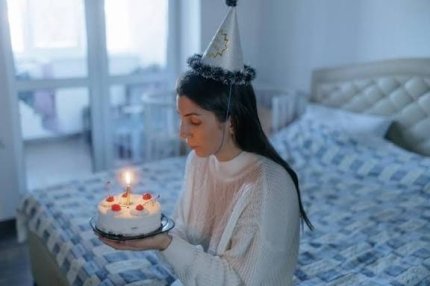
Birthdays are usually imagined as a day of joy: congratulations, gifts, meetings with loved ones and a festive mood. But for some people, everything happens the other way around. A few days before the date, anxiety appears, and on the holiday itself, you want to cry, turn off your phone or even pretend that this day does not exist.
Points of attention
- Birthdays can cause sadness due to self-esteem, thoughts about time, aging, and holiday prejudices.
- Round dates activate comparisons with the intentions, implementation of plans, and lives of others, which can cause feelings of failure.
- The memory of deceased loved ones, unpleasant memories from the past, and the inability to organize a celebration can increase the state of sadness.
This condition is sometimes informally called birthday blues . It is not a medical diagnosis or a separate mental disorder. More often, it is a short-term emotional reaction to a date that makes you feel the passage of time more acutely, evaluate your own life, remember loved ones, or face expectations from the holiday.
Psychological research has shown that birthdays are a kind of time frame. They help us mentally divide our lives into “before” and “after” periods, which can enhance self-esteem, goal-setting, and a sense of how well reality is aligned with our plans.
In most cases, a few sad hours or days are not indicative of depression. But if the depressed state is prolonged, affects other areas of life, or is accompanied by a loss of interest in familiar things, it is better not to write off the problem as a date on the calendar.
1. Birthday turns into a personal “year report”
Even a person who doesn't make lists of accomplishments may involuntarily evaluate the previous year on their birthday.
Thoughts arise:
What has changed?
What have I achieved?
What haven't you done yet?
Am I where I planned to be now?
What happened to the goals you set last year?
Psychologists call birthdays and other significant dates temporal landmarks . They structure our perception of time and can encourage us to look at our own lives in a broader perspective.
This mechanism can work positively. After a birthday, people sometimes feel a “fresh start” effect and are more willing to set new goals.
But if there is a large gap between expected and real life, such a revision can be painful.
Especially if the internal dialogue doesn't sound like:
"What do I want to change?"
and how:
"I didn't get anything done again."
2. The passage of time becomes more noticeable
On a typical Tuesday, we rarely think:
"I am already 39 years, 7 months and 12 days old."
Birthday makes age very specific.
That's why even people who are calm about aging can suddenly feel:
anxiety due to the speed of time;
fear of losing opportunities;
regret for the past years;
anxiety about changes in appearance or health;
thoughts about limited time.
Such experiences can be especially strong before symbolic age milestones — 30, 40, 50, 60 years.
Research shows that reflecting on anniversaries can enhance the search for meaning and a sense of time perspective.
Therefore, sadness on such a day sometimes arises not because a person is afraid of a specific number, but because this number makes time more noticeable.
3. Expectations from the holiday turn out to be higher than reality
There is a very strong cultural scenario associated with birthdays.
It is assumed that:
you should rejoice;
friends should remember;
the partner must come up with something special;
gifts must be successful;
party - fun;
the photographs are beautiful;
The day itself is unforgettable.
The more expectations, the more opportunities for disappointment.
For example, your partner greeted you warmly, but not in the way you imagined.
Friends wrote messages, but no one called.
Everyone at the party seems happy, but you're bored.
Nothing catastrophic happened — but reality did not match the internal scenario.
As a result, a strange feeling arises:
"Everything is fine, but for some reason I feel sad."

4. Social media creates an unrealistic birthday standard
In the film we see strangers:
surprises;
huge bouquets;
travel;
restaurants;
dozens of guests;
gifts;
beautiful photo shoots.
But we usually see a few of the most spectacular moments of someone else's day, and compare them to our own full experience.
A person may look at a friend's celebration and think:
"Here are his real friends."
"Her partner organized the trip, and I have a regular dinner."
"Everyone is celebrating on a grand scale, and I don't even have anyone to invite."
Comparing yourself to others can generally worsen your well-being, especially when your own life is judged through idealized images.
On a birthday, this mechanism often becomes stronger, because a person immediately evaluates the holiday, relationships, and their own achievements.
5. Loneliness is felt more acutely on this day.
Loneliness is not defined by the number of people around you.
You can have:
a hundred congratulations on social media;
large work team;
guests at the table
and still feel a lack of emotional closeness.
It is often the birthday that makes the quality of social connections particularly noticeable.
I want a specific person to write it.
So that someone would guess to call.
To have people around you with whom you can be yourself.
And when that's not there, the date becomes a kind of magnifying glass for the already existing feeling of loneliness.
The World Health Organization has in recent years specifically emphasized the importance of social connections for mental and physical well-being. Loneliness is not the same as physical isolation: a person can live alone and feel good, or have many contacts and feel lonely.
6. A birthday reminds you of someone who is no longer around.
Holidays are strongly associated with memory.
If your mother used to be the first person to call in the morning, your partner would make breakfast, or your friend would traditionally come over in the evening, the absence of that person on your birthday can be felt especially strongly.
Psychologists are well-known for the so-called anniversary reactions : significant dates can activate memories and intensify experiences associated with a loss or traumatic event.
Therefore, even after years, strong sadness can suddenly appear.
This does not mean that the person "didn't experience the loss correctly."
Grief doesn't work according to a calendar.
You can feel normal for many months and suddenly burst into tears on the very day that was once associated with a loved one.

7. The date brings back unpleasant memories from the past
For some, childhood birthdays were warm.
For another person, they were associated with:
family conflicts;
drunken quarrels;
disappointment;
absence of parents;
ridicule;
unsuccessful holidays;
traumatic events.
Such associations can remain very persistent.
The person is already an adult, life has changed, but the approach of a familiar date again causes tension.
There is no need to explain this with the mystical "body remembers everything." Memory, emotions, and context are truly connected: significant dates can remind us of previous events and the experiences associated with them.
8. You're just tired of organizing a party
Sometimes the psychological reason is much simpler.
Celebration means:
decide who to invite;
choose a place;
find the date;
to agree with everyone;
buy products;
clean the apartment;
host;
respond to dozens of messages.
If a person is already overloaded with work, children, or everyday life, their own birthday can easily turn into another project.
A particularly paradoxical situation:
The birthday boy organizes a party for everyone else.
And at the end of the day, instead of joy, he feels only relief that it's all over.
In such a situation, the problem may not be about age at all.
Maybe the celebration format you usually choose just doesn't suit you.
9. Pressure appears: “I have to be happy”
We calmly allow ourselves to be sad on an ordinary day.
On a birthday, a second level of experiences is added:
"Why am I sad? Today I should be happy."
Then the following join in the sadness:
fault;
shame;
irritation with oneself;
desire to hide true emotions.
And that often makes the day even harder.
Emotions don't obey dates.
You can receive a gift and be sad.
You can be grateful for your friends and feel lonely at the same time.
You can love life and not want to celebrate it today.
Such states do not contradict each other.

10. Your birthday coincides with a difficult period in your life.
Sometimes the date itself is almost irrelevant.
You could approach her against the backdrop of:
conflict;
divorce;
job losses;
financial problems;
diseases;
caring for a loved one;
moving;
wars;
chronic stress;
lack of sleep.
The holiday calendar does not turn off reality.
Therefore, demanding a drastic change in mood from yourself just because today is your birthday is unrealistic.
Sometimes the healthiest holiday scenario is to admit:
"I'm going through a difficult time right now, so this year I want to spend this day very calmly."
Is there a real "birthday depression"?
The term birthday depression is often used on the internet, but there is no separate psychiatric diagnosis with that name.
Short-term sadness before or after a holiday can be a normal emotional reaction.
Depressive disorder is different.
It is characterized by persistent symptoms, which may include:
depressed mood;
loss of interest or pleasure;
feeling of hopelessness;
severe fatigue;
sleep disturbances;
changes in appetite;
difficulty concentrating;
feelings of worthlessness or intense guilt;
thoughts of death or self-harm.
The duration, combination of symptoms, and their impact on daily life are important.
If the bad mood started long before the birthday and doesn't end after it, the date itself may simply make the problem more noticeable.
Why it's especially difficult before 30, 40 or 50 years old
Round dates have cultural significance.
We often unconsciously associate life scenarios with them.
Up to 30:
decide on a career;
build relationships;
to start a family.
Up to 40:
achieve professional stability;
to have a home;
to feel "fulfilled."
Up to 50:
have a certain financial reserve;
to know what you want from life.
But real biographies almost never develop so smoothly.
A person can change profession at 42.
Find a partner at 47.
Starting a business at 55.
Divorce at 38 and start a new phase of life.
The problem arises when a conditional social schedule is perceived as an objective deadline.
Then the birthday seems like proof:
"I'm late."
In reality, calendar age is not a universal indicator of where a person "should" be.
What to do if you feel sad before your birthday
The goal is not to create a festive mood at any cost.
It is more useful to make the day more psychologically comfortable.
1. Determine in advance what you want
Not:
"How do you normally celebrate a birthday?"
AND:
"How do I want to spend this day this year?"
The options can be very different:
big party;
dinner with two friends;
a day with family;
short trip;
cinema alone;
walk;
a normal working day.
Neither of them is psychologically "more correct."
2. Reduce your expectations of others
People don't always guess how you want to be greeted.
If it's important to spend the evening with your partner, say so.
If you want a surprise, you can also discuss this in general terms in advance.
If you don't want guests, let us know.
Expectations that only exist in your head create a lot of room for disappointment.
3. Don't turn a life review into a trial
You can sum up the year in a constructive way.
Instead:
"What haven't I achieved?"
try:
What has changed this year?
What was the most difficult?
What did I learn?
What do I want to leave in the past?
What do I want more of next year?
This way, the date becomes a point of orientation, not an exam.
4. Limit social media if it makes you feel worse.
It is not necessary to post a photo of the holiday.
It is not necessary to count the number of greetings.
It is not necessary to answer everyone at once.
If the feed triggers comparisons, you can simply put your phone away for a day.
Your birthday exists without its digital version.
5. Allow yourself to be sad.
Paradoxically, trying to immediately remove sadness often adds to the tension.
You can say to yourself:
"Yes, I'm a little sad today. I don't have to fix it in five minutes."
Acknowledging an emotion doesn't mean agreeing to stay in it forever.
This means stopping fighting the very fact of its appearance.
6. Arrange contact with a loved one in advance
If a birthday traditionally increases loneliness, there's no need to wait for someone to guess who will call.
Agree:
"Can we have coffee tonight?"
or:
"I don't feel like celebrating this year, but I feel like spending time with you."
Asking for contact is normal.
What is better not to do?
Don't force yourself to throw a big party.
A holiday you don't want is unlikely to automatically improve your mood.
Don't measure closeness by the number of greetings
An automated message from 150 friends can mean much less than one important conversation.
Don't make big life decisions during a time of severe emotional distress.
Opinion:
"I'm 40, I'm doing everything wrong, I need to get out of this immediately and get a divorce"
needs time to check.
Don't try to drown out your feelings with alcohol.
Alcohol can temporarily alter mood, but it can increase emotional instability and disrupt sleep.
How to support someone who is sad on their birthday
No need to convince:
"Never mind, today is your holiday!"
This phrase only reinforces the feeling that a person is experiencing something "wrong."
It is better to say:
"Do you want to tell me what particularly touched you today?"
"Do you want company or would you rather be alone?"
"Let's spend the day however you feel comfortable."
Also, you shouldn't force a surprise on someone who directly says they don't want a celebration.
Support is not about creating fun at all costs, but about hearing the other person's need.
When to seek help
An isolated sad day in itself is usually not a reason to talk about a mental disorder.
But professional consultation is appropriate if the depressed state:
lasts about two weeks or longer;
occurs most days;
significantly interferes with work or study;
leads to isolation;
accompanied by pronounced hopelessness;
takes away pleasure from things you used to enjoy;
noticeably disrupts sleep or appetite.
If you are having thoughts of self-harm, suicide, or feeling that life has no meaning, you should seek urgent professional help. In a situation of immediate danger, you should contact emergency services.
Conclusion
Sadness on a birthday does not make a person ungrateful, pessimistic, or “wrong.” A significant date can remind you of time, unfulfilled plans, losses, loneliness, or simply highlight accumulated fatigue.
In addition, birthdays often become a point of self-evaluation: we compare our current life with the one we once imagined, or with the lives of other people.
You don't have to turn this date into an exam. You can forgo a big celebration, change traditions, spend the day with a few close people, or generally make it as ordinary as possible.
And if sadness has long gone beyond one day, it's worth taking it more seriously and seeking professional support.
Important: The material is for informational and educational purposes only and does not constitute psychological or medical advice, diagnosis or treatment recommendations. Self-diagnosis and self-treatment of mental disorders can be harmful. If depression persists, worsens or interferes with daily life, consult a doctor, psychologist or psychiatrist. If you have thoughts of self-harm or suicide, seek immediate professional help.
FAQ
Why do you get sad before your birthday?
A significant date can increase self-esteem, thoughts about the passage of time, aging, unfulfilled goals, and relationships. Also affected are expectations from the holiday, loneliness, fatigue, and personal memories.
What are birthday blues?
Birthday blues is an informal term for sadness, anxiety, or emotional depression that occurs before, on, or immediately after a birthday. It is not considered a separate mental disorder.
Is it normal to cry on your birthday?
Yes. The mere fact of tears on a significant date does not mean a mental disorder. What matters is your overall well-being, the duration of your depressed mood, and its impact on your daily life.
Why is it harder to endure a birthday after 30 or 40 years of age?
Round dates can be perceived as life milestones and activate comparisons between one’s plans and reality. Research shows that reflecting on symbolic age boundaries can enhance the search for meaning and awareness of the passage of time.
Why do you feel especially lonely on your birthday?
Holidays create expectations of social closeness. This can make the gap between desired and actual levels of attention or support more pronounced. Loneliness can occur even when a person is physically present with others.
What to do if you don't feel like celebrating your birthday at all?
Don't celebrate in a traditional format. You can spend the day at home, go somewhere, meet up with one loved one, or stick to your usual schedule. A big party is not a prerequisite for a "proper" birthday.
Why are deceased loved ones remembered on birthdays?
Significant dates are closely linked to autobiographical memory. If a loved one was part of a previous celebration, a birthday can activate memories and temporarily intensify the experience of loss.
How to stop comparing your birthday to someone else's?
It's worth remembering that social media shows selected moments, not the full picture of life. It helps to determine your own comfortable holiday format in advance and limit viewing other people's publications for a while.
When can sadness on a birthday be a sign of depression?
It is worth paying attention if the depressed mood lasts about two weeks or longer, is accompanied by loss of interest, pronounced fatigue, hopelessness, sleep or appetite disturbances, and noticeably affects daily life.
How to support a person who is sad on their birthday?
Don't force her to have fun. Ask her what she wants: to talk, to be together, or to be alone. The best support is to respect her emotions and the desired format of the day.

