
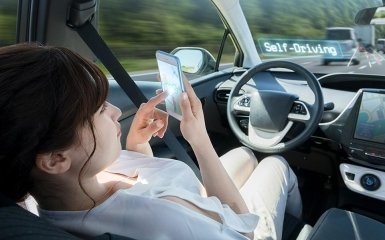
You get into the car, start the navigation, make a phone call through the multimedia system and go to work. The car remembers the route, records the speed, analyzes the engine operation and interacts with the smartphone. And if the car is connected to the Internet, some of this information may be transmitted to the manufacturer's servers or other companies.
Points of attention
- Modern cars can process geolocation, driving style data, technical condition, contacts, and camera recordings, depending on the model and settings.
- Data collection does not mean its automatic transmission: information may be stored in the car, the application, on the manufacturer's servers or third-party services.
- The presence of a microphone or GPS does not prove constant listening or surveillance; access capabilities depend on the specific system.
It would seem that nothing unusual. Digital functions make trips more comfortable, help prevent accidents, find faults and control the car remotely.
But the question arises: who actually controls the information your car collects, and can it be used without your knowledge?
In September 2026, the Dutch General Intelligence and Security Service (AIVD) issued a warning about the risks of digital surveillance through modern vehicles. Experts drew attention to cameras, microphones, navigation systems and smartphone connections that could potentially be used to obtain confidential information.
At the same time, this does not mean that every car constantly records conversations or transfers all personal data to third-party organizations.
Actual capabilities depend on the manufacturer, model, year of manufacture, installed software, and user settings.
We understand what data modern cars collect, where it is stored, who can access it, and what the owner should check to reduce privacy risks.
Why does a modern car collect so much information?
A few decades ago, electronics in cars mainly controlled the engine, braking system, and other technical components.
Today, a car can have dozens of electronic control units, cameras, radars, satellite navigation, mobile internet, and its own software services.
The car uses some of the information directly while driving.
For example, the stabilization system analyzes wheel speed to help prevent loss of control.
Other data is required for additional functions: remote start of the climate system, finding a car in a parking lot, or planning a route taking into account the traffic situation.
Such transport is called a connected car .
Is all collected data transmitted to the manufacturer?
No. It is important to distinguish between three processes:
Collection: Sensors or software obtain information.
Storage: Data remains in the memory of the car or other device.
Transmission: Information is sent to an external server, mobile application, or third party.
For example, a car may use temperature sensor readings to control the engine, but that doesn't mean every measurement is automatically transmitted over the internet.
Conversely, the remote diagnostics function may involve regular exchange of technical data with the manufacturer's server.
The fact that there is a camera, GPS, or microphone does not prove that all the information they receive is constantly being recorded or sent outside.
That is why you need to check the privacy policy of a specific brand and its digital services.
What data do modern cars collect: 9 main categories
1. Geolocation and movement history
Navigation systems use satellite signals to determine the location of a vehicle.
Depending on the features, the car can store recent routes, destinations, favorite addresses, search history, and parking locations.
This is convenient for the driver: you don't need to enter the work address every time or look for a car in a large parking lot.
However, information about regular movements can reveal much more than meets the eye.
Routes can sometimes provide an indication of approximate home time, work location, regular meetings, and usual travel times.
The European Data Protection Board (EDPB) considers geolocation to be a particularly sensitive category of information in the context of connected vehicles.
This does not mean that the car necessarily stores the full history of every trip. The amount and duration of storage depends on the settings and the specific service.
2. Speed, braking and driving style
Modern cars can analyze speed, acceleration, braking, cornering, and trip duration.
Some of this data is used by security systems.
Other information may be sent to telematics services that evaluate driver behavior.
For example, a driving style-based insurance program might analyze the frequency of hard braking, nighttime driving, and mileage.
Under certain conditions, careful driving may entitle you to a discount.
However, such programs also have risks: data can be interpreted without fully taking into account road conditions.
For example, sudden braking is not always an indication of dangerous driver behavior. It can be a reaction to an unexpected obstacle.
3. Technical condition of the car
Electronic control units process information about the operation of the engine, battery, transmission, brake system and other components.
Such data may include:
run;
battery charge level;
fault notification;
indicators of individual sensors;
status of driver assistance systems;
maintenance information.
This helps service centers identify problems faster.
Some cars also send diagnostic information to the manufacturer for remote analysis.
However, it is necessary to distinguish between ordinary technical indicators and personal data.
For example, coolant temperature by itself usually does not identify a person. But if the information is linked to a specific car, account, and owner, it can become personal.
4. Images from external and internal cameras
Cameras are installed for parking, traffic monitoring, driver assistance, and other functions.
Some cars have surround view systems, video recording of events, or driver attention monitoring.
Video processing can take place directly in the car.
In other cases, individual records or images may be stored in the file system or transmitted to external services.
The exact mechanism depends on the manufacturer.
An important nuance: external cameras can record people and vehicles nearby, even if they have no relation to the car owner.
Therefore, the issue of privacy also concerns passengers, pedestrians, and other road users.
5. Voice commands and audio data
Built-in microphones are used for phone calls, voice control, and digital assistants.
For example, a driver can use their voice to ask for directions or to call a specific contact.
To execute such commands, the system can process the audio signal locally or transmit part of it to a cloud service.
Not all voice assistants work the same.
Some functions require the Internet, while others can be performed without a permanent connection.
Therefore, before use, it is important to find out whether audio recordings are stored, how long they are stored, and whether the history of voice commands can be deleted.
6. Contacts and information from your smartphone
Once the phone is connected, the multimedia system can access certain information.
For example, to contacts, caller names, call history, or messages that the user has allowed to be displayed.
But the scope of access varies significantly depending on the connection method.
A regular Bluetooth connection, Apple CarPlay, and Android Auto are not entirely the same data exchange mechanisms.
Apple explains that CarPlay apps run on the iPhone, and the car receives limited information necessary for the interface to work.
Google notes that Android Auto and related services may use permissions to access contacts, messages, location, and microphone as needed for their functionality.
This does not mean that each connection automatically gives the manufacturer full access to all the smartphone's files.
However, some synced data may remain in the car, so it is worth managing it after you are finished using it.
7. Personal driver profiles
Many modern cars allow you to create separate profiles for different drivers.
They can store seat positions, mirror settings, climate control system, selected routes and multimedia preferences.
If the profile is associated with a mobile application, contact information and information about connected devices can be added to it.
Such profiles are useful when several family members use the same car.
However, they also pose an additional risk: another person could access your saved settings or usage history if the system is configured incorrectly.
8. Driver biometrics
Some cars may use cameras or other sensors for facial recognition, attention monitoring, or personalization.
Some systems use biometric identification to access a vehicle or driver profile.
It is important to distinguish between conventional image analysis and biometric identification of a specific person.
For example, a camera can determine whether a driver's gaze is directed at the road without identifying them.
The EDPB recommends that manufacturers provide local processing of biometric information and alternative authentication methods where possible.
9. Electric vehicle charging data
Electric vehicles exchange technical information with the charging infrastructure.
Depending on the system, data on battery status, charging duration, electricity received, and charging session characteristics may be processed.
If the driver uses the charging operator's mobile app, this information may include account details, charging location, and payment information.
This does not mean that every charging station receives all the data of the car or its owner.
The volume of exchange depends on the technical standard, authorization method, and conditions of a specific service.
Where is the information collected by the machine stored?
A modern car's data can be located in several places at once.
| Storage location | Examples of information |
| Car electronic units | Technical parameters, diagnostic codes |
| Multimedia system | Contacts, navigation history, profiles |
| Internal memory or storage | Individual video recordings and event logs |
| Driver's smartphone | Application data, digital keys, permissions |
| Manufacturer's servers | Information about connected services and remote diagnostics |
| Third-party platforms | Data from insurance, navigation or charging services |
It is important to understand that deleting information from one device does not always mean that it automatically disappears from all other systems.
For example, clearing route history in a multimedia system does not necessarily delete data that was previously transferred to the cloud service.
That's why sometimes you need to manage your car, app, and personal account separately.
Who can access vehicle data?
Depending on the model and terms of use, different organizations may be involved in information processing.
First of all, this is the car manufacturer and its digital service providers.
Authorized service centers, software providers, charging infrastructure operators, insurance companies, and corporate fleet operators may also have separate access.
In some cases, data transfer is provided for by the user agreement.
In others, information may be provided upon lawful request by competent authorities.
However, the possibility of technical access does not mean an automatic right to use any personal data for unlimited purposes .
The legal basis depends on the country, the category of information and the circumstances of its processing.
Can car manufacturers sell insurance company data?
Such cases have already become the subject of official investigations.
In January 2026, the US Federal Trade Commission (FTC) finally approved a decision in the General Motors and OnStar case.
The regulator imposed the restrictions after allegations that companies collected and transmitted precise geolocation data and driving style information without properly informing and obtaining consumers' consent.
The decision includes a five-year ban on transferring certain data to consumer reporting agencies, as well as additional requirements for transparency and control of information.
This is a specific case from the US, not proof that all car manufacturers sell data to insurers.
For the Ukrainian market, the possibilities of using telematics depend on the specific insurance product, contract, and legislation.
How well do automakers protect drivers' privacy?
In 2023, Mozilla Foundation researchers analyzed the privacy policies and practices of 25 automotive brands.
All 25 received negative ratings according to the study criteria.
According to the organization's findings, the policies of most manufacturers reviewed included extensive collection of personal information, and 84% of brands allowed the transfer or sale of individual data.
At the same time, it is important to correctly interpret these results.
The study covered policies and available information about companies' practices as of 2023.
It did not prove that every car from all these manufacturers actually records every possible category of personal information.
In addition, privacy policies and service settings may change.
Therefore, it is worth evaluating a specific model based on current documentation, and not just on the overall brand rating.
Can cars listen to the driver's conversations?
This is one of the most sensitive issues related to the digital security of modern transportation.
In September 2026, the Dutch intelligence service AIVD drew attention to the technical possibilities of using car cameras and microphones for surveillance.
The agency noted that under certain circumstances, remote activation of such components may be technically possible.
However , this does not mean that all cars are constantly bugged or that manufacturers are mass-producing secret recordings of conversations .
The actual possibility of access depends on the architecture of electronic systems, software, level of cyber protection, and availability of appropriate functions.
Who needs to be especially careful?
The AIVD addressed its recommendations primarily to civil servants and employees of companies who have access to sensitive information.
For such people, a car with connected digital systems should not automatically be considered a room protected from unauthorized access.
This is especially relevant for discussing trade secrets, confidential commercial information, and information that requires special protection.
An ordinary driver does not need to conclude that every trip is accompanied by surveillance.
But understanding the potential risks helps you be more careful with your personal data.
Does the car record everything that happens during an accident?
It is worth distinguishing between two technologies: the EDR event recorder and the eCall emergency call system.
What is EDR - automotive event recorder?
The EDR can store certain technical parameters shortly before a collision and during an accident.
Depending on the car, this may include speed, braking data, activation of safety systems, and other characteristics.
Such a recorder should not be confused with a video recorder.
Having an EDR does not, in itself, mean that video, audio, or all of a vehicle's routes are constantly recorded.
How eCall works in the European Union
The standard European eCall system is designed for automatic or manual calling of emergency services.
In the event of a serious accident, it can transmit a minimum set of data, including location, direction of travel, time of incident, and vehicle identification information.
European rules explicitly state that the standard 112 eCall system should not be used for continuous movement tracking.
This is an important clarification: having emergency communication does not equal continuous driver monitoring.
Commercial roadside assistance services may have different features and data processing conditions.
How to protect personal data in a car: 10 practical steps
It is not necessary to completely abandon modern digital features.
For most users, it's more practical to check which services are active and what data they really need.
1. Review your privacy settings
Open the car menu and find the sections related to privacy, data sharing or connected services.
Check if you can limit optional analytics, personalized offers, or the sharing of driving style data.
Do not disable features unless you understand their purpose and the possible safety implications.
2. Check mobile app permissions
Some cars support remote control via smartphone.
Find out what permissions the app has: access to geolocation, contacts, microphone, or other phone functions.
Leave only the permissions that are required for the desired features.
However, restricting access to location may disable car tracking or other remote features.
3. Don't sync contacts unnecessarily
Sometimes a Bluetooth connection is enough to listen to music without transferring the phone book.
Check what permissions the system is requesting.
If a certain feature is not needed, its access can be restricted by setting it accordingly.
4. Delete unnecessary browsing history
It is not necessary to constantly save your home address, work address, and all previous routes.
If navigation allows, periodically clear your search history and unnecessary favorites.
This is especially important when using a shared car.
5. Protect your producer account
If your car supports remote door unlocking, digital keys, or location tracking, account security is especially important.
Use a unique password and multi-factor authentication if supported by the manufacturer.
Check the list of devices that have access to the car.
6. Control digital keys
In some cars, you can grant access to family members or other drivers via a mobile app.
Periodically check who has access to the car and what permissions each user has.
If access is no longer needed, revoke it through the manufacturer's provided mechanisms.
7. Install verified updates
Software updates can fix vulnerabilities and improve the security of digital systems.
Use the official update mechanisms provided by the manufacturer.
Do not install unknown software modifications or questionable applications that promise to unlock additional features.
8. Check connected third-party services
Find out if you use driving style analysis programs, telematics-based insurance, or additional services from the dealer.
If you no longer need a certain service, check if you can stop data transmission.
It is also important to find out whether some of the information will remain on the servers in accordance with the contract or legislation.
9. Use other people's cars with caution.
After renting a car or using a company car, it's worth checking to see if your contacts, accounts, or routes are still in the system.
If possible, use a guest profile.
Do not leave your digital key active after you have finished using the machine.
10. Remove personal data before selling your car
Before transferring the car to the new owner, you need to check the information remaining in the multimedia system.
Consumer Reports, in its recommendations updated in August 2026, advises clearing personal data not only in the car, but also in related applications and services.
Some cars provide for this by returning the multimedia system to factory settings.
However, check the manufacturer's instructions first: resetting settings does not necessarily delete information from all servers.
What to remove before selling or returning a rental car
| Data or function | What to check |
| Contacts and call log | Delete synchronized information if it is stored |
| Connected smartphones | Remove Bluetooth pairing and other connections |
| Navigation | Clear route history and saved addresses |
| Driver profiles | Delete personal profiles where applicable |
| Music and other services | Log out of personal accounts |
| Digital keys | Revoke access according to instructions |
| Manufacturer's application | Unlink a car from your account |
| Video recordings | Check internal memory and installed drives |
After the sale, it's also worth making sure that the car no longer appears as an active vehicle in your app.
For certain brands, an official procedure is required to change the owner of a digital account.
What rights does a car owner have regarding personal data in Ukraine and the EU?
Legislation in the field of personal information protection depends on the country and the circumstances of data processing.
What does the legislation of Ukraine provide?
Ukraine has a Law "On the Protection of Personal Data".
It defines the rights of individuals with regard to information that allows them to be identified.
In particular, a person has the right to know about the purpose of processing their personal data, to receive information about their processing as required by law, and to protect their rights in accordance with the established procedure.
However, not every technical parameter of a car is automatically considered personal data.
The legal assessment depends on whether the information can be linked to a specific individual.
What rules apply in the European Union?
In the EU, the processing of personal data is regulated by the GDPR.
Depending on the legal basis and circumstances, the user may have the right to receive information about the processing, access their data, correct inaccuracies or delete them under the conditions provided for by law.
From September 12, 2025, the EU also applies the Data Act, a regulation that expands users' access to certain data generated by connected devices, including cars.
Separate requirements for the design of connected products apply to devices placed on the market after September 12, 2026.
However, the Data Act does not mean automatic unlimited access to all of a manufacturer's algorithms, records, and information.
User rights depend on the type of data and specific legal provisions.
European rules should not be automatically considered applicable to any car purchased or used in Ukraine.
Before requesting access or deletion of data, you should check which company is processing it and what legislation applies.
How to find out exactly what data your car collects
The most accurate way is to check the documentation for the specific model and related digital services.
Pay attention to four questions.
What information is collected? Geolocation, technical indicators, contacts, driver behavior data or other information.
What is it used for? Navigation, security, diagnostics, personalization or analytics.
To whom is it transferred? To the manufacturer, service providers, insurance companies or other recipients.
How do I manage my data? Can I disable optional features, view my information, and request its deletion?
If the answers are unclear, contact the official support of the manufacturer or operator of the relevant service.
You should not rely solely on the advertising description of functions, as it usually does not disclose all the conditions for information processing.
Should you give up connected car features?
Not all digital services pose the same risk.
For example, an automatic emergency call can be an important safety feature.
Instead, personalized advertising messages or optional driving style analytics may not have significant benefits for a particular owner.
Therefore, it is advisable to evaluate each function separately.
| Function | Potential benefit | What to look out for |
| Navigation | Convenient routes and traffic information | Geolocation storage and transmission |
| Remote control | Comfort and vehicle condition monitoring | Account protection |
| Online diagnostics | Early detection of faults | Volume of technical information |
| Insurance telematics | Possible personal insurance conditions | Evaluation criteria and data recipients |
| Voice assistant | Hands-free control | Audio processing |
| Emergency call | Assistance in case of an accident | The difference between a mandatory function and commercial services |
Disabling all available services will not necessarily provide complete privacy.
Some systems operate independently of multimedia settings or have mandatory safety features.
Therefore, it is better to understand the purpose of each service and its real capabilities.
Five myths about car tracking
Myth 1. All modern cars record conversations continuously. The presence of a microphone does not prove continuous audio recording. Actual performance depends on the system design and settings.
Myth 2: If you turn off the GPS on your screen, no one will be able to determine the car’s location. Other connected systems may have their own geolocation mechanisms. However, not all of them use constant tracking.
Myth 3: Connecting your phone always sends all your personal information to the manufacturer. The amount of data depends on the connection method, permissions, and specific software.
Myth 4: A car with an eCall system constantly transmits its coordinates to emergency services. The standard European 112 eCall system is not designed for continuous tracking.
Myth 5: After a factory reset, all personal data is gone forever. Some information may remain in associated accounts or on servers according to terms of service and law.
Conclusion
The modern car has gradually transformed into a complex digital device that processes significant amounts of technical and potentially personal information.
Geolocation, route history, driving style, smartphone data, camera recordings, and vehicle system settings can be used for navigation, security, diagnostics, and additional services.
At the same time, certain ways of collecting and transmitting information create privacy risks.
It is especially important to distinguish between data that the car uses locally and information that goes to external services.
To reduce risks, it is worth checking privacy settings, smartphone permissions, access to digital keys, and information storage rules.
The main question for the owner of a modern car is not how many sensors the car has, but what data it transmits, to whom exactly, and to what extent a person can control this process.
FAQ: Frequently Asked Questions about Vehicle Data and Privacy
What personal data do modern cars collect?
Depending on the model and features, the car may process geolocation, route history, driving data, contacts, information about connected devices, and personal profiles. Not all of this information is necessarily stored or transmitted to the manufacturer.
Can a car track its owner via GPS?
Connected systems can use geolocation for navigation, vehicle tracking, and other functions. In some cases, the information is shared with external services. However, having GPS does not mean constant tracking.
Can automakers listen in on conversations in the cabin?
In some car systems, remote access to microphones may be technically possible. This was noted by the Dutch intelligence service AIVD in 2026. However, there is no reason to claim that all modern cars constantly record conversations.
Does Apple CarPlay transmit personal data to the car?
Apple says that CarPlay apps work on iPhone, and the car receives limited information needed for the relevant features. However, other car systems may collect information separately. Actual conditions vary by car.
What data does the car receive via Bluetooth?
Depending on the permissions, the multimedia system may access contacts, call logs and other information required for the relevant functions to work. The scope of access is determined by the system capabilities and phone settings.
Can insurance companies receive information about driving style?
Such programs exist in some countries and insurance products. They may use data about speed, mileage, acceleration and braking. The transfer and use of information depends on the contract, consent or other legal basis and applicable law.
How do I disable data collection in my car?
Check the privacy, connected services and information sharing sections in the car menu. Also review the settings of the manufacturer's mobile app. Some features can be restricted, but not all systems allow for complete data collection.
Does the car store a trip history?
Many navigation systems can store recent routes, addresses, and favorite locations. However, the availability and duration of history storage depends on the model and settings. Some information may be stored in the vehicle and some in related services.
How to delete personal data before selling a car?
You need to delete connected smartphones, contacts, navigation history, personal profiles and log out of accounts. You should also revoke digital keys and unlink the car from the app. If necessary, use the official factory reset procedure.
Is it possible to completely protect yourself from digital surveillance through your car?
It's difficult to completely eliminate all potential risks, as some data is required for the operation of car systems. However, you can reduce the amount of unnecessary information, limit access to third-party services, secure accounts, and follow manufacturer cybersecurity recommendations.
Important: The material is for informational purposes only. The technical capabilities of vehicles, privacy policies and methods of processing personal data may vary depending on the manufacturer, model, year of manufacture, country of use and software version. Before changing settings or disabling digital services, check the manufacturer's instructions, especially if the function is related to safety or emergency communication. The legal provisions are given in general terms as of October 2026 and do not replace individual legal advice.

