
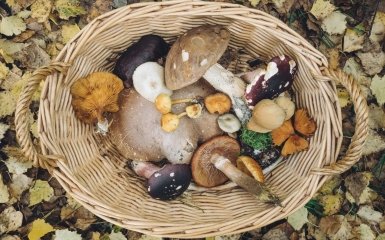
Mushroom names are one of those topics where the word "surzhyk" easily infiltrates everyday speech. A person can speak Ukrainian well, but when talking about "quiet hunting", they still say "ryozhka", "podosinovyk", "maslyonok", "veshenka" or "poisonous mushroom". Some of these words are direct calques from Russian, some are everyday habits that have become entrenched through price tags, markets, old culinary records or family speech.
But the topic is broader than a simple list of “don’t say this — say it differently.” In the Ukrainian language, there are several normative or common names for many mushrooms: white mushroom and boletus, cep and champignon, aspen and red-headed cep. Therefore, it is important to understand not only the correct form, but also the context: what is better to write in an article, what is appropriate in a recipe, and what may be a dialect name, but not universal for all of Ukraine.
Why correct mushroom names are important
The correct name is no small matter for “language purists.” It helps to communicate more accurately, write better texts in Ukrainian, avoid jargon, and not transfer Russian models to Ukrainian vocabulary.
In everyday life, this is especially noticeable in three situations.
The first is recipes. If a recipe says “oyster mushrooms,” “butterflies,” or “champignons,” the text doesn’t sound as natural as “oysters,” “butterflies,” or “ceps.” For a culinary article, menu, blog, or product description, this matters.
The second is sales and labeling. In markets and stores, you can see different names for the same mushrooms. Some say “pecheritsy”, some say “champignons”, and some say “oyshenka”. If the price list or catalog is to be in Ukrainian, it is better to use literary names.
The third is educational and media content. Articles about nature, language, nutrition, mushroom picking, or cooking should be accurate. Especially if they claim to be expert and don't look like a machine translation from another language.
Basic mistakes: not “mushrooms” and not “poisonous”
It’s worth starting with the simplest. In Ukrainian, the correct spelling is грибы , not “грибы.” The Ukrainian dictionary records the word “гриб” as the normative form, and the plural is “грибы.”
Similarly, in Ukrainian it is better to say poisonous mushrooms , not “poisonous.” The word “poison” exists in Ukrainian, but in modern natural speech the adjective “poisonous” is mainly used for dangerous plants, mushrooms, substances, or animals: poisonous mushroom, poisonous plant, poisonous substance.
Right:
poisonous mushrooms;
edible mushrooms;
conditionally edible mushrooms;
inedible mushrooms;
mushroom poisoning;
mushroom poisoning.
Unnatural or unnatural:
mushrooms;
poisonous mushrooms;
poisonous mushrooms;
to gather mushrooms;
mushroom poisoning.
In neutral text, it is better to write: “how to avoid mushroom poisoning”, “do not collect unknown mushrooms”, “poisonous species can look similar to edible ones”.
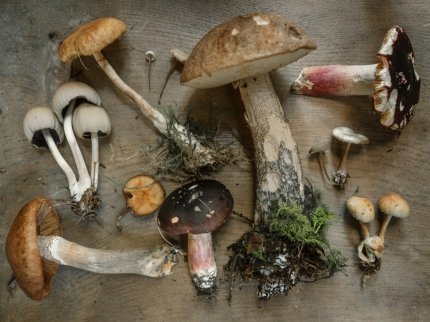
Ukrainian names of popular mushrooms: a short table
It is most convenient to remember names in pairs: an incorrect or unwanted form — the correct Ukrainian equivalent.
| Don't write. | Better in Ukrainian |
|---|---|
| mushrooms | mushrooms |
| poisonous mushrooms | poisonous mushrooms |
| white mushroom | white mushroom, boletus, white mushroom |
| boletus | boletus, dragonfly |
| boletus | aspen, red-headed woodpecker |
| oil lamp | buttercup |
| russula | russula |
| blackberry | blackberry |
| mushroom | champignon, champignon |
| oyster mushroom | oyster mushroom |
| umbrella | umbrella mushroom |
| pale toadstool | pale toadstool |
| morel | wrinkle, morel |
This list does not mean that there are no regional names in Ukrainian. On the contrary, the mushroom vocabulary is very rich: in different regions the same mushrooms can be called differently. But for literary, SEO-optimized, educational or media text, it is better to choose understandable dictionary forms.
White mushroom, boletus or white mushroom
One of the most famous mushrooms in Ukrainian can be called a white mushroom or a boletus . Both names are understandable and normative. The Ukrainian dictionary lists “boletus” as a white mushroom, and synonymous sources also list “bilak” as a colloquial or rarer variant.
In an article, guide, or recipe, it is most convenient to write like this:
“porcini mushrooms” is a neutral and as clear a name as possible;
“boroviki” is a natural Ukrainian name, especially for texts about the forest, mushroom picking, and traditional cuisine;
“whites” — can be used in an artistic, colloquial, or regional context, but not as the only name in reference material.
Examples:
“Dried porcini mushrooms are added to soups, sauces, and stuffing.”
“After rains, people often look for boletus in coniferous and mixed forests.”
“In this region, porcini mushrooms can also be called belyaks.”
Boletus and dragonfly
The Russian “podberezovyk” is most often translated into Ukrainian as podbereznik . The name babka is also used in everyday life. It is short, popular, and recognizable in many regions, but for a broad text it is better to first give the main name: podbereznik.
Right:
“Borbush mushrooms grow in birch and mixed forests”;
“in the basket there were boletus, chanterelles and boletus mushrooms”;
“Dabka is the folk name for the boletus.”
You shouldn't mechanically transfer the Russian model of "podberezovyk." The Ukrainian form is formed differently and sounds more natural.
Woodcock, red-headed woodpecker and red-headed woodpecker
Instead of “podosynovyk” in Ukrainian, the word “podosynovyk ” or “krasnogolovets” is used. Dictionary sources also record synonymous names: chervonyuk, chervonyuk, krasnyuk, osikovyk and other regional forms.
For neutral text, the best options are:
aspen;
red-headed goose.
“Pidosichnik” is logically understandable: the mushroom is associated with aspen. “Krasnogolovets” describes the appearance — a red or reddish cap.
Examples:
“Peduncles are often recognized by their bright cap.”
“Redheads are good for drying and frying.”
“Don't write 'podosynovyk' in the Ukrainian text — it's better to write 'podosynovyk' or 'krasnogolovets'.”
Buttermilk, not buttermilk
In Ukrainian, the correct form is maslyuk . This is the normative and dictionary form. In dictionaries, maslyuk is described as an edible mushroom with a yellow-brown cap covered with sticky mucus.
The form “maslyonok” is a tracing from Russian. In the Ukrainian text, it looks alien, especially if there are natural names like boletus, chanterelle, honey agaric, and boletus nearby.
Right:
“pickled butterfish”;
“fried butternut squash with onions”;
"After the rain, buttercups appeared in the pine forest."
It is not worth it:
“butterflies”;
“oil” as a universal name in a literary text;
"buttercup mushrooms".
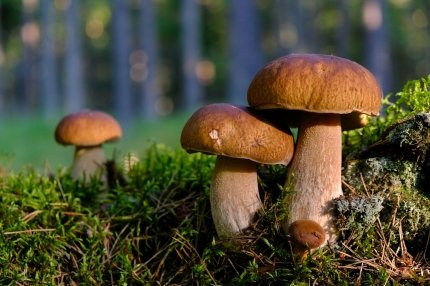
Russula, not russula
One of the most common mistakes is “syroezhka.” In Ukrainian, the correct spelling is syroezhka : with the letter ї after “o.” The 20-volume dictionary of the Ukrainian language presents “syroezhka” as an edible mushroom with a convex, fragile, lamellar cap.
The correct form is well explained by the structure of the word: “siro” + “ezhka”. We pronounce and write “э” not “э”, but “э”.
Examples:
“Chews have a fragile cap”;
“not all similar lamellar mushrooms are worth collecting”;
“in the basket there were chanterelles, russula and a few boletus mushrooms.”
Important: the name “russula” does not mean that the mushroom can be eaten raw. The Universal Dictionary-Encyclopedia notes that among russula there are many edible species, but there are also poisonous ones, for example, russula emetica. Therefore, linguistic correctness does not replace knowledge of the species and safety rules.
Hedgehog, not a blackberry
The word yzhovyk is also easy to make a mistake due to the influence of the Russian “ezhovyk.” In Ukrainian, at the beginning of the word you need to write ї , not “э”: yzhovyk.
The same logic works in other words: hedgehog, hedgehog, hedgehog. If the name of the mushroom is related to “hedgehog” through external features, the Ukrainian form should begin with “э”.
Right:
blackberry;
blackberry comb;
bramble mushrooms.
It is not worth it:
blackberry;
hedgehog;
blackberry as the name of a mushroom.
The latter option is sometimes confused with the word “blackberry” or the Russian “ebony,” but this is another lexical trap.
Champignon or champignon
Both печериця and champignon are understandable names. But if you need to sound natural in Ukrainian, especially in culinary or educational texts, it is better to use печериця more often.
The 20-volume Dictionary of the Ukrainian Language defines cep as an edible cap mushroom, also known as champignon. That is, these are not two different mushrooms in the everyday store context, but two names, one of which is more specific to Ukrainian tradition.
For SEO text, you can use both options:
“champignons, or champignons”;
“fresh mushrooms”;
“cream of mushroom soup”;
“champignons are often labeled as champignons in the store.”
It is better not to use the form “pechurka” as the main name of this mushroom in modern literary texts. If it is mentioned, it is as an undesirable or colloquial form that should be replaced with “pecheritsa”.
Oyster mushroom, not oyster mushroom
The mushroom, which is often called “oyshenka” in stores, is in Ukrainian — глыва . For a more precise designation of the species, you can write глыва высочныйна . The M. G. Kholodny Institute of Botany of the NAS of Ukraine, in the material on the genus Pleurotus, notes that the Ukrainian name for the species Pleurotus ostreatus is “глыва высочныйна” or “шерепичаста”.
In everyday text, there is enough “oyster”:
“fried oysters with onions”;
“oysters can be bought in the supermarket all year round”;
“oyster mushrooms have a dense texture and are well suited for stewing.”
You shouldn’t write “oyster mushroom” in a Ukrainian menu, catalog, or recipe. If necessary, you can explain it once for the reader: “oyster mushroom is a mushroom that is often mistakenly called an oyster mushroom.”
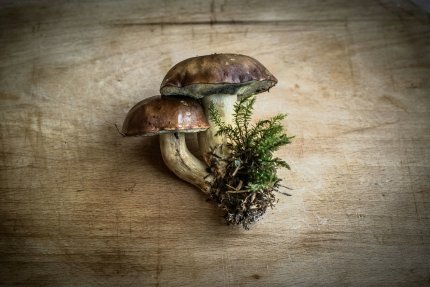
An umbrella mushroom, not just an umbrella
The Russian “umbrella” in the topic of mushrooms is better translated into Ukrainian as grib-umbrella . The word “umbrella” itself means an object from rain or sun, so for the mushroom name it is more appropriate to add the clarification “mushroom”.
Right:
umbrella mushroom;
umbrella mushrooms;
umbrella mushroom cap.
In a culinary or natural history text, you shouldn't just write "umbrellas" when talking about mushrooms. This may be understandable in a conversation between mushroom pickers, but for a wider audience, it's better to use the full name.
Pale toadstool, not pale toadstool
Correctly in Ukrainian — билда поганка . Not “билдна”. The adjective “билдый” in the feminine gender has the form “билда”: pale skin, pale paint, pale toadstool.
This is one of the most dangerous mushrooms, so accuracy is especially important here. In texts about mushrooms, you should not resort to frivolous formulations or jokes that can reduce the sense of risk. When talking about dangerous mushrooms, it is better to write clearly: “pale toadstool is a poisonous mushroom”, “do not collect mushrooms that you are not sure about”, “do not taste raw mushrooms”.
Morel, morel and “morel”
The Russian “smorchok” is most often translated into Ukrainian as zmorshok . The Ukrainian dictionary records “zmorshok” as an edible mushroom from the class of marsupial mushrooms with a sinuous-folded cap.
Also in dictionaries and dialect sources, the form сморж occurs. “Горох” presents “сморж” as a synonym for зморшка, with a dialectal note in some sources.
For a modern neutral text, it is best to write zmorshok . If you need to cover the topic more broadly, you can specify: “zmorshok, in some sources — сморж”. But it is better not to use “сморчок” as the main form in an article in Ukrainian.
Dialect names are not always a mistake
It is important not to confuse surzhyk with dialects. Ukrainian mushroom vocabulary has many regional names. In different localities, mushrooms can be called by color, tree, place of growth, cap shape, or culinary tradition.
For example, aspen can be red-headed, red-headed, aspen-headed, or have other local names. Some of these words are recorded in dictionaries as dialect, rare, or colloquial. This does not mean that people “speak incorrectly” in their area.
But there is a difference between a literary text, a live conversation, and a reference article. If you are writing SEO material, news, an encyclopedic description, a recipe, or an educational collection, it is better to choose the most understandable literary form, and present the dialect name as an additional one.
For example:
“bushbird, or red-headed bird”;
“champignon, also known as champignon”;
“white mushroom, or boletus”;
“wrinkle, in some regions — morel”.
This way, the text will be both natural and understandable for readers from different regions.
How not to copy the names of mushrooms from Russian
The easiest way to avoid mistakes is not to translate the name literally from Russian. Mushroom names do not always have the same structure in different languages.
For example:
“podberezovyk” – not “podberezovyk”, but podbereznik;
“podosinovyk” — not “podosinovyk”, but podosinovych or red-headed woodpecker;
“buttermilk” — not “buttermilk”, but buttermilk;
“ryozhka” — not “ryozhka”, but ryozhka;
"oyster" is not "oyster", but mushroom;
"morel" is not "morel", but a wrinkle.
It is also worth paying attention to the letters ї , ї , и and и . In mushroom names, they are often the ones that give out a trace: russula, blackberry, aspen.
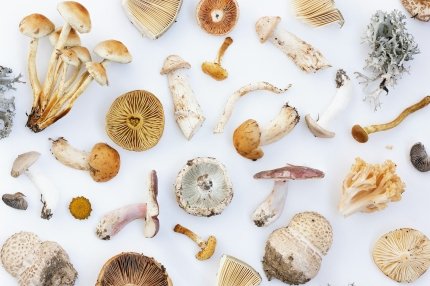
How to write about mushrooms in recipes, menus, and SEO articles
If you are preparing text for a website, blog, menu, online store, or media, it is better to unify the names of mushrooms. This improves readability, SEO, and the overall quality of the material.
For a recipe, it is better to write:
soup with porcini mushrooms;
potatoes with butter;
cream of mushroom soup;
oysters in soy sauce;
pickled boletus mushrooms;
fried chanterelles;
risotto with boletus.
For reference article:
“white mushroom, or boletus”;
“the woodcock is also known as the red-headed woodcock”;
“champignon and champignon are the names of one popular cultivated mushroom”;
“oyster mushroom is the Ukrainian name for a mushroom that is often mistakenly called an oyster mushroom.”
For SEO, it is useful to naturally include several variants, but not to spam. If a user searches for “what is the name of a boletus in Ukrainian,” you can mention the incorrect form once in the text, and then use the correct one: boletus, red-headed boletus.
Linguistic correctness is no substitute for security
It is also important to note that the correct Ukrainian name of a mushroom does not automatically help determine whether it is edible. An article about the language should not be an instruction for self-recognition of mushrooms in the forest.
The Ministry of Health of Ukraine warns that most cases of intoxication occur due to incorrect identification of mushrooms, and there is no single rule that 100% guarantees the safe distinction between edible and poisonous mushrooms. The material also states that up to 500 species of edible mushrooms and almost 2,000 poisonous or inedible species grow in Ukraine.
Therefore, even if you know the correct pronunciation of “russula”, “aspen”, or “wrinkle”, this is not enough for safe harvesting. You should not pick mushrooms that are in doubt, buy wild mushrooms at natural markets, or determine edibility based on photos from the Internet.
The Ministry of Health also advises not to buy mushrooms at wild markets and to store leftover mushrooms or mushroom dishes in case of suspected poisoning, so that this can help with laboratory testing and treatment.
Conclusion
In Ukrainian, it is correct to say griby , not “griby”; otruzhni , not “poisonous”; rusoejka , not “rusoejka”; podosychnik or krasnogolovets , not “podosynovyk”; maslyuk , not “maslyonok”; gliva , not “veshenka”; zmorshok , not “smorchok”.
At the same time, Ukrainian mushroom vocabulary is not limited to a single list. It includes literary names, dictionary synonyms, regional forms, and folk names. For media, recipes, educational materials, and SEO texts, it is best to use clear normative forms, and present local names as additional ones.
And most importantly: language helps you speak more precisely, but it does not replace caution. If a mushroom is unknown, questionable, or looks poisonous, the correct name does not make it safe.
FAQ
How is it correct in Ukrainian: mushrooms or грибы?
Correctly - mushrooms . The form "mushrooms" is erroneous and arises under the influence of Russian pronunciation or surzhik.
How to say "podosynovyk" in Ukrainian?
In Ukrainian, the correct spelling is пидосичник or красноголовцец . Dictionaries also contain synonymous and dialect names, but for a neutral text it is best to use these two forms.
“Syroezhka” or “ryozha”?
That's right - ryozhka . This is a dictionary form with the letter "ї". "Ryozhka" is an unwanted calque from Russian.
Which is correct: buttermilk or buttermilk?
In Ukrainian, the correct form is maslyuk . The form “maslyonok” is a calque and does not fit the literary Ukrainian text.
How do you call champignons in Ukrainian?
You can say ceps or champignons . “Pecheritsa” is a more specific Ukrainian name, and “champignon” is also understandable and used, especially in trade and cooking.
How do you say "veshenka" in Ukrainian?
In Ukrainian, it is called глыва . For a more precise species, you can write “глыва выходныйна”.
Which is correct: pale or pale toadstool?
That's right - pale toadstool . The adjective "pale" in the feminine gender has the form "pale".
“Smorchok” in Ukrainian — what is it?
The best is zmorshok . Also in dictionary sources you can find “smorzh”, but for a modern neutral text it is clearer to write “zmorshok”.
Are all dialect names for mushrooms incorrect?
No. Dialect names are part of the living Ukrainian language. But in reference, journalistic, educational, and SEO texts, it is better to use literary forms, and present dialect names as additional ones.
Is it possible to determine the edibility of a mushroom by its name?
No. The name does not guarantee safety. Mushrooms should only be picked when you know the species without fail. The Ministry of Health warns that there is no single rule that 100% guarantees safe mushroom identification.

