
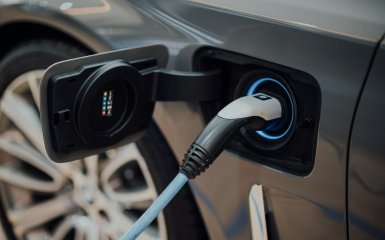
Electric cars no longer seem like a futuristic toy. They have become part of the car market, government climate plans, and the strategies of many automakers. But along with their popularity, another question is growing: will the planet have enough resources to replace hundreds of millions of cars with internal combustion engines with electric ones?
The short answer is: potentially yes, but not automatically. The issue is not just how much lithium or nickel is in the Earth's crust. The important thing is whether it can be quickly, safely, economically, and environmentally extracted, processed, shipped to factories, used in batteries, and then recycled back into the cycle.
Points of attention
- It is necessary to ensure economically available lithium, recycling, and scaling up the production of electric vehicles.
- Lithium iron phosphate and sodium-ion batteries reduce the need for cobalt and nickel, simplifying resource issues.
- An electric vehicle has its own environmental footprint, but can reduce overall emissions through energy efficiency.
- Battery recycling is an important part of the future resource system, but it requires gradual development.
- Successful electrification of the vehicle fleet requires modernization of power grids, infrastructure development, and environmental planning.
Electric vehicles are growing faster than raw material chains
Demand for electric vehicles is growing in waves: it is stimulated by environmental regulations, government subsidies, cheaper operation in some countries, the development of charging infrastructure and technological progress in batteries. But raw material chains are not scaling as quickly as car sales.
To bring a new electric vehicle model to market, a manufacturer needs battery cells, electronics, power modules, software, and stable suppliers. Opening a new mine or building a raw material processing plant often takes years: geological exploration, permits, environmental impact assessments, investments, infrastructure, and agreements with communities.
This is where the tension arises. The world may have an ample mineral base, but temporarily face a shortage of processed raw materials, a lack of capacity, or price spikes.
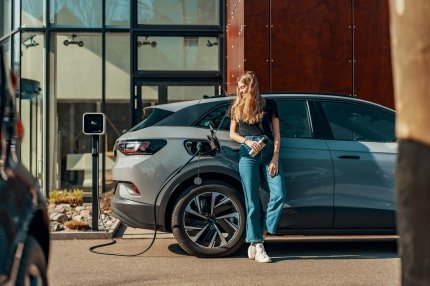
What resources are needed for an electric car?
An electric car is not just a battery. It requires materials for the body, tires, electric motor, power electronics, cables, cooling systems, and charging infrastructure. But it is the battery that is most controversial.
Lithium
Lithium is one of the key elements in modern traction batteries. It is used in various types of lithium-ion batteries, which provide high energy density and acceptable durability.
A common myth is that “lithium will run out soon.” In reality, the issue is more complicated. Geological lithium resources are found in different regions of the world, but not all of them are equally accessible for commercial extraction. Concentration, extraction technology, water, energy, logistics, environmental requirements, and political stability are all important.
Nickel, cobalt and manganese
Some batteries use nickel, cobalt, and manganese in cathode materials. Nickel can increase energy density, cobalt helps stabilize battery chemistry, and manganese is used in various combinations.
Cobalt has become a symbol of ethical risks in the battery industry due to issues in certain mining regions: working conditions, supply chain transparency, impact on local communities. That is why manufacturers are gradually reducing the proportion of cobalt or switching to chemistries where it is not needed.
Graphite, copper and rare earth elements
Graphite is often used in battery anodes. It can be natural or synthetic, and both options have their own environmental and industrial limitations.
Copper is needed for electrical wiring, motors, inverters, charging stations and grids. The electrification of transport in general is increasing demand for copper, not just for battery materials.
Rare earth elements can be used in permanent magnets in electric motors. Not all electric motors require them, but they are important for some designs. Here the risk is often not related to absolute rarity, but to the concentration of mining and processing in a limited number of countries.
Why the issue is not just about reserves, but about the rate of production
When people say "there are enough resources" or "there are not enough resources," they often confuse different concepts:
geological resources — how much material is potentially in the subsoil;
reserves — part of the resources that is economically and technologically feasible to extract under current conditions;
production capacity - how much can actually be extracted each year;
processing capacity — how much raw material can be purified and converted into battery material;
Production chains - the ability to deliver material to factories and integrate it into the finished product.
For electric vehicles, the pace is critical. If demand for batteries grows faster than production and processing, a shortage will arise, even if long-term resources are not exhausted.
It's like building a house: a country may have enough land, concrete, and labor, but that doesn't mean that millions of apartments can be built in a single season.
The environmental cost of batteries: what's really worth considering
An electric car doesn't have an exhaust pipe, but that doesn't mean it doesn't have an environmental footprint. Some of the emissions and impacts are transferred to the battery manufacturing, raw material extraction, and electricity generation stages.
Key environmental issues:
water use during the extraction of certain materials;
energy consumption in raw material processing;
the impact of mines on soils, landscapes and biodiversity;
working conditions and rights of local communities;
source of electricity in factories and when charging cars;
further disposal or recycling of batteries.
According to estimates from industry bodies including the IEA and ICCT, electric vehicles often have lower life-cycle emissions than petrol or diesel cars, especially where electricity is gradually becoming cleaner. But the outcome depends on the country, the structure of the power grid, the size of the battery, the range and the calculation methodology.
Therefore, the honest position is this: electric vehicles can be an important tool for reducing emissions, but they do not eliminate the need for responsible mining, efficient use of resources, and the development of clean energy.
Will new batteries be able to reduce dependence on scarce raw materials?
Battery technologies are not standing still. This is what makes the resource issue dynamic, not fatal.
LFP batteries, or lithium iron phosphate batteries, do not require nickel and cobalt. They typically have lower energy densities but can be cheaper, longer-lasting, and suitable for mass-market models, city cars, commercial vehicles, and stationary energy storage systems.
Sodium-ion batteries are seen as a promising direction for some applications. Sodium is more affordable, but such batteries have their own technical limitations and are not yet a universal replacement for lithium-ion batteries.
Work is also underway to reduce cobalt content, increase energy density, safer electrolytes, solid-state batteries, and new anode materials. However, one technology should not be expected to quickly solve all problems. The market will most likely become more diverse: different batteries for different tasks.
Battery recycling: a solution, but not an instant answer
Recycling electric vehicle batteries is an important part of the future resource system. Some of the valuable materials from used batteries can be returned to the production cycle, reducing the need for primary extraction.
But there are limitations. The mass fleet of electric vehicles is still relatively young. Many batteries will last for years, and after automotive use, some of them can get a second life in stationary energy storage. This is good for durability, but it means that the large flow of batteries for recycling will appear gradually.
Recycling cannot supply the entire industry with materials at once. Primary mining will remain important in the short to medium term. In the longer term, closed loops can significantly reduce the burden on mines if they are economically viable and well regulated.
Electricity and charging infrastructure: will the system survive?
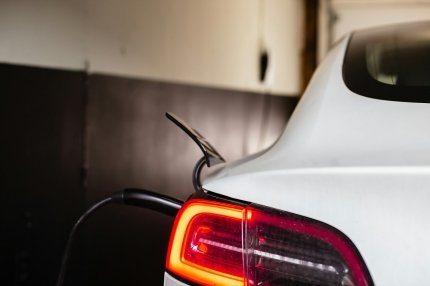
Even if there are enough batteries, electric vehicles still need to be charged. This raises questions about power grids, generation, and urban planning.
Not only total consumption, but also peak loads are important for the power system. If many drivers charge their cars at the same time during the evening rush hour, local networks may need to be upgraded. If charging is managed, overnight, or tied to periods of renewable energy surplus, the load can be distributed more intelligently.
Fast charging stations are convenient for highways and commercial vehicles, but they require a powerful connection. Slow home or office charging is less noticeable to the network, but not available to everyone, especially residents of apartment buildings.
So, the question is not that the power grids “will definitely not survive.” The question is whether they will be modernized, digitalized, and aligned with the development of charging infrastructure in a timely manner.
Does everyone need an electric car?
Mass electrification of private cars is just one option for a transportation transformation. Simply replacing every gasoline-powered car with an electric one of the same or larger size would reduce some of the world’s emissions, but it would not solve the problems of congestion, parking, material consumption, and urban sprawl.
A more rational approach combines:
electric cars where a private car is really needed;
electric public transport;
railway transportation;
bicycles, electric bicycles and micromobility;
car sharing and shared transportation;
more compact and lighter cars instead of excessively large models.
Much fewer resources are needed if the transportation system becomes more efficient, rather than just electric.
What could go wrong?
The transition to electric vehicles may slow down or become more expensive due to several factors:
geopolitical concentration of mining or processing of critical minerals;
trade restrictions and competition between major economies;
slow approval of new mines and factories;
environmental conflicts around mining;
shortage of qualified personnel in the battery industry;
uneven development of charging infrastructure;
price fluctuations for raw materials;
excessive reliance on one technology instead of diversification.
These risks do not mean that electric vehicles will fail. They mean that the transition requires industrial policy, transparent standards, investment in networks, recycling, and responsible sourcing.
Practical conclusions for the buyer, business and the state
It is important for a buyer to evaluate an electric vehicle not only by its range. It is worth considering real-world routes, access to charging, climate, battery warranty, service support and the size of the car. An excessively large battery is not always better if most trips are short.
For businesses, electrification makes sense where there are predictable routes, self-charging, and high daily mileage. Commercial fleets can absorb electric vehicles more quickly, but require competent energy management.
For the state and cities, the main tasks are broader than subsidies for car purchases. We need:
transparent rules for charging infrastructure;
modernization of power grids;
support for public electric transport;
battery recycling standards;
control of the origin of critical raw materials;
incentives for energy-efficient, not just expensive and heavy electric vehicles.
FAQ
Could the world run out of lithium for electric cars?
The complete “end” of lithium in the immediate logic of the discussion is not the main problem. What is more important is whether there will be enough economically available lithium, processing capacity and time to scale up production. Shortages may arise temporarily due to rapid growth in demand.
Are electric car batteries more harmful than internal combustion engines?
Batteries have an environmental footprint during the manufacturing phase, but an electric vehicle does not produce local exhaust emissions while in motion. Many life cycle assessments suggest that electric vehicles often have lower total emissions, especially in power systems with a higher share of low-carbon electricity. However, the outcome depends on the conditions.
Can electric car batteries be recycled?
Yes, batteries can be recycled, recovering some of the valuable materials. But the scale of recycling will increase gradually, because many batteries still work in cars or can be reused in stationary systems.
Will there be enough electricity for a mass transition to electric vehicles?
In many countries, this is more a question of planning than of absolute impossibility. Modernization of networks, managed charging, development of generation and charging infrastructure are needed. Local load peaks can be the most difficult.
What batteries can reduce dependence on cobalt and nickel?
LFP batteries are already reducing the need for cobalt and nickel in some electric vehicles. Sodium-ion batteries may also fill niches, but are not yet a universal replacement for all lithium-ion batteries.
Should you buy an electric car now?
It depends on your routes, access to charging, budget, climate, service, and expected mileage. For some drivers, an electric car is already practical and profitable, while for others, a hybrid or fuel-efficient car with an internal combustion engine may be more convenient.
Are electric cars equally useful in all countries?
No. The effect depends on the structure of the electricity sector, the quality of the grids, the climate, the urban infrastructure and the average mileage. Where electricity becomes cleaner, the benefits of electric vehicles usually increase.
What is more important: electric cars or public transportation?
These are not mutually exclusive solutions. Electric vehicles can reduce emissions from private transport, but public transport, rail, bicycles and compact urban planning often have a greater impact in reducing congestion, space and resource consumption.
Conclusion
The world shouldn't celebrate too soon, but it shouldn't panic either. Electric vehicle resources are a complex system that involves not only lithium and cobalt, but also copper, graphite, energy, recycling, power grids, mining standards, and consumer behavior.
Mass production of electric vehicles is possible under certain conditions: technological diversification of batteries, responsible mining, development of recycling, modernization of networks and less dependence on excessively large private cars. The electric vehicle is not a magic answer to all transport problems, but an important tool in the broader transition to cleaner and more efficient mobility.

