

"Baby teeth will fall out anyway," "we'll go to the dentist when it hurts," "fluoride is not allowed for young children," "the child can already hold the toothbrush by himself, so adult help is not needed" — these beliefs still influence the care of children's teeth.
The problem is that tooth decay can start as soon as the first tooth appears, and early lesions are often painless. When a child first complains of a toothache, treatment can be more difficult than in the initial stages.
Baby teeth are necessary for chewing, speaking, and normal dental development. The premature loss of some of them can change the available space for permanent teeth. And the habit of caring for the oral cavity is formed long before a full set of permanent teeth appears.
We analyze the main myths of pediatric dentistry and explain what parents should do in practice.
Myth 1. Baby teeth don’t need to be treated — they’ll fall out anyway
This is one of the most dangerous mistakes.
Yes, baby teeth are temporary. However, some of them remain in the mouth for many years and are replaced already at school age.
Until now, they perform several important functions:
help the child chew food normally;
participate in the formation of speech;
maintain proper load distribution;
They occupy a place in the dentition until the eruption of permanent teeth.
A decayed baby tooth can hurt, become infected, and interfere with eating and sleeping. If the damage is severe, it may sometimes require premature removal.
Why early tooth loss matters
When a baby tooth is removed long before the natural replacement, neighboring teeth can gradually move into the free space.
As a result, there is sometimes less space left for the permanent tooth.
That is why, after the premature loss of individual baby teeth, the dentist may recommend a special space maintainer.
This does not mean that every early loss will necessarily lead to a malocclusion. The decision depends on which tooth is lost, the child's age, the stage of development of the permanent teeth, and the structure of the dentition.
But the principle "it will fall out anyway, so you can do nothing" is wrong.

Myth 2. You should only take your child to the dentist when something hurts.
Pain is a bad indicator for first aid.
Caries in the early stages often causes no symptoms at all.
The child can:
eat normally;
sleep;
run;
not to complain about cold or sweet things,
and enamel demineralization or carious lesions are already developing.
When severe pain occurs, the inflammation may be much deeper.
Therefore, the task of a preventive examination is to find the problem before it becomes painful or to prevent it from occurring at all.
During the visit, the doctor assesses:
enamel condition;
the presence of caries;
dentition;
gums;
bite;
home hygiene;
risk of developing new carious lesions.
If necessary, the dentist may also recommend professional application of fluoride varnish or fissure sealant.
Myth 3. The first visit is needed at 3–5 years old, when the child already understands everything
Modern recommendations advise introducing a child to the dentist much earlier.
The American Academy of Pediatric Dentistry recommends forming a so-called dental home — constant contact with a dental practice — within six months of the appearance of the first tooth and no later than the first birthday.
A similar approach is used by British recommendations: it is advisable to carry out the first examination after the eruption of the first teeth or before 12 months.
This does not mean that a one-year-old child will necessarily be treated with anything.
The first step is often very simple.
The doctor can:
quickly examine the teeth and gums;
assess the risk of caries;
show parents cleaning techniques;
explain how much paste to use;
discuss eating habits;
answer questions about bottles, pacifiers, and teething.
There is another advantage: the child gets acquainted with the dental office when he or she is not in pain.
This experience is much more peaceful than the first visit to the dentist due to an acute toothache.

Myth 4. Fluoridated toothpaste is dangerous for a small child
Fluoride in pediatric dentistry often causes fear, although it is fluoridated toothpastes that have convincing evidence of effectiveness in preventing caries.
Fluoride helps enamel better resist acids that form in plaque after consuming carbohydrates.
The key rule for young children is the right amount of toothpaste .
Up to 3 years
A very thin smear of fluoridated toothpaste is used—about the size of a grain of rice.
From 3 to 6 years
A guideline is an amount about the size of a small pea.
The adult should squeeze the paste onto the brush and supervise the brushing.
Excessive fluoride ingestion during the formation of permanent teeth can increase the risk of enamel fluorosis. This is why young children are not allowed to squeeze a strip of toothpaste onto the entire brush.
But this does not mean that fluoridated toothpaste should be completely eliminated.
When used according to age, it is one of the basic means of preventing caries.
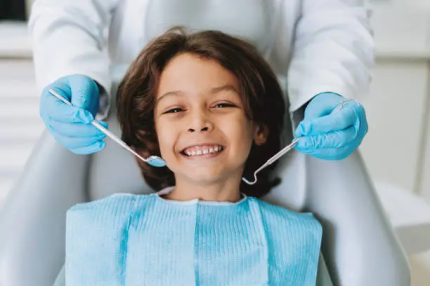
What concentration of fluoride is needed for children's toothpaste?
Recommendations may vary slightly depending on the country and individual caries risk.
For example, the NHS recommends toothpaste with a fluoride concentration of at least 1,000 ppm for young children, and 1,350–1,500 ppm for older children.
Highly concentrated medicinal pastes are prescribed by a dentist in specific situations.
Therefore, when choosing, you should look not only at the inscription "0–3 years" or the picture of a cartoon character, but also at the fluoride concentration and the dentist's recommendations.
Myth 5. A child can brush their teeth well on their own once they have learned to hold a toothbrush.
A child can perfectly insist:
"I am alone!"
But the ability to brush your teeth and the ability to thoroughly clean all surfaces are different skills.
Young children lack precision and consistency in their movements.
They often miss:
back teeth;
internal surfaces;
areas near the gums;
individual segments of the dentition.
Therefore, parents should brush their child's teeth or actively help them for several years.
American pediatric guidelines often point to around 8 years of age as the age at which a child still needs help or close adult supervision. For flossing, assistance may be needed until around 10 years of age.
Age is not an absolute limit here.
It is more useful to ask:
Is the child able to brush all of their teeth independently and consistently for about two minutes?
If not, an adult is still needed.
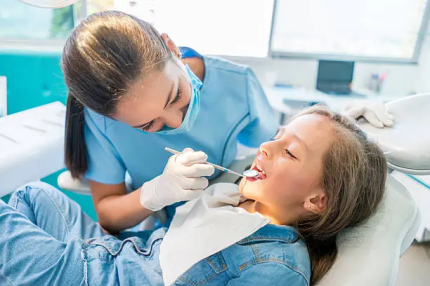
How to properly brush children's teeth
The basic scheme is simple:
twice a day;
a soft brush of the appropriate size;
with fluoridated toothpaste;
especially carefully before bedtime.
Evening brushing is of great importance, because after it it is advisable not to give your child sugary drinks or snacks.
Older children are recommended to spit out the remaining toothpaste after brushing, but not rinse their mouth with a lot of water so that the fluoride remains on the surface of the teeth longer.
Myth 6. Cavities only occur because of candy
Sugar is indeed a significant risk factor.
But caries is a multifactorial process.
The values are:
dental plaque;
frequency of contact of teeth with carbohydrates;
cleaning quality;
fluoride intake;
properties of saliva;
individual risk.
The frequency of sugar consumption is especially important.
Conditionally, it may be worse for your teeth to eat small portions of sweets all day and constantly drink a sweet drink than to eat dessert once with a meal.
The reason is simple: after each intake of fermented carbohydrates, bacteria in dental plaque produce acids that contribute to the demineralization of enamel.
The more often such episodes occur, the less time is left for the natural restoration of mineral balance.
"Good" sugar can also affect teeth
Potentially problematic issues may include:
juices;
sweet yogurts;
fruit purees in pouches;
dried fruits;
bars;
sweet flakes;
honey;
cookies.
There is no need to forbid your child from all these products.
It is more practical to limit frequent sugary snacks and sugary drinks between main meals.

Myth 7. Juice in a bottle or sippy cup is safer than candy
For children's teeth, it's not just what 's in the drink that matters, but also how long the teeth are in contact with it .
If a child spends hours with a cup of juice, a sweet milk drink, or another source of carbohydrates, the teeth are constantly receiving a new portion of substrate for acid-producing bacteria.
A particularly bad habit is falling asleep with a bottle of sugary drink or milk in your mouth after your child's teeth have already started to erupt.
At night, salivation decreases and oral cavity cleansing occurs more slowly.
For drinking between meals, plain water remains the best basic option.
Juice should not be perceived as a necessary drink for children.
Myth 8. You don't need to floss between baby teeth.
The brush cleans the exposed surfaces of the teeth well, but does not always make close contact between two teeth.
If adjacent teeth are already touching each other, plaque and food debris can get trapped between them.
It is at this point that dental floss can be added to hygiene.
Professional dental recommendations advise starting interdental cleaning when two teeth are already in close contact.
A small child will not be able to do this well on their own.
Parents may find it convenient to:
ordinary thread;
flossers with handle;
other remedies recommended by the dentist.
You need to use the floss carefully, without making sudden movements in the gums.

Myth 9. Dental X-rays should not be done on children.
Any use of ionizing radiation in children must be justified.
However, this does not mean that dental X-rays are prohibited or dangerous under any circumstances.
An X-ray can help see things that cannot be reliably assessed with a regular examination.
For example:
caries between teeth;
condition of the roots;
consequences of injury;
development of permanent teeth;
some pathological processes.
The modern principle is not to perform X-rays on every child on the same schedule, but to schedule them according to clinical necessity .
The need depends on:
age;
condition of the teeth;
risk of caries;
symptoms;
previous treatment;
dental history.
That is, both extremes are not correct:
"X-rays are absolutely not allowed for children"
and
"A picture should be taken at every check-up."
The dentist makes the decision based on specific indications with the minimum necessary exposure.
Myth 10. Dental treatment for a child inevitably means fear, tears, and restraint by force
A pediatric dentist works differently than a dentist with an adult patient.
Behavioral adaptation is a separate part of pediatric dentistry.
Modern recommendations describe a whole range of methods:
age-appropriate explanations;
"tell - show - do";
positive reinforcement;
distraction;
gradual desensitization;
adaptation of the sensory environment.
The goal is to form cooperation without unnecessary anxiety.
That is why a preventive visit to the dentist is often easier than the first appointment when the child already has acute pain.
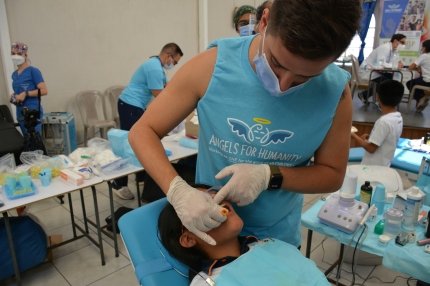
What about sedation and sleep therapy?
For some children and procedures may use:
nitrous oxide with oxygen;
medical sedation;
general anesthesia.
These are normal medical methods when there are appropriate indications.
But they are not just "a convenient way for the child not to feel anything."
Sedation and general anesthesia have:
specific indications;
contraindication;
potential risks;
personnel requirements;
equipment and monitoring requirements.
Before such procedures, the doctor should assess the child's health status, the extent of treatment, behavioral characteristics, and alternative methods of performing the procedure.
Can caries in a baby tooth damage a permanent tooth?
Accuracy is needed here.
The mere fact of a small amount of caries in a baby tooth does not mean that the permanent tooth underneath will necessarily be damaged.
However, a deep, untreated infection near the roots of a baby tooth can cause problems for the tissues next to the permanent tooth bud.
In addition, early loss of baby teeth can affect the available space for future eruption.
There is a broader connection: a child with active early caries already has a set of risk factors—dietary, behavioral, and hygiene—that, unless they are changed, will remain at high risk for caries even after the permanent teeth appear.
Therefore, treatment of baby teeth should be considered along with prevention of future problems.
How often should a child go to the dentist?
A popular rule is once every six months.
For many children, this is a really handy guideline, and the American Academy of Pediatric Dentistry often cites a six-month interval as a standard recommendation.
But the interval should take into account individual risk.
Children with:
active caries;
numerous previous lesions;
orthodontic treatment;
complex hygiene;
other high risk factors
Your doctor may recommend more frequent visits.
For a low-risk child, the dentist will determine their schedule of preventive examinations.
That is, it is more correct to focus on an individual plan, rather than waiting for pain.
What is dental fluoridation and is it necessary for all children?
Professional fluoride varnish is applied to the surface of the teeth in the dental office.
It helps:
strengthen enamel;
support remineralization;
reduce the risk of caries.
According to research, fluoride varnish can significantly reduce the number of caries lesions in baby teeth.
The frequency of application depends on the risk of caries.
This does not mean that professional fluoridation replaces home cleaning.
The basis remains:
fluoridated toothpaste;
regular hygiene;
control the frequency of sugar consumption;
dental examinations.

What is fissure sealing?
The chewing surfaces of molars have natural grooves - fissures.
Some children have deep cavities, making it difficult to clean them with a brush.
The sealant creates a thin protective layer on this surface and helps prevent food debris and bacteria from getting into the deep grooves.
Sealants are especially often considered after the eruption of the first permanent molars at approximately 6–7 years of age.
The CDC cites evidence that sealants on chewing teeth can prevent a significant portion of cavities in these areas over several years.
The need for the procedure is assessed by the dentist.
The first signs of tooth decay in a child may not look like a “hole”
Parents often look for a dark spot or an obvious cavity.
However, early caries can begin with a whitish, matte area of enamel.
They can alert:
white chalky spots near the gums;
dark areas;
food getting stuck between the teeth;
sensitivity;
unpleasant smell;
complaints of pain from sweet or cold foods.
A white spot can sometimes be stabilized without a classic filling by changing home care and professional preventive methods.
That's why an early checkup makes sense.
What parents should do: a simple care plan
From the appearance of the first tooth
Brush your teeth twice a day with a soft child's toothbrush and a very small amount of fluoridated toothpaste.
To the first birthday
Schedule your first appointment with the dentist.
When teeth start to touch tightly
Add a cleaning thread between them.
Daily
Supervise cleaning and help the child as much as necessary for a quality result.
Between meals
Make water your main drink.
Before bed
Brush your teeth and avoid sugary drinks and foods afterward.
Regular
Visit the dentist at intervals that correspond to your individual risk of caries.
7 mistakes parents make when caring for children's teeth
1. Wait for the pain to appear.
Cavities can often be detected early.
2. Let the child squeeze out the paste himself.
Young children easily use it too much.
3. Stop helping with cleaning too early.
Independence does not always mean quality.
4. Give sweet drinks in small portions throughout the day.
For the risk of caries, the frequency of contact with sugar is very important.
5. Consider juice a full replacement for water.
Juice contains sugars and acids.
6. To be scared of the dentist.
Phrases like "if you don't brush, the doctor will drill your teeth" themselves create anxiety before the visit.
7. Promise that "they won't do anything."
It's better to honestly and calmly say that the doctor will examine your teeth and explain what needs to be done.
How to prepare your child for the first visit
No need to constantly remind yourself every few days:
"Don't be afraid of the dentist."
The word "be afraid" tells the child that something dangerous is ahead.
It's better to explain simply:
"We'll go to the doctor who'll look at how your teeth are growing."
For a small child, you can play dentist at home:
to plant a toy;
"count" her teeth;
shine a small flashlight;
practice opening your mouth.
You should not pass on your own negative dental experience to your child.
Phrase:
"I hate dentists too, but we have to be patient"
definitely won't help to form a calm attitude.
Conclusion
The main mistake in pediatric dentistry is to wait until the problem becomes obvious. A baby tooth that is “soon to fall out” can remain in the mouth for several more years, and early caries can develop without pain.
Prevention starts with the first tooth: a small amount of fluoridated toothpaste, adult assistance during brushing, minimal frequent sweet snacks and drinks, and early acquaintance with the dentist.
You don't need to strive to raise a child who never eats sweets and cleans their teeth perfectly at the age of two. A much more realistic goal is to form a regular daily system in which problems are noticed early and a visit to the dentist is not associated exclusively with pain.
Important: The material is for informational and educational purposes only and does not constitute medical or dental advice, diagnosis, or treatment recommendations. Self-treating a toothache or postponing necessary dental treatment may be harmful to your health. The need for treatment, x-rays, fluoridation, fissure sealants, sedation, or other procedures should be determined by a pediatric dentist after examining your child.
FAQ
Is it necessary to treat caries in baby teeth?
Yes, the need for treatment should be assessed by a dentist. Baby teeth can hurt, become infected, and remain in the mouth for many years. The method of treatment depends on the depth of the lesion, the age of the child, and the time until the tooth naturally changes.
When should you take your child to the dentist for the first time?
Modern professional recommendations advise doing this within six months of the appearance of the first tooth and no later than the first birthday.
From what age should a child's teeth be brushed?
From the moment the first tooth appears. Until the teeth erupt, the gums can be gently wiped with a clean, damp cloth or gauze.
Can a small child use toothpaste with fluoride?
Yes, professional dental recommendations support the use of fluoridated toothpaste with the appearance of the first tooth. Up to three years, use an amount about the size of a grain of rice, and for 3-6 years, use about the size of a pea.
How often does a child need to go to the dentist?
For many children, a guideline is a check-up about once every six months, but the frequency depends on individual caries risk and the dentist's recommendation.
Until what age should parents brush their child's teeth?
The exact limit is individual. Many children need active help or supervision until about 7–8 years of age, as they are not always able to clean all surfaces properly before then.
When should a child start flossing?
When two adjacent teeth begin to touch each other tightly. First, an adult or a child should clean the interdental spaces.
Are dental X-rays dangerous for a child?
X-ray examinations are used only when clinically justified. The dentist should choose the necessary type of image and minimize radiation exposure in accordance with modern radiation safety principles.
Can a child have their teeth treated under sedation or anesthesia?
These methods may be used as indicated. The choice depends on the age, health status, extent of treatment, and behavior of the child. Sedation and general anesthesia require special safety and monitoring procedures.
What best protects children's teeth from cavities?
Basic prevention includes brushing twice a day with the correct amount of fluoridated toothpaste, helping parents with hygiene, reducing the frequency of sugary snacks and drinks, cleaning between teeth after tight contacts appear, and regular dental checkups.

