

"What if I don't pass the NMT?", "What if I don't have enough points for the budget?", "Everyone has already decided on a specialty, and I still don't know what I want to be." Similar questions may be heard in the family of a future graduate more and more often. Sometimes a teenager openly talks about his fears, and sometimes he becomes irritable, avoids talking about studies or sits for hours over textbooks, afraid to take a break. Entering a university is one of the first important stages at which a young person is faced with the need to make decisions independently, assess his own capabilities and accept uncertainty. For Ukrainian applicants, this is compounded by the circumstances of war, educational losses, air raids and worries about future security.
If a child is very nervous before entering college, the most important task for parents is to help them feel supported, regain control over specific actions, and understand that the results of one exam do not determine their worth or their entire future.
At the same time, normal anxiety should not be considered an illness. But it is also not worth devaluing severe anxiety by saying, "Everyone has been through it."
Let's consider how to recognize signs of excessive stress, speak correctly with a prospective entrant, organize preparation for NMT, help choose a specialty, and support your child if the results are lower than expected.
Why do teenagers get so anxious before college entrance exams?
Stress before exams is a common reaction to a situation in which the result is important but cannot be fully controlled.
A prospective student may prepare well, but still be worried about the complexity of the tasks, limited time, competitive selection, and the possibility of making a mistake.
Learning experiences are often accompanied by questions that go far beyond testing:
Did I choose the right profession?
Will parents be able to pay for tuition and accommodation?
Will I have to move to another city?
Will I disappoint my family?
What will I do if I don't get where I want to go?
Particularly strong anxiety can be caused by the belief that a mistake in choosing a university will have irreversible consequences.
In reality, professional development is rarely limited to a single educational decision. People can change majors, continue their education, and acquire new skills throughout their lives.
However, for a teenager going through an entrance campaign for the first time, these opportunities are not always obvious.
Why stress increases due to parental expectations
Sometimes adults, without realizing it, turn introductions into a matter of family prestige.
For example, they constantly emphasize that a child should enter a certain university because their parents studied there.
Or they compare the results of mock tests with the achievements of other graduates.
The UK's National Health Service (NHS) in its recommendations on exam stress draws attention to the fact that criticism, excessive expectations, and additional pressure from family can exacerbate adolescents' experiences.
Support does not mean giving up demands or responsibilities. But it is important that the child does not perceive the test results as a condition of parental love.

How to understand that the excitement before the NMT has become excessive
Moderate anxiety can help mobilize attention. But when stress becomes too intense, it can interfere with learning, sleep, and daily life.
According to the recommendations of the NHS and UNICEF, psychological stress in adolescents can manifest itself not only in words about fear.
What signs to look out for
Among the possible manifestations:
difficulty falling asleep or frequent night awakenings;
headache or stomach pain;
constant irritability and sudden mood swings;
decreased appetite or noticeable changes in eating habits;
difficulty concentrating;
refusal of previously favorite activities;
excessive worry over every mistake;
avoiding any talk about the future;
a feeling of hopelessness or the belief that nothing will work out.
Such signs do not automatically mean that a teenager has an anxiety disorder.
But if they persist, worsen, or significantly affect daily life, specialist consultation is required.
It is especially important not to attribute any physical symptoms solely to nervous tension.

1. Help your child talk about their fears without judgment
Parents sometimes want to solve a problem immediately.
A teenager says, “I’m afraid of failing the entrance exam,” and in response he hears, “I should have prepared earlier” or “Just study harder.”
But such a reaction can silence a child.
Before giving advice, try to find out what exactly is bothering her.
What questions will help start a conversation?
Instead of the usual “Why are you nervous again?” you can ask:
"What scares you the most about admissions right now?"
"Are you more worried about exams or about choosing a major?"
"What are you most afraid of if the result is lower than expected?"
"Do you need my advice right now or do you want me to just listen?"
It is important not to turn the conversation into an interrogation.
Sometimes a teenager needs time to formulate their own experiences.
What to say to a child who is afraid of failing
It is more helpful to acknowledge feelings than to immediately try to eliminate them.
For example:
"I can see how important this is to you. I understand why you're worried. Let's figure out together what we can do now and what options we have for different outcomes."
UNICEF emphasizes that attentive listening, respect for the adolescent's experiences, and supportive relationships with adults are important factors in psychological well-being.
At the same time, there is no need to promise guaranteed admission. It is much more useful to support the child without false assurances.

2. Separate exam preparation from fear of the future
Sometimes all the experiences of a new entrant merge into one big problem.
You need to prepare for the NMT, choose a university, decide on your future profession, estimate the costs, and submit documents on time.
The number of tasks creates a feeling that nothing can be controlled.
Try to divide the introduction into three separate directions together.
| Direction | What needs to be decided |
|---|---|
| Educational training | What subjects need attention, how to organize repetition |
| Organization of admission | What documents are required, what deadlines and rules apply? |
| Personal choice | What specialties are interesting, where and under what conditions does the child want to study? |
| After that, you can determine the next specific action. | |
| For example, instead of the general "I need to urgently prepare for university," agree to take a practice math test this week and analyze typical mistakes. | |
| Big tasks become less daunting when they can be broken down into manageable steps. |
3. Help create a realistic schedule for preparing for the NMT
Trying to study for ten hours every day does not guarantee better results.
On the contrary, excessive workload can lead to fatigue and increase anxiety.
The NHS recommends using a realistic timetable, rotating subjects, doing practice tasks and taking regular breaks when preparing for exams.

How to organize a study week
Start by assessing your actual level of knowledge.
There is no need to spend the same amount of time on subjects that the child has already mastered well and topics that remain difficult.
For example, a teenager may allocate one main block each day to a more complex subject, and the second to review the material.
At the same time, you need to take into account school lessons, homework, clubs, and recreation.
An example of a balanced approach:
identify two or three priority topics per week;
alternate analysis of theory with practical tasks;
periodically perform tests in a format close to real-life;
analyze mistakes without self-blame;
leave time for physical activity and rest.
There is no universal number of study hours that guarantees high scores.
If a teenager has significant gaps in knowledge, it may be helpful to have the help of a teacher or tutor who can identify specific learning needs.
4. Don’t turn every conversation into a discussion about the introduction
As exams approach, the topic of university gradually fills all family communication.
"How much did you practice today?"
"What is the result of the mock test?"
"Have you decided where you'll submit your documents?"
Even a regular dinner can turn into a test of academic progress.
It is important to remember that a teenager remains a person with different interests, relationships, and needs.
Try to agree on a specific time when you will discuss training and organizational issues.
At other times, talk about daily life, friends, movies, hobbies, and family matters.
This will help maintain the feeling that the relationship with parents is not limited to grades and test results.
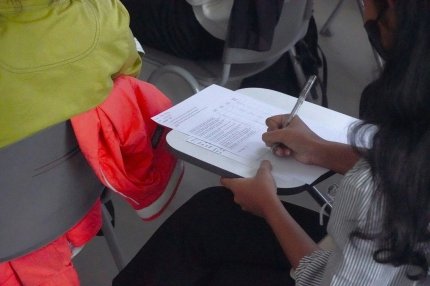
5. Allow your teenager to choose their own major
Parents often have their own ideas about prestigious and promising professions.
Some people are convinced that a child should become a doctor. Others insist on economics, law, or information technology.
However, even a popular specialty can be an unsuccessful choice if it does not at all match the applicant's abilities and interests.
How to help choose a future profession
Instead of imposing a specific faculty, suggest exploring possible options.
It is useful to discuss:
what school subjects are really interesting to the child;
what tasks she likes to perform;
what she likes about a particular profession;
what disciplines are included in the university program;
where graduates can work;
what further training opportunities exist.
For example, if a teenager wants to study psychology, it's worth looking at the curriculum together.
Perhaps he imagines the profession only through popular videos, but does not yet know about research methodology, statistics, and other academic disciplines.
Getting to know the real content of the specialty will help you make a more informed decision.
If a child doesn't know what he wants to be
This is not necessarily a problem.
In high school, not everyone has a formed professional identity.
You can explore several areas, talk to students, attend available career guidance events, or get advice from a career counselor.
The main thing is not to force the applicant to make an irreversible choice just because their peers have already named their desired university.

6. Discuss money and the family's real possibilities
For many teenagers, entry is associated with financial worries.
They may be afraid of not being able to budget or think their parents will have to spend too much money.
Sometimes these fears are exacerbated if adults avoid talking about family finances.
It is useful to discuss realistic possibilities in advance.
For example, can the family pay for contract tuition, dormitory, housing rent, and daily expenses?
You don't need to reveal all the financial details to your teen, but it's worth explaining the basic limitations and available options.
What to look for when choosing a university
| Criterion | What questions should be clarified? |
|---|---|
| Educational program | What subjects will the student study? |
| Tuition fee | Is a contract available, what are the payment terms? |
| Budget places | What is the competitive selection procedure? |
| Residence | Is there a dormitory and what are its conditions? |
| Security | What shelters and safety measures does the facility have? |
| Practical training | Are internships and practical classes provided? |
| Further possibilities | What are the prospects for training and professional development? |
| Before making a decision, it is important to check the current conditions of a particular university. | |
| Cost, competitive selection rules, and government support programs may change each year. |
7. Explain the rules of entry, but don't do everything for the child.
Uncertainty about documents and procedures can increase anxiety.
Therefore, it is useful for parents to help their teenager understand the official rules.
In Ukraine, for most undergraduate applicants, the main competitive selection tool in 2026 remained the national multi-subject test.
Applications were submitted through the applicant's electronic account in the Unified State Electronic Database on Education (UEDB).
Important: the account for participation in the NMT and the applicant's account for submitting applications are different electronic services.
Additional tests or special conditions may also be provided for certain specialties or categories of applicants.

Why you need to check the rules every year
The admission procedure, registration deadlines, list of documents, competitive coefficients, and other requirements are determined for the respective admission campaign.
Therefore, the conditions of 2026 cannot be automatically carried over to 2027 or subsequent years.
Before starting the admission campaign, it is worth checking the latest announcements from the Ministry of Education and Science of Ukraine, the Ukrainian Center for Education Quality Assessment, and admissions committees of educational institutions.
The task of parents is to help them figure it out, not to completely take over the process.
Let the teen independently research the requirements, save documents, and ask questions of the admissions committee whenever possible.
This way he gradually acquires important adult life skills.
8. Help your child cope with exam anxiety
Not every worry can be eliminated with logical arguments.
Even a well-prepared teenager sometimes feels afraid of unknown tasks or time constraints.
In such cases, you can try simple self-regulation methods.
Calm breathing exercise
Invite your child to sit comfortably, relax their shoulders, and take a few calm breaths.
For example, you can inhale for about four seconds and exhale for a little longer.
There is no need to force yourself to take very deep breaths or hold your breath forcibly.
If the exercise causes dizziness or discomfort, it should be stopped.
Breathing techniques can reduce physical stress, but they do not replace professional help in case of severe anxiety symptoms.

Exam rehearsal without added pressure
One way to reduce uncertainty is to familiarize yourself with the testing format.
For example, complete demonstration tasks, learn how to manage your time, and understand in advance how the test interface works.
It is important not to turn every training session into a test of a child's worth.
If the result is low, it can be used to identify topics that need to be repeated.
9. Take care of sleep, nutrition, and rest
During intensive training, teenagers sometimes begin to sacrifice sleep for extra classes.
However, this can impair concentration and well-being.
According to the American Academy of Sleep Medicine recommendations, which are cited by the US Centers for Disease Control and Prevention (CDC), adolescents aged 13–18 typically need 8–10 hours of sleep per night .
Adequate sleep supports attention, learning, and emotional regulation.
Therefore, reviewing material the night before an exam is usually less beneficial than getting enough rest.
How parents can support a healthy diet
It is useful to help organize a comfortable place for studying, plan breaks, and not burden the child with additional, unnecessary tasks during the most intense periods of preparation.
There is no need to cancel all meetings with friends, sports activities, and hobbies.
Moderate physical activity and rest can help you cope with stress.
At the same time, you should not use energy drinks or uncontrolled use of sedatives as a way to increase performance.
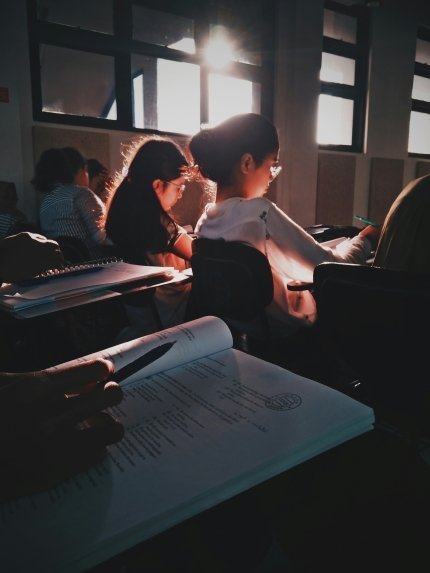
10. Prepare several options for the future together
One of the strongest fears of an entrant is the belief that there is only one acceptable outcome.
For example, a child wants to enroll in a specific university on a budget and considers all other options a personal defeat.
In such a situation, it is useful to consider alternatives in advance.
Plan A, B and C
Plan A - priority specialty and university that best match the applicant's interests and capabilities.
Plan B is another educational institution or educational program that also allows you to move in the desired professional direction.
Plan B is an alternative educational trajectory, such as a professional or vocational education, preparation for the next admissions campaign, or another well-thought-out route.
Not all options are available to every applicant. They depend on test scores, applicable regulations, and family resources.
However, just having a few realistic scenarios helps reduce the feeling of hopelessness.
It is important not to present alternatives as punishment for failure.
What parents should do on the eve and on the day of the NMT
The last days before testing are often accompanied by particularly strong anxiety.
During this period, it is better not to try to urgently study all the material that the child did not have time to master earlier.
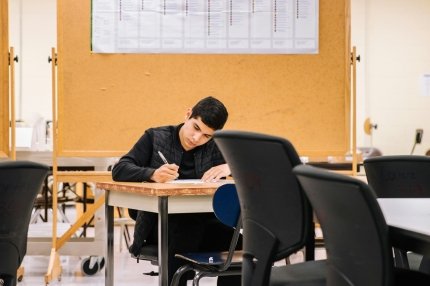
The day before testing
Together, check the organizational issues: invitation, documents, route, arrival time, and current exam rules.
After that, give the teenager a chance to rest.
There is no need to stay up late at night discussing possible scores and predicting the competition outcome.
On the day of testing
It is useful to allow enough time for travel, a regular breakfast, and completing the necessary procedures.
Follow the organizers' current instructions regarding permitted items, documents, and safety rules.
It is not worth repeating all the formulas or asking questions that the child can no longer influence before entering the testing center.
It is much more useful to say:
"You have prepared as much as you can. Now your task is to calmly carry out what you know."
After the exam
If your teenager doesn't want to analyze the task right away, don't insist.
Constantly comparing answers with friends or discussing every mistake can maintain anxiety.
It is better to give yourself time to rest and return to organizational issues when it is really necessary.

What to do if your child did not get into their desired university
For a teenager, a bad competition result can seem like a personal disaster.
Especially if the admission was preceded by months of intense preparation and great expectations.
In the first days after a disappointment, it is not necessary to immediately look for the positive aspects of the situation.
A child has the right to be sad, angry, or upset.
How parents respond to failure
Avoid phrases:
"I warned you that you need to study more."
"Look, all your friends have joined."
"Now it's my own fault."
It is better to say:
"I understand how much you wanted to get in. I'm sorry the outcome was different. When you're ready, we'll see what options are available."
Once the acute disappointment subsides, you can return to alternative scenarios.
You should not rush into any major just for the sake of formal student status.
Preparing for Entry During War: What to Consider
For Ukrainian graduates, the admissions campaign takes place against a backdrop of special challenges.
Air raids, shelter-in-place training, remote learning, forced relocations, and unstable power supplies can all impact training.
Some children also have experiences of loss, separation from loved ones, or other traumatic events.
UNICEF notes that stress in adolescents can manifest itself in problems with sleep, attention, memory, mood, and physical well-being.
Therefore, it is not always fair to evaluate success solely by the number of hours spent on textbooks.

How to adapt training to unstable conditions
You can save some of your training materials in advance for offline access, plan for spare time for classes, and take into account possible interruptions due to alarms.
At the same time, safety always takes priority over the curriculum.
It is also important to check official explanations regarding the conditions for participation in the admission campaign for applicants from abroad, from temporarily occupied territories, and other categories for which special rules may apply.
The conditions and available procedures depend on the specific year of entry.
When you need the help of a psychologist due to stress before admission
Normal anxiety does not require treatment.
However, sometimes the experiences become so strong that the teenager cannot study normally, sleep, or maintain normal relationships.
The World Health Organization emphasizes that anxiety and depressive disorders are among the most common mental health problems in adolescence.
However, specific symptoms require individual assessment.
Signs you shouldn't delay
Contact a doctor or mental health professional if your child:
has severe anxiety that interferes with daily life;
has little or no sleep for long periods of time or has significant eating disorders;
lost interest in previously favorite activities;
often talks about his own worthlessness or hopelessness;
avoids school, learning, or regular socializing due to fear;
experiences recurring episodes of intense fear with physical symptoms.
Any statements about self-harm or unwillingness to live require special attention.
In such a situation, it is important to directly ask about the teenager's safety, not leave him alone if there is an immediate threat, and immediately seek professional help.
In Ukraine, you can call 112 or 103 for emergency assistance.

Enrollee Support Plan: What Parents Can Do During the Two Weeks
To reduce the chaos of preparation, you can start with a simple plan.
| Period | Parents' tasks | Teenager's task |
|---|---|---|
| Days 1–3 | Listen to experiences without criticism | Identify key fears and priorities |
| Days 4–6 | Help find current admission rules | Get to know the requirements of the selected programs |
| Days 7–9 | Discuss real financial possibilities | Make a list of preferred and alternative options |
| Days 10–12 | Help organize conditions for learning | View training schedule and difficult topics |
| Days 13–14 | Check if the overload is increasing | Assess which training approach works best |
| This is an example of a family organization, not a special psychotherapy program. | ||
| The plan can be changed depending on the time before the exams, the level of preparation, and the child's well-being. | ||
| It is important that parental help gradually increases the teenager's independence, and not forms a dependence on constant control. |
Conclusion
Entering university is an important event, but not the final test for success in life.
A teenager needs to simultaneously cope with the academic load, the choice of a future profession, and the uncertainty of the competition result.
Parents can make this period much easier if they listen carefully to their child, help organize their preparation, talk openly about available opportunities, and do not turn grades into a measure of their personal worth.
It is equally important to maintain a teenager's sleep, rest, and normal life, even when it seems like all their time needs to be devoted to studying.
The best support during admission is the child's confidence that their parents will remain by their side regardless of the number of points scored, the chosen university, and further decisions.
FAQ: Frequently Asked Questions About University Stress
What to do if a child is very nervous before the NMT?
First, find out what exactly is scaring her: the difficulty of the tasks, low grades, parental expectations, or the uncertainty of the future. Help her create a realistic preparation plan, leave time for rest, and support her without criticizing her. If anxiety interferes with daily life, consult a specialist.
How to calm a teenager before entering university?
Try to listen to their experiences without rushing to give advice. Discuss specific steps that can be taken now and possible alternatives if the outcome is different than expected. Don't make false guarantees or discount their fear.
How to motivate a child to prepare for NMT without forcing them?
Help her understand the connection between preparation and her own goals. Together, determine achievable learning tasks and an appropriate schedule. Do not compare with other children or use fear of failure as the main way to motivate her.
How many hours a day do you need to prepare for the NMT?
There is no single optimal number of hours for all applicants. It depends on the level of knowledge, time before the test, and school workload. It is useful to alternate subjects, take breaks, and leave enough time for sleep.
What to do if a child doesn't know which university to enter?
Suggest exploring several areas based on her interests, abilities, and educational opportunities. It is helpful to review educational programs, talk to students, and evaluate the learning environment. Don't force a major just because of its prestige.
Should parents choose a university for their child?
Parents can help with information, experience, and financial planning. However, it is important to consider the teen’s own goals and interests. If the family will be paying for the education, financial constraints should be discussed openly and not made without the student’s input.
What to say to a child if he is afraid of not being able to enter the budget?
Acknowledge that her feelings are understandable. Discuss realistic admission requirements, financial opportunities, and alternative educational paths. Don't promise guaranteed admission, but explain that one result doesn't determine her entire future.
What to do if a child does poorly on the NMT?
Don't start with accusations. Give your teen time to process their disappointment, and then explore the options available to them together, according to current admissions rules. These could include other majors, educational institutions, or preparing for the next admissions campaign.
How to help your child fall asleep before an important exam?
Make sure you have a quiet evening, a regular routine, and avoid intensive nighttime study. Teenagers aged 13–18 are usually recommended to get 8–10 hours of sleep. If sleep disturbances are persistent or severe, you should consult a doctor.
When does test anxiety need treatment?
If the anxiety becomes severe and persistent, disrupting sleep, eating, school, or social life, an evaluation by a doctor or mental health professional is necessary. You should not diagnose an anxiety disorder or prescribe a child with sedatives on your own.
Important: the article is for informational purposes only and does not replace the advice of a doctor, psychologist, psychotherapist or psychiatrist. Self-medication of anxiety and other mental disorders can be harmful to health. If stress before admission is accompanied by a persistent deterioration in well-being, sleep disturbances, severe anxiety or depressive symptoms, be sure to consult a doctor. The rules for admission to educational institutions in Ukraine may change every year, so before submitting documents, you should check the current official requirements.

