
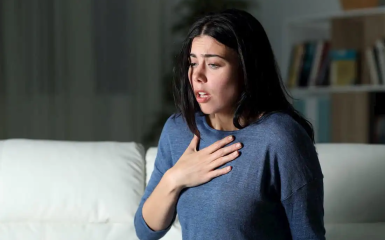
The heart suddenly starts beating wildly, it becomes difficult to breathe, the head becomes dizzy, and the body is seized by a strong fear. There is a feeling that something terrible is about to happen: the person will lose consciousness, lose control of himself or even die. This is how a panic attack can manifest itself.
Points of attention
- A pounding heart, dizziness, and difficulty breathing can seem like signs of disaster.
- A panic attack usually peaks within a few minutes.
- One of the most famous grounding exercises is based on switching attention between the senses.
A panic attack is a sudden episode of intense fear or discomfort that is accompanied by pronounced physical symptoms and usually reaches its peak intensity within a few minutes.
Although extremely unpleasant, a panic attack itself is usually not immediately life-threatening. However, its symptoms can resemble a heart attack, heart rhythm disturbances, and other dangerous conditions. Therefore, you should not attribute any chest pain or shortness of breath solely to anxiety.
During an attack, calm breathing, focusing on your surroundings, and having another person to support you can help. If the attacks are recurring, effective treatments include psychotherapy and, if indicated, medication prescribed by a doctor.
We'll figure out how to recognize a panic attack, what to do in the first few minutes, what mistakes to avoid, and when to seek immediate medical attention.
What is a panic attack and what happens to the body?
When the brain perceives a situation as threatening, the systems responsible for responding to danger are activated.
The body prepares to act quickly: the heartbeat speeds up, breathing changes, and muscle tension increases.
These are normal physiological mechanisms that help a person respond to real danger.
But during a panic attack, similar reactions can occur without an obvious external threat.
The US National Institute of Mental Health (NIMH) compares this mechanism to an overly sensitive alarm system: the body reacts as if there is danger, although there may not be.
Why it feels like you're dying
A pounding heart, dizziness, and difficulty breathing can seem like signs of disaster.
A person begins to fear physical sensations themselves.
For example, noticing a rapid pulse, she thinks: "Something is wrong with me, my heart is going to stop now."
This thought intensifies fear, and fear is physical arousal.
This creates a vicious circle that can sustain the attack.
At the same time, it is important: without a medical examination, it is impossible to reliably determine that a rapid heartbeat is caused by panic, and not by a physical illness.
Main symptoms of a panic attack
A panic attack can manifest itself in different ways.
Some people primarily experience heart palpitations and shortness of breath, while others experience severe dizziness, tremors, or a fear of losing control.
According to the NHS and NIMH, typical symptoms include:
sudden intense fear or a sense of imminent danger;
rapid or pounding heartbeat;
trembling of the hands or the whole body;
increased sweating;
difficulty breathing or feeling short of breath;
chest discomfort or pain;
dizziness and feeling unsteady;
nausea or stomach discomfort;
chills or hot flashes;
tingling or numbness of the extremities;
a feeling of unreality of the surrounding world;
fear of losing control, going crazy, or dying.
It is not necessary to have all of the symptoms listed.
However, their presence alone does not confirm a panic attack. Similar symptoms can occur with a variety of medical conditions.
How long does a panic attack last?
According to the NHS, most panic attacks last between 5 and 20 minutes.
However, individual episodes can last longer, and after the intensity of the fear decreases, a person sometimes still feels tired and tense for some time.
A panic attack usually peaks within a few minutes.
However, you should not wait a certain amount of time if signs of a possible dangerous disease appear.
What to do during a panic attack: a step-by-step plan
If you have already undergone a medical examination, know the nature of your panic attacks, and your current feelings are consistent with previous episodes, you can try several self-help methods.
But if the attack has occurred for the first time, the symptoms are unusual, or there is doubt about their cause, a medical evaluation is necessary.
Step 1. Make sure you are safe
First of all, assess the surrounding situation.
If you are driving, stop safely in an authorized location.
If you are on stairs, near a road, or working with dangerous equipment, stop the activity.
If possible, sit in a comfortable position.
You don't need to force yourself to stand if you feel dizzy.
At the same time, if panic occurs in conditions of real threat, for example, during shelling, the priority is to follow safety rules and move to shelter.
Step 2. Remind yourself that the attack can pass.
If panic attacks have already been diagnosed by a doctor and the current episode has familiar manifestations, you can try a short phrase:
"I've experienced this before. The symptoms are very unpleasant, but they can gradually ease."
There is no need to try to convince yourself by force that there is no fear.
You can acknowledge the unpleasant feelings and at the same time remember that the intensity of panic can decrease.
However, such reassuring statements should not replace seeking help if dangerous symptoms appear.
Step 3. Try to slow down your breathing
During a panic attack, a person may breathe too quickly.
This type of breathing sometimes causes dizziness, tingling in the fingers, and a feeling of shortness of breath.
Try to breathe gently, without taking large, forced breaths.
One possible option:
Take a calm breath through your nose for about three to four counts.
Exhale slowly for four to five counts.
Repeat several times at a comfortable pace.
There is no need to hold your breath forcibly or try to take in as much air as possible.
If an exercise causes dizziness, pain, or additional discomfort, stop it.
Step 4. Shift your attention to the surrounding objects
During a panic attack, attention often focuses on your heartbeat, breathing, and other bodily sensations.
Sometimes it's useful to transfer it to what's happening around you.
For this, grounding techniques are used.
For example, you can name objects in the room, pay attention to the support under your feet, or describe the colors of surrounding things.
This approach helps reduce fixation on anxious feelings.
Step 5. Do not try to immediately stop the attack at any cost
The desire to instantly get rid of every symptom sometimes increases anxiety.
The person begins to constantly check their pulse, monitor their breathing, or look for new signs of danger.
If medical causes of your symptoms have already been ruled out and your doctor has confirmed panic attacks, it may be helpful to try to let the unpleasant sensations gradually subside without fighting each one individually.
This principle is used in certain approaches to cognitive behavioral therapy.
It is important not to confuse it with ignoring new or dangerous symptoms.
Breathing exercises during a panic attack: what really matters
Breathing techniques are often recommended as a self-help method.
However, there is a common mistake: a person tries to breathe as deeply as possible, even though they are already breathing rapidly.
As a result, discomfort may increase.
Why you shouldn't take too deep breaths
During hyperventilation, a person exhales carbon dioxide faster than the body produces it.
A decrease in its level in the blood may be accompanied by dizziness, tingling, and a feeling of unsteadiness.
Therefore, the goal of the exercise is not the maximum inhalation volume, but a comfortable, calm breathing rhythm.
According to NHS guidelines, breathing practices can be a helpful way to reduce anxiety, but they should not be used instead of medical attention for dangerous symptoms.
Can you breathe into a paper bag?
This method was once a common way to help with hyperventilation.
However, today it is not recommended to use it independently without medical evaluation.
The reason is that rapid breathing can occur not only due to anxiety, but also due to heart, lung, and other diseases.
Re-breathing air from the bag in such situations can be dangerous.
It is better to focus on natural slow breathing and seek help promptly if the cause of the symptoms is unknown.
The “5–4–3–2–1” technique: how to regain a sense of reality
One of the most famous grounding exercises is based on switching attention between the senses.
It is described, in particular, in materials from the Scottish health service NHS inform.
The scheme looks like this:
5 — name five objects you see. For example, a table, a window, a lamp, a book, and a cup.
4 — pay attention to four bodily sensations. This could be the touch of clothing on your skin, the support of your feet on the floor, or the surface of a chair.
3 — Identify three sounds. For example, ventilation noise, voices, or sounds from the street.
2 - notice two smells. If there are no smells, you can recall two familiar aromas.
1 — pay attention to one taste. Or imagine the taste of a familiar product.
It is not necessary to perform all the points perfectly.
If it is difficult to count during an attack, you can simply describe the objects around you.
The purpose of grounding is not to forcefully turn off the alarm, but to help bring the attention back to the present moment.
How to know it's a panic attack and not a heart attack
This is one of the most important questions.
A panic attack and a myocardial infarction may have similar symptoms:
chest pain or discomfort;
rapid heartbeat;
shortness of breath;
sweating;
nausea;
dizziness;
strong fear.
According to the Mayo Clinic, a heart attack is not always accompanied by sharp and severe pain.
Sometimes symptoms are less obvious, especially in women, older people, and people with diabetes.
When to call an ambulance immediately
Emergency medical attention is needed if:
new, severe, or unexplained chest pain or pressure;
pain spreading to the arm, back, neck, or jaw;
severe difficulty breathing;
faint;
sudden weakness on one side of the body, slurred speech, or other signs of a stroke;
other symptoms that may indicate an acute dangerous condition.
In Ukraine, emergency medical assistance can be called by calling 103 or through the unified service 112 .
You don't need to wait until the breathing exercise is complete.
Even if you have had panic attacks before, new chest pain or unusual symptoms should not automatically be attributed to anxiety.
Why panic attacks occur for no apparent reason
It is not always possible to identify the event that immediately preceded the attack.
A person can be sitting calmly at home, riding in public transport, or waking up in the middle of the night and suddenly feel intense fear.
Scientists view panic attacks as the result of an interaction of biological, psychological, and environmental factors.
Possible factors include hereditary predisposition, specific responses to bodily sensations, and experienced stress.
At the same time, there is no single analysis or test that accurately determines the universal cause of an attack.
Can a panic attack occur during sleep?
Yes. Panic attacks sometimes occur at night and wake a person up.
This may include palpitations, sweating, shortness of breath, and intense fear.
But nocturnal episodes can also be associated with other conditions, including sleep-disordered breathing or heart problems.
Therefore, recurring nighttime symptoms should be discussed with a doctor.
Panic attack or panic disorder: what's the difference?
One panic attack does not mean that a person has a mental disorder.
According to the NIMH, isolated panic episodes can occur without developing panic disorder.
Panic disorder is diagnosed based on a set of criteria.
These include recurrent unexpected panic attacks and prolonged anxiety about the possibility of further attacks or significant changes in behavior related to this fear.
Why does the fear of a repeat attack arise?
After a severe attack, a person may begin to avoid the places where it occurred.
For example, they stop taking the subway, going to the shops, or staying home alone.
The problem is that avoidance sometimes temporarily reduces anxiety, but at the same time maintains the belief that the situation itself is dangerous.
Under certain circumstances, agoraphobia can develop — a pronounced fear of situations in which, in the person's opinion, it will be difficult to escape or get help.
Such conditions require professional treatment.
How to help someone who is having a panic attack
If someone nearby suddenly feels intense fear, it is important not to increase the tension.
First, make sure the person is physically safe.
If this is your first seizure, your symptoms are unusual, or there are signs of an emergency, seek medical attention.
What to say to someone during an attack
Speak in a calm voice and short sentences.
For example:
"I'm here. Let me know if you need help."
"We can sit in a safe place."
"Try to breathe calmly. I'll stay by your side if you want."
There is no need to demand that the person calm down immediately.
It's also not worth convincing her that physical symptoms are definitely safe if the medical cause is unknown.
What is better not to do?
You should not:
to shame a person through fear;
shout or make extra noise;
forcibly detain her unnecessarily;
give someone else's sedatives;
to force to breathe into a bag;
leave without assistance if there are dangerous symptoms.
Some people do not want physical contact during an attack.
Therefore, it is better to ask permission before hugging or touching.

What to do after a panic attack
As the intensity of symptoms decreases, a person may feel tired, tense, and worried that the attack will happen again.
If your condition allows, you can sit quietly for a while and gradually return to normal activities.
There is no need to immediately analyze every symptom or force yourself to perform difficult tasks.
If this is your first time having an attack, it is important to see a doctor to evaluate possible causes.
Do I need to record my symptoms?
For consultation with a specialist, brief information may be useful:
when the attack occurred;
what symptoms occurred;
approximately how long they lasted;
what happened before the episode;
Are you taking medication?
Have there been similar cases before?
At the same time, you shouldn't constantly check your pulse or keep an overly detailed record of every bodily sensation if it increases anxiety.
How to prevent repeated panic attacks
It is impossible to completely guarantee the absence of new attacks.
However, certain habits can support overall psychological well-being.
The NHS recommends that people with panic symptoms pay attention to regular physical activity, sleep, relaxation skills and avoid excessive use of substances that can increase anxiety.
Check the caffeine content
Caffeine stimulates the nervous system and can cause heart palpitations, tremors, and feelings of excitement.
In some people, these symptoms resemble the symptoms of a panic attack.
If you notice a connection between coffee, energy drinks, and anxiety, it's worth discussing caffeine restrictions with your doctor.
Don't use alcohol to calm down.
Alcohol can temporarily reduce stress, but it also affects sleep and the ability to regulate emotions.
Using alcohol or sedatives without a doctor's prescription to combat panic can pose additional risks.
Support sleep mode
Insufficient sleep can increase sensitivity to stress.
It is helpful to stick to a relatively consistent bedtime and wake-up time if possible.
But the right regimen alone is no substitute for treatment for panic disorder.
Panic attacks during war: what to do for Ukrainians
Air raids, shelling, forced relocations, and constant uncertainty can create significant psychological stress.
In such conditions, people may react more acutely to loud sounds, feelings of danger, and unexpected changes in circumstances.
The World Health Organization recommends using grounding and stress management skills as supportive ways to maintain psychological well-being.
However, it is very important to distinguish between a panic reaction and a justified fear of real danger.
If an air raid warning sounds, you need to follow safety rules and not try to convince yourself that there is no threat.
Once you have moved to a safe place, you can use calm breathing and other available self-regulation techniques.
If panic symptoms recur after traumatic events, it is advisable to consult a specialist who works with anxiety and trauma-related conditions.
How are panic attacks and panic disorder treated?
Treatment depends on the frequency of attacks, associated symptoms, general health, and examination results.
According to the recommendations of the UK's National Institute for Health and Care Excellence (NICE), one of the main methods of treating panic disorder is cognitive behavioral therapy.
Cognitive behavioral therapy
CBT helps a person understand the connection between bodily sensations, anxious thoughts, and behavioral responses.
For example, a person can learn to differently evaluate a rapid heartbeat, which they previously automatically perceived as a sign of imminent disaster.
With professional guidance, special exercises can also be used to gradually confront the feelings or situations that a person fears.
It is not worth conducting intensive exposure exercises on your own without a proper assessment of your condition.
Drug treatment
In certain cases, a doctor may prescribe medication.
For long-term treatment of panic disorder, some antidepressants are used, in particular, whose effectiveness has been confirmed by research.
They do not work instantly: it takes time to assess the therapeutic effect.
Benzodiazepines can quickly reduce anxiety symptoms, but they carry risks of tolerance and dependence, so their use requires particularly careful medical supervision.
You cannot start, change the dosage, or stop taking psychotropic drugs on your own.
When to see a doctor
Medical consultation is needed even after a single episode if its cause is unknown.
It is especially important to seek help when attacks recur or begin to change your lifestyle.
For example, a person stops using transportation, going to work, or leaving the house due to fear of another attack.
The first step may be to consult a family doctor, who will assess the symptoms and, if necessary, refer you to an appropriate specialist.
You should not delay seeking help just because you feel normal between attacks.
Conclusion
A panic attack can cause extremely intense fear and physical symptoms that seem life-threatening.
However, with confirmed panic attacks, these feelings usually gradually subside.
During an attack, safe body positioning, calm breathing, shifting attention, and having the support of another person can help.
However, it is important not to try to distinguish a panic attack from a heart attack based on a single symptom. New, severe, or unusual physical symptoms require medical evaluation.
If attacks recur, effective treatments exist. Cognitive behavioral therapy and, when indicated, medication can significantly reduce symptoms and help you return to your normal life.
FAQ: Frequently Asked Questions About Panic Attacks
What to do when a panic attack begins?
First, make sure you are in a safe place. If you have had a confirmed panic attack and the symptoms are familiar, try calm breathing, grounding, and taking a short break. If this is your first time having an attack, your symptoms are unusual, or you have signs of a dangerous condition, seek medical attention.
How to quickly stop a panic attack?
There is no method that is guaranteed to stop an attack in a certain number of seconds. Some people find that slow breathing, shifting their attention, and staying calm help. The best approach depends on the individual's symptoms.
How long does a panic attack last?
Most panic attacks last about 5–20 minutes, although some episodes may last longer. If your symptoms are unusual, worsening, or may indicate a serious medical condition, you should not wait for them to go away on their own.
Can you die from a panic attack?
A panic attack itself is usually not immediately life-threatening. However, its symptoms can resemble a heart attack and other emergencies. Without an examination, not all chest pain or shortness of breath should be considered a manifestation of anxiety alone.
Why do panic attacks occur for no reason?
Sometimes an attack does begin without any obvious external trigger. Biological predisposition, stress, and sensory perception can all play a role in its onset. The exact cause of a particular episode is not always identifiable.
What is the difference between a panic attack and anxiety?
Anxiety can build up gradually and persist for a long time. A panic attack is characterized by a sudden intense fear or discomfort with pronounced physical symptoms that usually reach a peak quickly.
Does water help during a panic attack?
A few sips of water may be comforting to someone who is experiencing dry mouth. However, there is no conclusive evidence that water alone will stop a panic attack. You should not force someone to drink, especially if they have difficulty swallowing.
How to help a loved one during a panic attack?
Speak calmly, help move to a safe place, and ask what support is needed. Do not embarrass the person or force them to calm down immediately. Seek medical attention for the first or unusual attack and for possible dangerous symptoms.
Can panic attacks be cured permanently?
Panic disorder is treatable, and many people achieve significant relief from their symptoms. However, there is no guarantee that they will never have attacks again. The effectiveness of treatment depends on individual circumstances and requires professional evaluation.
Which doctor should I see for panic attacks?
You can start with your family doctor, who will assess your physical symptoms and determine the need for further testing. If necessary, a psychiatrist, psychologist, or psychotherapist with appropriate training will be involved in the treatment.
Important: The article is for informational purposes only and is not a substitute for professional medical advice. Self-medicating for panic attacks, anxiety disorders, and other conditions can be harmful to your health. If you experience symptoms similar to a panic attack for the first time, be sure to see a doctor to determine the cause. If you experience new or severe chest pain, severe shortness of breath, fainting, or other signs of an emergency, call 103 or 112 immediately. Do not self-medicate with sedatives or other medications.

